
by Sasha Riess | 28.08.26. | Behaviour
To understand and connect deeply with our companions, we must return to the roots and rediscover an authentic, natural relationship with a dog. Through this process, we do not simply learn how to raise an animal. Simultaneously, we learn profound lessons about ourselves. Setting clear and healthy boundaries creates the strong foundation that helps us build stable, balanced, and meaningful relationships with both animals and people.
How Freedom Shapes an Authentic Relationship With Your Dog
As I often told Heni while we walked along the beach: “Let him go. I call him, he does not come, so I simply turn around and walk away.” I often recorded those precise moments. If you truly believe there is a better place for you somewhere else, then go freely.
Yet it is precisely from that absolute freedom that an unbreakable connection emerges. When a living being experiences genuine freedom, it consciously chooses to remain beside you, or beside anyone with whom it wishes to build a bond. Consequently, in the end, freedom becomes one of the most powerful forces of connection when shaping a healthy relationship with a dog.
Trust That Goes Beyond the Need for Control
Many owners unintentionally limit their companions through excessive control and constant physical tension, believing this behavior will keep the dog close to them. However, a stable and natural relationship with a dog can never rely upon the fear of loss.
Only when you consciously let go of that constant need for control will you begin to notice something remarkable. The dog starts choosing to follow your steps voluntarily because it recognizes a calm, stable, and trustworthy leader in you.
Love That Grows Without Cages or Restrictions
When both partners build their dynamic on mutual trust, the dog has no desire to lose the freedom it experiences beside you. The dog does not know whether another place would offer the same emotional freedom or confine it behind harsh restrictions.
The same universal principle applies to love, human relationships, and many other aspects of daily life. True connection does not grow from tightening the leash out of deep-seated fear. Ultimately, a natural relationship with a dog thrives most beautifully when you build it at the highest level of mutual freedom.
Thank you for reading.
To discover more about how emotional alignment, balanced lifestyle, and authentic energy restore internal balance, read our canine communication and behavior guidelines.
At Sasha Riess, we look past commercial labels to honor the unique biological blueprint of your companion. True health requires addressing the subtle internal patterns that create lasting vitality and pureloveandharmony. Discover the customized path to your dog’s longevity:Linktree Sasha Riess
👉 Follow our Facebook page and never miss our latest articles, news, and updates.
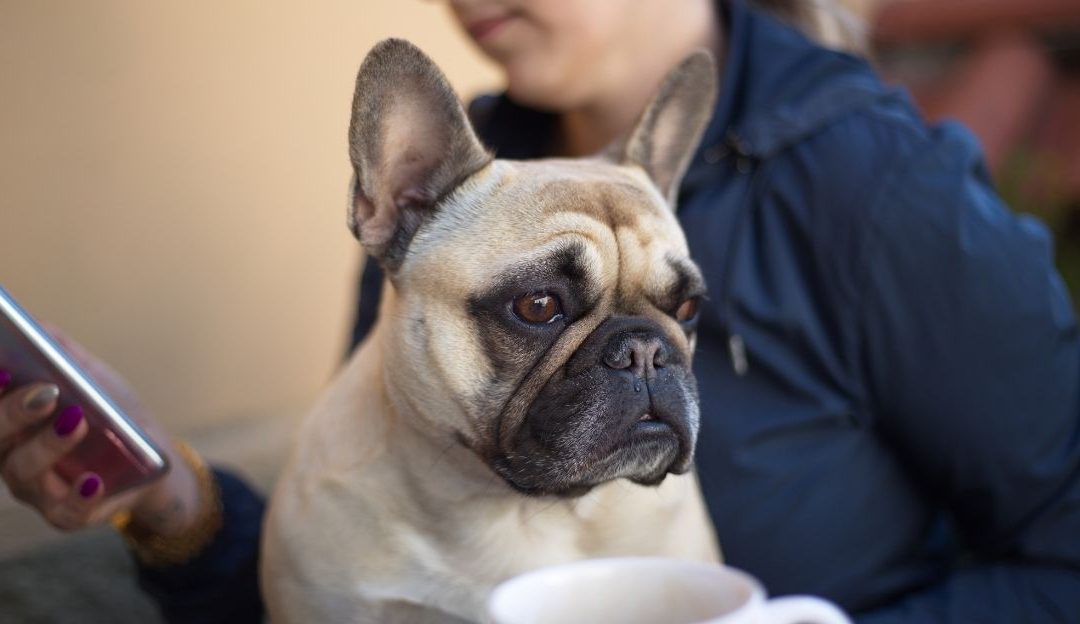
by Sasha Riess | 04.03.26. | Wellbeing
“Dog Friendly” – The Hidden Cost of Emotional Marketing
In recent years, around the world and in our region, we increasingly see signs and advertisements proudly stating “dog friendly.” Owners of shops, restaurants, cafes, and even certain Western churches open their doors to dogs, sincerely believing they are making a gesture of love and inclusion. At first glance, it appears to be a sign of progress and greater respect for animals.
However, when we look at this phenomenon through a deeper, systemic understanding of the human-dog relationship, beneath the sentimental facade lies a painful truth and a profound misunderstanding of a dog’s nature. What humans perceive as freedom and togetherness, dogs often experience as stress, confusion, and loss of safety.
At the same time, dog-themed cafes, birthday spaces, special menus, and emotional marketing concepts appear everywhere. It seems devoted to the love of dogs, but in reality, it is a sophisticated way to extract more money from owners who are emotionally attached to their pets. The dog, who should be honored for its nature and uniqueness, is increasingly reduced to a marketing prop and a tool for profit.
The “Dog Friendly” Chaos – The Stress of Dogs in Human Spaces
The inspiration for this column came a few days ago when I witnessed a scene inside a store. On the surface everything looked pleasant, people walked in with their dogs, smiling and enjoying the idea of being welcome. But the dogs quickly showed another picture.
A couple entered the space with two dogs, while another couple passed by the entrance with their own dog. That brief moment of encounter was enough for one of the smaller dogs to begin barking uncontrollably. The owners became nervous and embarrassed. They tried to calm him with words and petting, but every attempt only intensified the dog’s excitement. Their eyes looked at me as if asking, “What do we do now?”
Barking Is a Symptom – Not a Dog’s Problem, but a Family Imbalance
What seemed to people like a simple behavioral issue was, to me, an obvious sign of deeper imbalance. That dog had taken on the role of leader, decision-maker, and protector within its family. His barking was not “bad behavior” but the natural consequence of occupying a role that does not belong to him. When a dog feels responsible for making decisions and protecting the household, his nervous system stays on high alert.
I said aloud, “Poor dogs.” The woman replied, “But at home he is perfect. He never barks, he is calm and obedient.” I gently responded: if everything were truly in balance at home, the dog would carry that balance into the world. If problems appear outside, this is a sign of hidden imbalance inside the home, something people often overlook or consider normal.

Public barking is a symptom of taking on the leadership role, not just a bad habit.
The Illusion of “Rescued Dogs”
The man added that “nothing can be done” because both dogs were rescued, as if this were a permanent obstacle. I explained that rescued dogs are often the easiest to guide into a new, secure emotional structure. Dogs who lived on the street already understand the value of order and hierarchy. They know how to follow the one who shows stability and responsibility. Problems more often arise in dogs who have lived only in human households, where boundaries between human and canine worlds become blurred.
The Method of Love and Order – How to Be a True Leader, Not Only a Friend
I explained the principles from the Harmony Guide. Nothing I ask of people are tricks or obedience techniques. They are natural patterns dogs already understand. Kindness, calm presence, clarity in decisions—these create harmony. When the human becomes a leader through love and responsibility, the dog steps out of the role of protector and finally relaxes.
I suggested they avoid taking their dogs to cafes, churches, or busy places for the next two weeks. Instead, they should create a new structure at home. They were ready to learn, and that brought me joy. The problem is never the dog. The problem is the human misunderstanding of what “being welcome” means to a dog.
The Forgotten Truth – A Dog Does Not Understand the Concept of “Going Out”
One of the most important truths people forget is that dogs do not understand the human concept of leaving and returning. For a dog, every new place is a new world. When we take a dog into a church, café, or restaurant, he does not experience it as a short visit. He steps into a completely new environment with new scents, dogs, and people. He immediately has to determine where he belongs and what role he must take.
This is a huge task for an animal living entirely in the present moment. While we drink coffee imagining we are giving the dog joy, the dog is silently evaluating danger, boundaries, and responsibility.
Profit Over Wellbeing – When Love Becomes a Marketing Tool
Why then do shops, churches, and institutions promote themselves as “dog friendly”? The answer is simple: profit. People love their dogs, and where dogs are welcome, more customers come. Owners of these spaces rarely intend harm, but few truly understand what it means to bring an animal into a human-designed environment that is unnatural for them. Humans feel pleasure. Dogs feel subtle stress.

Calm presence, love, and order – this is what a dog truly needs, not an outing.
The Path to Harmony – Respecting the Dog for What It Truly Is
If we want a real relationship with dogs, we must respect who they are. This means stopping the projection of human roles onto them: child, angel, emotional companion for outings.
A dog is a dog. Its place is beside humans, but not inside human rituals that overwhelm its instincts.
-
Love is not taking the dog everywhere.
-
Love is providing structure, calm, and safety.
When we take responsibility for decisions, when we become leaders through love, the dog no longer needs to bark, control, or decide. He can finally be what he is meant to be.
“Dog Friendly” as a Mirror – A Call to Re-examine Ourselves
The “dog-friendly” trend is more than a cultural shift. It is a mirror showing how humans project their emotional needs onto animals. We call it love, but often it is the extension of our own ego. This pattern spreads into human relationships, shaping how we treat our children, partners, and friends. Perhaps the greatest proof of maturity is the ability to see another being as they truly are. Only then can harmony begin.
At Integrative and Holistic Grooming Education, we believe that every physical symptom is a message. Understanding these signals and addressing them through a holistic lens—understanding the true nature of the animal—is at the heart of everything we teach. Learn more and join our community: Linktree Sasha Riess