
by Sasha Riess | 14.05.26. | Emotions
There is a moment in the life of every dog owner that is never forgotten. It is the moment when we realize that the dog never asked anything from us except for our presence. Not perfection, but simply to be there. This is when we understand that adult love toward a dog takes the form of responsibility, not just affection.
Rexi in the Family Mirror: A Crack That Tenderness Could Not Hide
Rexi came into a family that truly wanted him. At first, everything looked ideal. However, within that love, there was no space for boundaries. When Rexi showed fear, he received even more comfort. Love turned into something that strengthened neither the dog nor the human.
Adult love toward a dog means saying no out of care, providing a sense of safety that tenderness without direction can never replace.
The Invisible Trap: When Attachment Becomes Emotional Captivity
Instead of stability, dependency developed. A love without a future was born—one that asks the dog to adapt to our weaknesses. This is a relationship where the dog serves as an emotional shield against loneliness. In such a bond, the human believes they are giving everything, while in reality, they are asking the dog to become what is missing in their human relationships.
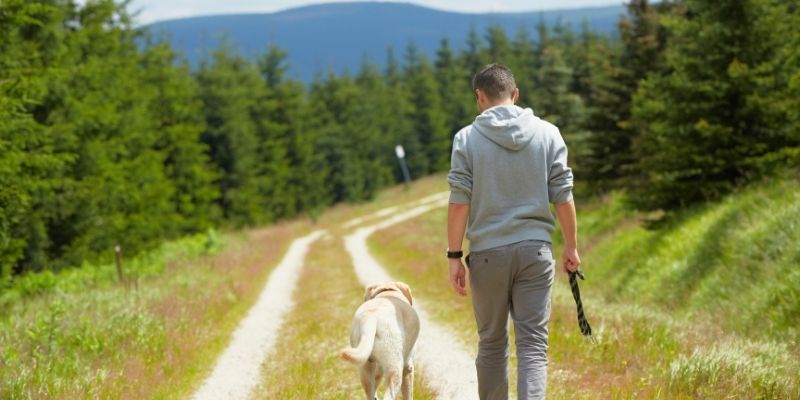
Adult love toward a dog means saying „no“ out of care, providing a sense of safety that tenderness without direction cannot replace.
Why Tenderness Without Boundaries Becomes Violence
When every separation became unbearable, it was clear: Rexi didn’t have a problem with love; he had a problem with the absence of leadership. He was seeking an adult who could say no out of care, not out of fear of rejection. Understanding adult love toward a dog requires us to give them space to be dogs, without the task of healing human wounds.
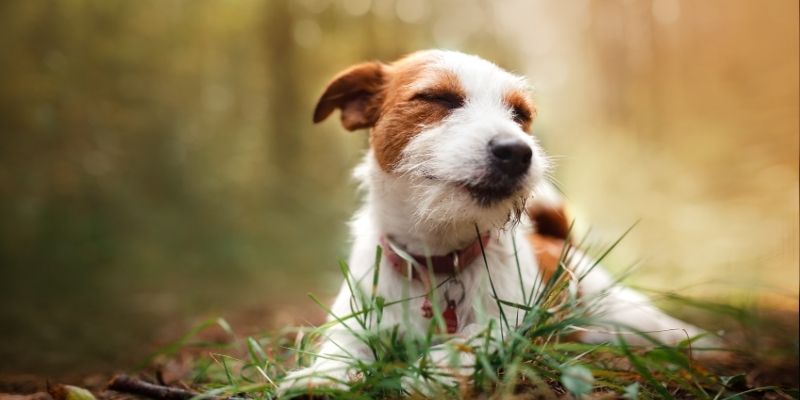
Only when we restore their place in the natural order can dogs truly breathe with full lungs.
The Dog as a Teacher: Responsibility That Restores Inner Peace
A dog does not teach us how to pet him; he teaches us how to love in a way that allows the other to be what they truly are. Rexi’s story is a call to examine what we truly give our dogs: comfort that soothes us, or security that empowers them.
Only when adult love toward a dog is established can we say that we have not lost the dog, but have found ourselves. Then that love is no longer an escape, but a path we can walk together.
At Sasha Riess, we advocate for a relationship built on mature leadership. Moving beyond emotional dependency toward adult love toward a dog is the only way to achieve a state of pureloveandharmony. Discover more: Linktree Sasha Riess
Awakening With Dogs : Exploring the Profound Connection Between Dogs and Humans: Love, Resonance, and Healing Kindle Edition
by Sasha Riess | 04.05.26. | Behaviour
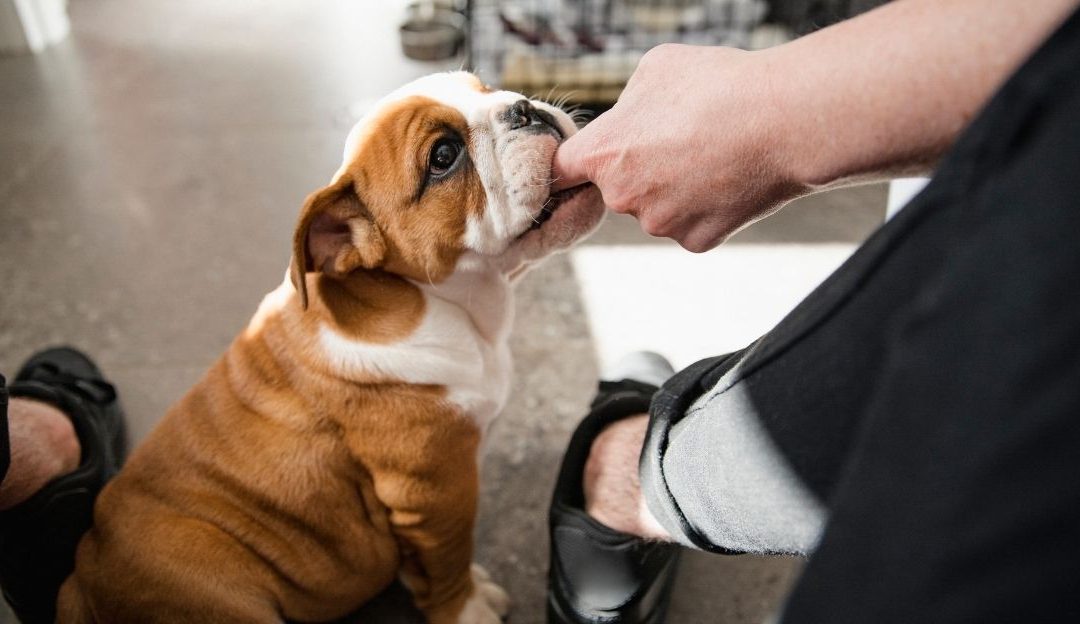
Nibbling hands, clothes, or skin often confuses dog owners, but it is important to understand that a dog who nibbles is not showing aggression. The dog is trying to communicate. The real question is not whether the dog nibbles, but how and in what context it happens.
Is Nibbling Play or a Problem?
In dogs, especially young ones, nibbling is a natural part of play and stress regulation. The problem begins when a human unknowingly participates in that play and reinforces it. Behaviors such as pushing the dog away, laughing, pulling the hand back suddenly, or shouting phrases like “hey, stop” actually do the following:
-
Increase excitement
-
Raise stress levels
-
Prolong the behavior
In these moments, the dog does not receive the message “no.” Instead, the dog receives confirmation that play is still ongoing.
[Image showing a dog nibbling and the correct human response]
How to Respond Properly When a Dog Nibbles
When a dog starts nibbling, the response must be calm, clear, and consistent.
The First Step: Stop the Interaction Gently move your hand away and clearly say: “Ay” or “No.” There should be no shouting, no additional words, and no explanations. This gives the dog a clear signal that a boundary has been crossed.
The Five-Minute Rule If the dog continues despite the warning, the rule of separation applies:
-
Calmly lead the dog into another room.
-
No talking, no anger, no physical contact.
-
The dog stays alone for approximately five minutes.
For a dog, separation from the group is the strongest message possible. This is not punishment in the human sense, but clear information: “With this behavior, you do not belong in the group.”
Why Separation Works
Dogs are social beings. Belonging to the group is more important to them than any physical correction. When separation is done calmly and without drama:
-
The dog connects behavior with consequence.
-
Understanding comes quickly.
-
Boundaries are learned without fear.
A dog does not think like a human, but instinctively understands exclusion from the group. Separation is communication, not punishment.
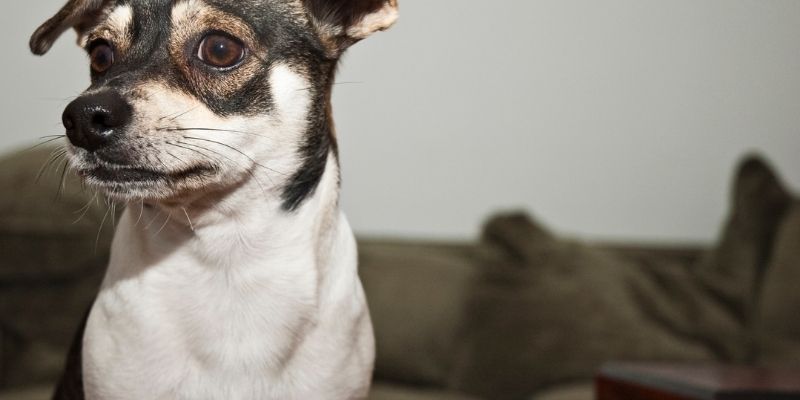
Isolation is a message, not a punishment.
What Should Never Be Done
To successfully address why dogs nibble, avoid these common mistakes:
-
Do not hit the dog.
-
Do not shout.
-
Do not explain.
-
Do not push your hand into the dog’s mouth.
-
Do not turn everything into play.
Dogs do not learn rules through noise and chaos, but through clear, consistent rituals.
Nibbling Is a Message, Not Disobedience
It is essential to understand this: a dog is not raised through punishment, but through rules of belonging. A dog that knows where it belongs has no need to test boundaries with its teeth.
At Sasha Riess, we believe that every interaction is an opportunity for clarity. Understanding why dogs nibble allows you to set boundaries that build trust rather than fear, leading to a state of pureloveandharmony. Discover more: Linktree Sasha Riess
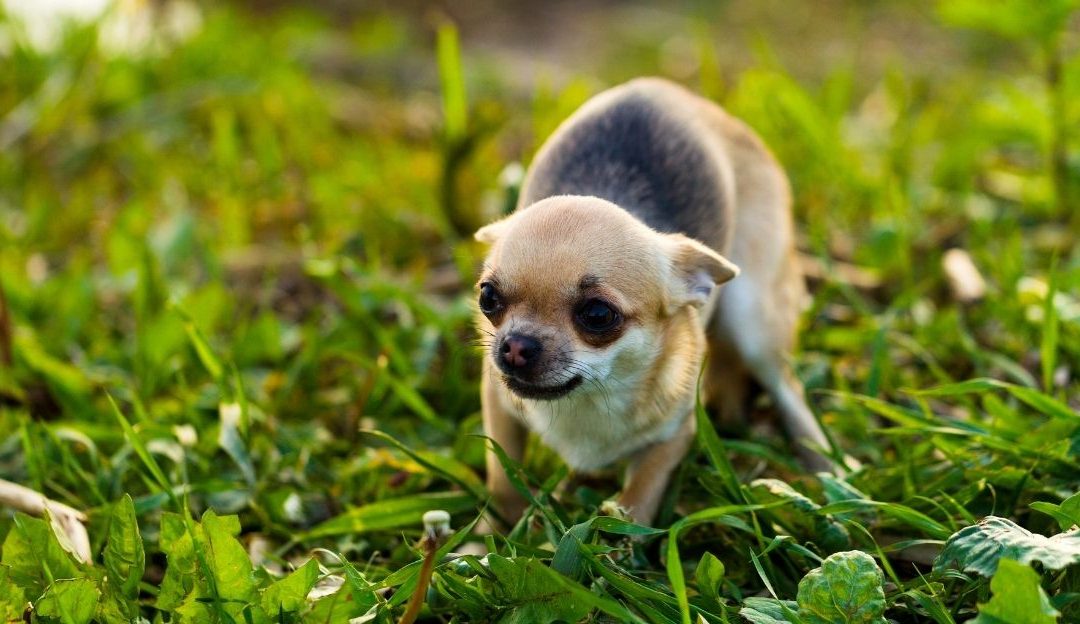
by Sasha Riess | 13.04.26. | Behaviour
Should a happy, well-adjusted dog let everyone pet or pick them up? In a recent episode of “1000 Whys – 4 Truths,” a dog owner shared her concern: her dog growls and snaps whenever someone tries to lift him. This raises a deeper question: why should anyone touch a dog if the dog doesn’t want to be touched?
A Dog Is Not a Toy
Many owners unconsciously see their dogs as beings that “must be nice to everyone.” But that belief often reflects our own conditioning — the need to please, to always appear kind and agreeable, even when we feel otherwise inside. When we project that onto our dogs, we expect them to behave the same way — calm, polite, and endlessly patient. Yet, a dog is not an extension of our personality. A dog is a sentient being with boundaries, memories, and emotions of its own.
Pack, Family, and Boundaries
A dog is a social being — but when living with humans, the “pack” becomes a family system with different rules. A wolf pack consists of parents and their offspring. Our families with dogs are not packs — they are interspecies groups built on emotional connection and a sense of safety.
For the dog, the human represents that safety. When the family lacks harmony — when parents don’t respect each other, or the home is filled with tension — the dog feels it deeply. In such an environment, the dog doesn’t know whom to rely on, and this uncertainty often manifests as growling, snapping, or avoiding touch.
Change Creates Insecurity
When guests visit or a new family member arrives, the dog must “remap” its social world. If there’s no stable, trusted figure, the dog can’t relax. Each change in the household forces the dog to find its place again. In balanced families, where respect and emotional clarity exist, the dog feels calm and secure. But in unstable relationships, where roles and boundaries blur, the dog can’t be stable — because no one else is.
Why the Dog Doesn’t Want to Be Picked Up
If a dog growls when someone tries to lift them, it’s rarely aggression — it’s fear or loss of control. They might have been hurt before, mishandled, or traumatized as puppies. Or they may simply dislike being restrained.
Dogs also mirror their owners’ unresolved emotions. If a person has experienced abuse — emotional or physical — and hasn’t fully healed, the dog can reflect that energy through defensive behaviors. It’s not coincidence. Dogs perceive our energy and subconscious patterns. When the owner begins to heal and integrate their own experiences, the dog often calms down naturally.

Trust is built with patience and understanding, not force.
How to Help a Dog That Fears Touch
The answer isn’t to “force the dog to get used to it.” It’s about rebuilding trust — slowly, gently, and respectfully. Through desensitization, the dog learns that touch doesn’t mean threat, and that humans can be close without control or pressure. A good professional or a well-designed guide can help you work with dogs that fear handling or have lost their sense of safety.
What the Growl Really Means
A dog that growls when someone tries to pick it up is not “bad.” It’s saying: “I’m not sure. I don’t trust you yet.” Understanding, patience, and the family’s emotional stability can help the dog feel safe again — and rediscover that human touch is not a threat, but an expression of love and trust. This is the foundation of a healthy interspecies family.
At Integrative and Holistic Grooming Education, we teach that a growl is a conversation, not a conflict. Respecting a dog’s „no“ is the first step toward a deeper „yes.“ Learn to listen to your dog: Linktree Sasha Riess
by Sasha Riess | 01.02.26. | Behaviour
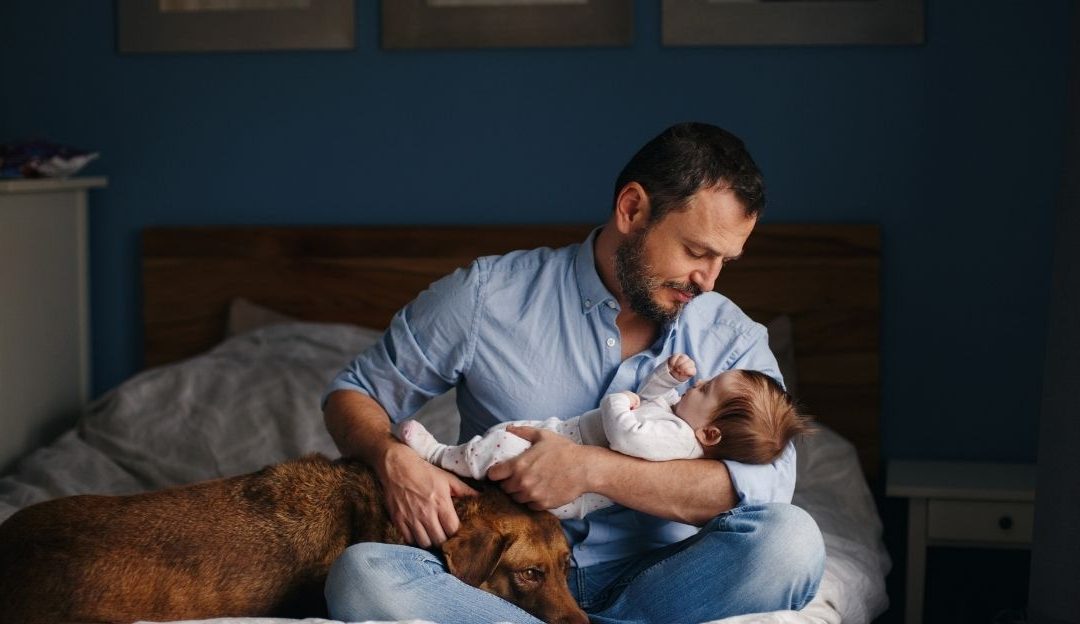
The relationship between a dog and a baby is one of the purest and most innocent relationships that exist. A dog does not intend to harm a child, and a baby has no awareness of causing harm. Problems arise only when adults fail to take responsibility and set clear boundaries.
A Relationship Disturbed Only by Humans
Small children, babies, and dogs share one important trait: complete innocence. Their relationship cannot be “wrong” by itself. A dog never plans to hurt a child. Difficulties appear when a parent or caretaker does not react, does not set boundaries, and does not recognize their own emotional state.
Parenthood, especially in the first months, carries enormous emotional and physical pressure. Lack of sleep, hormonal changes, stress, and inner tension become part of daily life. The dog and baby dynamic is affected by this because the dog senses everything. He does not understand words, but he understands energy.
How a Dog Experiences the Arrival of a Baby
In the dog’s perception, the baby is not “a child” but a change that has created instability in his human. The dog may then try to “protect” the parent because instinctively he feels that something has shifted. This is not aggression; it is an attempt to control a situation he does not understand.
That is why it is essential that adults:
-
Do not project their own stress onto the dog.
-
Do not leave the dog and baby unsupervised.
-
Do not expect the dog to “understand” human life phases.

Clear boundaries create a safe and peaceful environment for both the dog and the baby.
Boundaries Are Protection for Both Baby and Dog
A dog and a baby must have clear boundaries. How close the dog may come, when he must withdraw, and where his own space is. The same applies to the child. A dog is not a toy, a pillow, or a tool to calm a baby.
Boundaries are not punishment. They are safety.
Why Responsibility Always Remains with Adults
A dog cannot be emotionally mature. A baby cannot know boundaries. Adults must. When a parent takes responsibility, the relationship between dog and baby becomes stable, calm, and safe. Not because the dog is “good,” but because he is guided.