by Sasha Riess | 30.08.26. | Wellbeing
Frequent inflammation and impaction of anal glands are among the most uncomfortable and common health issues dog owners face. Many people take their dogs for manual expression at the veterinarian for years, yet the problem keeps returning. However, when we begin to view the body as a whole, it becomes clear that healthy anal glands in dogs require a complete shift in nutrition.
Instead of relying on aggressive treatments, the first step must be regulating stool quality and strengthening the intestinal microbiome. Consequently, proper stool consistency allows the glands to empty naturally and painlessly during each bowel movement.
A Homemade Fiber Recipe That Naturally Supports Anal Gland Emptying
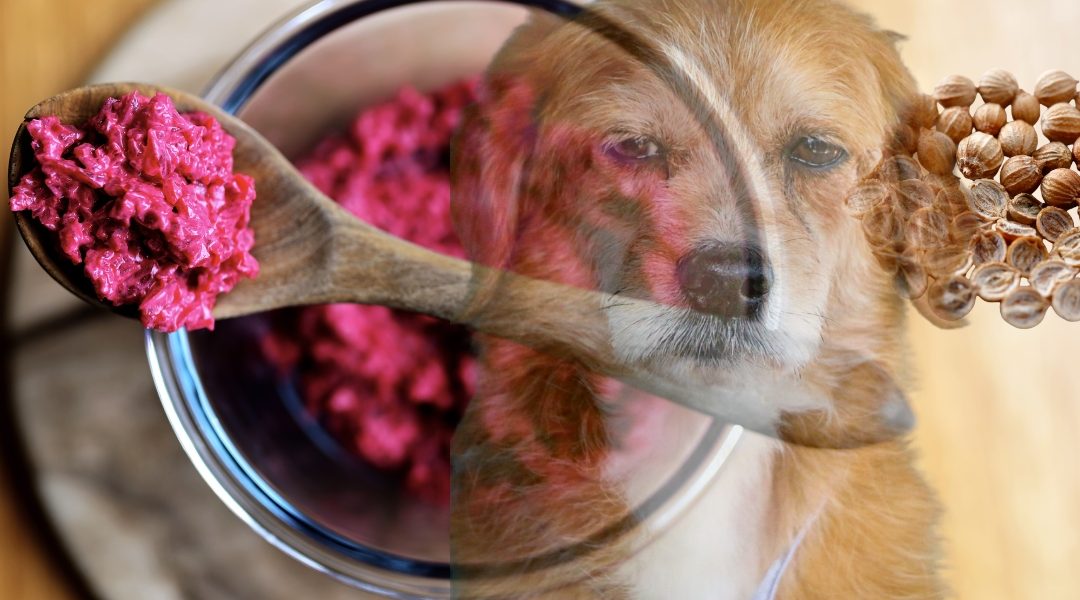
If you feed your dog cooked meals, you need to introduce plant fibers that add proper volume to the stool. The first key addition includes probiotics, which restore gut flora and improve digestion. Simultaneously, psyllium husk, available in health food stores, provides highly effective support for anal glands in dogs.
Add one-quarter teaspoon of psyllium per five kilograms of your dog’s body weight. Apply the same dosage when using homemade dried beetroot powder. Therefore, this combination of natural fibers has a powerful and beneficial effect on the entire digestive system.
How to Make Homemade Beetroot Powder for Digestive Health
Preparing this natural remedy at home is simple and accessible. First, wash fresh beetroot thoroughly under running water. Then slice it into very thin rounds, similar to homemade chips. Place the slices in the oven overnight and dry them at a low temperature of 70°C.
In the morning, place the fully dried pieces into a coffee grinder and grind them into a fine powder. Owners should mix this natural supplement daily with food, psyllium, and probiotics to achieve optimal stool quality and support healthy anal glands in dogs.
How Is a Natural Relationship With a Dog Built Through Freedom and Boundaries?
Hidden Triggers and the Microbiome: How Does Deadly Pancreatitis Develop in Dogs?
Why Does Aggression Appear in Dogs and How Does the Airplane Metaphor Explain It?
The Emotional Cause: Why Fear and Insecurity Block Natural Gland Emptying
However, an important truth is that physical factors and diet alone will not fully resolve the issue if the dog has emotional blockages. The release of gland secretions acts as a natural way for a dog to mark its territory. If your dog feels fearful or lacks confidence, it may consciously avoid leaving its scent.
As a result, anal glands in dogs often remain full due to ongoing stress and internal insecurity. Ultimately, solving this issue requires building a stable relationship and creating a sense of safety, which our comprehensive guide explains in detail.
Thank you for reading.
To discover more about how emotional alignment, balanced lifestyle, and authentic energy restore internal balance, read ourcanine wellbeing guidelines.
See you next time.
At Sasha Riess, we look past commercial labels to honor the unique biological blueprint of your companion. True health requires addressing the subtle internal patterns that create lasting vitality and pureloveandharmony. Discover the customized path to your dog’s longevity: Linktree Sasha Riess
👉 Follow our Facebook page and never miss our latest articles, news, and updates.
by Sasha Riess | 25.03.26. | Emotions
Allergies in dogs aren’t just physical reactions to food or environmental triggers — they’re often messages from the body and soul. Through a dog’s symptoms, we can see how much the owner’s stress, emotions, and energy shape the dog’s health. Understanding the roots of a canine allergy requires us to look beyond the surface.
The Quiet Message of Canine Allergy
There is no quieter cry for help than an allergy. No noise. No screaming. No attack. Just itch. Just redness. Just a body trying to expel what it can no longer tolerate. And in this case, the body isn’t ours — it’s the dog’s.
Symptoms That Speak Louder Than Words
For years people have called me about allergies. The dog scratches, chews his paws, loses hair, breaks out in rashes. They hunt for the culprit in food, grass, detergents, or kibble. And the question is always the same: “What is he allergic to?”
More and more often, I take a breath and say: “To you.”
Not literally. Not as an accusation. But as an invitation to awareness. A dog can’t choose his own life. He lives ours. He eats what we give him, breathes the air of our home, walks at our pace, sleeps when we sleep. A dog is the truest mirror of the life we lead. And if he’s suffocating, itching, protesting, and falling apart — that’s not a sign to change the brand of food. It’s a sign to look at what, exactly, we’re feeding.
Allergy as an Inner Conflict
By its nature, allergy is conflict — rejection. Physiologically, it’s an overreaction of the immune system to something that should be harmless but has become unrecognizable. The body refuses to accept it and tries to expel it. Systemically, it means a boundary has been crossed — the organism can no longer tolerate a lie.
The Dog as a Mirror of the Owner’s Life
Now imagine a dog who becomes allergic to chicken, beef, pollen — to things tied to life, strength, fertility, movement, the presence of nature. On the level of the body, his system is shouting: “This isn’t my life. This isn’t for me. I can’t digest it.”
Then we look at the owner and see a forgotten person. Forgotten by himself. Forgotten in a marriage that has traded tenderness for mere correctness. Forgotten in a job that’s no longer a choice but a climate-controlled cell with monthly paychecks. Forgotten in a body that no longer feels hunger but runs on habit. Forgotten in a sexuality that’s no longer lived.
Civilization and Suppression
This isn’t about blame. It’s civilization. We were taught to be polite, useful, productive — not to disturb the order. Not to want too much, ask too much, feel too much. When we suppress our hunger for life, for the body, for touch, for feeling and sexuality, the body that no longer knows how to say “I want” begins to say “I mustn’t.”
And the dog — who feels everything, resonates with our nervous system, absorbs our chemistry, our unfinished thoughts, our unspoken grief — begins to react. He can’t digest what we give him because we’re not giving from love but from guilt. He can’t tolerate the life we offer because we ourselves can no longer tolerate our own.
So the dog isn’t allergic to food. He’s allergic to us. Or, more precisely, to the life we, as his humans, have forgotten how to live.
Physiology: What’s Actually Happening
That’s hard to admit.
Physiologically, a canine allergy is an overreaction to a harmless substance. A confused, depleted immune system sees threat where there is none. Instead of protecting, it starts attacking — everything. The only question is: what will be the trigger.
Stress, the Microbiome, and the Invisible Link
In dogs with chronic symptoms we often see the same story: cortisol — the stress hormone — stays elevated. It signals danger. The system switches to survival mode. Blood leaves the stomach for the muscles. Digestion halts. Blood sugar spikes. Gut pH turns acidic. The microbiome — that separate organ of trillions of bacteria — begins to collapse. Without it, food isn’t digested. Everything becomes toxic. The dog eats but doesn’t utilize. He’s fed yet starving. He receives but cannot assimilate. His body becomes a battlefield. Not because the food is “wrong,” but because everything in him has been put on alert without a break.

Behind every allergy might lie an unspoken emotion – a dog often feels what the owner suppresses.
Where It Starts: When a Dog No Longer Knows Where He Belongs
It begins quietly — the moment a dog no longer knows to whom he belongs, which species he belongs to, what his role is. He only knows he must stay near us. Because he loves us. And because we are falling apart.
The Dog as a Substitute
It starts when the dog becomes a stand-in. When he enters during a time of pain — a gift to a child after a divorce, a comfort after a parent’s death, a “new chance” when everything else has failed. While we believe the dog loves us unconditionally, each day he gets more lost in a role that was never his.
He begins to carry what cannot be carried. And his body shows it — through skin, through gut, through allergy.
Allergy as a Metaphor for the Life We Don’t Live
Allergy isn’t just a physical response. It’s a metaphor. A message. Resistance. A symptom that says: “I can’t digest this.” And most often it’s not about chicken. Food isn’t the problem — it’s the symbol. Food is life. When a dog becomes “allergic to food,” what he’s often trying to say is: “I’m allergic to the life I’m living.”
But whose life is that?
The Owner’s Life as the Key
It’s the owner’s life — woven with suppressed emotions, compromises, and polite smiles. A life without joy, touch, or presence. A life of waking next to someone you no longer love. Of going to a job you can’t stand. A life where “I’m fine” is just a façade.
A dog doesn’t understand that. He absorbs it. Tries to break it down, to “digest” it. When he cannot, the body reacts. Because love without order becomes poison.
Hypoallergenic Diets: Solution or Surrender?
Then comes the next phase: “But my dog has no more symptoms on a hypoallergenic diet.” Anti-allergy food — industrially broken down under extreme heat and pressure — is no longer food. It’s a semi-digested mash of amino acids, fractionated fats, and processed carbohydrates. There’s nothing left to digest. It doesn’t provoke — but it doesn’t nourish either. It carries no character, no information, no vitality. The body accepts it without resistance — because there’s nothing left to receive.
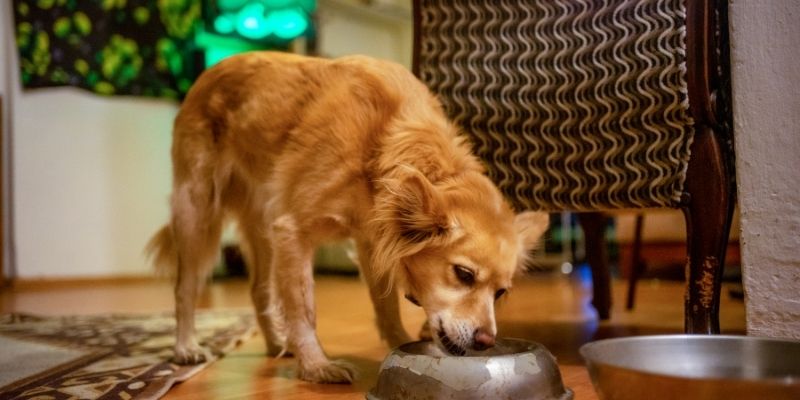
Hypoallergenic food is often just a temporary fix – the root of the problem lies deeper, in how the dog and owner live.
The Silence of Symptoms Isn’t Healing
Phenomenologically, the absence of symptoms is not the same as healing. It can be life giving up — and we call that progress. If a dog can function only on sterile, inert food, that isn’t health. That’s capitulation — like all our compromises. Food without taste. Relationships without touch. Days without meaning.
When a dog can again eat real, living food without reacting — then we know the body has renewed itself. Then life can enter again. And often, it means our own life has started moving again, too.
A Dog’s Loyalty — and His Quiet Tragedy
Dogs love blindly. That is their magnificent tragedy. In systemic work we know: what remains unresolved is passed on. In human–dog relationships, that transmission is direct — from soul to body. The dog becomes the bearer of a dynamic no one recognizes.
A canine allergy to chicken may be an allergy to the fact that we keep smiling when we don’t want to. A “pollen allergy” may be resistance to life blooming outside while the flowers of our sexuality wither within.
When Love Turns Toxic
When love is out of order, it becomes poison. And the dog carries it — silently. So when you ask me, “What should I feed a dog with allergies?” I no longer have a single recipe to give you. I’ve shared thousands. I can only ask: “What are you feeding your life?”
Returning to Life — Your Dog as Your Barometer
A dog eats what we serve — but digests what we radiate. If we live dead relationships, suppress feelings, feed illusions and polite smiles — if we’re surviving instead of living — a dog can’t understand it, but he feels it. And he reacts. Not as disease, but as message.
Dogs don’t lie. Their skin doesn’t lie. Their itch doesn’t lie. We do. If we stop lying, the dog can finally breathe. That is healing — not symptomatic, but deep, present, alive. That is love — not the commercial kind, but the real kind, the kind that sees and looks toward the future.
A Gentle Self-Check: What Is Your Dog Really Telling You?
Answer honestly — not as self-blame, but as an invitation to awareness:
-
Does your dog have chronic allergies, itching, rashes, or digestive issues?
-
Have you rotated through foods, shampoos, and supplements without a lasting solution?
-
When you look at your dog, do you see only symptoms — or also sadness, exhaustion, restlessness?
-
Are you living the life you truly want — or just functioning out of duty, habit, obligation?
-
Are you in relationships you’ve stayed in out of fear rather than love?
-
Do you sometimes feed your dog out of obligation instead of love and presence?
-
Have you felt “tired of everything” lately without knowing why?
-
Does your dog come to you when you’re upset — and do you push him away?
-
Did your dog’s symptoms worsen after a major family change (divorce, move, death, illness)?
-
If your dog could speak, would he say: “I can’t carry this for you anymore”?
Your Dog as Your Reflection
If you answered “yes” to more than a few of these, your dog may not need a brand-new food. He may be mirroring your life. And if you return to your own life, he may no longer have to run from his body.
At Integrative and Holistic Grooming Education, we look beyond the itch. We help you decode the language of the soul reflected in the skin. Real health begins with real truth. Explore our philosophy: Linktree Sasha Riess
by Sasha Riess | 25.03.26. | Emotions
When we banned chains, we thought we had done something great, something civilized and humane. We freed dogs from chains, but not from ourselves.
Sophisticated slavery in the name of love
We passed laws, declared victory over cruelty, and celebrated ourselves as protectors of life. But the truth is far deeper and much darker. Because while we were breaking iron, we forgot that chains are not made only of metal.
Today, dogs are no longer tied to trees. They are tied to us. To our fears, insecurities, ambitions, emptiness, and projections. Their new collars are not made of steel, but of energy. Silent and invisible, yet incomparably stronger. And while in the name of love and freedom we removed visible chains, in the name of those same words we created new ones, subtle, unbreakable, and far more cruel.
Today we no longer use chains. We design them. We make them from fine leather, order handmade buckles, decorate them with crystals, gold plating, initials, and logos. We call them leashes, as if a new word has the power to erase the old truth. We sell them in luxury boxes, photograph them on marble floors, advertise them as status symbols and proof of a special bond between human and dog.
And while we praise how far we have progressed in our relationship with animals, no one dares to say what is obvious. This is not freedom. This is sophisticated slavery. A new level of hypocrisy in which humans have surpassed themselves. Never before have we managed to turn restraints into fashion accessories and call that act love.
The Energetic Chain: When a Dog Becomes Our Emotional Prosthesis
We call them “our dogs.” We tie them to beds, couches, terraces, yards, to every moment of our sadness, boredom, and insecurity. They are no longer guardians, hunters, or companions. They have become emotional buffers, carriers of our inner emptiness.
Every time we are afraid, they feel it. Every time we argue, they carry it. Every time we want love we cannot give ourselves, we take it from them.
And so, while they smile in our photographs and wear scarves at Christmas, dogs die more slowly than ever before. Because their collapse is not physical. It is energetic. A collapse of connection with their true place in the order of life. In the natural order of the world, the dog is a bridge between humans and wilderness. He stands between instinct and consciousness, between darkness and light, between life that fights and life that loves. But we have turned that bridge into a wall. Instead of respecting it, we possess it. Instead of listening, we use it.
When the Dog Becomes a Mirror: Invisible Chains of Human Imbalance
In the order of harmony, every being has its place. When someone leaves their place, the system reacts, distorts, seeks balance. The dog has always been a guardian of balance between humans and nature. Today, as we are cut off from the earth, dogs become our sensors, transmitters of our imbalance.
The modern dog is no longer free even within his own nature. He is not allowed to bark because it bothers neighbors. He is not allowed to run because he gets dirty. He is not allowed to sniff because it is “unhygienic.” His drive to hunt, to move freely, to touch water and mud, everything that makes him a dog, we label as a “behavioral problem.”
We have created dogs that are obedient, sterilized, trained, emotionally saturated, yet spiritually dead and physically zombie-like. This is the price of our comfort. And while we believe we have freed them, they have become prisoners of our “humane” concepts. The chain of normality is the strongest of all. Because there is no scream, no audible pain, no blood. Only silent sadness in the eyes of a dog who knows he has lost the right to be what he is.
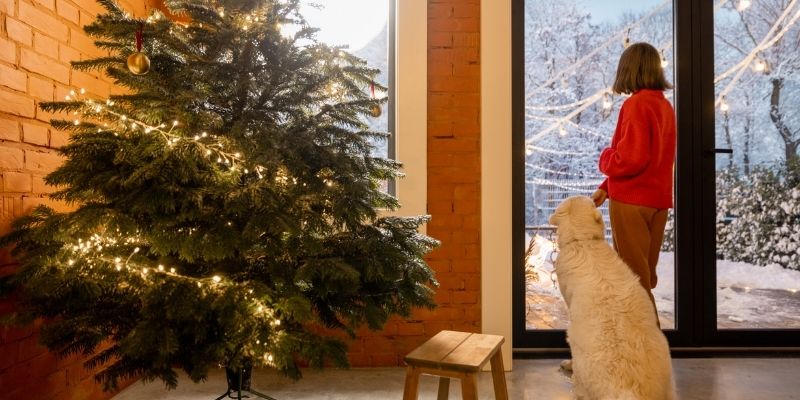
„He has everything, except himself.“ Our homes have become camps of love.
Invisible Chains of Love Without Boundaries
Every love without boundaries becomes violence. We do not see it because we believe we love. But love without awareness of place, without respect for distance, without honoring another nature, is not love but obsession.
A dog does not ask to be loved like a child, but to be respected as a being. When a dog lies next to us, he does not ask to become human. He asks to remind us that we are animals too. That we breathe, feel, and move through the field of life just like he does. But we rejected that lesson, and now dogs look at us with the same gaze wolves once did, a gaze of understanding and sorrow.
Our homes have become camps of love. Everything looks gentle, clean, and orderly, yet in that sterility something is dying. Every dog who has lost contact with his body, with the earth, with a sense of meaning, becomes a victim of our system of “care.” We call this a humane society, but that society does not know true freedom. Because true freedom is not the absence of a chain, but the presence of awareness. And we have not become aware of our place in relationship with dogs. We have only changed the material.
The Camp of Kindness: Are Our Homes Prisons for Dogs
In the order of harmony, the dog has a deep purpose. He does not exist to serve, but to testify to how far we have strayed from ourselves. When a dog loses peace, it is a sign that we have lost touch with the source. When a dog becomes ill, it is a message that the system between human and nature is broken.
The dog does not carry our mistakes as punishment, but out of loyalty. He will carry our imbalances until we admit that they are ours. And when we do, when we bow to his pain as a mirror of our own unconsciousness, that invisible chain breaks.
False Freedom, Real Suffering
In the desire to give them freedom, we stripped dogs of meaning. In the desire to protect them, we took away their task. In the desire to love them, we took away their dignity.
The law that banned chains is not wrong. It is incomplete. Laws do not change awareness, only behavior. And behavior without awareness becomes a new form of unfreedom. Real change is not when a dog is no longer tied, but when a human stops tying him into their own processes and problems. When we stop seeking confirmation of our value in his gaze. When we stop using his loyalty as medicine for our insecurity.
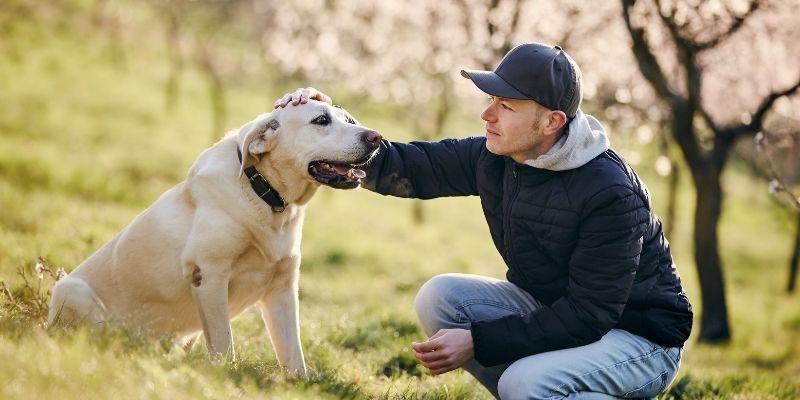
True freedom is not the absence of a chain, but the presence of awareness.
The Dog as a Prophet
Perhaps one day, if we are quiet enough, we will hear what the dog is trying to tell us. That we do not need to be pitied, but awakened. That the real chain is not between dog and tree, but between human and hypocrisy.
And perhaps then we will understand that the dog does not come into our life to be “ours,” but to teach us how to be part of the world he also belongs to. Not owners of life, but participants in it. Imagine a dog sitting in a yard without a fence. The wind carries the scent of earth, leaves rustle, and he simply breathes. In his eyes there is no fear, no dependency, no expectation. Only peace. That is the image of freedom.
Now imagine another dog, clean, groomed, loved, in an air-conditioned apartment, always in company, but never in silence. His body looks relaxed, but his soul and every muscle are tense. He looks through the window and does not understand where he went wrong.
We say, “He has everything.” But if he could speak, he would say, “I have everything, except myself.”
We freed dogs from chains, but not from ourselves. And as long as we refuse to see what we do not want to admit, that our dogs have become extensions of our inner prisons, freedom will remain only a word. Only when we stop binding them invisibly and finally return to them the place that belongs to them in the order of life will the dog once again be what he has always been: the guardian of the sacred bridge between us and nature. The same nature we admire from afar, while with every action we push it toward the abyss.
And only then might we realize that as long as we keep dogs imprisoned in our fears and illusions, we ourselves remain the greatest prisoners, walking tirelessly toward our own end, convinced we are civilized, while in truth we accelerate our own destruction.
At Integrative and Holistic Grooming Education, we believe that true connection requires the courage to let go of control. Respecting a dog’s nature is the ultimate expression of love. Explore our philosophy: Linktree Sasha Riess
by Sasha Riess | 24.03.26. | Behaviour
Negative influence on a dog is rarely the result of intentional cruelty. Much more often, it comes from the unconscious transfer of emotions, trauma, and inner conflicts from the owner. Dogs do not understand words the way humans do, but they deeply sense the emotional state of the person they live with. When a dog becomes a place where unresolved problems are discharged, the consequences inevitably appear in the dog’s behavior.
When a Dog Becomes an Emotional Support
Many owners unconsciously project their trauma onto their dog. They talk to the dog as if it were a therapist, confide their problems, and expect understanding. The dog does not respond with words, but it absorbs the emotional burden that does not belong to it.
Such a relationship does not heal the human, but it deeply burdens the dog.
Transferring Trauma Across Generations
If a person grew up in an environment of violence, emotional coldness, or manipulation, those same patterns are often transferred to the dog, usually in a milder form. There may be no physical violence, but there is control, emotional pressure, passive aggression, or constant tension. This is a negative influence on the dog that often goes unnoticed until it becomes serious.
How a Dog Shows That It Is Carrying Your Burden
Dogs clearly signal when they are under emotional pressure:
-
Constant tension or withdrawal
-
Excessive attachment to the owner
-
Fear without a clear cause
-
Digestive or skin problems
-
Unexplained aggression or apathy
These are not “bad dogs.” These are dogs carrying emotions that are not theirs

Dogs feel and absorb the inner conflicts of their owners.
Love Is Not Projection
If we only know how to love through control, fear, or pain, the dog becomes a victim of our patterns. Loving a dog does not mean transferring our wounds onto it. It means taking responsibility for our own inner state.
A dog is not therapy. A dog is a living being that reacts to the truth we live. Recognizing that you are negatively affecting your dog requires an honest look inward. A dog does not need a perfect owner, but a stable human being. When you begin to carry your own emotions, the dog will be the first to show relief.
At Integrative and Holistic Grooming Education, we believe that the mirror of a dog’s soul reflects the clarity of its owner’s heart. True well-being starts with emotional responsibility. Explore our philosophy: Linktree Sasha Riess
by Sasha Riess | 11.02.26. | Behaviour
Chronic Stress in Dogs Is Not a Momentary Fear
Chronic stress in dogs is not just a momentary fear or short term discomfort. It is a condition that quietly builds through our everyday actions. What surprises owners the most is that stress rarely comes from major events. It most often arises from small, repeated inconsistencies in human behavior around the dog.
When one family member allows something and another forbids the same behavior, the dog enters a state of constant confusion. Over time, this confusion turns into chronic stress in dogs, which can lead to serious physical and emotional disorders.
How Chronic Stress Develops in Dogs
Chronic stress most often develops when a dog cannot predict the consequences of its behavior. If the dog is sometimes punished and sometimes rewarded for the same action, it enters a state of insecurity.
A dog does not understand the difference between “mom allows it” and “dad does not allow it”. The dog only experiences that the same stimulus leads to completely different reactions. For the dog, this becomes an alarm that never turns off.
Inconsistent rules, shouting, unfair punishment, and sudden changes in owner behavior directly activate stress hormones. When this repeats day after day, the dog loses its sense of stability, and the body shifts into a state of constant tension. This is the physiological foundation of chronic stress in dogs.
Confusion as a Trigger for Serious Problems
A dog can appear obedient, calm, and affectionate, while still being deeply confused. Confusion is one of the most dangerous forms of emotional pressure in dogs because dogs do not have the ability to rationalize situations the way humans do.
If a dog is allowed on the bed one day and forbidden the next, if one family member feeds the dog from the table while another punishes it for the same behavior, the dog’s nervous system enters a chaotic survival mode.
This state can lead to:
-
loss of energy and lethargy
-
withdrawal and depressive behavior
-
sudden aggressive outbursts
-
psychosomatic illnesses
-
weakened immunity and digestive problems
For a dog, confusion is not just discomfort. It is a state in which the body remains in constant physiological defense, as if danger is present at all times.
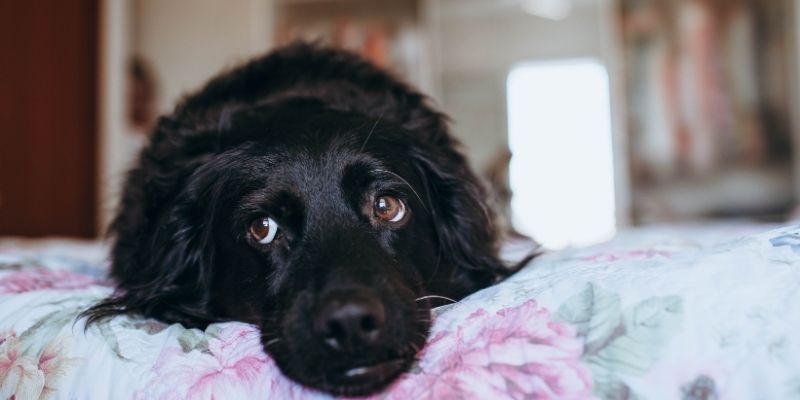
Chronic stress in dogs leads to both emotional and physical health issues.
How Family Disharmony Affects a Dog
Dogs live in the present moment. They do not process the past the way humans do, nor do they imagine the future. Their perception of the world exists entirely in the here and now. Even small inconsistencies within the family create inner chaos for the dog:
-
one owner shouts, another stays calm
-
one allows the dog on the bed, another forbids it
-
one punishes a mistake, another rewards the same mistake with attention
-
children allow behaviors that parents forbid
In such conditions, the dog no longer knows what is right and what is wrong. And when a dog does not know, it prepares itself for the worst-case scenario. This leads to constant activation of stress hormones such as cortisol and adrenaline. As a result, the dog may begin to behave unpredictably, becoming withdrawn, tense, fearful, or aggressive. Even sudden reactions in public spaces, such as snapping or rough play, are often rooted in accumulated confusion and chronic stress in dogs.
What Owners Can Do Immediately
To reduce chronic stress in dogs, the family must function as one clear voice. Not as several individuals with different rules, but as a unified structure the dog can understand.
The most important steps are:
-
Agree on clear rules within the family
-
Follow those rules consistently
-
Avoid shouting and confusing punishment
-
Provide routine and predictability
-
Build the relationship through calmness and consistency
A dog does not seek perfect owners. It seeks consistency. Consistency creates safety, stability, and a healthy life without unnecessary stress.
At Integrative and Holistic Grooming Education, we believe that every physical symptom is a message. Understanding these signals and addressing them through a holistic lens is at the heart of everything we teach to ensure the well-being of every dog in our care. Learn more about our Holistic Approach.