by Sasha Riess | 03.02.26. | Wellbeing
Fifth Toe in Dogs: What It Is For and When It Should Be Removed
The fifth toe in dogs is often a topic of debate. Misleading advice. Routine procedures done without real understanding. Many owners are unsure what it is for. Whether it is an extra part. And whether it should be removed.
The truth is simple. It has a function. But only in certain cases can it become a problem.
What the fifth toe in dogs is?
It is most commonly found on the front legs. It is anatomically connected to bones and tendons. Unlike the hind legs where it appears less often and is usually weakly attached, the fifth toe on the front legs has a clear role in movement and stability.
What the fifth toe in dogs is used for?
On the front legs it:
-
Helps with balance.
-
Participates in stabilizing the joint.
-
Is used when holding and gripping objects such as bones.
-
Contributes to more precise support during movement.
If you have ever seen a dog holding a bone or a toy, you can notice that the fifth toe in dogs actively participates in that movement.
When it can become a problem?
The problem does not come from the toe itself. It comes from poor anatomical attachment, excessive mobility, or incorrect position. In some dogs, especially on the hind legs, the fifth toe can:
In these situations removal of the toe can be justified.
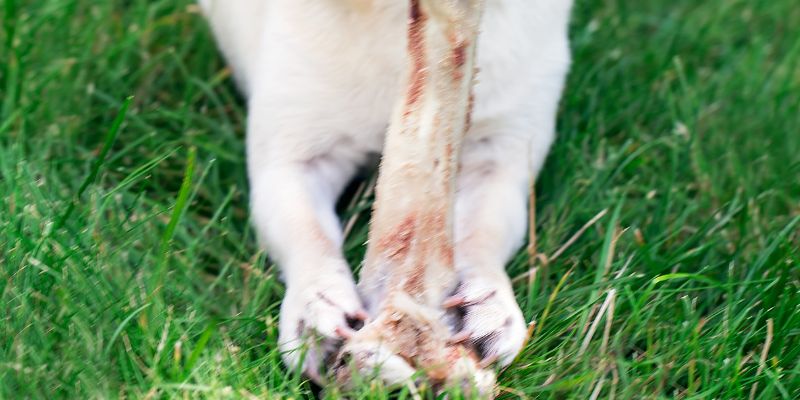
Functional role of the fifth toe in dogs: grip, balance, and stability.
Is the fifth toe a genetic flaw?
In most breeds the presence of an extra or incorrectly positioned toe is considered a genetic fault. Especially in the context of dog shows. Such dogs often cannot pass judging. Except in breeds where the toe is allowed or required by the standard.
It is important to distinguish between a functional fifth toe which should not be touched and a problematic fifth toe in dogs where removal can be considered.
When the fifth toe should not be removed?
If the toe does not interfere with movement, does not get injured, is stably attached, and has a clear function—it should not be removed. Routine removal without a real problem is not justified. It can disturb the natural biomechanics of the dog.
Function before appearance
The fifth toe in dogs is not an extra part that should be automatically removed. It exists for a reason. Removal makes sense only when there is a real functional problem. Not for aesthetic or routine reasons.
As in many other aspects of our relationship with dogs: We should not fix what already works.
by Sasha Riess | 29.01.26. | Emotions
For years she did everything right, but her dog’s bloody diarrhea stopped only when she stopped lying to herself.
In the previous column, the story of Marija and her dog was shared—a case of chronic diarrhea lasting for years that stopped only when she stopped living against herself. That story left an open question: was it coincidence, or a repeating pattern that appears when unspoken truth within a system is suppressed for too long?
This column continues where the previous one ended. It brings the story of Snežana and her dog Bobi, and of a decision that had been postponed for years.
When Protocols Are Not Enough for a Dog’s Health
Snežana was not a woman who ignored problems. On the contrary, she was one of those who try everything, follow guidelines, and seek knowledge. When Bobi developed bloody diarrhea, she reacted immediately with veterinarians, analyses, and therapies.
When medical solutions proved temporary, she turned to a different approach. She followed rituals, adjusted nutrition, and changed ingredients used in cooking. Alongside this, she regularly attended online workshops of the Harmony Order.
Yet, despite everything being technically done correctly, Bobi’s symptoms did not disappear. There were short periods of improvement, but the blood always returned. It was as if the cause was not in what the dog was eating, but in what he was living inside.
The Harmony Order and the Unspoken Truth in the Marriage
From the outside, Snežana’s marriage looked stable—life abroad and professional success. There was no visible chaos, only a relationship of long silence. She believed enduring was the same as love, refusing to admit she could no longer live that way.
In such conditions, a woman often loses contact with herself. But the body does not understand the concept of cost; it responds to reality. The dog, sharing the same emotional climate, responds even faster. A dog’s health and the owner’s truth are inseparably connected.
Through the Harmony Order workshops, Snežana realized that a dog cannot be stable in a space where the central figure lives in constant inner conflict.
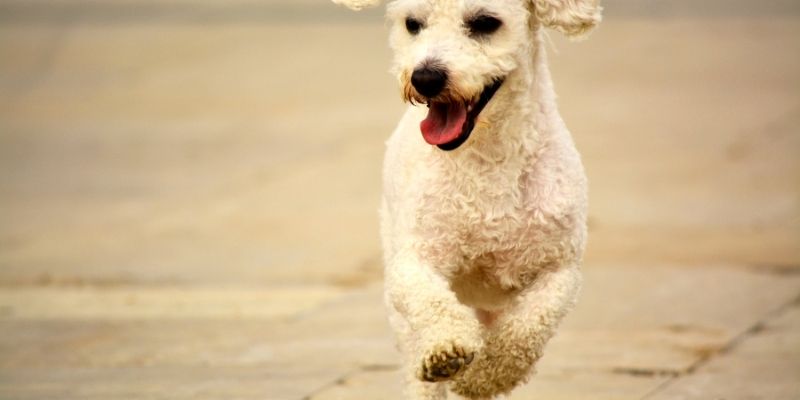
A dog’s health and the owner’s truth are inseparably connected.
A Decision That Changed the Nervous System of the Whole System
At the final workshop, Snežana shared her realization. She understood she could no longer lie to herself; if she wanted to help her dog, she first had to help herself.
The decision to divorce was not impulsive; it was the end of long-term denial. When she finally made the decision, everything changed. After the divorce, Bobi’s bloody diarrhea stopped almost overnight. The food remained the same. No new protocol was introduced. Only the life dynamic changed. The chronic tension disappeared, and as the woman’s nervous system calmed, the dog’s nervous system followed.
What Does the Health of Our Pets Tell Us?
This story does not claim that every health problem is caused by human relationships. It speaks of something more subtle: that sometimes symptoms do not withdraw until what continually creates them is changed.
In the Harmony Order, everyone has their place. When a woman stands in her rightful place, the dog no longer needs to carry what is not his.
This is not a story about divorce. This is a story about honesty. It is about the moment self-deception ends. The dog recognizes it first—not through words, but through the body.
It was never about the chips. It was always about the truth.
by Sasha Riess | 26.01.26. | Wellbeing
Ear and tail docking in dogs is a topic often discussed superficially, without a true understanding of context and consequences. That is why it is important to say clearly from the start: docking a dog’s ears or tail is not a good practice when done without a medical reason.
A dog is not an object meant to be shaped to human aesthetic standards.
When Ear and Tail Docking Has Medical Justification
There are specific situations where surgical intervention is necessary for the animal’s well-being. If a dog has suffered a severe injury, a serious infection, a tumor, or permanent tissue damage, then removing part of the ear or tail is performed strictly as therapy.
In such cases, the procedure follows these principles:
-
Clear medical reason: The intervention is a response to an existing health issue.
-
Medical indication: It is recommended by a veterinary professional.
-
Health-focused goal: The priority is the dog’s recovery and quality of life, not its appearance.
In these instances, docking is not an aesthetic decision, but a medical necessity.
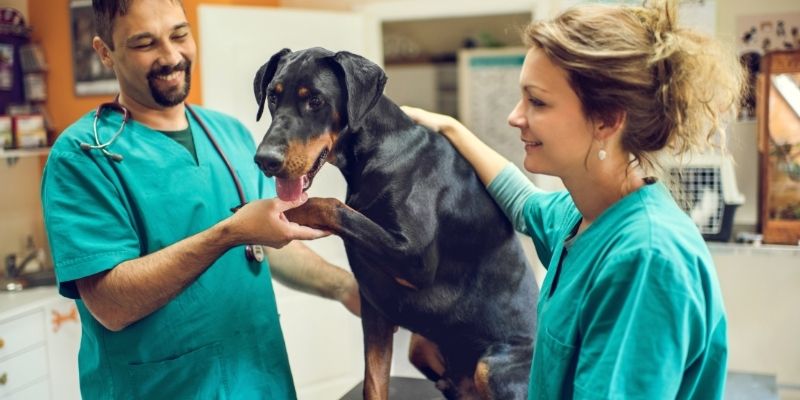
Intervention only makes sense when it resolves a medical health problem.
When Ear and Tail Docking Has No Justification
The problem arises when docking is done preventively or „in advance,“ simply because it is believed that the dog will „look better“ or should match a specific breed standard.
This practice has nothing to do with caring for the dog. Instead, it stems from a human desire to control and shape a living being according to arbitrary visual criteria.
Docking for aesthetic reasons:
-
Does not improve the dog’s quality of life.
-
Does not prevent future health problems.
-
Leaves permanent physical and psychological consequences.
A Dog Is Not Decoration, But a Responsibility
As a society, we have already made enough mistakes in how we treat animals. Every intervention on a dog’s body must have a clear medical justification rather than a visual motive.
A dog is not here to be „prettier.“ A dog is here to be healthy, stable, and safe. As owners and lovers of animals, our responsibility is to protect their physical integrity and respect them as sentient beings.