by Sasha Riess | 16.08.26. | Wellbeing
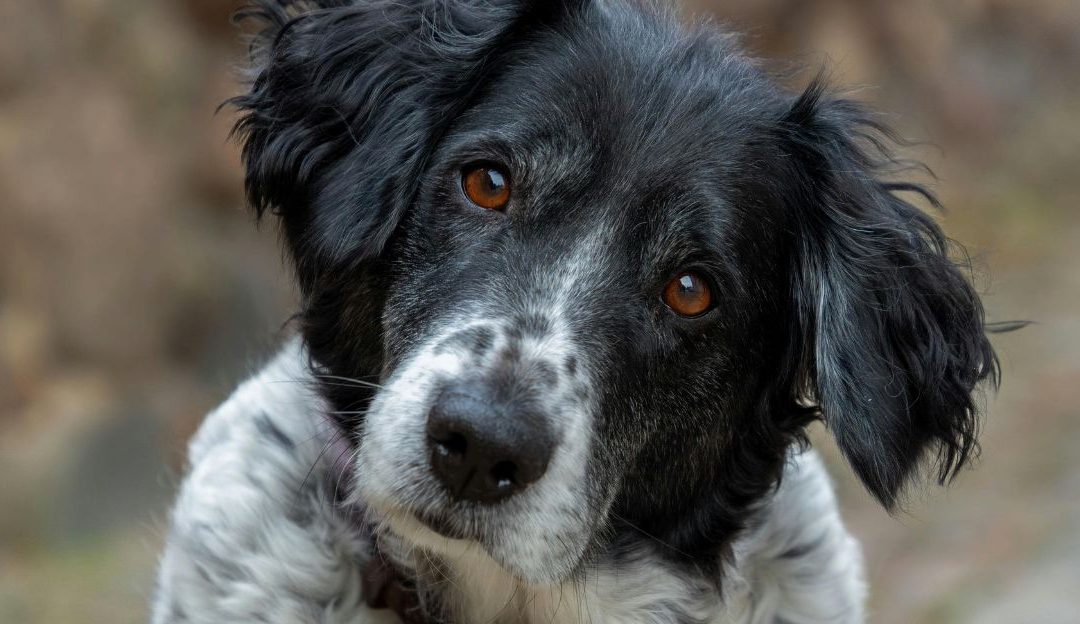
As modern scientific understanding of how organisms interact with their environment continues to evolve, perhaps cynology—the study of dogs—must reconsider one of its oldest assumptions. The concept of breed has proven highly effective in describing how a dog looks. However, it has been far less successful in explaining how a dog behaves. By turning breeds into psychological categories, we have created generations of owners who see labels instead of living systems. When it comes to canine behavior and biology, the time has come to stop explaining behavior through pedigrees and start understanding it through the science of life itself.
Before we continue our exploration of how the senses shape a dog’s relationship with the world, we must first establish an important foundation. Originally, the plan aimed to begin with vision and then move through hearing, smell, taste, touch, and emotions. However, before taking that journey, we must pause and examine a question that sits at the very center of modern canine behavior science: What is behavior?
What Is Behavior?
At first glance, the answer appears simple. Yet the deeper we explore the subject, the clearer it becomes that misunderstanding behavior lies at the heart of many misconceptions in the dog world. For decades, experts attempted to explain behavior through breed, genetics, training, or temperament while often overlooking a much more important question: Is behavior a trait of the dog, or does it simply represent the way the nervous system attempts to maintain balance within its environment? This question sits at the center of the relationship connecting breed and dog behavior to biology.
When most people talk about canine behavior, they usually discuss expectations. A dog that comes when called displays “good behavior.” A dog that barks has a “behavior problem.” A dog that sits quietly acts “obedient.” A dog that pulls on the leash acts “disobedient.” Consequently, over time, we have developed entire systems of labels without asking what actually happens inside the organism we observe.
Biology offers a completely different perspective. From a scientific standpoint, behavior is not a personality trait. It does not represent a moral category, nor does it prove that a dog is good or bad. Behavior represents a collection of responses through which an organism reacts to internal and external changes to increase its chances of survival and maintain homeostasis. In other words, behavior functions as a tool. It is the exact way the nervous system attempts to solve a problem.
Homeostasis: The Driving Force Behind Behavior
In the previous article, we discussed homeostasis as one of the fundamental principles of life. Homeostasis represents the organism’s ability to maintain internal stability despite constant changes in the outside world. Body temperature, hormones, blood pressure, breathing, and energy regulation continuously adapt to keep the organism balanced. However, homeostasis does not act merely as a physiological process. It serves as one of the primary goals of the nervous system.
The organism is not simply trying to survive; it tries to survive efficiently, with as little unnecessary energy expenditure and uncertainty as possible. This is why we cannot separate behavior from homeostasis. Behavior functions as one of the key mechanisms through which the organism attempts to maintain equilibrium. Once we understand that, we begin to recognize one of the greatest misconceptions in modern dog culture: the belief that breed and dog behavior share an inseparable, rigid bond.
Breed Differences and Biological Reality
Of course, breeds differ from one another. It would be absurd to claim otherwise. Selective breeding has created enormous differences in body size, coat type, structure, movement, and certain functional predispositions. Consequently, some breeds show stronger tendencies toward tracking. Others excel at retrieving. Some display greater interest in herding livestock. However, several hundred years of selective breeding represent only a tiny moment compared to the thousands of years during which canine biology evolved.
No breed has altered the fundamental principles governing the canine nervous system. No breed has removed the dog’s need for safety. No breed has changed the need for predictability. Furthermore, no breed has changed the organism’s drive to maintain homeostasis. A dog is still a dog. Whether we observe a Chihuahua, a Great Dane, a Maltese, or a Belgian Shepherd, the nervous system attempts to solve the exact same challenge: understanding the world and maintaining balance within it. Therefore, assuming that breed and dog behavior are identical misses the underlying biological reality.
Neuroplasticity: How Environment Changes Everything
Perhaps one of the most remarkable characteristics shaped through thousands of years of coexistence with humans is neuroplasticity. Neuroplasticity represents the ability of the nervous system to adapt through experience. The greater the neuroplasticity, the greater the capacity to learn, adapt, and develop new behavioral patterns. Modern neuroscience demonstrates that mammalian brains continuously change in response to their environment.
Over thousands of years living alongside humans, dogs did not evolve simply to live near us. They evolved to adapt to us. Consequently, the same dog can appear completely different under different life circumstances. The same genetics, the same breed, and the same organism can display completely different behavior.
The World of Human Beliefs
Perhaps the most fascinating part of this discussion lies in the fact that dogs do not live primarily in an objective world. They live in a world shaped by humans. More specifically, they live in a world shaped by human beliefs. One owner believes dogs belong on the bed. Another believes dogs should never enter the house. One believes social interaction with other dogs remains essential. Another avoids it completely. One uses food as a primary communication tool. Another rejects food rewards entirely.
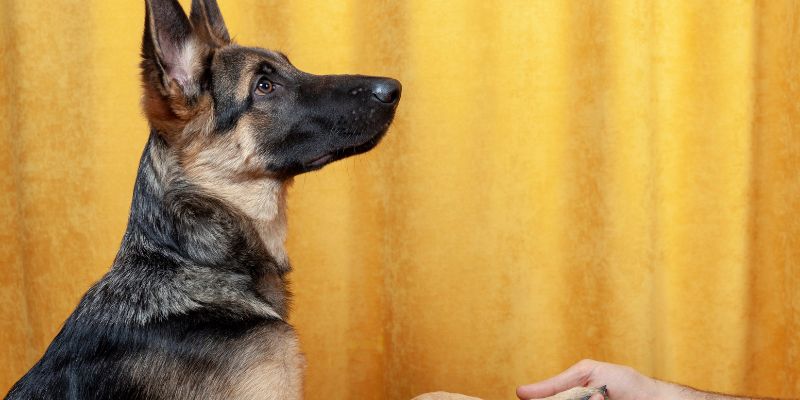
THE DOG AS A REFLECTION OF ITS WORLD.
The dog adapts to whichever reality it inhabits. Its environment is shaped not only by physical space but also by the ideas, routines, expectations, and assumptions of the people around it. This is why we cannot fully understand breed and dog behavior without understanding the humans who share the dog’s life. Studying behavior without examining the environment is like trying to understand a fish while ignoring the water in which it swims.
The Dog as a Reflection of Its World
Perhaps this explains why we so often misunderstand dogs. We search for answers in breed when we should be looking at relationships. We search in genetics when we should be looking at experience. Consequently, we search inside the dog when we should be examining the world we have created around it.
Behavior is not primarily a story about what breed a dog belongs to. It is a story about how the dog’s nervous system experiences the world in which it lives. Ultimately, sometimes the greatest changes in behavior occur not when we change the dog, but when we change ourselves.
Thank you for reading.
To discover more about how emotional alignment, balanced lifestyle, and authentic energy restore internal balance, read our canine wellbeing guidelines.
See you next time.
At Sasha Riess, we look past commercial labels to honor the unique biological blueprint of your companion. True health requires addressing the subtle internal patterns that create lasting vitality and pureloveandharmony. Discover the customized path to your dog’s longevity: Linktree Sasha Riess
by Sasha Riess | 12.06.26. | Emotions
Unlived wounds that we keep silent about become quiet alarms in our homes, and this is why dogs are the first to recognize them. What we often mistake for calmness is, in reality, trauma that is afraid of itself. If we do nothing, we will leave our children to face the consequences of our silence and our pretense that everything was fine.
The Illusion of Stability and the Denial of Pain
In my previous column, I wrote about how, in our attempt to protect ourselves from overwhelming pain, we left dogs to be the first to show the consequences of our silence. A comment recently appeared: “There was no panic or chaos. The dog had its routine.”
This sentence is a perfect example of how unlived wounds are created through denial. When collective trauma strikes so deeply, the easiest way to survive is to say that nothing happened. But this denial is not proof of stability; it is a symptom of a wound. No one wants to admit the world stopped, because that would mean admitting what that stoppage did to our internal systems.
A Dangerous Inheritance for Children and Dogs
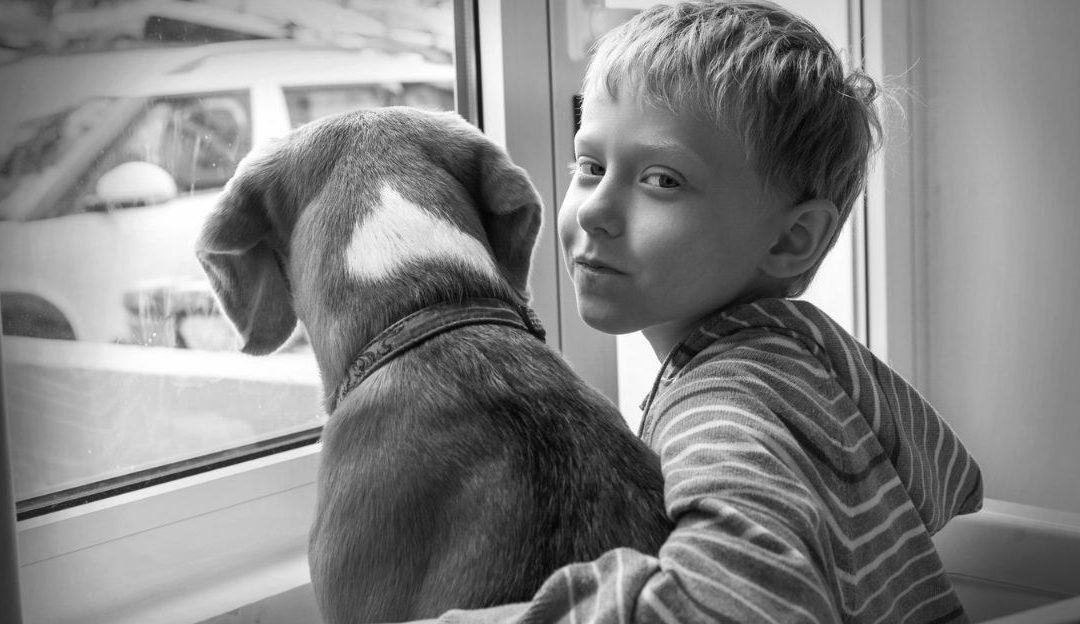
Adults find ways to survive even when life collapses, but children and dogs do not have the mechanisms to store trauma in internal drawers. They will live out what we do not dare to acknowledge.
The sentence “The dog had a routine” is actually a sentence of fear. It speaks about a person who needed that routine as an anchor to endure an unbearable period. If we continue to close our eyes to who we became during the pandemic, we only close another circle of silence. Silence creates generations that carry the weight of their parents without knowing why.
Emotional Imprints: When Dogs Speak for Us
Dogs are already showing us the results of these unlived wounds. We see it in:
-
Severe separation anxiety
-
Increased reactivity
-
Panic when humans return to work
-
Inability to be separated for even five minutes
These are not „problem dogs.“ These are emotional imprints of human pain that was never fully processed. They speak through their behavior because we chose to remain silent.
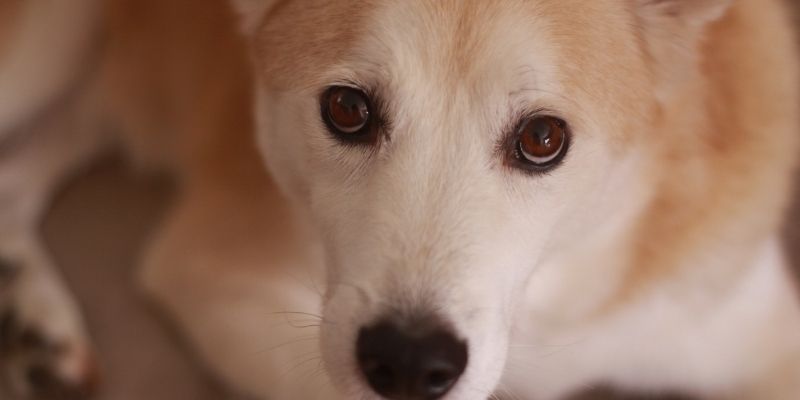
The sentence “The dog had a routine” is often not proof of stability, but the deepest scream of fear hidden behind an appearance of normalcy.
Acknowledgment as the Path to Healing
We must not leave our children and dogs an inheritance of silence. The price of silence always comes; it just needs time. It is time to stop defending ourselves with „there was no panic.“
Acknowledging that it was hard and painful is not weakness. Acknowledgment is the only way to ensure that we do not pass our unlived wounds to our children and our dogs as an invisible inheritance. Truth, not silence, is what leads to stability.
At Sasha Riess, we understand that a dog’s peace is tied to the human’s honesty. Facing our unlived wounds is the only way to protect our pets and children, leading us all toward pureloveandharmony. Discover more about our holistic approach: Linktree Sasha Riess

The Dog Groomer’s Dilemma: Journey Trough Burnout, Belonging and Becoming
by Sasha Riess | 10.06.26. | Behaviour
Trauma in dogs is often overlooked in modern training because we rely too heavily on treats. When a dog receives a reward for something it did “right,” we rarely notice the other side of that process: the moment when the reward is absent.
Although the reward system is considered “positive,” for a dog’s physiology it can be deeply counterproductive.
Trauma Hidden in Expectation
Many people ask: what kind of trauma can occur when I reward my dog for being good? The problem is not in the moment of the reward itself. The problem arises in the moment when the dog is not “good” and the reward is missing.
For the dog, there is no theory or training method in that moment. There is only the experience of absence. Learning through pure conditioning directly affects the dog’s physiology, but not in the way we think. Positive stimulation through food is only one side of the coin. The other side is the negative effect that appears in the dog’s body when it does something and the expected reward does not come.
Relationship Above Method: Preventing Trauma in Dogs
The question is not only how we teach a dog, but what kind of relationship we build while conditioning it. Are we building a partnership based on understanding, or a dependency that disturbs inner balance?
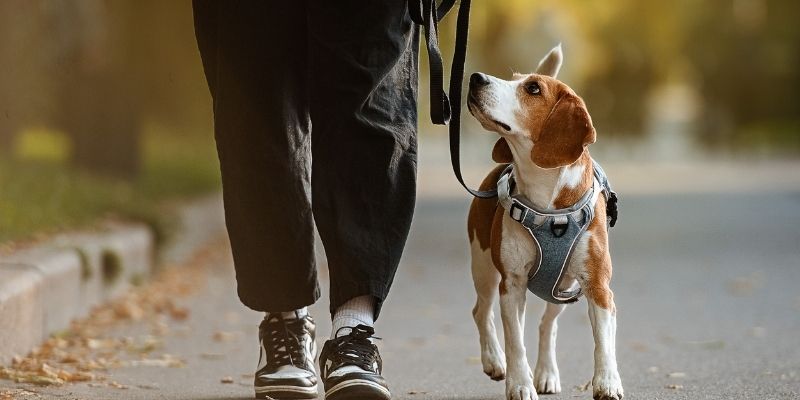
Build a relationship that doesn’t depend on a piece of food in your pocket.
True communication with a dog does not come through a piece of food in your hand. It comes through alignment that leaves no space for physiological stress that later develops into chronic conditions. Remember, every time you rely on conditioning, you risk creating trauma in dogs that is difficult to resolve later.
At Sasha Riess, we believe true communication bypasses the stress of bribery. Moving beyond food conditioning prevents underlying trauma in dogs, paving the way for authentic pureloveandharmony. Build a real partnership: Linktree Sasha Riess
by Sasha Riess | 01.06.26. | Behaviour
Unlike humans, dogs do not have the ability to live in the future. They do not make plans, set goals, or fear what tomorrow may bring. A dog lives in the moment, fully present here and now, exactly as they are. This is a lesson in presence we must learn.
A Dog Does Not Imagine the World, It Feels It
While we analyze the past or worry about the future, the dog is there, in its body. It does not search for answers and is not confused, even though it asks no questions. Because a dog lives in the moment, it is content; in that instance, nothing is missing. This calm presence is what makes dogs the most stable members of our environment.
The Power of the Present Over the Past
Many owners worry about their dog’s past, especially with adopted pets. However, canine psychology tells us that what is new can always overcome what once was. Because a dog lives in the moment, they have an incredible physiological capacity to adapt. In every moment, they seek:
Your strength in the present moment directly shapes how your dog feels.
Why Your Stability Is Essential for Your Dog
A dog senses destiny through you. Since a dog lives in the moment, it expects calmness and serenity from its leader. If you are distracted, the dog suffers because it cannot find the peace it expects. To be a leader means staying „here and now,“ allowing your dog to feel safe even when life is challenging.
At Sasha Riess, we recognize that a dog lives in the moment to teach us about our own presence. Our goal is to provide the stability they need to maintain pureloveandharmony. Focus on the now:Linktree Sasha Riess
by Sasha Riess | 21.05.26. | Behaviour
The human-dog relationship is often a mirror of our personal attitudes, fears, and cultural patterns. Differences in opinions, tastes, and values are not a problem in themselves; they become dangerous only when dogs suffer because of them.
Why People Disagree Even About Dogs
Differences in what we like are not random. When we choose a dog, we often do not choose a living being—we choose an image.
-
One person dislikes black dogs.
-
Another focuses on the fur.
-
A third sees only beauty.
There is no right or wrong here, only difference. People look at life through different filters, and different opinions are not an attack. The problem begins when these differences justify poor treatment.
A Paradigm That Brings Results
There is a way of thinking and working with dogs that, when applied consistently, brings real results to the human-dog relationship:
If a method produces these results, why should it be dismissed just because it challenges the dominant belief that a dog is „problematic“?
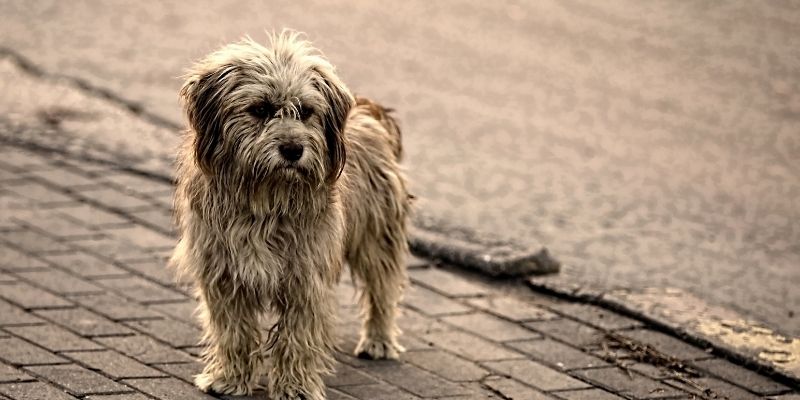
The dog is the animal that suffers most because of humans.
Who Truly Suffers in the Human-Dog Relationship?
There is no animal beside which humans suffer more than a dog, but there is also no animal that suffers more because of humans. The dog is the only animal completely bound to human decisions, fears, and projections.
Because of this, the responsibility always lies with us.
Changing Our Perspective
Differences in opinion are not the issue. The issue is when a dog pays the price for our aesthetic criteria or our fears. If we change how we perceive them, we change their fate.
At Sasha Riess, we believe that the human-dog relationship should be based on understanding the dog’s true nature, not our own projections. Only then can we achieve pureloveandharmony. Learn how to look past the „image“ and see the soul: Linktree Sasha Riess
The Dog Groomer’s Letter of the Month Club with Sasha Riess