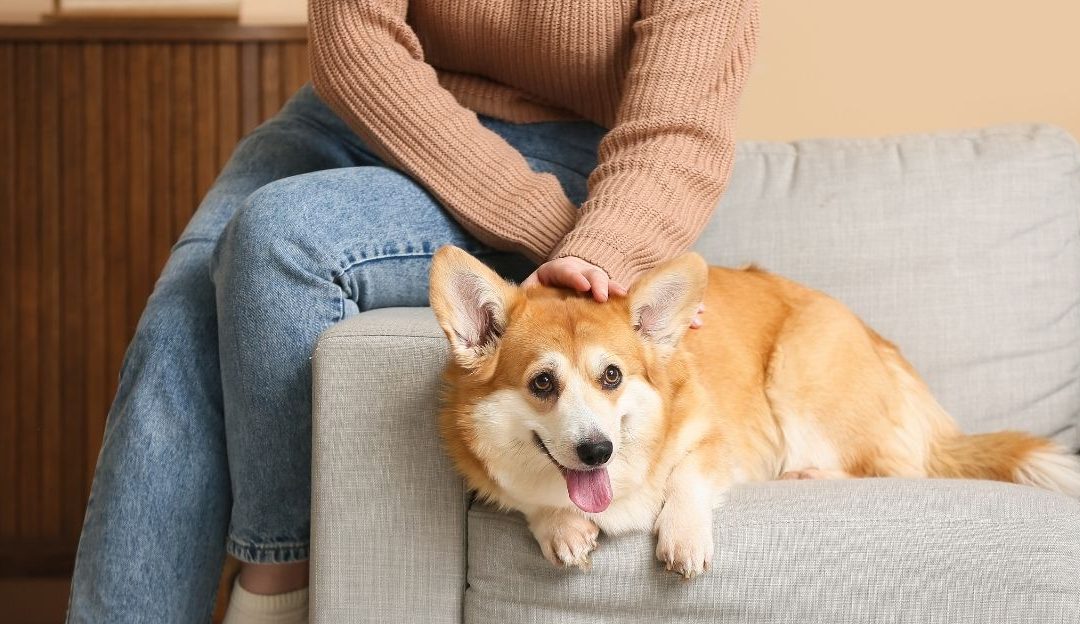
In the world of a holistic approach, we often forget that a dog’s physiology is based on adaptation. A dog does not adapt to an abstract system, but exclusively to the system in which it lives, and that system is you and your home.
If you live a vegan or vegetarian lifestyle, yet force yourself to go to a butcher just for your dog, you are making a serious mistake.
Adaptation Without Burden: The Dog as Part of Your System
Historically, dogs have always eaten the leftovers of human food. They are companions to our way of life.
If you do not consume meat for moral reasons, yet provide it to your dog by going against your own principles, you are unconsciously introducing hypocrisy into the relationship.
The question you need to ask yourself is: why am I doing something for my dog that I would not do for myself?
Hypocrisy as a Hidden Source of Stress
When an owner “sacrifices” their values in order to provide meat, they create an internal imbalance. The dog feels it. That is the first and fundamental reason why many dogs today live under stress, despite all the love they receive.
Proper dog nutrition in a vegan or vegetarian home can be completely healthy and balanced, provided that the system is aligned. A dog that lives in harmony with your true beliefs lives without the burden of inner conflict that you, as the leader, would otherwise unconsciously transfer to it.
To discover more about how emotional alignment, balanced lifestyle, and authentic energy restore internal balance, read our canine wellbeing guidelines.
At Sasha Riess, we look past commercial labels to honor the unique biological blueprint of your companion. True health requires addressing the subtle internal patterns that create lasting vitality and pureloveandharmony. Discover the customized path to your dog’s longevity: Linktree Sasha Riess
👉 Follow ourFacebook page and never miss our latest articles, news, and updates.
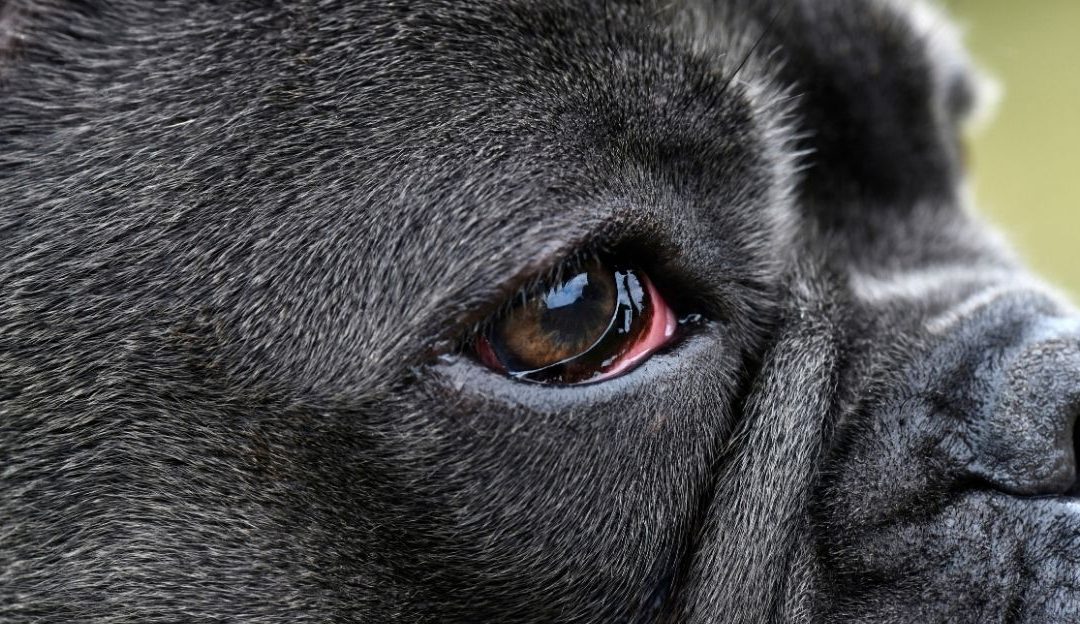
Watery eyes in dogs are often interpreted as an aesthetic issue or a local eye problem. However, in many cases, tearing has little to do with the eyes and far more to do with the environment in which the dog lives and the level of stress it experiences.
Why Dogs “Cry” in Stressful Environments
A dog that lives in constant tension does not breathe properly, cannot relax, and cannot release excess strain from the body. In such cases, watery eyes in dogs become a release valve. This is not emotional crying, but a physical response to prolonged stress.
The Biological Side of Watery Eyes
Of course, biological factors exist, such as red blood cell metabolism, liver function, and porphyrins—pigments that leave tear stains. But the question often overlooked is simple: Why did the organism reach a state of overload in the first place?
The Liver and Detoxification
In dogs with chronic tearing, the liver often functions under strain, and detoxification is incomplete. The body searches for an alternative outlet. Here, watery eyes in dogs are not the cause; they are the consequence of an internal system struggling to maintain balance.
Immunity as a Two-Sided System
Immunity never works in isolation. It has an internal side (nutrition, liver function) and an external side (stress, environment). If we focus only on teas or supplements without changing a stressful environment, the problem will inevitably return.
Guidance, structure, and a calm human are often the best remedies for tension.
Stress: A Factor Within Our Influence
A dog does not respond to our explanations or intentions; it responds to our tone, tension, and the stability we provide. When a dog’s eyes water, the message is often: „It is too much for me“ or „I have nowhere to release what I carry.“
Conclusion: Tears as a Signal
Watery eyes in dogs are not a defect that needs to be quickly removed. They are a signal from a system asking for relief. Before searching for a miracle solution, ask yourself: What kind of world does this dog live in every single day?
At Sasha Riess, we understand that true healing comes from harmony. Addressing watery eyes in dogs requires looking beyond the symptom to the environment, leading your pet back to pureloveandharmony. Find the path to a calmer home: Linktree Sasha Riess
From years of observing dogs, I often notice moments when a dog suddenly becomes completely still. At first glance, he appears calm or uninterested, but behind that outer silence lies a complex psychological and physiological process. Understanding why a dog freezes is essential for any owner who wants to build a relationship based on trust.
Dogs and Stress in Their Environment
Dogs constantly sense our energy and tension. Even when an owner says they are calm, the dog can feel the tension in the air. This is an instinctive reaction. In such moments, the dog activates the motor response known as fight, flight, or freeze.
This means the dog can run away if there is space, attack if he sees an opportunity, or completely freeze if he sees no way out.
Why a Dog Freezes Instead of Running
Dogs often cannot escape because they are on a leash, inside the home, or in a restricted space. When an aggressive response is suppressed due to training or socialization, the only remaining option is freezing.
When you wonder why a dog freezes, remember it is the way a dog processes stress and holds the tension inside because he has no way to release it physically. It is not laziness or disobedience; it is a moment of self-protection and a way of dealing with insecurity.
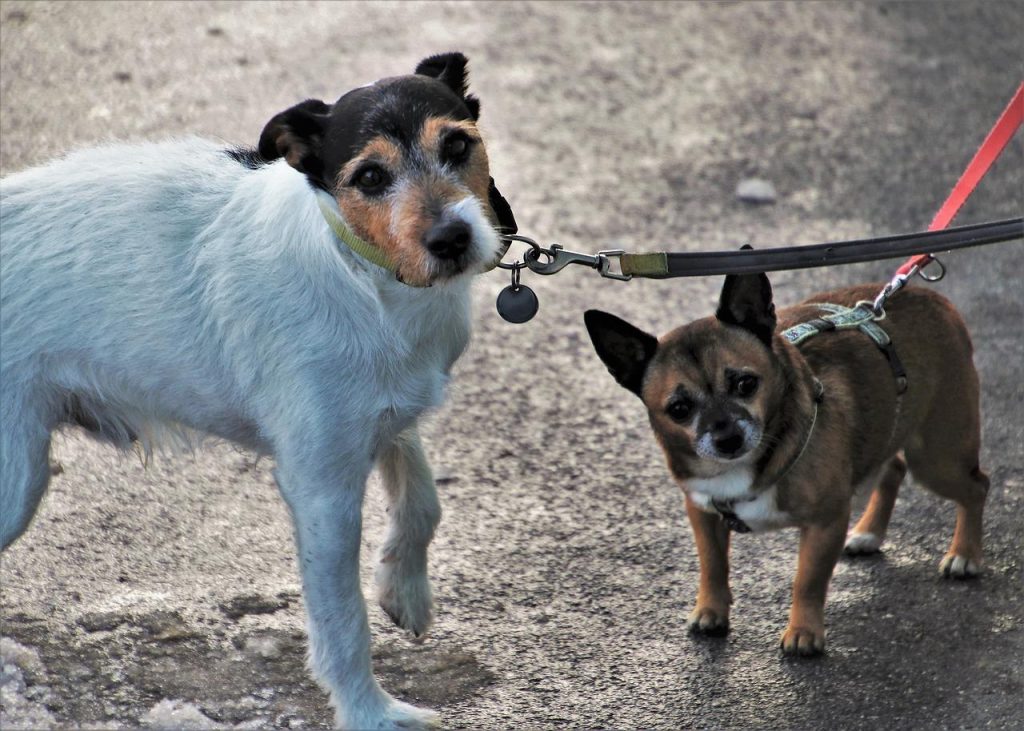
When space is restricted: A dog on a leash has no other option but to freeze when stressed.
How to Support a Frozen Dog
The dog uses internal energy to stay in control. It is a sign of intelligence, but also a warning that he needs support.
My Advice for Dog Owners:
Do not respond with anger: Frustration only increases the dog’s internal stress.
Provide safety: Create a place where the dog can withdraw and feel secure.
Observe early signs: Look for signs of tension (like stiffening or „whale eye“) before the freeze occurs.
Stay calm: Your patient and calm energy is the best tool to help the dog relax.
Understanding why a dog freezes is essential for the dog’s well-being. Even if he doesn’t show aggression, his stillness is a clear sign that he senses a threat in the environment that he cannot resolve alone.
At Integrative and Holistic Grooming Education, we teach that silence is a language. When a dog freezes, they are speaking to us about their need for safety and pureloveandharmony. Learn to listen: Linktree Sasha Riess
This is the text that grew inside me for years — after watching too many dogs fade away. Not from age. Not from disease. But from everything we, with the best intentions, unknowingly impose on them every single day. I’ve had dogs who are no longer here. And each of them taught me something about how wrongly we sometimes love.
A Dog’s Body Reflects Its Owner’s Emotions
I’ve watched their bodies change under the weight of our emotional tension. How they try to adapt, to understand us, to be “good” — even when we stop understanding them. This isn’t a plea. It’s a confession. A personal call to responsibility. Because there were dogs who never heard this message in time.
The Moment My Dog Spoke — Through Silence
I remember the first time my dog turned his head away while I was talking to him. I thought he was being stubborn. Today I know he was overwhelmed. He had no more space inside him for my chaos. He was a mirror of my inner instability — and I refused to see it.
When Love Without Boundaries Hurts
I used to believe love was enough. That attention, care, and time were all that mattered. But they’re not. Love without wisdom can become a heavy burden. Love without boundaries can wound the very being it tries to protect.
Our dogs are mirrors of our inner world—their health starts with our stability.
My Rhythm, His Stress: How Our Lives Shape Theirs
It took me years to realize that my way of living shaped his body. My restless rhythm became his anxiety. My sleepless nights — his exhaustion. My need to have him everywhere with me — his burnout. When his body finally broke, I was shocked. But the signs had been there all along.
What It Really Means to Be a Good Owner
Being a good owner doesn’t mean endless affection, play, and care. It means balance. It means setting boundaries. Giving the dog silence when it needs it. Leaving it at home when the world feels too loud. It means being present, not just physically near.
The Dog as a Mirror of Our Inner World
My dog is not my therapy tool. He is not my accessory. He is a being who carries a fragment of my world within him. And if that world is unstable — he will be too.
Not Out of Fear — But Out of Responsibility
I don’t write this to scare anyone. I write it because I believe we can do better. For the dogs who are gone — and for those still waiting for us to truly see them, as they are.
Maybe It’s Time for Silence
Maybe it’s time to stop trying to be “good owners.” And to start becoming stable, grounded human beings. Because that’s when love becomes what it was meant to be — healing, not heavy.
AtIntegrative and Holistic Grooming Education, we believe that every physical symptom is a message. Understanding these signals and addressing them through a holistic lens is at the heart of everything we teach to ensure the well-being of every dog in our care.
Many believe that electric collars for dogs are just a harmless reminder, but violence that is not recognized as violence becomes invisible, and what is invisible enters the body the deepest.
Put that collar on him. Just to remind him where his place is. It does not hurt. Well maybe a little but nothing serious. They hit me too and I turned out normal.
These sentences are spoken calmly today. Almost gently. Without raised voices. Without drama. Often with a smile and the belief that this is responsibility, discipline, and care. They are spoken by parents, trainers, and dog owners who believe that pain is small, controlled, and justified, and that the result is order, obedience, and stability. That is precisely why they are dangerous.
Small Pain and Electric Collars: Deep Consequences for the Nervous System
When we talk about an electric collar, about a little sting, we are not talking about technology. We are talking about a very old pattern of human behavior. We are talking about the iron hand. The idea that pain is a legitimate tool of upbringing. That fear is a shorter path to order. That suppressing emotions is a sign of strength. This pattern did not start with dogs. Dogs are only the latest to carry it.
Pain, regardless of intensity, does not operate on the level of reason. The nervous system does not measure millivolts, does not make moral judgments, and does not understand good intention. It reacts in a binary way. Safe or unsafe. When an electric impulse passes through a dog’s body, the brain does not register a message like „this behavior is not desirable.“ It registers a break in safety. In that moment the amygdala, the survival center, is activated, and the entire organism enters an alarm state.
Outwardly calm, inwardly an alarm. The body always remembers what the mind tries to justify.
When Discipline Hurts: The Parallel Between Children and Dogs
The same happens with children raised with an iron hand. A child who is hit, shamed, or silenced does not become disciplined. It becomes cautious. It learns to hide impulses, suppress emotions, and not show what might trigger punishment. On the outside it looks well behaved. On the inside the nervous system remains in a state of chronic alert.
Violence does not stop when behavior stops. It only relocates. If it cannot express through behavior, it expresses through the body. The phrase „they hit me and nothing is wrong with me“ is often said as proof of resilience. But neurobiology tells a different story. A child who was not allowed to defend, scream, or escape remains with trapped energy stored in the nervous system.
Cushing Disease and Chronic Stress in Dogs
In dogs today we see the same pattern. Never before have there been so many trained and calm dogs who at the same time suffer from chronic diseases. Cushing disease, adrenal gland disorders, and immune problems are increasingly common in dogs living in seemingly safe environments.
The stress hormone cortisol is not an isolated problem. It is a response to a long term state of inner tension. A dog that is not allowed to react lives in constant adaptation. Its body does not receive the signal that danger has passed. The adrenal glands work without pause. Electric collars become a symbol of that process. The problem is not one impulse, but the message. Safety is conditional on obedience.
Dogs as a Mirror of Our Suppressed Emotions
That is why this topic creates so much resistance. If we admit that a little sting has consequences, we must face our own experiences and the price we paid to be good. Dogs today are a mirror of that process. Their bodies speak instead of them.
The real question is not whether an electric collar hurts. The real question is what we teach a being that loves us when we show that pain is used as a reminder of place. Perhaps dogs today are not calling us to be softer, but to be more conscious. Because the body, whether canine or human, always remembers what the mind tries to justify.