by Sasha Riess | 22.04.26. | Emotions
When a dog refuses obedience, most people assume something is wrong with the dog. But the truth is much deeper. I first encountered the idea of a culture of conflict through the work of my mentor, systemic therapist Vlado Ilić, who taught me that conflict is not a mistake but a natural process of growth.
Every conflict, even the one that appears between a human and a dog, is actually an invitation to look deeper into ourselves and face what we suppress.
Why Disobedience Is Not a Problem with the Dog
The culture of conflict teaches that conflict is not a flaw in a relationship but a natural occurrence that carries within it the possibility of growth and development. Every conflict is an invitation to look deeper, to see what we suppress, and to grow into more complete human beings through that encounter.

The clash between human and dog is often a reflection of our internal emotional conflict.
What Happens When a Dog Refuses Obedience
In practice, this becomes very clear. We often see conflict when a dog refuses obedience or does not do what we expect. Instead of stopping and asking why, we rush into training, forcing the dog to adapt to our demands. In doing so, we repeat the same patterns of force and upbringing that we once promised ourselves we would never repeat.
Dogs as Mirrors of the Human Shadow
This is not a conflict with the dog; it is a conflict with ourselves. It is a struggle with the part of us we do not want to acknowledge, the part whose longing for freedom becomes visible through a “disobedient” dog.
Dogs help us because they demand presence. They do not know masks. Their reaction is always authentic. When we learn to remain present in conflict with a dog, not resorting to punishment or force, but asking what the dog’s behavior is showing us, we touch the essence of harmony.
The Order of Love and Systemic Balance
Family constellations work with systemic laws, described by Bert Hellinger as the Order of Love. The three principles are:
-
The right to belonging: The dog belongs in our life, but not as a projection.
-
Respect for order: The human carries responsibility through grounded leadership.
-
Balance of giving and receiving: The dog is not a toy; he must receive safety, clarity, and love.
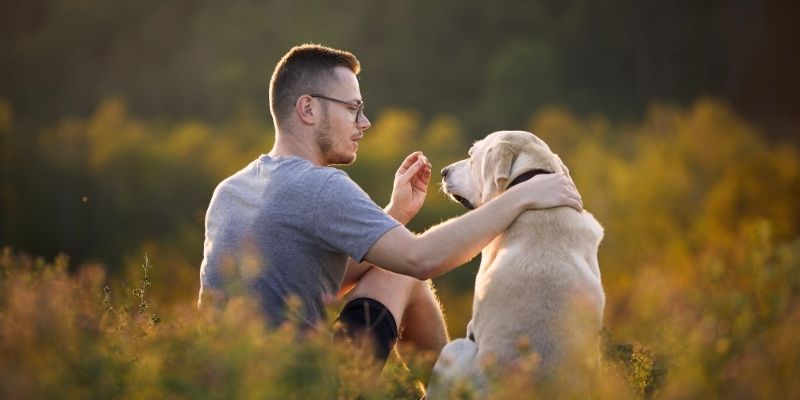
Silence and presence allow conflict to become a gift rather than an obstacle.
Presence and Silence: How to Respond
If I had to choose one practice for when a dog refuses obedience, it is to learn how to listen in silence. Not to listen through a mask or the ears of our parents, but through our own being. This means pausing before reacting, taking a breath inward, entering silence, and only then responding.
In my years of working with dogs, I have grown the most in conflict. Every crack in a relationship can become a place where light enters. If we dare to see conflict as a gift, it becomes a teacher rather than an enemy.
At Integrative and Holistic Grooming Education, we view every challenge as a path toward pureloveandharmony. When a dog refuses obedience, they are leading you toward your own shadow. Embrace the lesson:Linktree Sasha Riess
by Sasha Riess | 10.02.26. | Emotions
I grew up surrounded by dogs — quiet, steady, wise presences that shaped my childhood. From them, I received what I often couldn’t find in my family or among my friends at school. At least, that’s how it felt to me at the time. Through dogs, I learned the first lessons of love, trust, and pure connection — uncorrupted and real.
The Professional World of Dogs
When I entered the professional world, I did so with open eyes and full dedication. As a groomer and professional dog handler, I worked across the globe with dogs whose careers were worth millions. Their health, peace, safety, and performance in the show ring were my responsibility. I knew exactly what I was doing — and why. I was a professional.
But in that professional relationship, there was distance — connection without emotional entanglement. That’s how champions are raised: with respect, not attachment.
Titto — The Dog Who Changed Everything
When I stepped away from the industry in 2015, Titto entered my life. Not a champion. Not a project. Just a being I connected with — not as a professional, but as a man, with all my flaws and vulnerabilities.
Titto arrived at a time of personal and professional crisis. In that emotional vacuum, he became everything — my anchor, my comfort, my constant presence.
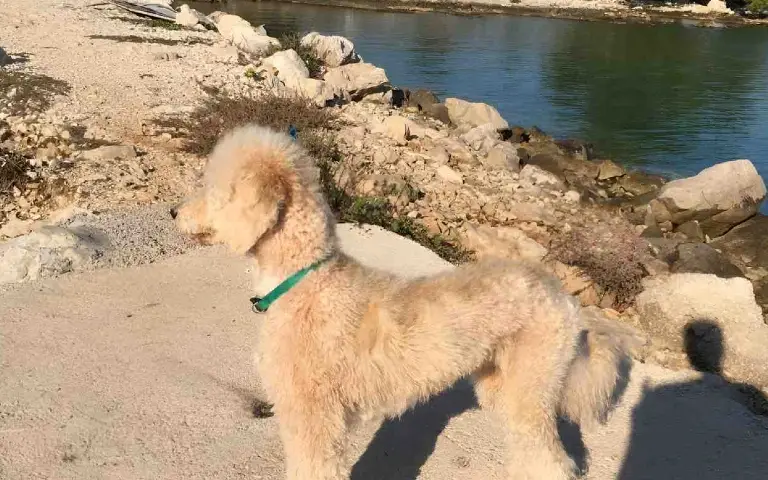
Titto by the water in nature
When Love Becomes a Burden
What I didn’t see was how I had unconsciously projected my own need for safety and validation onto him. Neighbors would call to tell me he was trying to jump out the window. He lost nearly all his fur; his body reacted as if it were in constant danger. I was lost — full of doubt and shame. How could a professional of my experience make such a mistake?
Awakening and Transformation
That was the moment of awakening. I began to change how I spoke publicly — telling my students that not everything is as it seems. That they don’t need to come to my seminars to ‘be like me,’ because the world under the spotlight often hides deep sadness and loneliness.
For that honesty, I finally found courage. Titto was the dog who turned everything around.
A New Understanding of the Human–Dog Relationship
I began exploring the deeper bond between humans and dogs — and discovered a world I had never known before: a world of true love and harmony, to which I later devoted my life.
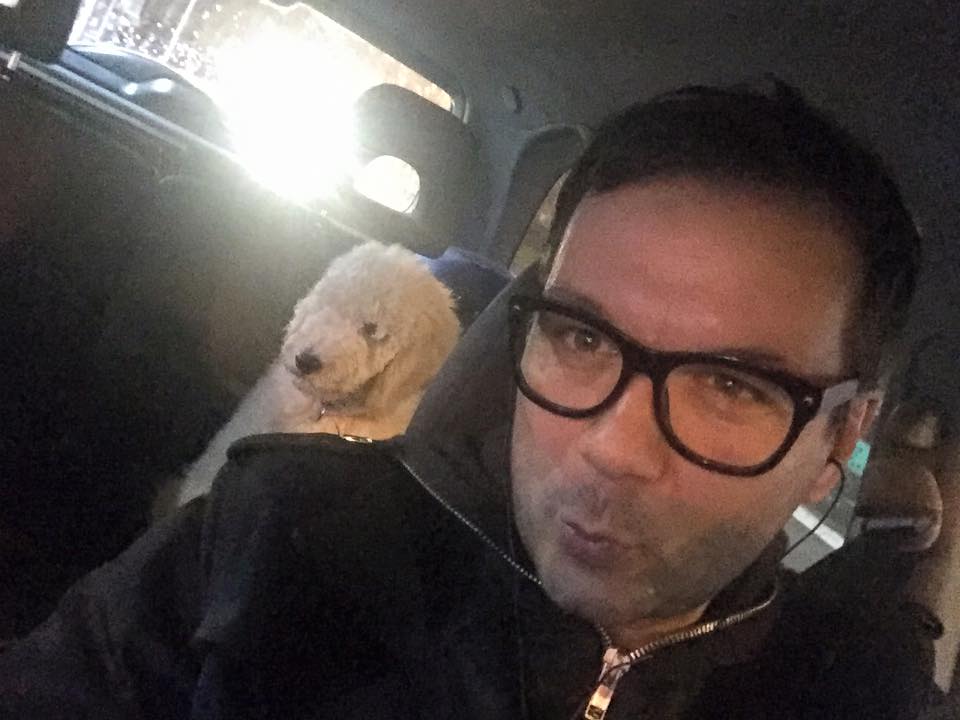
Sasha Riess and Titto in the car
Love Without Order — A Destructive Force
That painful experience opened a new understanding. Through personal development, I came to know the principles of the Order of Love. I realized that love without order does not sustain life.
The Morphogenetic Field and Species Resonance
Every species has its own dynamic — its own morphogenetic resonance, as described by Dr. Rupert Sheldrake: a field of memory and habit that shapes behavior within the species itself.
But what happens when we pull a dog into the human system, under rules that aren’t his own? He becomes a substitute — a therapist, a child, a partner — and his body begins to express the symptoms of destructive love.
The Order of Harmony — Returning to Natural Balance
From this realization came The Order of Harmony — an understanding that even between species, invisible systems exist. When these natural laws are broken, chaos follows. From that awareness were born the Pure Love & Harmony movement and my guidebook — a path toward balance between humans and dogs.
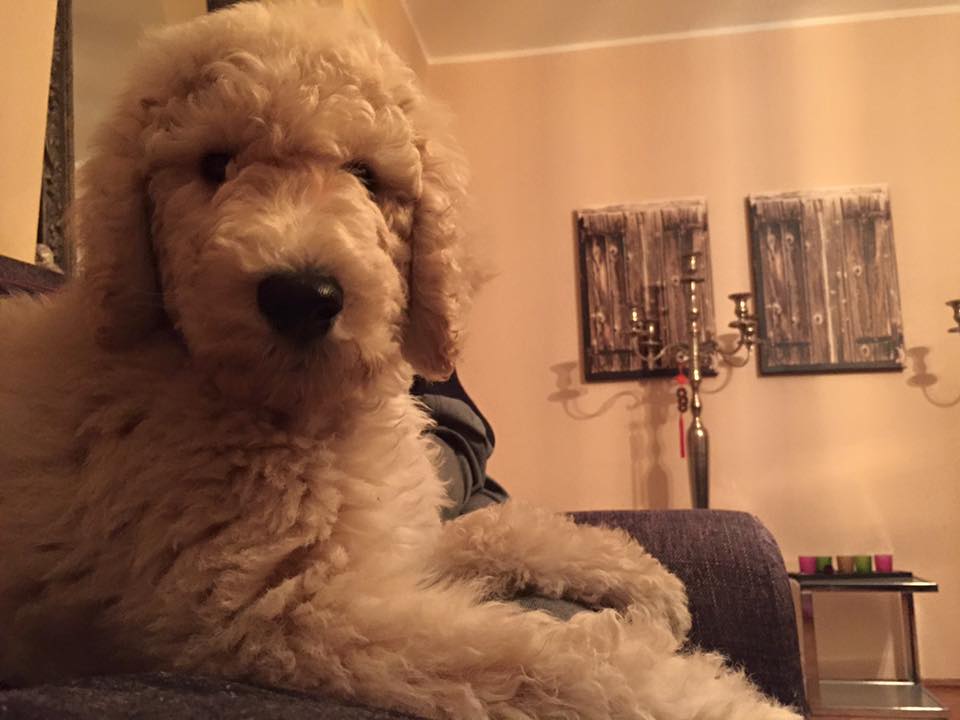
Titto resting on the bed
A Meeting with Dr. Sheldrake
I had the honor of discussing these discoveries with Dr. Sheldrake himself. He told me, ‘Sasha, this is a fascinating discovery — pioneering work. It’s incredible how you’ve connected two worlds and opened a door to a deeper understanding of our relationship with the natural world.’
When a Dog’s Behavior Reveals Our Inner State
Today, my work focuses on how a dog’s behavior reflects our inner state. A dog’s problems are never isolated — they mirror the relationship within the family system.
In families where the dog doesn’t have its rightful place, we often see chronic stress, behavioral issues, allergies, skin problems, autoimmune reactions, digestive disorders, and systemic illness.
When the Dog Becomes What’s Missing
In therapeutic work, I’ve noticed a common pattern: dogs often enter families before or after major emotional events — loss, divorce, trauma, or even abortion. The owner says, ‘This dog is everything to me,’ or ‘He’s my angel.’ And in that moment, the dog becomes everything he was never meant to be.
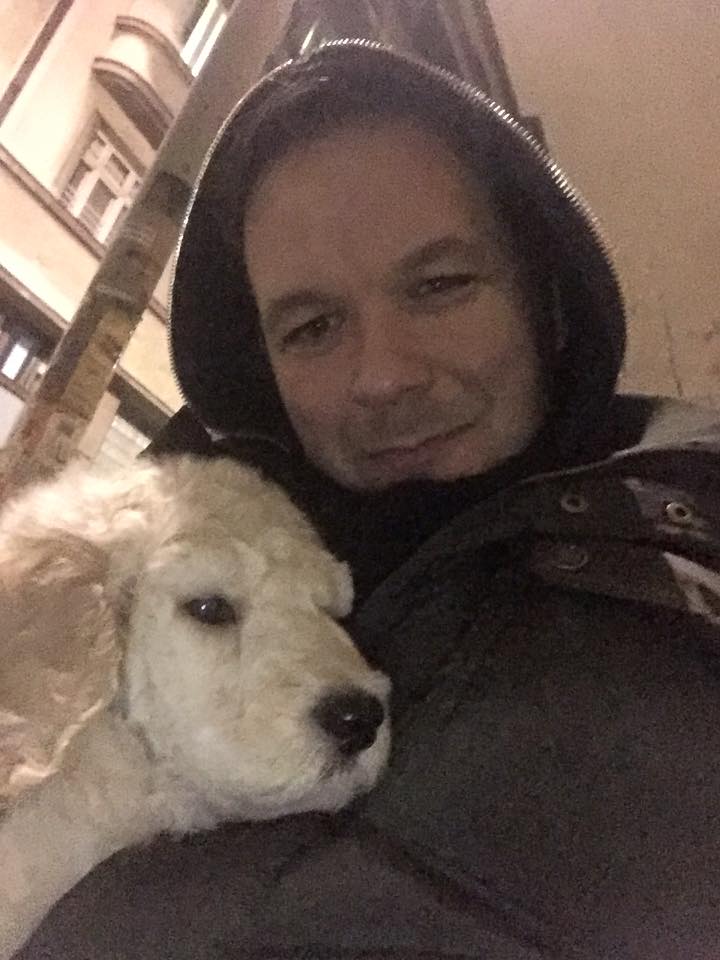
Sasha Riess and Titto on a walk
The Solution — Restoring the Dog’s True Place
Healing doesn’t begin with ‘fixing’ the dog — it begins with understanding the system. When the owner realizes that the dog cannot heal their pain, the dog is finally freed.
That’s when love stops suffocating and begins to see. Only then can a dog simply be — and that is enough.
So next time you ask, ‘Why is my dog doing this?’ or ‘Why did my dog get sick?’ try asking instead: ‘Who or what is my dog replacing?’ That’s where true healing begins — through love that respects boundaries, place, and dignity. A love that doesn’t destroy, but creates the future.
At Integrative and Holistic Grooming Education, we believe that every physical symptom is a message. Understanding these signals and addressing them through a holistic lens is at the heart of everything we teach to ensure the well-being of every dog in our care.