
by Sasha Riess | 25.05.26. | Behaviour
Caring for a dog is not the same as buying a toy. Dogs are living beings with emotions, needs, and awareness. If you want to know how to properly care for a dog, you must first be fulfilled and present in its life.
A Happy Owner Equals a Happy Dog
You cannot care for a dog properly if you neglect yourself. Just as a parent does not need to be a perfect mother, but a happy one, a dog owner must be balanced and at peace in order to guide the dog through life. Your emotional state is the foundation of your dog’s stability.
The Relationship Between Dogs and Children
Dogs and children share an exceptionally strong bond, influencing each other’s emotional state. Healthy communication and attentive presence are essential for building trust and a sense of security. Part of knowing how to properly care for a dog in a family setting is ensuring that these interactions are guided by respect and presence.
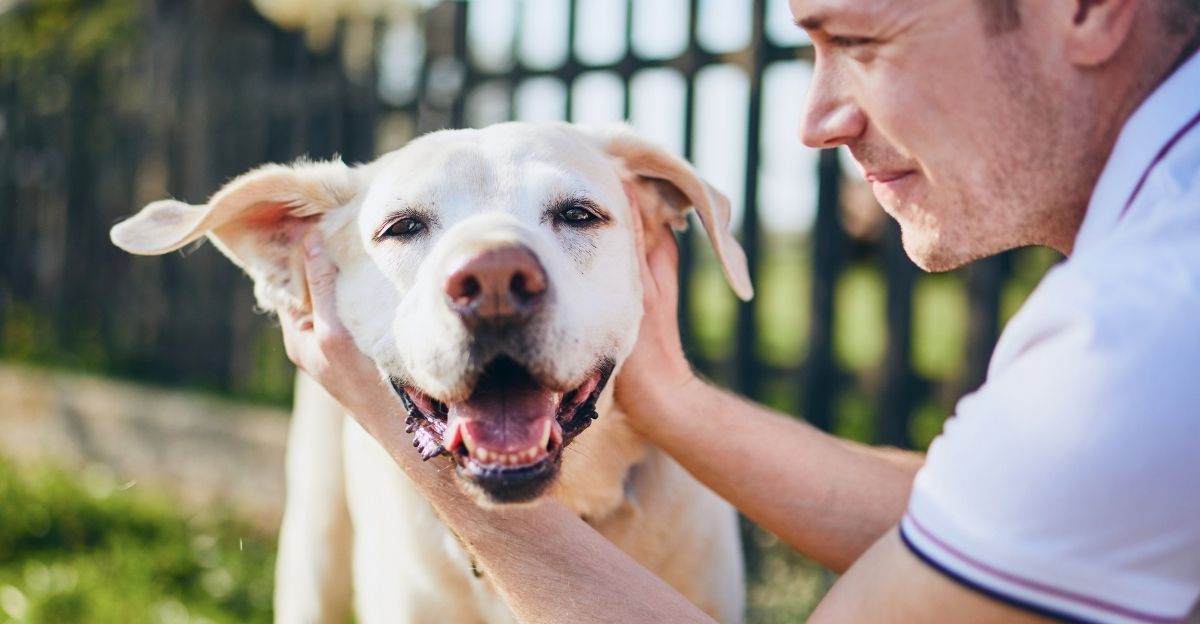
Caring for a dog requires responsibility and dedication.
Dedication to One Dog
It is more difficult to provide the same level of attention and love to two or more dogs than to just one. Having a dog requires deep commitment, time, and energy. A dog is not a toy, but a living being that deserves your full attention and a consistent place in your life.
At Sasha Riess, we believe that leadership begins with self-care. Learning how to properly care for a dog starts with finding your own balance so you can lead with pureloveandharmony. Discover the path to a deeper connection: Linktree Sasha Riess

The Dog Groomer’s Dilemma: Journey Trough Burnout, Belonging and Becoming

by Sasha Riess | 21.05.26. | Behaviour
The human-dog relationship is often a mirror of our personal attitudes, fears, and cultural patterns. Differences in opinions, tastes, and values are not a problem in themselves; they become dangerous only when dogs suffer because of them.
Why People Disagree Even About Dogs
Differences in what we like are not random. When we choose a dog, we often do not choose a living being—we choose an image.
-
One person dislikes black dogs.
-
Another focuses on the fur.
-
A third sees only beauty.
There is no right or wrong here, only difference. People look at life through different filters, and different opinions are not an attack. The problem begins when these differences justify poor treatment.
A Paradigm That Brings Results
There is a way of thinking and working with dogs that, when applied consistently, brings real results to the human-dog relationship:
If a method produces these results, why should it be dismissed just because it challenges the dominant belief that a dog is „problematic“?

The dog is the animal that suffers most because of humans.
Who Truly Suffers in the Human-Dog Relationship?
There is no animal beside which humans suffer more than a dog, but there is also no animal that suffers more because of humans. The dog is the only animal completely bound to human decisions, fears, and projections.
Because of this, the responsibility always lies with us.
Changing Our Perspective
Differences in opinion are not the issue. The issue is when a dog pays the price for our aesthetic criteria or our fears. If we change how we perceive them, we change their fate.
At Sasha Riess, we believe that the human-dog relationship should be based on understanding the dog’s true nature, not our own projections. Only then can we achieve pureloveandharmony. Learn how to look past the „image“ and see the soul: Linktree Sasha Riess

The Dog Groomer’s Letter of the Month Club with Sasha Riess

by Sasha Riess | 03.02.26. | Behaviour
When a female dog is in heat, the first question owners ask is how to calm the hormones. However, it is important to say the truth immediately. Hormones do not calm down. They do their job. Just like in humans.
Hormones Do Not Calm Down: They Have Their Role
The heat period in a female dog in heat is a natural biological process. It is not a disorder, a problem, or a state that needs to be switched off.
Hormones in this period:
Just as a woman goes through phases of her cycle that cannot be turned off, a female dog goes through her own hormonal rhythm.
Why Trying to Calm Hormones Leads in the Wrong Direction
When we search for ways to calm the hormones, we are actually trying to control a natural process or avoid our own discomfort. But the dog is not asking for her hormones to be shut down. The dog is asking for a stable environment.
Practical Steps to Help a Female Dog in Heat
What helps is not working on hormones. What helps is working on:
-
Structure.
-
Routine.
-
Consistency.
The biggest role in this period is our discipline. Not the discipline of the dog. The discipline of the human.
Routine and Clarity Instead of Attempts at Control
When a female dog in heat feels clear rules, it reduces stress. Predictability brings safety, and a calm human stabilizes the dog. A dog reacts to your behavior, tone, tension, and presence. Not to explanations.

A female dog in heat is not asking you to calm her, but for you to be calm.
A Manual as a Tool for the Human, Not for the Dog
If you do not have a clear behavioral system, heat will simply bring it to the surface. That is why these moments are not a time for experiments, but for consistent behavior according to rules that already exist.
A manual is not meant to fix the dog or stop hormones. It is meant to:
-
Stabilize the relationship.
-
Give you a behavioral framework.
-
Help the dog rely on your safety.
Hormones Pass, The Relationship Remains
Heat has a beginning and an end. Hormones will withdraw on their own. What remains is how you behaved, how stable you were, and whether you were a support or an additional source of stress.
A female dog in heat is not asking you to calm her. She is asking you to be calm.
This understanding of a dog’s emotional and physical state is at the heart of everything we do. At Integrative and Holistic Grooming Education, we teach people how to apply these principles of stability and care in their everyday lives with their dogs, helping create calm, healthy, and happy results.
by Sasha Riess | 02.02.26. | Behaviour
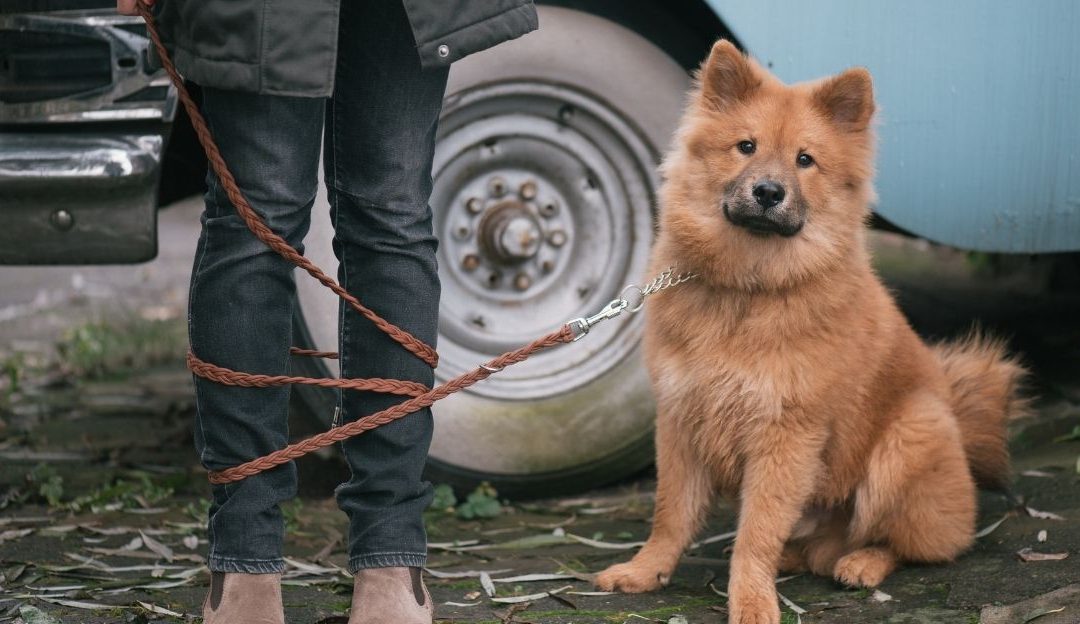
Boundaries are not for dogs. They are for us.
When we talk about boundaries with dogs, most people immediately think of prohibitions, commands, and rules that must be imposed on the dog. But the truth is quite the opposite. A dog does not suffer because of boundaries. A dog suffers because of the absence of boundaries. And the absence of boundaries does not come from the dog, but from the human who does not know how to set them.
A dog does not think in categories of “allowed” and “forbidden” like humans do. A dog functions through structure, consistency, and clear behavioral patterns. When that structure is missing, the dog is left without support. Then problems appear that people mistakenly call disobedience, stubbornness, or a “difficult character.”
Why Is It Hard for Us to Say No to a Dog
The problem with boundaries with dogs is often the same problem we have in relationships with people. We do not know how to say no because we fear conflict, rejection, or guilt. We say yes to everything. To compromises that drain us. To relationships that suffocate us. To habits that harm us.
The dog simply exposes that pattern.
Just as a parent who cannot say no to a child asking for sweets later pays the price through health issues, a dog owner gives in “out of love” and later faces anxiety, aggression, or loss of control in the dog.
Boundaries Are Not Punishment
Setting boundaries does not mean harshness, force, or domination. On the contrary. Boundaries are safety. They tell the dog, “I know what I am doing. You can rely on me.”
A dog with clear boundaries with dogs does not need to constantly test limits. He does not need to take responsibility that is not his. He does not need to make decisions instead of the human. That is where the dog’s inner peace begins.

A dog does not seek boundaries — the human avoids them.
When Boundaries Are Missing, the Dog Pays the Price
Without boundaries, the dog steps into roles that do not belong to him. He becomes overprotective, insecure, anxious, or reactive. People then say the dog is “problematic,” when in reality he has been left without structure.
That is why boundaries are not a tool to control the dog. They are a mirror of our relationship with our own life. The dog does not seek perfection. He seeks consistency.
The Dog Is Not the Problem. The Problem Appears Before the Dog.
The dog does not need to learn where boundaries are. The human needs to learn how to set them. When we know where we stand, the dog no longer needs to test, push, or take control. Then the relationship becomes stable, calm, and healthy for both sides.
by Sasha Riess | 01.02.26. | Behaviour
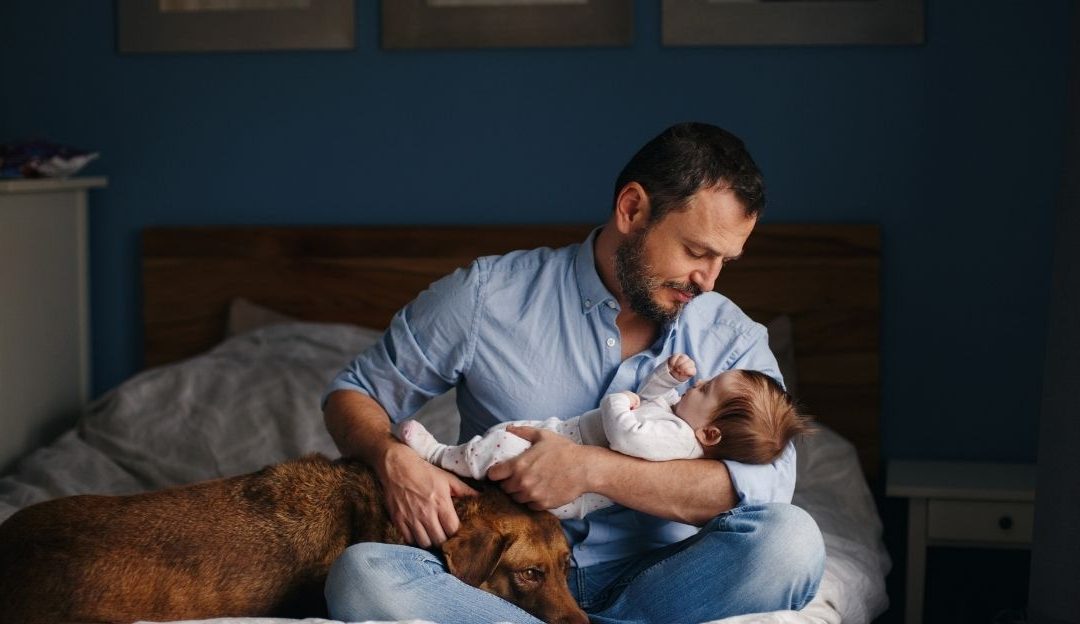
The relationship between a dog and a baby is one of the purest and most innocent relationships that exist. A dog does not intend to harm a child, and a baby has no awareness of causing harm. Problems arise only when adults fail to take responsibility and set clear boundaries.
A Relationship Disturbed Only by Humans
Small children, babies, and dogs share one important trait: complete innocence. Their relationship cannot be “wrong” by itself. A dog never plans to hurt a child. Difficulties appear when a parent or caretaker does not react, does not set boundaries, and does not recognize their own emotional state.
Parenthood, especially in the first months, carries enormous emotional and physical pressure. Lack of sleep, hormonal changes, stress, and inner tension become part of daily life. The dog and baby dynamic is affected by this because the dog senses everything. He does not understand words, but he understands energy.
How a Dog Experiences the Arrival of a Baby
In the dog’s perception, the baby is not “a child” but a change that has created instability in his human. The dog may then try to “protect” the parent because instinctively he feels that something has shifted. This is not aggression; it is an attempt to control a situation he does not understand.
That is why it is essential that adults:
-
Do not project their own stress onto the dog.
-
Do not leave the dog and baby unsupervised.
-
Do not expect the dog to “understand” human life phases.

Clear boundaries create a safe and peaceful environment for both the dog and the baby.
Boundaries Are Protection for Both Baby and Dog
A dog and a baby must have clear boundaries. How close the dog may come, when he must withdraw, and where his own space is. The same applies to the child. A dog is not a toy, a pillow, or a tool to calm a baby.
Boundaries are not punishment. They are safety.
Why Responsibility Always Remains with Adults
A dog cannot be emotionally mature. A baby cannot know boundaries. Adults must. When a parent takes responsibility, the relationship between dog and baby becomes stable, calm, and safe. Not because the dog is “good,” but because he is guided.