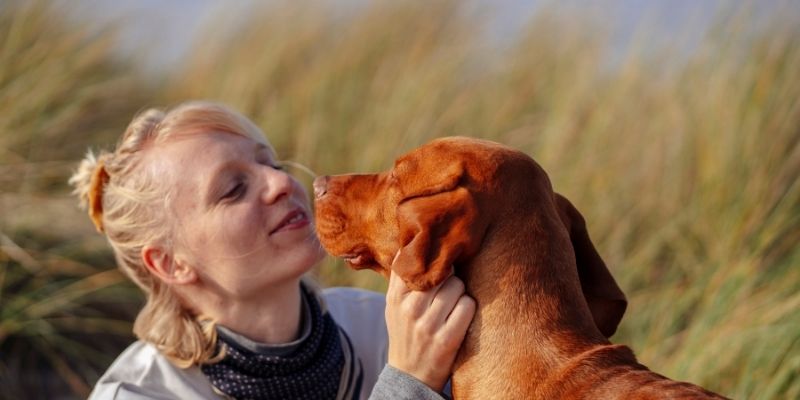
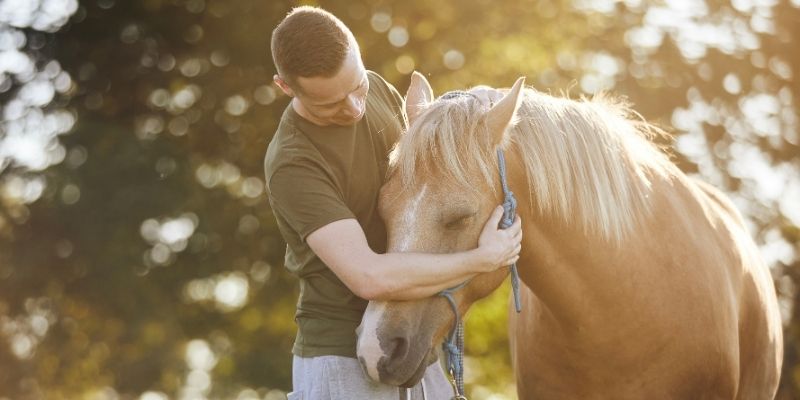
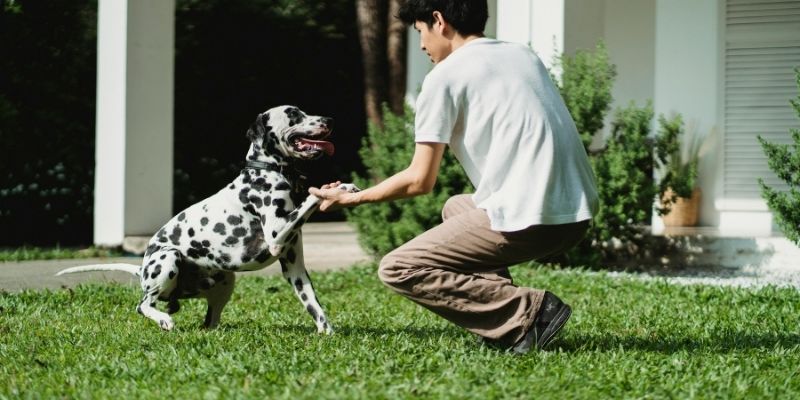
Dogs don’t suffer because something is missing — they suffer because they’ve lost their essential connection with humans. In a world where we have everything, the dog is left without the one thing it truly needs — a stable, present, calm human.
I don’t mean physical presence, but energetic and emotional presence. Everything else — food, accessories, cosmetics — becomes meaningless when connection is gone.
How Caring for Dogs Became a Consumer Identity
The modern dog owner lives under the pressure of an industry that convinces us we can’t be responsible owners unless we constantly buy things. Dogs and consumerism have become so intertwined that caring for a dog has turned into a matter of image, not relationship. Shopping is no longer functional — it’s become a moral duty. We feel inadequate if we don’t buy regularly, and when we can’t afford it anymore, we start believing we no longer deserve our dog.
When Money Disappears — the Illusion of Love Crumbles
When the illusion of consumption collapses due to job loss or personal crisis, people often decide to give their dog away. They think they can no longer care for it, not because they can’t feed it, but because they can’t participate in the expensive „system of care.“ This is the result of a distorted message: that love for a dog depends on money.
What a Dog Truly Needs — Simplicity and Presence
A dog doesn’t need a lavender pillow or a spirulina supplement. It needs stability, clarity, and contact. It needs to know who leads and who stays, even when everything changes. No purchase can replace that.
A Personal Story — Betti and the Illusion of Perfection
I was once part of that system. Betti was a Bichon whose owners followed every „professional standard“—weekly grooming, perfect white coat, show results. But they eventually gave her away, believing they weren’t „good enough“ for her anymore.
Betti ended up with their cook—a woman with no money but a priceless advantage: she had no need to prove anything. She trimmed Betti’s hair with kitchen scissors and never tried to turn her into a trophy. For the first time, Betti could simply be a dog.
A dog doesn’t ask for luxury; it asks for the presence of a human who understands.
The Responsibility of Professionals
Experts, trainers, and groomers shape the idea of a “good owner.” When we raise that bar so high that it depends on money and perfection, we share responsibility for every abandonment caused by guilt.
Returning to Simplicity — Returning to True Love
If we pause, we’ll see how simple it is to give a dog what it truly needs: a human who understands it. Someone who knows that silence sometimes matters more than another toy.
The Pure Love and Harmony approach teaches that a relationship with a dog isn’t a luxury. You don’t need special equipment or a perfect home. You just need yourself—not as a buyer, but as a human who stays when everything else fades.
At Integrative and Holistic Grooming Education, we prioritize the bond over the brush. True care is about being present, not just providing products. Explore our philosophy: Linktree Sasha Riess
Dogs and the culture of conflict reveal that conflict is an inevitable part of life and that the way we respond to it shapes our relationships, boundaries, and personal growth. In the human world, conflict is often seen as a threat or the beginning of a fight, while animals show us that conflict can be a healthy signal, the start of change, and an opportunity for learning.
When we understand the natural logic of conflict, we more easily recognize the patterns we repeat and the lessons we avoid. Animals, especially dogs and horses, experience conflict very differently. Their instincts are clear, their reactions direct, and their relationships transparent. They give us the chance to see ourselves in a way we otherwise never could, without masks, without illusions, and without rationalizations.
This text is a journey through that mirror.
Why Humans Fight and Why Animals Don’t
Conflict among humans often comes from emotion and ego. Expectations and unspoken needs also play a major role. In nature, conflict is brief, functional, and solution-oriented rather than destructive.
How Dogs Build a Culture of Conflict Without Aggression
Dogs and horses do not have the concept of guilt. They have no need to prove they are better. Their behavior is a message about the state of the relationship, about misalignment, about misunderstanding. In that sense, they teach us something we constantly forget: conflict is not an attack, conflict is information.
When animals clash, they show boundaries clearly. They hold them. They respect them. And they move on. Humans, on the other hand, carry the same wounds, the same themes, and the same fears of abandonment or unworthiness for years.
Evolution and the Culture of Conflict
Our biology is not made for chronic conflict. Evolutionarily, conflict was short, energetic, and resolvable. Modern humans live in long-lasting emotional conflicts that stretch over months or decades. The body remains locked in tension, raising cortisol (the stress hormone), weakening the microbiome, and lowering the immune system.
This is where dogs become our teachers. Animals show us exactly how deeply the nervous system is connected to relationships.
What Dogs Teach Us About Our Nervous System
A dog does not react to our words. A dog reacts to our state. It feels our fear, our doubt, our hidden aggression, and the sadness we suppress. The dog is not a symptom. The dog is an indicator. What we manage to hide among humans, the dog sees instantly.
Dogs and the Culture of Conflict as a Mirror of Our Emotions
Dogs reflect our inner world clearly:
If you become unsettled, the dog becomes unsettled.
If you calm down, the dog calms down.
If you hold a boundary, the dog relaxes.
If you have no boundary, the dog begins to control.
The dog does not return your ego. It returns your unresolved emotional material.
Monty Roberts and a Lesson from the World of Horses
Monty Roberts teaches that a horse does not accept violence but accepts clarity. A horse flees from force but connects with stability. Dogs behave the same way. They enter the relationship only to the extent that we are mentally present.
When we have a clear identity, a clear boundary, and an emotionally regulated state, the dog follows us. When we are contradictory, fearful, or attempt to control through pressure, the dog resists, avoids, becomes anxious, or takes on responsibility it should never carry.
Animals show us what a pure relationship looks like without the conflict of ego.
Dogs and Emotions: How the Culture of Conflict Shapes Our Relationships
The dog carries the world we create for it: our rhythm, our stress, our way of solving problems, our unspoken emotions, our impatience, and our chaos. When dogs get sick, become nervous, or react impulsively, they are often carrying emotional weight that is not theirs. Many owners believe it is a behavioral problem, but most often it is a relational problem.
The Microbiome, Stress, and Why Dogs Somatize Our Choices
Chronic stress changes the microbiome in dogs just as it does in humans. Stress affects digestion, immunity, hormonal balance, behavior, and frustration tolerance. When a dog’s nervous system stays in survival mode, the body stops regenerating and functioning properly.
Science, Veterinary Medicine, and the Microbiome Through the Lens of Conflict
Veterinary medicine often treats the symptom instead of the cause. If a dog vomits, the stomach is treated. If a dog bites, training is prescribed. But in many cases, the deeper issue is a lack of secure attachment, a lack of leadership, or emotional instability in the home. This is when relational conflict becomes bodily conflict.
A dog shows us what a pure relationship looks like without the conflict of ego.
How to Develop a Culture of Healthy Conflict With Your Dog
Clarity brings safety. Boundaries bring stability. Silence brings peace.Predictability heals the dog’s nervous system. Relationships always come before technique. A dog wants you, not a trick.
Conclusion: Conflict as a Teacher
Conflict is not the enemy. Conflict is navigation. It shows where it hurts, where boundaries are missing, where you have abandoned yourself. Dogs teach us that conflict is resolved through presence.
At Integrative and Holistic Grooming Education, we believe that a healthy dog starts with an emotionally aware owner. Discover how to build a deeper, stress-free connection with your pet. Explore our resources: Linktree Sasha Riess
From my years of working with dogs, persistent itching almost always points to an internal imbalance. When a dog eats only kibble, problems often arise in the microbiome — the colony of beneficial bacteria in the gut that keeps the immune system balanced.
Kibble, especially lower-quality brands, contains preservatives and heat-processed proteins that a dog’s body can’t fully digest. When the body doesn’t know what to do with these substances, the brain sends a signal: “Get it out!” The result appears on the skin — through itching, redness, and inflammation.
Allergies and Histamine: How Itching Starts
When an allergic reaction occurs, the body produces histamine — a compound that triggers itching and skin irritation. This means your dog’s body is reacting to something it can’t digest properly. The outcome: inflamed areas, flaky skin, paw licking, and constant scratching.
Allergies are actually a sign of a weakened immune system. They appear when the body can’t properly process food or toxins and tries to eliminate them through the skin, lungs, or kidneys.
Dietary changes and natural probiotics can help a dog struggling with persistent scratching.
Natural Nutrition to Reduce Itching
The first step is to change the diet. Introduce fresh, natural food — cooked or raw — with added probiotics and prebiotics to restore gut health. Avoid industrial kibble for a while and observe your dog’s skin and behavior.
Also, add flaxseed and pumpkin seeds — natural sources of omega fatty acids essential for healthy skin and coat. Grind them in a coffee grinder and sprinkle over meals. This supports skin regeneration and helps reduce itching naturally.
Itching Isn’t Just a Skin Problem
Constant scratching is rarely a skin issue — it’s usually a symptom of an internal imbalance. When a dog eats only kibble, its system gradually loses equilibrium.
A balanced diet, natural mineral support, and probiotic supplementation can restore harmony and help your dog live comfortably again — without the constant urge to scratch.
At Integrative and Holistic Grooming Education, we believe that beautiful skin and coat start from within. We teach you how to recognize the symptoms of internal imbalance and restore your dog’s natural glow. Explore our programs: Linktree Sasha Riess
A dog living in harmony with nature — calm, healthy, and free of stress — is the image of true well-being. Caring for a dog’s health and providing proper nutrition are essential foundations for a long, joyful life.
Dogs who share life with humans are not just companions — they absorb our emotions, our energy, and our stress. Understanding how nutrition, emotional awareness, and the owner’s inner balance affect the dog’s body is the key to preventing psychosomatic illnesses and maintaining vitality.
Why It’s Important to Watch Diet and Environment
Almost no wild animal suffers from cancer. But when a dog lives with humans, that changes — our emotions and our stress directly influence its body. The closer the dog is to us, the more it becomes a mirror of our inner state. That’s why diseases linked to stress and emotional imbalance appear more frequently in dogs who live tightly connected to humans.
Proper Nutrition and Its Effect on the Immune System
When a dog reaches six months of age and beyond, care should go beyond medical procedures like sterilization. True care means creating a safe and peaceful environment — one where stress does not poison the body. Dogs instinctively absorb and process their owners’ emotional tension in an attempt to protect them. This makes it crucial for us, as owners, to remain calm, aware, and emotionally present — because our state shapes their health.
Balanced nutrition is more than food—it is the foundation of your dog’s immunity and emotional stability.
The Connection Between Mind, Food, and Immunity
Balanced nutrition is not just about physical health — it’s also about emotional stability. Healthy meals rich in natural ingredients, consistent daily rhythms, and gentle human energy together strengthen the immune system and prevent disease.
Psychosomatic Effects of Chronic Stress
Chronic stress can lead to deep physiological changes in dogs, including psychosomatic conditions and even cancer-like illnesses. A dog is not merely a pet — it’s a sentient partner in our shared ecosystem. Its body reflects our emotions, our peace, and our turmoil.
Health Through Awareness and Nutrition
Preserving a dog’s health begins with proper nutrition and awareness of the shared space we create together. Wholesome food, regular walks, clean water, and emotional balance form the invisible structure of health and longevity.
The Owner’s Responsibility
Caring for a dog is both a physical and an emotional responsibility. To truly nurture health, one must understand how stress, food, and environment intertwine. When we become mindful of our own emotions, we protect not only ourselves — but also the being that trusts us most.
At Integrative and Holistic Grooming Education, we view the dog as a whole. Our mission is to guide owners toward a deeper understanding of the link between nutrition, emotion, and physical health. Discover more: Linktree Sasha Riess
Why You Should Not Pet Your Dog While Firecrackers Are Going Off
Many dog owners try to comfort their pets during the holiday season when the noise of firecrackers begins. However, what seems like love and care can actually deepen fear and create a larger problem. Here is what you should never do and how to truly help your dog.
Petting Your Dog While They Are Afraid Only Confirms Their Fear
When a dog begins to show signs of fear—trembling, hiding, whining, or looking around in panic—it is natural to want to comfort them. However, experts warn that in moments like these you should not pet your dog, sing to them, or speak softly, because the dog interprets this as confirmation that their fear is justified.
Your reaction, even if it is filled with kindness, signals to the dog that something is truly wrong. They assume that you also find the situation unsettling, and that you are not able to “lead” or take control. As a result, the next time they will be even more frightened and will seek the same kind of comfort, which unfortunately does not help them.
Why Fear of Firecrackers Can Be Dangerous
Fear of firecrackers is not harmless. Some dogs experience extreme stress, run away from home, or even die from the shock and panic. Dogs feel lost and unsafe because they do not trust that their owner can protect them.
In these moments, it is essential for you to remain calm and steady, without overreacting. Do not show that their behavior disturbs you. What they need is your stability, not your sympathy.
Instead of petting and comforting, a dog needs the calm and security that comes from a steady owner.
Stay Calm and Give Your Dog a Sense of Safety Instead of Comforting Them
There is a simple and effective way to help your dog feel safe during firecracker noise: the wrapping technique. If you do not have a special anti-anxiety vest, you can use a soft cotton bandage or a piece of cloth.
Wrap the dog gently so that the fabric applies light pressure to specific points on the body, creating a sensation similar to a gentle hug. This gives the dog a physical sense of security while you remain composed and do not focus on their fear.
When the dog sees that you are calm and going about your day, they begin to rely on you and understand that there is no real danger. Over time, the fear becomes significantly weaker and may even disappear entirely.
A Calm Owner Creates a Calm Dog
Dogs absorb our energy and behavior. If you panic, sing, pet, or try to comfort your dog during moments of fear, they believe the situation is dangerous. Instead, show calmness, consistency, and steady leadership. This is what truly helps the dog overcome their fear of firecrackers.
At Integrative and Holistic Grooming Education, we teach you how to read your dog’s signals and lead with love and stability. True care is knowing when to act and when to remain a calm anchor for your pet. Explore our resources: Linktree Sasha Riess