by Sasha Riess | 15.03.26. | Emotions
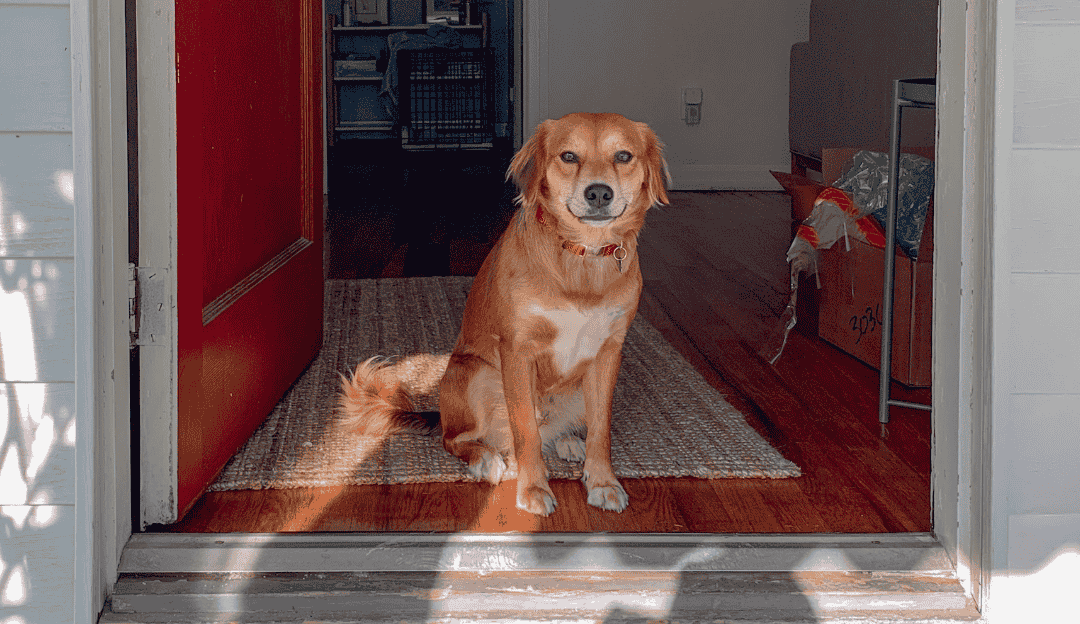
Many owners believe every dog must love walks. But the truth is, some dogs experience walks as stress — not pleasure. When a dog reacts intensely outside, it doesn’t always mean disobedience — it might be a reflection of your own emotional tension.
Don’t Force Walks If Your Dog Doesn’t Want Them
One owner shared: “We’ve had one dog for five years, and the other has been with us for five months. Every walk with him feels like a risk.” There is no such thing as a “pleasant walk” with a dog that doesn’t want to walk — it’s like forcing someone having a seizure to dance.
For such dogs, walking is not enjoyment but stress. Everything around them is overstimulating: other animals, people, smells, sounds, interactions. When a stimulus activates, the dog reacts. There’s already a fixed neural pathway between an external trigger and the central nervous system’s response. In that moment, you can’t bypass the reaction. If you expose the dog to triggers, he will simply — react. That’s when you need to withdraw, return home, and work on removing the cause — not “fixing” the dog.
Is Your Dog Too Attached to You — or Are You to Him?
Many owners say, “My dog is too attached to me.” But the real question is — is he too attached to you, or are you too attached to him? Pause and ask yourself honestly: Do you allow your dog to be a dog — a free being with emotions and boundaries? Or is he your support, the one who fills the emptiness you carry inside?
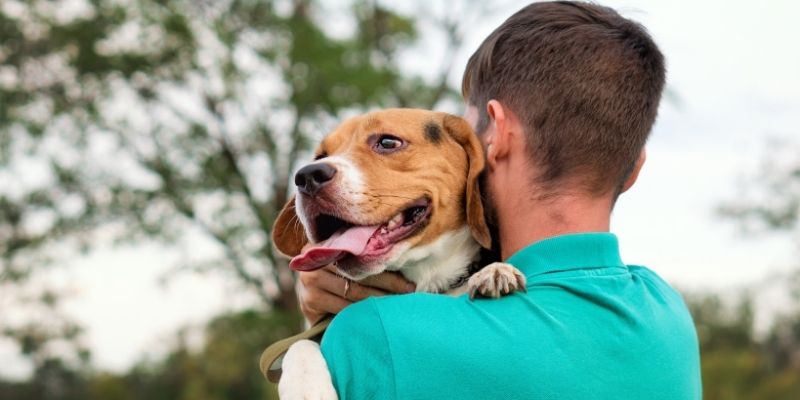
Excessive emotional entanglement often creates stress for the dog, even though it may look like love.
Emotional Attachment Isn’t Love
In The Alchemist of the Perfect Relationship, it says: “I wanted my dog to look at me the way I wanted my parents to look at me.” That’s what many people unconsciously do — through their dog, they seek the gaze, understanding, attention, and love they never received. And they hope that if they love their dog enough, someone else will finally see them. But real love for a dog doesn’t come from need. It comes from freedom.
Looking for the Cause Within
None of this is about guilt — it’s an invitation to awareness. When you start looking for the causes of your dog’s behavior within yourself rather than in him — that’s when true growth begins. Your dog isn’t “attached to you” as much as you are attached to what you’re experiencing through him. You might be doing everything “right,” yet something still doesn’t feel aligned — that’s a sign you’re emotionally entangled. That’s not love — it’s a bond that suffocates both of you. Only when you let go — when you allow your dog to simply be a dog — the relationship becomes healing and free.
At Integrative and Holistic Grooming Education, we believe that communication is felt, not forced. We teach you how to listen to your dog’s soul instead of just commanding their body. Explore our philosophy: Linktree Sasha Riess
by Sasha Riess | 13.03.26. | Emotions
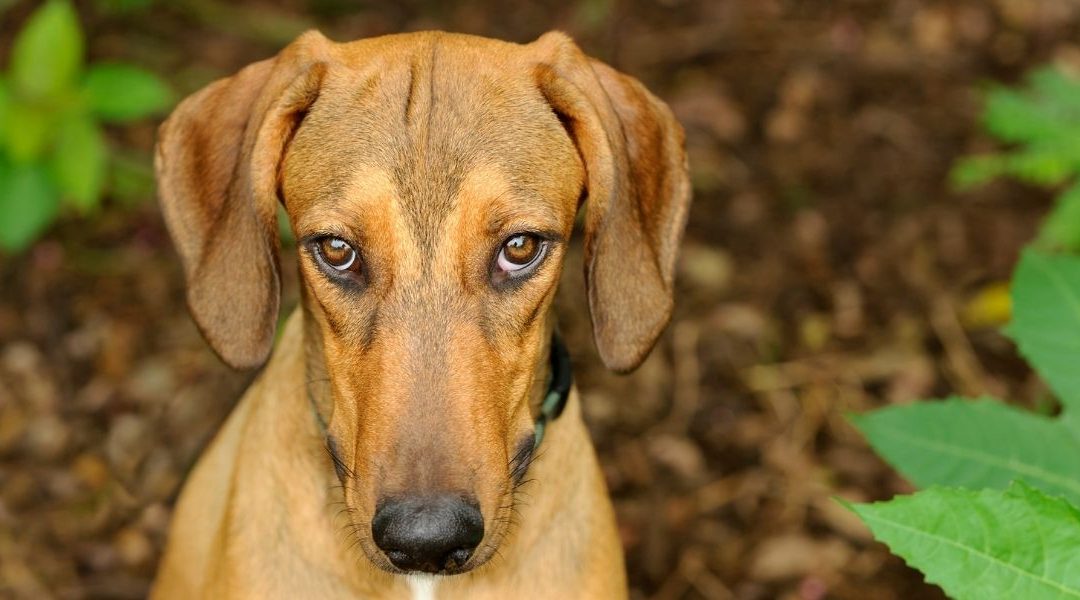
There was a time when dogs died peacefully in their sleep — without clinics, diagnoses, or “final visits to the vet.” They passed quietly at home, beside their humans. They didn’t have medical charts thicker than novels or endless appointments with specialists. The dogs of our grandparents lived and died with dignity — simply, as dogs.
The Judas Kiss at the Last Heartbeat
Today, dogs are consumed by diseases that have become the new normal — tumors, epilepsy, autoimmune disorders, and chronic inflammation. Instead of facing the truth of how our choices brought them there, we choose euthanasia. We call it “mercy.” But it’s not mercy. It’s helplessness — and hypocrisy.
Dogs no longer die suddenly and quietly. They die slowly — day by day, month by month — not because their time hasn’t come, but because they feel us. Their hearts keep beating even when their bodies have already given up — because they are still bound by our love, our fear, and our inability to let go.
Loyalty and the Right to a Dignified End
They stay because they believe it’s their duty to be there for us. They stay through pain and exhaustion because we’ve never freed them from the idea that they are our “angels” or our “only joy.” We never gave them permission to be simply — dogs.
We hold them back because it hurts to imagine life without them. And when that pain becomes unbearable, we choose to kill them — calling it “release.” But the truth is harder: We do it because we can’t bear to face what their final days reflect — the reality of what we’ve become.
The Hypocrisy of Our Lives
Isn’t it hypocritical? We work jobs we hate, share beds with people we no longer love, and stay in relationships that drain us. And so, when faced with pain, we choose what we’ve already chosen for ourselves — death as escape. Only this time, not for us — but for them.
The Other Way: Love and Freedom
There is another way — a life lived in love and harmony, where we learn that death isn’t an ending, but a transition. Where we can look our dog in the eyes and say: “You can go now. Your mission is complete. I’ll stay until my time comes. Thank you for every moment of love and service.”
When those words finally come from the heart — they understand. And then, they can go. Quietly. Freely. Without injections, without the “ceremony of goodbye.” They simply lie down and drift away because we released them.
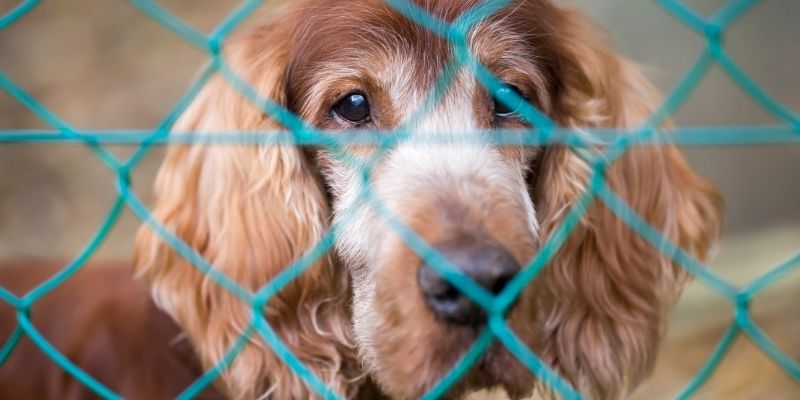
When our pain becomes unbearable, we choose to kill them.
Euthanasia Is Not Love
Euthanasia is not love. Love is letting them go when their time truly comes — without fear, without control, without disguising weakness as compassion. As our hand trembles above their body, we call it “mercy,” but what we give is often a Judas kiss — an act that appears gentle, yet carries the mark of betrayal.
We owe them the right to a dignified end — the same dignity they offered us every day of their lives. From the very start, they must know they are free — never bound to stay longer than destiny allows. Love doesn’t hold. Love releases.
At Integrative and Holistic Grooming Education, we believe that communication is felt, not forced. We teach you how to listen to your dog’s soul instead of just commanding their body. Explore our philosophy: Linktree Sasha Riess
by Sasha Riess | 11.03.26. | Wellbeing
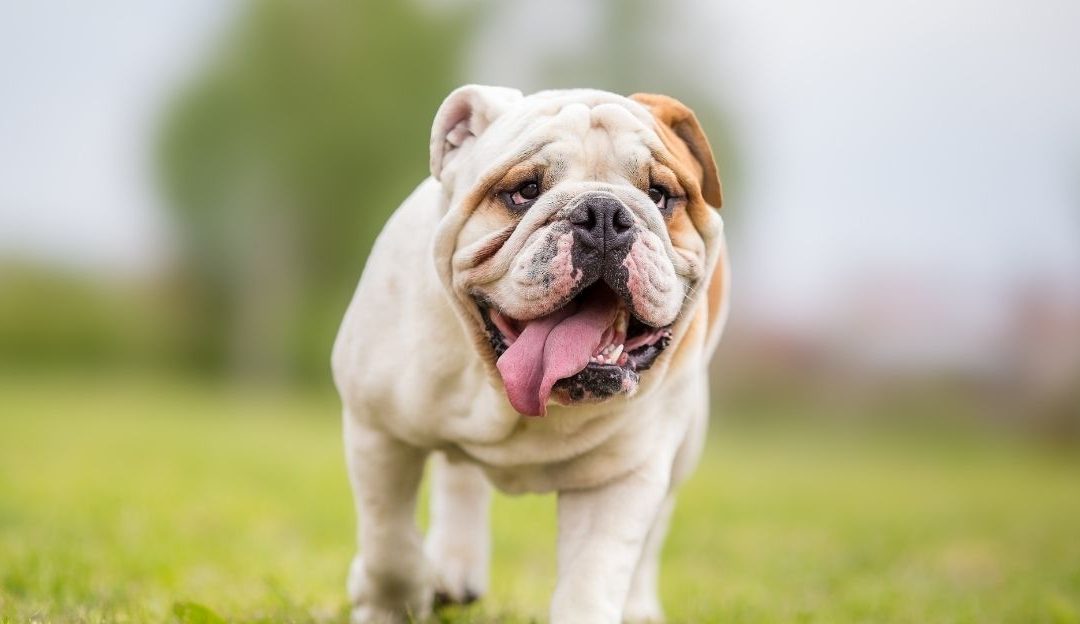
The English Bulldog would not survive in nature. Few people truly ask themselves which dogs would not survive in nature and what that means for us who choose to breed or adopt certain breeds. Once a human steps into canine genetics and begins deciding what will be combined, they take on enormous responsibility for the life that is created. Nature is simple. It does not forgive weaknesses and it does not preserve mutations that make survival difficult.
Which dogs would not survive in nature and why
Some breeds were created as a result of human choice rather than natural selection. This means that without humans they would not be able to survive even for a few days.
The most well known examples include:
-
English Bulldog: Cannot breathe properly, cannot run, has difficulty regulating body temperature, and often cannot give birth naturally.
-
Dachshund: Extremely short legs and a long torso would make it an easy target for predators. In the wild it could neither escape nor defend itself.
-
Pug, French Bulldog, Pekingese: All brachycephalic breeds suffer from breathing difficulties, problems with heat regulation, and limited physical endurance.
In nature, natural selection would simply remove such individuals.
The Dachshund and short legs as a genetic mutation
The Dachshund is an example of a breed whose short legs represent a genetic trait that would be a serious handicap in nature.
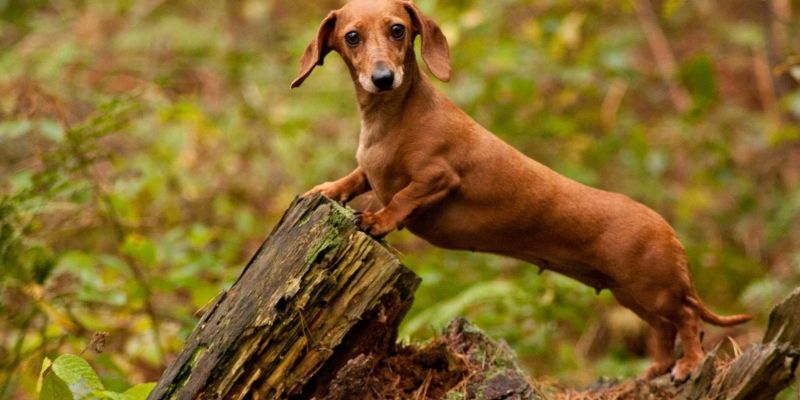
Genetic mutations like short legs would make survival in the wild nearly impossible.
Genetic mutations: what happens when humans help nature
Genetic mutations occur in all species, but in nature only those that enable life survive. In domestic dog breeds, the problem arises when humans take a mutation such as short legs or a flattened nose, consider it cute, and then deliberately breed that same mutation further. The result is dogs that would not be able to survive even a few hours without our care, medical assistance, and controlled environment. At that point, the breeder must be extremely responsible, because they take on the role of nature itself.
Why mothers sometimes reject puppies with mutations
In the wild, a mother immediately recognizes which puppy will not survive. This is not cruelty. It is biology. If a puppy has a severe mutation, difficulty walking, inability to nurse, or congenital diseases, the mother will not care for it. She knows what humans often do not want to see: that puppy is not capable of life. But when a human intervenes and saves every puppy without reflection, the mutation is preserved and passed on.
Which dogs would not survive in nature and what that means for us
Breeds such as the English Bulldog, Pug, Dachshund, and many others would not be able to survive in nature. They survive because of us. That means the responsibility lies entirely with humans:
If we create life, we must be ready to protect it.
At Integrative and Holistic Grooming Education, we believe that communication is felt, not forced. We teach you how to listen to your dog’s soul instead of just commanding their body. Explore our philosophy: Linktree Sasha Riess
by Sasha Riess | 10.03.26. | Emotions
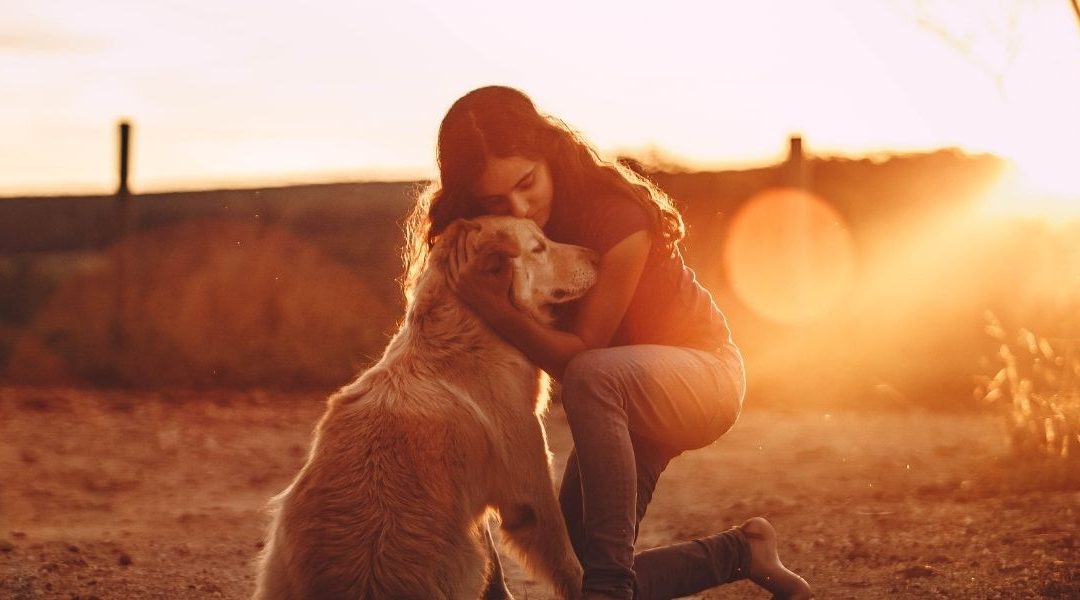
Dogs are more than loyal companions — they are bridges between the world of the living and those who have passed. Through them, we often feel the presence of those we’ve lost, because the love we carry inside doesn’t end with a physical goodbye. It simply takes a new form — a warm gaze, a gentle wag of the tail, a closeness that can’t be explained by reason.
Dogs Reflect Our Souls
There is a special connection between a person and a dog — one that goes beyond feeding, walking, and play. A dog recognizes in us what we often forget we have — quiet sorrow, tenderness, and a longing for peace. When we lose someone dear, a dog often becomes a channel through which we learn to love again, to embrace, and to believe that nothing in the universe truly disappears — it only changes form.
Love Beyond Presence
I can love you even without you. Love isn’t about possession — it is a state of being. When a dog enters our life, it doesn’t seek to replace what’s lost; it reminds us that love is always there, within us, needing no physical presence to exist. Through our dogs, we often embrace our memories— a parent, a child, a friend — and for a brief moment, all pain fades away.
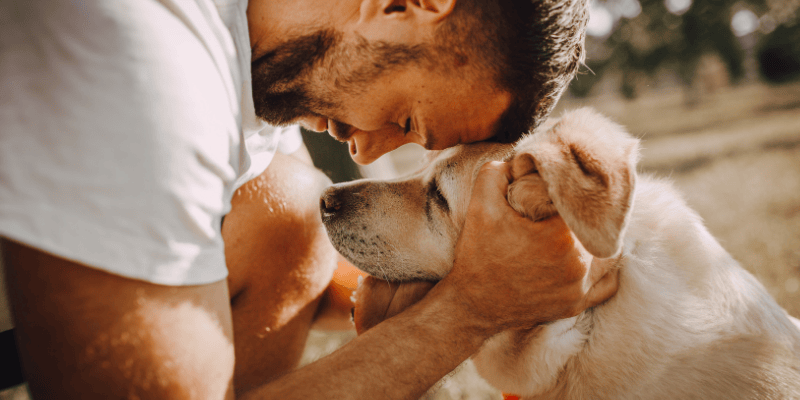
A man and a dog share a moment of silence and understanding – a bond that knows no words.
Dogs Connect Us with the Souls We Love
It’s not uncommon that through our bond with a dog, emotions we’ve buried rise to the surface. Dogs sense grief, loss, and unspoken pain. When we lean into their warmth, it’s as if we are holding those who are no longer here. They become bridges between worlds — and that’s why their presence carries such healing power.
The Dog as a Spiritual Guide
When we open our hearts to a dog, we are actually opening the door to our own soul. A dog does not judge, ask, or demand — it simply loves. And within that simplicity lies the deepest spiritual truth: love is eternal. Dogs teach us to love without condition, without fear, and without end.
At Integrative and Holistic Grooming Education, we believe that communication is felt, not forced. We teach you how to listen to your dog’s soul instead of just commanding their body. Explore our philosophy: Linktree Sasha Riess
by Sasha Riess | 09.03.26. | Emotions
Dogs Bring Happiness and Peace When the Relationship Becomes a Daily Practice
Dogs bring happiness and a sense of peace when the relationship with them does not remain only a possibility, but becomes a daily practice. A dog does not come into our life to solve problems instead of us, but to lead us toward facing them. That is why people often find peace with dogs that they are unable to find anywhere else.
How Dogs Bring Happiness and Peace into Everyday Life
Many people say that dogs bring happiness and a sense of peace because, with them, they stop running away from themselves. With people, we are constantly negotiating. With children, parents, partners, colleagues, and authorities. In those relationships there is history, expectations, power, and disappointment. A dog does not carry any of that. A dog reacts to what is, not to what we wish we were. That is why meeting ourselves through a dog is often more honest and less painful than through relationships with people. A dog does not pretend. A dog does not manipulate. A dog does not rationalize. A dog shows the consequence of our inner state.
Why Happiness with Dogs Comes Through Presence and Responsibility
People often believe they would feel calmer if only a certain problem disappeared. If only this situation, this person, this job, or this responsibility were gone. In that belief, happiness is projected into something in the future. A new object, a journey, a relationship, an experience.
Disappointment usually happens twice. The first time when it is not there. The second time when it arrives, and we realize it did not bring what we expected. Neither a new relationship, nor travel, nor possessions bring lasting peace. They only briefly shift attention.
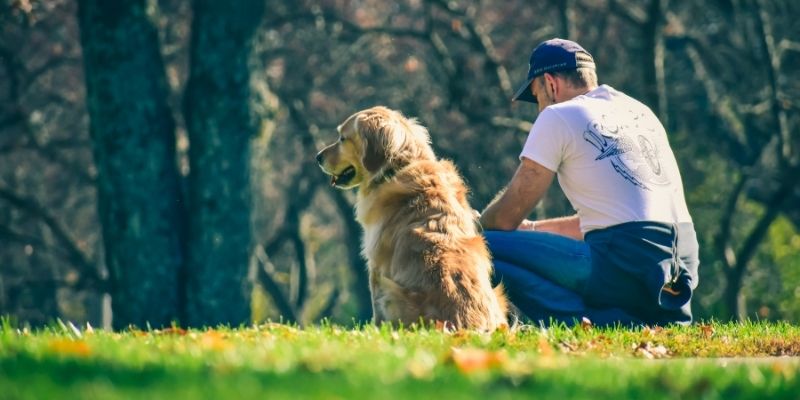
A dog brings us back to ourselves, without judgment or demands.
Emotional Stability and Dogs: How a Sense of Peace Is Created
A dog does not come as a distraction. A dog comes as a mirror. Through a dog, we cannot escape ourselves, but we can calm down in the presence of a being that does not ask for explanations, but for consistency. The peace people feel with a dog does not come because the dog is positive or therapeutic. It comes because the dog brings us back into the present moment. Into routine. Into responsibility. Into the simplicity of relationship. That peace people feel with dogs is not accidental. Dogs bring happiness and a sense of peace through relational stability, not through excitement. This is not an escape from problems. It is a meeting with them, without drama.
Dogs Bring Happiness: Why External Things Are Not Enough
True peace does not arrive when the external world changes, but when we stop believing that external things will save us from inner restlessness. A dog helps in this process because it constantly brings us back to the essentials. Care. Presence. Responsibility. Dogs do not give happiness. They create the space in which happiness can appear.
At Integrative and Holistic Grooming Education, we believe that communication is felt, not forced. We teach you how to listen to your dog’s soul instead of just commanding their body. Explore our philosophy: Linktree Sasha Riess