Shelters are meant to be places of hope, but for many, they are places of silent suffering. While we often talk about cold kennels and the lack of human contact, there is a quieter, more dangerous problem: the poor quality of dogs in shelters nutrition.
Very often, shelter food consists of expired kibble—stale, spoiled, and filled with chemicals. What the label calls “food” is often just industrial waste that the industry cannot sell to humans.
Poor Nutrition: The Invisible Source of Suffering
A shelter dog is already at the edge of its strength, battling anxiety and a weakened immune system. When we add low-quality food, the consequences are devastating:
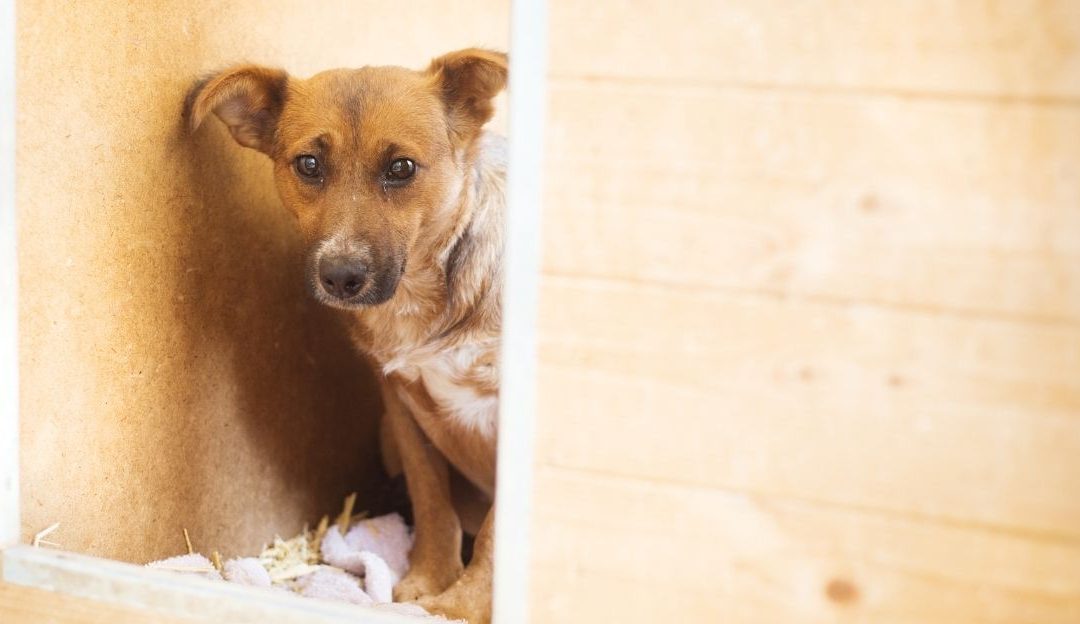
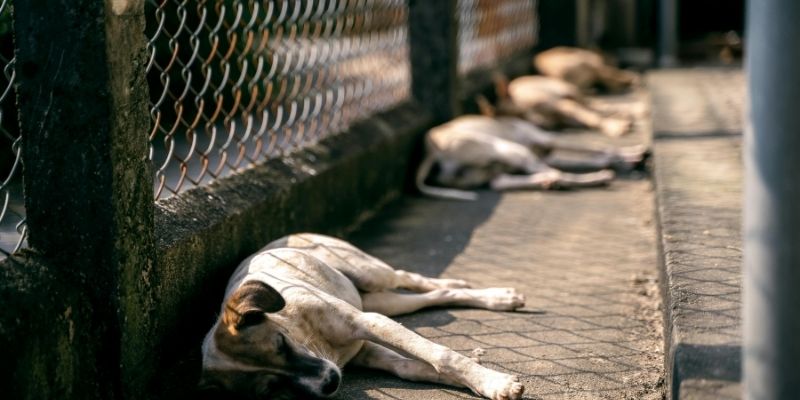
Poor conditions and low-quality food further endanger dogs in shelters.
The System, Not the People
This is not an accusation against shelter workers. Shelters are overwhelmed and underfunded. When a truck of expired food arrives, it looks like salvation. But in reality, this food often contains mold and toxins that directly poison an already exhausted system.
What Can Be Changed?
Food is the foundation of survival. When a dog receives clean, nutritious food, it gains a chance to heal. While shelter problems cannot be fixed overnight, the conversation about the quality of what they eat must begin today.
At Integrative and Holistic Grooming Education, we believe that health starts from within. A dog’s coat and spirit are reflections of their nutrition. Learn more: Linktree Sasha Riess
When it comes to our lives with animals, we must ask ourselves: is it dog training or a relationship of love? Training often reduces dogs to mere points in a program, but a real connection begins only when we stop training and start feeling.
Training as a Continuation of the Circus
The way dog training is understood today has never represented a relationship to me — it’s merely a modern form of the circus. Once, people used elephants, tigers, or lions to demonstrate power and entertain crowds. Today, the stage is smaller, the method refined — but the essence remains the same.
Trust is not commanded; it is built through presence, understanding, and love.
When I see dogs performing “tricks,” I don’t see freedom; I see limitation. The dog becomes a number in a show — a tool for our amusement, not a being that feels and breathes.
Zoos and “Positive Therapy”
In zoos, the same principle continues. Animals are taught to accept examinations, open their mouths, and take medication. While it’s called “positive therapy,” the essence hasn’t changed — it’s still about the human adapting the animal to themselves.
The True Essence of Relationship
No one in this process enters the animal’s soul or inner world. The focus remains on shaping behavior for human convenience, while the animal’s need is forgotten. A dog didn’t come into our lives to perform, to entertain, or to validate us. Its presence carries something much deeper — a call to relationship.
True trust doesn’t need a command; it only needs your presence.
Relationship, Not Domination
A true relationship isn’t built on dominance, but on trust, belonging, and sincere love. When we choose a relationship of love over dog training, we stop taking away who they truly are.
True Companionship, Not a Circus
When I understood that, I discovered something else — that only then does the bond with a dog stop resembling a circus and start resembling a real community. That’s the moment when both human and dog become what they were always meant to be — partners in life.
At Integrative and Holistic Grooming Education, we believe that communication is felt, not forced. We teach you how to listen to your dog’s soul instead of just commanding their body. Explore our philosophy: Linktree Sasha Riess
Dogs Are Not Trained but Understood Through Relationship
Dogs are not trained because a dog is not a machine, nor a program that needs to be “fixed”. A dog is a living being who enters into a relationship with a human, responds to the context in which it lives, and mirrors the state in which we exist. When we understand this, the need for training disappears and real work with the dog begins.
Why Classical Training Does Not Work
Dogs do not function through training because training implies control, commands, and correction. Understanding implies relationship, presence, and human responsibility. And this is where the difference arises that changes everything.
A dog living in an apartment is not the same dog as one living on the street. A dog living in a yard is not the same dog as one living inside a family. That is why there is no universal technique, no universal command, and no universal method for working with dogs.
Dogs Are Not Shaped by Commands but by Context
A dog is not “disobedient”. A dog responds to the circumstances in which it lives. When a dog pulls on the leash, barks constantly, refuses food, or shows anxiety, this is not disobedience. It is a message.
The dog is showing how it feels within the relationship, the space, and the structure provided by the human. Dogs are not trained to fit into our life; they are understood so they can be stable within it.
A dog always responds to the context in which it lives.
Learning Through State of Being, Not Words
A dog does not learn from words. A dog learns from a state of being. That is why a dog may “listen” to one person and completely ignore another. Not because it is stubborn, but because with each person it experiences a different relationship, a different sense of safety, and a different level of trust.
The boundaries a dog respects are not the ones we say, but the ones we live.
Dogs Are Not Projects nor Household Appliances
A dog is not here to fulfill our need for control, success, or perfect behavior. A dog is not a project. A dog is a companion. The more we try to “train” a dog, the more we distance it from ourselves. The more we learn to understand the dog, the more behavior changes naturally—without force, without punishment, and without trauma.
Dogs are not trained to be good. Dogs are understood so they can be stable.
This understanding of a dog’s emotional and physical state is at the heart of everything we do. At Integrative and Holistic Grooming Education, we teach people how to apply these principles of stability and care in their everyday lives with their dogs, helping create calm, healthy, and happy results.