by Sasha Riess | 04.03.26. | Emotions
In family relationships, we often hear that forgiveness is the key to peace, but in reality, the role of forgiveness is far more complex. In the parent-child relationship, we should neither judge nor forgive, because both actions disrupt the natural order of love. Instead, the sentence “Yes, this is how it is” brings the deepest form of release without taking on burdens that do not belong to us.
Why We Should Not Judge or Forgive
When we say that forgiveness is not always the path to healing, it may sound contrary to everything we have been taught. But within the natural family order, the child must not rise above the parent. If the child says “I forgive you,” the child unconsciously takes the position of a judge, and this disrupts the order of love.
What It Means to Take On a Parent’s “Guilt”
Forgiving a parent places the child above the parent, as if the child is evaluating the parent’s actions and deciding what is good and what is not. This is a form of unconsciously taking on the parent’s burden.
How a Disrupted Order Affects Future Generations
When a child stands above the parent, the consequences can echo through generations. Feelings of guilt, fear, insecurity, destructive behavioral patterns, and even psychosomatic symptoms may emerge. To stop this burden from continuing, the answer is simple: do not judge and do not forgive.

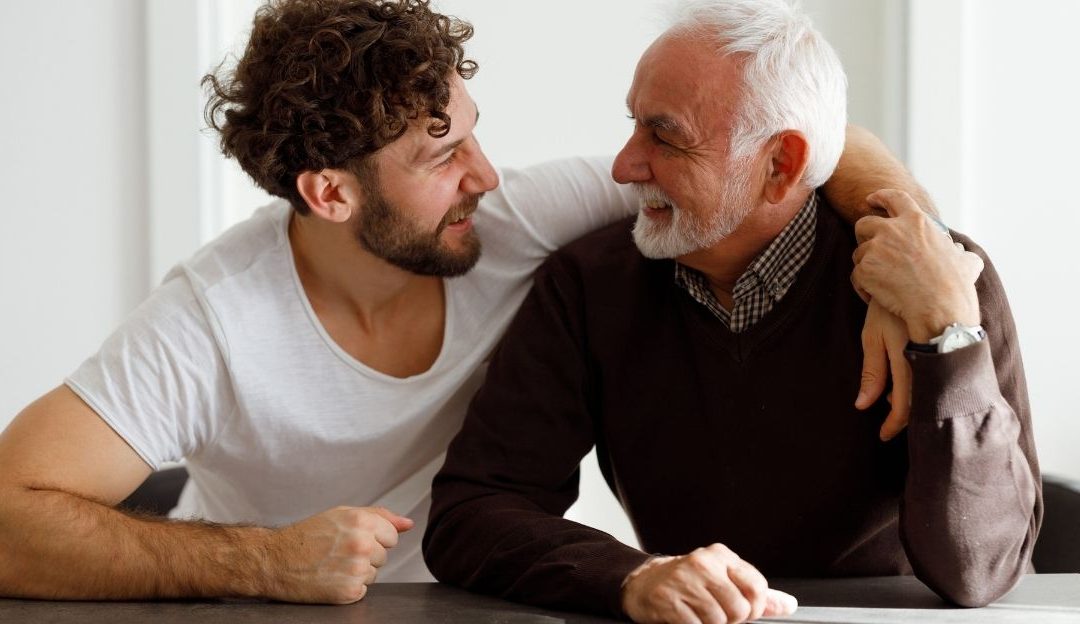
A moment showing the importance of maintaining the order in the parent-child relationship.
The Power of “Yes, this is how it is”
Acceptance does not mean justification. It means acknowledging that the parent gave what they could with what they had. This sentence restores order: the parent is the big one, the child is the small one.
-
The child keeps: Strength, discipline, and life energy.
-
The child releases: Wounds, violence, and disoriented emotional attachments.
“Yes, this is how it is” as the healthiest form of liberation does not try to change the past. Judgment belongs to a higher power; the burden stays where it belongs, and you are finally free to live your own life.
At Integrative and Holistic Grooming Education, we believe that understanding our roots and emotional order is essential for true health. Every physical symptom—in humans or dogs—is a message about balance. Learn more: Linktree Sasha Riess
by Sasha Riess | 04.03.26. | Nutrition
Dogs do not experience food and hunger the same way humans do. While owners often believe their dog is constantly hungry or enjoys food the way we enjoy our favorite meals, their relationship with food is entirely different. It is important to understand how dogs feel hunger and what food represents to them, because this changes how we feed them and how we interpret their signals.
How Dogs Actually Experience Hunger
For dogs, hunger has a completely different meaning than for humans. While humans associate hunger with taste, rituals, comfort, and emotions, dogs experience food functionally. Food is simply a source of energy that allows them to be capable, active, and ready for life.
In nature, dogs instinctively apply a natural rhythm similar to what we now call autophagy—a mild fasting period that helps the body regenerate. For wild dogs, hunger is not a tragedy; it is a vital part of their daily recovery cycle.
The „Manipulation“ of Love
Dogs often use food to “manipulate” their owners, but not out of bad intent. They intuitively understand that food is the strongest emotional point in our relationship. Because we express care, love, and connection through feeding, they use food-seeking behavior as a way to engage with us.
Do Dogs Truly Enjoy Food Like Humans Do?
Dogs do not enjoy food emotionally. We eat when we are sad, lonely, or stressed, assigning emotional meaning to every bite. Dogs do not do this. They eat to:
While a dog eats with enthusiasm, it is a response to a natural need, not a search for emotional satisfaction or comfort.
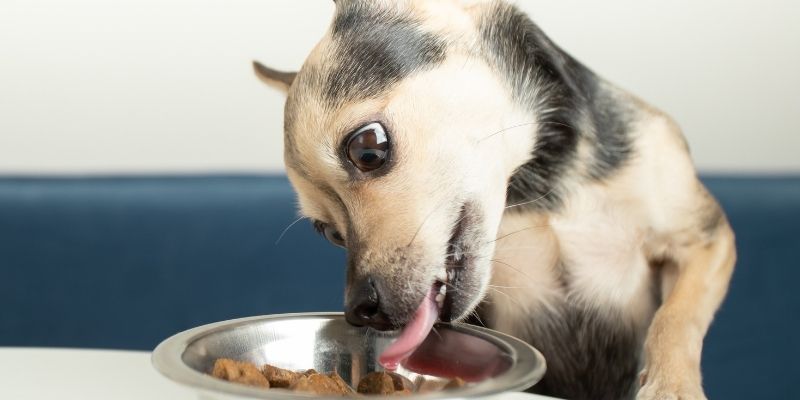
Dogs eat when biologically necessary, without emotional overeating.
When We Think the Dog Is Hungry, but It Isn’t
Owners often misinterpret „begging“ eyes or following them to the kitchen as starvation. In most cases, this is communication, habit, or a request for attention. This is why experienced handlers say: “A happy dog is a slightly hungry dog.” Mild hunger is natural, healthy, and part of their biological rhythm.
What Owners Should Know
Dogs feel hunger differently. For them, food is not an indulgence or an emotional outlet. It is energy, function, and a way to remain stable. By understanding this, we can avoid overfeeding and build a relationship based on true needs rather than misinterpreted emotions.
At Integrative and Holistic Grooming Education, we believe that every physical symptom is a message. Understanding these signals and addressing them through a holistic lens is at the heart of everything we teach. Learn more and join our community: Linktree Sasha Riess
by Sasha Riess | 04.03.26. | Behaviour
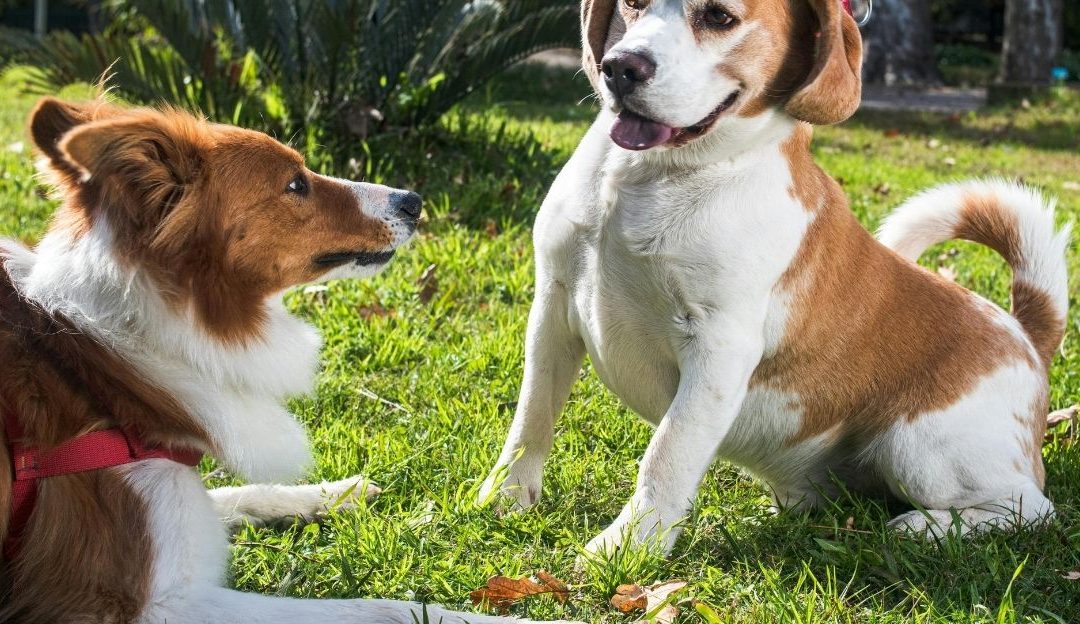
People often imagine that dogs socialize the same way we do. We think dogs enjoy going to the park, meeting other dogs, or visiting a neighbor. However, dogs do not function through that concept at all. In nature, there is no idea of one animal visiting another simply for socializing. This is why it is important to understand how dogs truly experience contact with other dogs.
Why Dogs Do Not Understand the Concept of Socializing
Dogs do not possess a social model similar to that of humans, so we cannot say that dogs socialize like humans in the way we understand it. There is nothing in their biology that supports the idea of someone coming or going from a space purely for companionship.
This concept feels normal to us, but to dogs, it is unclear and unnecessary. What matters to them is their environment, stability, and the relationship with their owner—not expanding a circle of acquaintances.
The Cost of Continuous Sensory Overload
When we constantly take them to other dogs, to crowded parks filled with unfamiliar animals, or to a neighbor “to socialize,” we are actually exposing them to continuous sensory overload. In those situations, the dog must repeatedly open all its sensory fields, assess safety, and search for emotional security again and again.
Frequent encounters force the dog into repeated cycles of assessment:
-
Whether the other dog is safe.
-
Whether it needs to defend itself or take control.
-
Whether its owner is stable enough to provide protection.
-
Whether safety can be found in another animal.
This is not socializing. This is a continuous activation of physiology that the dog usually does not need. Instead of calmness, the dog remains in a mode of analysis and survival, which exhausts both the body and emotions.
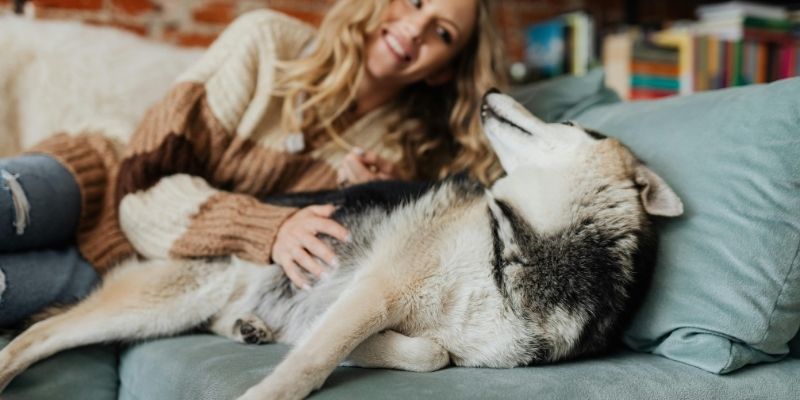
A dog does not seek the company of other dogs — it seeks security beside its human.
What a Dog Truly Wants
A dog does not want a “park friend” or a “social network” like humans have. A dog wants:
-
Stability.
-
Safety.
-
An owner who is an emotional anchor.
When that exists, everything else becomes unnecessary. When we accept that dogs do not socialize like humans, it becomes much clearer what they genuinely need.
At Integrative and Holistic Grooming Education, we believe that every physical symptom is a message. Understanding these signals and addressing them through a holistic lens is at the heart of everything we teach to ensure the well-being of every dog in our care. Learn more and join our community: Linktree Sasha Riess
by Sasha Riess | 03.03.26. | Nutrition
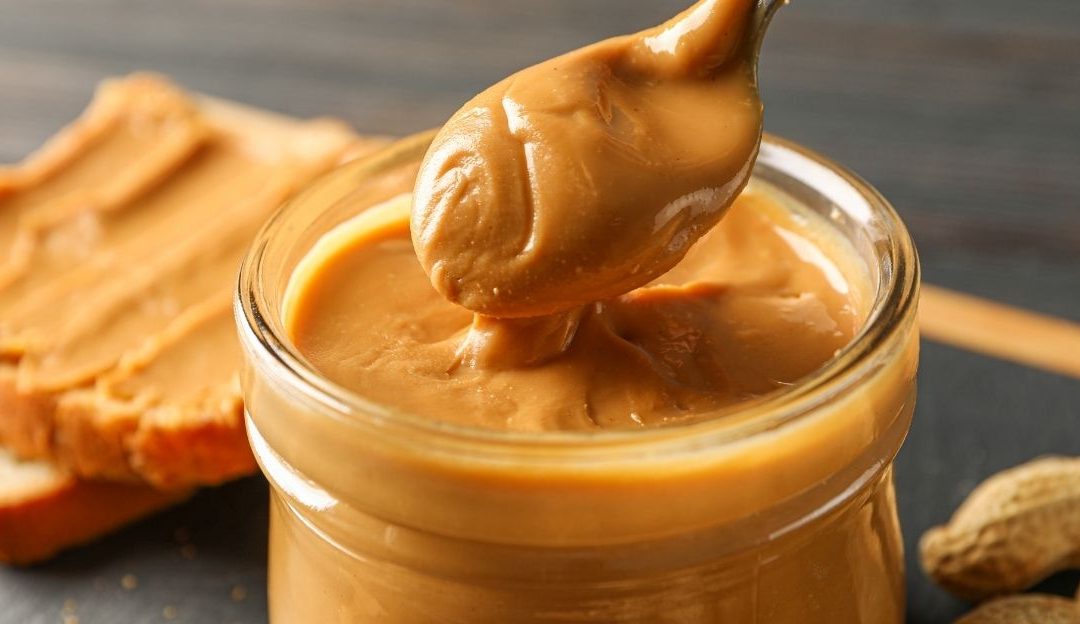
Peanut butter is often considered a healthy and convenient food, but the reality is very different. Although it appears nutritious, this product almost always contains something we cannot see with the naked eye: mold and toxins that develop during harvesting, processing, transportation, and storage. This is why many nutritionists and holistic practitioners increasingly warn: do not eat peanut butter unless you have made it yourself from completely safe, home-sourced peanuts.
Why You Should Not Eat Peanut Butter
Peanuts are one of the foods most susceptible to the development of mold. Even with the best quality control, there is no technological process that can completely prevent contamination during harvesting, drying, transportation, storage, or industrial processing.
Mold on peanuts often produces aflatoxins, substances that are among the most dangerous natural toxins. They can affect the liver, immunity, digestive system, and overall energy levels. In other words, even the so-called „best“ peanut butter cannot guarantee that it is truly safe.
What Actually Happens to Peanuts During Storage
Peanuts grow underground and are therefore exposed to a large number of fungi. During transport, bags or containers rarely maintain optimal humidity and temperature, allowing mold to develop very quickly.
This is why experts agree on one thing: Even when they appear clean, dried, or roasted, peanuts almost always contain mold that cannot be seen. For this reason, it is strongly recommended do not eat peanut butter unless you process your own peanuts from a trusted source.
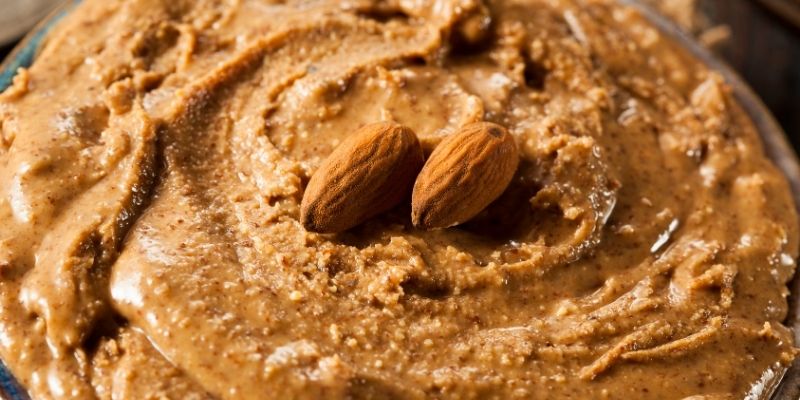
Almond butter contains fiber and has a lower risk of contamination during storage.
A Better Option: Almond Butter
If you enjoy spreads, there is a much safer and healthier alternative: almond butter.
Almonds are significantly more resistant to mold development, easier to store, and less likely to be contaminated during processing. In addition, almond butter is:
-
Rich in fiber.
-
Supportive of gut health.
-
More stable in digestion.
-
Nutritionally cleaner and gentler on the body.
For these reasons, it is an excellent substitute for peanut butter and can be used in exactly the same way.
Conclusion: Prioritize Your Health
No matter how tasty, affordable, or practical it is, peanut butter carries risks that you cannot see or detect. If you want to avoid ingesting mold and toxins, the best decision is simple: Do not eat peanut butter unless you make it yourself from completely safe, home-grown peanuts. For everyone else, almond butter remains the best, healthier, and cleaner alternative.
At Integrative and Holistic Grooming Education, we believe that every physical symptom is a message. Understanding these signals and addressing them through a holistic lens is at the heart of everything we teach to ensure the well-being of every dog in our care. Learn more and join our community: Linktree Sasha Riess
by Sasha Riess | 03.03.26. | Behaviour
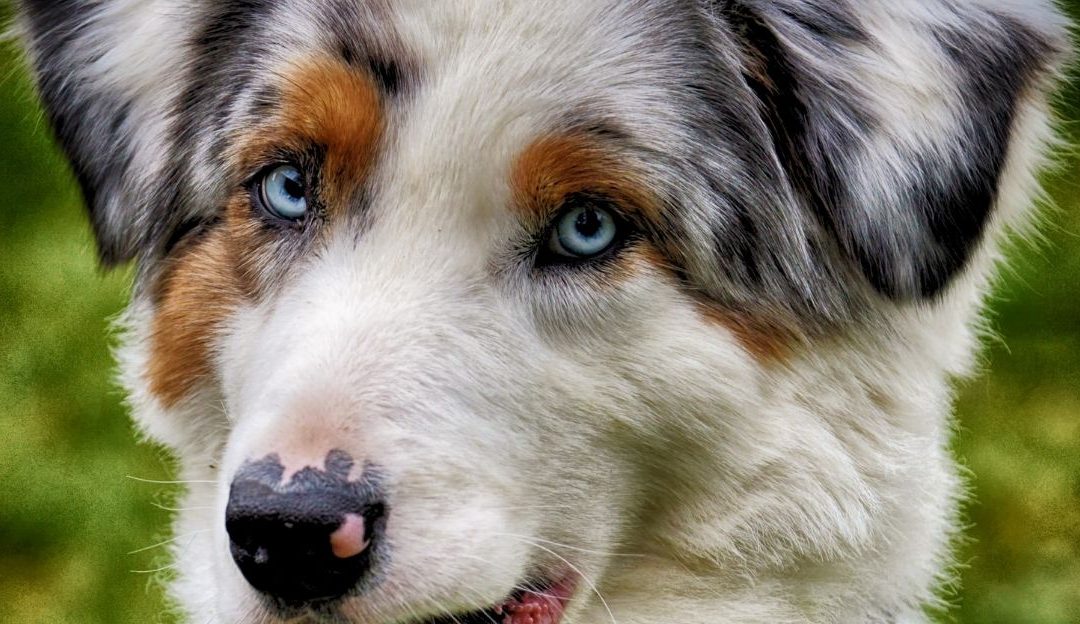
Most people believe that a dog reacts only to commands, tone of voice, or training. But the truth is much deeper. Both dogs and young children feel far more of who we are than what we do. This is why a dog sometimes does not listen, a child does not respond, and it seems to us that they “do not understand.”
In reality, they understand much more than we would like to admit. How dogs and children react is a direct reflection of our inner state.
What Does a Dog Actually Sense?
A dog does not respond to our words but to the atmosphere we create. If we are nervous, insecure, angry, or afraid, the dog will feel it long before we acknowledge it to ourselves.
The issue is not the leash, the collar, the command, or the technique. The issue is the energy we bring into the relationship. Just as we do not need to walk a dog with a choke chain or an electronic collar, we also do not need to “break him with discipline.” A dog reacts to the entire environment shaped by us—to the way we move, speak, breathe, and approach.
Why Is It the Same with Young Children?
It is similar with children. They rarely react to what we tell them; they react to what they feel coming from us. If we are confused, tense, angry at ourselves, or afraid of life, they interpret it as their own insecurity.
They do not respond to our story but to our inner reality. And here lies the essence of the problem. We are often afraid to be who we truly are, so we wear masks. We perform calmness, confidence, and authority. But the dog and the child see right through it.
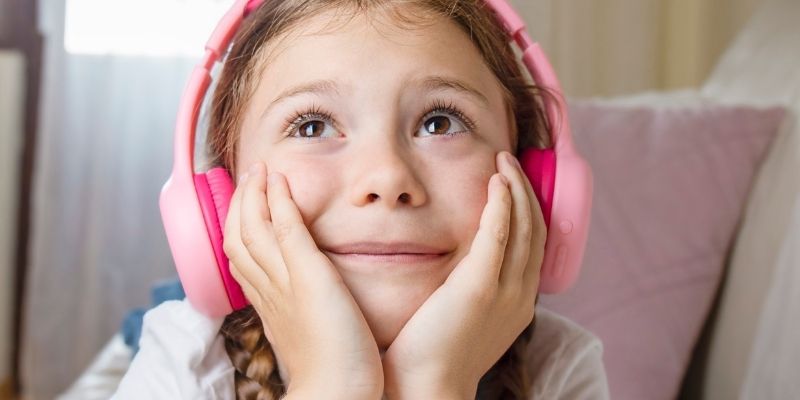
Children feel what we live, not what we say.
How One Sentence Can Change a Child’s Entire Life
A dog did not come to be your pet; he came to change your life. This applies to children as well. They do not learn from what we say; they learn from what we live. Understanding how dogs and children react to our lived truth can shift the entire family dynamic.
How to Change Their Response
There is only one way to change the behavior of a dog or a child: We must first change ourselves.
-
Slow down: Speed creates tension.
-
Release tension: Physical stiffness signals danger.
-
Become present: They feel when we are mentally elsewhere.
-
Stop hiding emotions: They sense the dissonance between our face and our heart.
-
Stop sending mixed signals: Consistency comes from inner peace.
They react to truth, not performance. When we change, their behavior naturally changes with us.
At Integrative and Holistic Grooming Education, we believe that every physical symptom is a message. Understanding these signals and addressing them through a holistic lens is at the heart of everything we teach to ensure the well-being of every dog in our care. Learn more and join our community: Linktree Sasha Riess