
by Sasha Riess | 01.07.26. | Behaviour
There are things we can hide from a partner, friends, and sometimes even from our own awareness. However, there is one being in front of whom every mask becomes useless. Your dog knows the truth.
I often receive complaints from owners about “strange” canine behaviors. These include persistent mounting of a leg or sudden possessiveness. What most people interpret as a behavioral problem is often a manifestation of something hidden. Indeed, a dog does not live what it sees. Instead, it lives what it feels in the air. Therefore, you must understand how your companion acts as an intuitive dog emotional mirror.
Energy You Cannot Hide From Your Dog
When a dog begins to display obsessive dominance or irritating behaviors, it creates immediate tension between partners. Consequently, the animal is revealing the hidden dynamics of the relationship. Dogs sense subtle shifts in energy, internal stress, and emotional distance. They perceive the presence of a “third person” in the emotional space, even if that person is not physically present.
The dog becomes a mirror of the relationship between partners. Because of this deep connection, it lives the secret that people try to suppress.
The “Secretary” Case: When Symptoms Disappear with the Truth
I once handled a case where a wife was desperate because the dog constantly mounted her husband’s leg. Naturally, this action irritated her enormously. Later, the truth came out. The dog had been reacting to a change in the husband’s energy. This shift was caused by a secret relationship with his secretary.
The moment the truth came out and the marriage ended, the dog spontaneously stopped the behavior. Therefore, the problem had never been the dog or its natural instincts. The problem was the energetic imbalance within the home.
Between Love and the System: The Paradox of Veterinary Ethics
Bathing Dogs: Hygiene That Protects Internal Organs
The Silence That Screams: Are We Leaving Our Unlived Wounds to Children and Dogs?
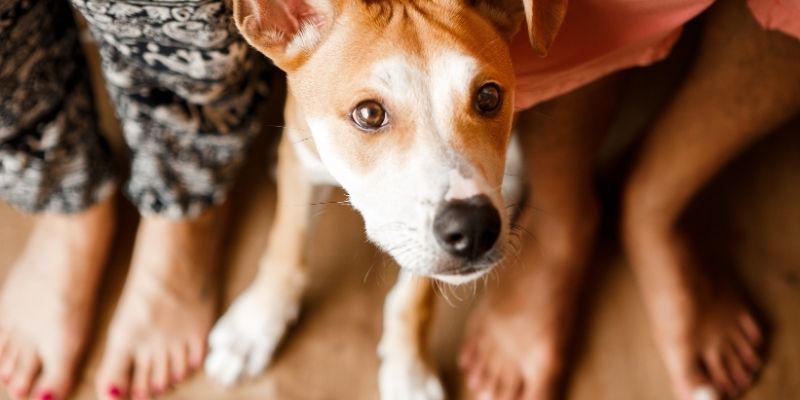
True behavioral balance returns naturally the moment we restore energetic harmony within the home.
You cannot hide anything from a dog. Your companion connects deeply to the emotional atmosphere of the home. Furthermore, the animal reacts to every single crack in human integrity.
If your dog suddenly behaves in a strange way, do not look for the solution only in training. Sometimes the answer lies in the truth of your relationships. To explore more about how animals process human energy and environment, read our holistic behavior guidelines.
At Sasha Riess, we teach that a dog’s behavior is the direct reflection of your inner world. True wellness means living in absolute authenticity to bring ultimate pureloveandharmony to your companion. Connect with your dog’s true nature today: Linktree Sasha Riess
👉 Follow our Facebook page and never miss our latest articles, news, and updates.
by Sasha Riess | 25.06.26. | Behaviour
During my time in Australia, I met Aleksandar and his dog. It was my first encounter with a case where a companion animal displayed such severe physical symptoms. The diagnosis was clear, but no solution seemed to exist. The animal suffered from epilepsy in dogs in its harshest form. Therefore, this critical case forced us to look deeper into what causes canine epileptic seizures when traditional methods fail.
The Limits of Traditional Veterinary Medicine
The traditional veterinary approach managed to keep the heavy symptoms under control only up to a certain point. Aleksandar took his dog to prestigious specialized clinics across the country. However, traditional veterinary medicine simply no longer had a reliable answer for the condition.
There came a dark moment when the seizures became incredibly frequent and severe. Consequently, modern medicine could no longer keep up with their rapid progression. This limitation shows why we must re-evaluate what causes canine epileptic seizures from a holistic standpoint.
Between Hope and the Final Option
The disappointment became complete when specialists told Aleksandar that nothing more could be done. Increasing the dosage of standard medication or combining additional drugs had become entirely impossible. Indeed, even the smallest chemical adjustment could have been catastrophic for the dog’s fragile organism.
As a final option, and with great “empathy,” the clinics advised him to euthanize his friend in order to end the suffering. Aleksandar was completely devastated. Yet, deep inside his heart, he felt that this was not the true end of the road.
Dog Nutrition: Allowed Fruits, Vegetables, and Mushrooms – A Complete Guide
Bathing Dogs: Hygiene That Protects Internal Organs
Alopecia in Dogs: Why Hair Cannot Break Through the Skin

Deep inside, he felt that this moment of hopelessness was not the end of the road.
It was precisely that intense moment of hopelessness that became the entry point into an entirely new understanding of what we call epilepsy in dogs. To explore more about how internal systems and environmental stress impact severe conditions, read our holistic behavior guidelines.
At Sasha Riess, we believe that when conventional answers end, a deeper understanding of biological harmony begins. True healing requires looking past the symptom to restore absolute pureloveandharmony within the organism. Discover a new perspective on your dog’s vitality:Linktree Sasha Riess
👉 Follow our Facebook page and never miss our latest articles, news, and updates.
by Sasha Riess | 22.06.26. | Behaviour
In a world that often frightens and paralyzes us with its circumstances, it is easy to lose contact with what truly matters. We have become a generation that has surrendered, forgetting the deep, primal strength that each of us carries within.
Life with a dog is not just a hobby or an obligation. It is a path back to that strength, the kind that can move mountains when they stand in our way.
A Lesson in the Endurance of Our Ancestors
We often complain about the difficulty of life, about bills or everyday inconveniences, forgetting what our ancestors endured. They survived wars, illness, and unimaginable hardship so that we could exist today. While we focus on material concerns, we lose sight of the essence of existence.
This is where the companion enters. Embracing life with a dog pushes us out of our frozen state and reconnects us with nature and with a reality that is simpler and stronger than our fears.
The Dog as a Bridge to Primal Strength
When you have dogs, contact with life becomes more beautiful and easier. They do not know about curfews or unpaid bills. They know only movement, presence, and the strength of survival.

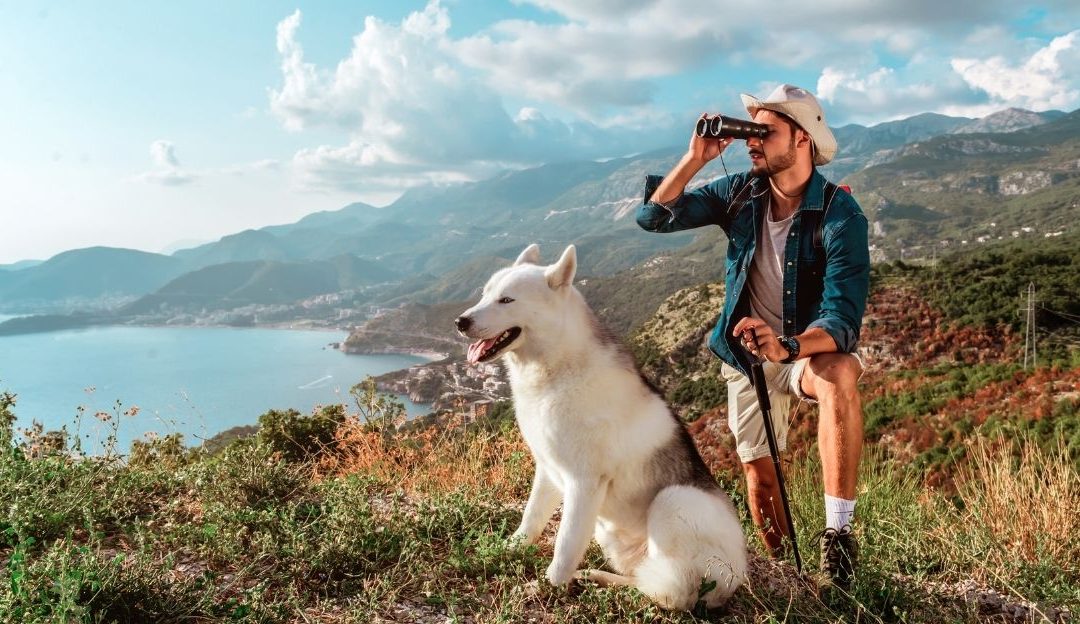
Getting back to what really matters.
Through them, we are reminded that life is not about collecting bags from the store, but about moving forward despite everything. With them, the mountain that once seemed immovable suddenly becomes just a small obstacle we can bypass or move. Life with a dog is, in essence, life lived in the full capacity of our human and animal nature.
At Sasha Riess, we recognize that our animals are the ultimate mirrors of presence and resilience. Returning to nature alongside your companion restores your inner power, grounding your entire household in pureloveandharmony. Reclaim your ancestral strength:Linktree Sasha Riess
by Sasha Riess | 19.06.26. | Behaviour
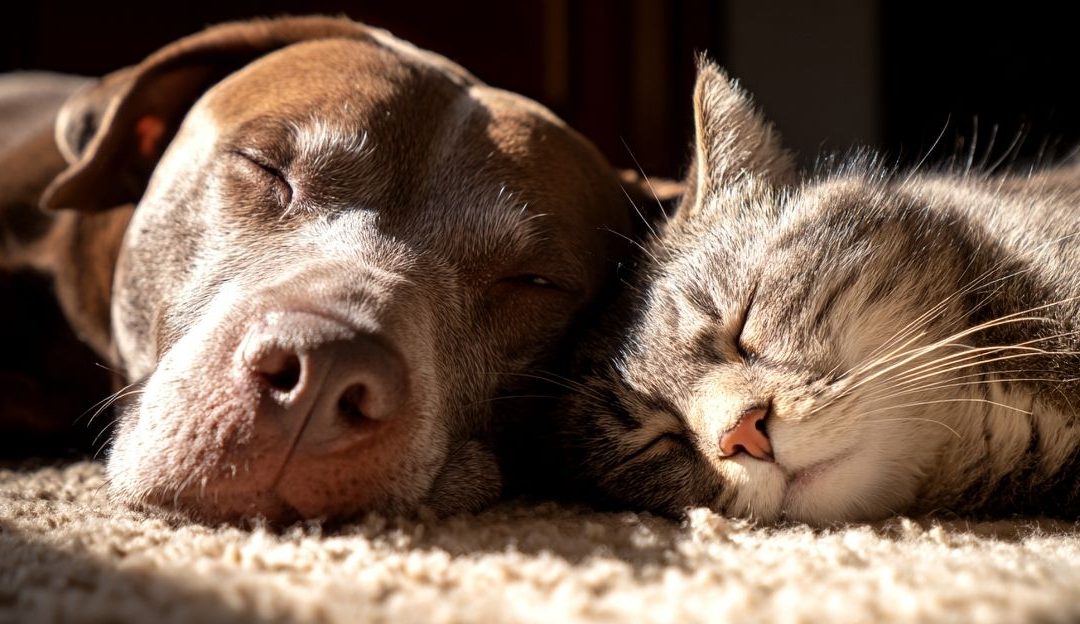
The question of how to get a dog used to a cat is one of the most common among pet owners. Most people look for tricks, barriers, or scents, but the essence is much deeper. If your dog chases a cat, it often does so because it feels the need to protect you or its territory. A dog’s behavior in this situation is a direct message to you: “You are not the center of my world, so I have to decide who is welcome here.”
A Dog That Protects Its Owner From the Cat
Many people do not realize that aggression or intolerance toward a cat often comes from a dog’s instinct to protect its human. If the dog does not see you as an unquestionable leader, it takes responsibility for the safety of the pack.
To resolve this conflict, you do not need to train the dog to “sit” next to the cat. You need to go back to the beginning and rebuild that mutual relationship by placing yourself at the very center of your dog’s attention.
You Are the Greatest Reward, Not a Treat
Forget about bribing your dog with cheese or toys so it accepts the cat. A true relationship is built when you become the greatest possible reward for your dog.
When the dog sees you as its “god” and absolute authority, its need to chase the cat or react to external stimuli disappears. It wants to follow you and please you because you are the leader of its life.
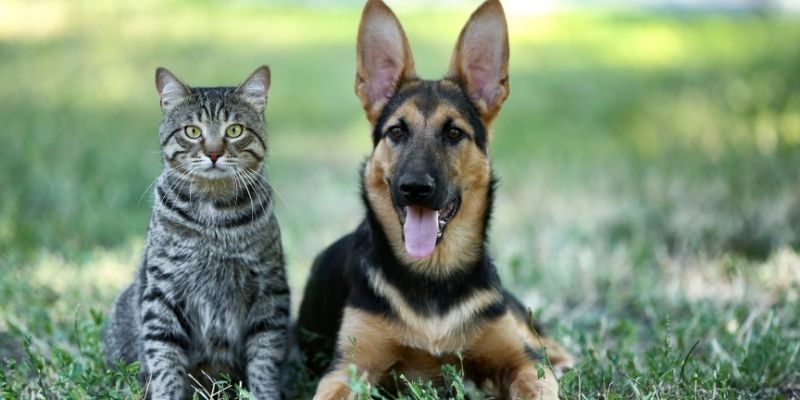
Be the leader for your dog and he will stop feeling the need to „solve“ the cat situation.
Leadership in Your Own Life
Dogs long for a leader who moves through the world with stability. The hardest thing for a human is to do what must be done, to be consistent and calm.
When you master yourself and your life, your dog will feel it. At that moment, the presence of a cat is no longer a threat or a target, because the dog knows that the leader is the one who decides what peace in the home looks like.
by Sasha Riess | 16.06.26. | Behaviour
Dog Parks: A Time Bomb of Anthropomorphism
There is something deeply appealing in the image of a dog park. Open space, grass, freedom, play, encounters, “socialization.” People stand on the side, smiling, relaxed, convinced they are doing the best possible thing for their dog. The idea seems pure, humane, modern. And that is exactly why it is dangerous. Not because it is malicious, but because it is based on a misunderstanding of the dog’s nature.
The question is not whether a problem will occur. The question is when, and what the cost will be.
Over the past ten years, dog parks have become a standard of urban culture. In many cities, they are seen as a symbol of care for animals. However, alongside this growth, the number of incidents has also increased. Various studies and data from veterinary practice show that a significant percentage of owners report that their dog has experienced an attack in such environments. Estimates go as far as suggesting that approximately every seventh dog has had a negative experience in a dog park. Scientific research further confirms that conflicts between dogs in these settings are a real and frequent occurrence.
But what cannot be seen in statistics is far more important. It is the invisible cost paid by the dog’s nervous system. It is the micro-stresses that accumulate. It is the behavioral changes that appear later, when no one connects cause and effect anymore. And here we arrive at the key point: the dog park is not the problem. The problem is the idea we have placed into it.
Anthropomorphism and the Truth About Dog Parks
Anthropomorphism means attributing human characteristics to beings that are not human. When a dog owner observes a dog through a human lens, we do two things at once: we lose contact with its nature and project our own needs onto it. We believe it needs the company of other dogs because we need the company of other people. We believe that a large group equals joy. We believe that more contact means more “socialization.”
But a dog is not a human in a dog’s body.
A dog did not originate in a dog park. A dog comes from a structure that has deep roots, from relationships that carry order, boundaries, and meaning. The dog is a descendant of the wolf, and although it lives alongside us today, its instincts have not disappeared. They are still there, quiet, present, patient.
Whether it is a Chihuahua, a German Shepherd, or a mixed breed, in every dog there is a layer that does not belong to the modern world, but to the nature that shaped its nervous system over thousands of years. What we often do not know is what exactly is required to activate that layer. Which look, which movement, which scent, or which tension in the space can become a trigger.
And this is where the problem begins. Because when those primordial instincts awaken, the dog does not react as a pet. It reacts as a being guided by survival, hierarchy, protection, and defense. At that point, there is no longer “play” in the human sense. What begins is what people later describe with sentences like: “I don’t know what happened,” or “He has never behaved like that before.”
But it is not something new. It has always been there. And when it emerges, the consequences can be serious. A dog can injure another dog. It can injure a human. It can also be injured or even killed. At that moment, the cost of anthropomorphism becomes real.
Why Socialization and Dog Parks Do Not Go Together
One of the most common arguments in favor of dog parks is socialization. However, the way this concept is used is often completely misunderstood.
Socialization is not the amount of contact. It is not the number of dogs a dog has met. It is not the intensity of play. Socialization is the dog’s ability to remain regulated, stable, and functional in the presence of other beings.
This means that a dog can see another dog and remain within itself. It does not need to approach every dog. It does not need to react to every stimulus. It means the dog has an internal structure that allows it to exist in the world without the need to control it or escape from it.
In dog parks, this is exactly what is lost. The dog is taught the opposite: that every encounter requires a reaction, that intensity is normal, that boundaries are unclear, that excitement is desirable. This is not socialization. This is destabilization.
A large part of the problem lies in the fact that people do not recognize signs of stress in dogs. A dog that runs, jumps, and barks appears happy. But a highly activated nervous system is not the same as wellbeing. A dog can be in a state of overload while appearing to enjoy itself.
In dog parks, dogs are exposed to constant signals: looks, movements, approaches, scents, and the tension of other dogs. Their system must continuously evaluate and react. When that system can no longer process everything, an explosion occurs. People then say it happened out of nowhere. But it did not. It happened within a system that was overloaded.
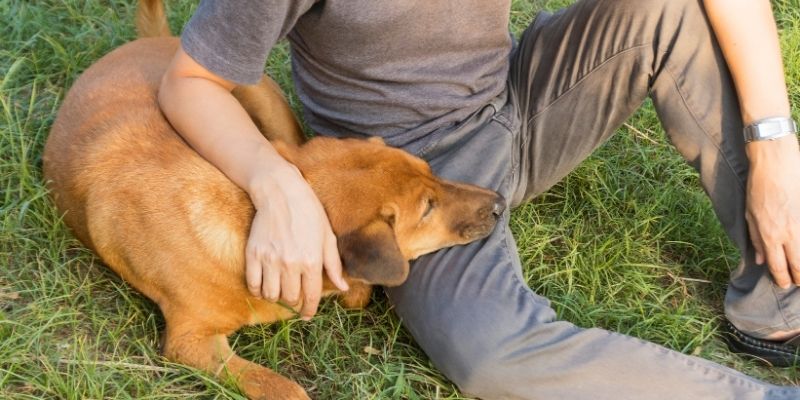
Clear structure and calm build a more stable dog than chaotic play.
Belonging to a Group, Not a Crowd
This is why it is important to understand another key point: a dog is not a being that seeks to be part of a crowd. A dog seeks belonging. And belonging does not exist in chaos.
A dog feels safest, most stable, and most relaxed within its small group. This can be a family, a household, or a small circle of known relationships where it understands its place and where boundaries are clear. This does not mean isolation. It means a clear and meaningful position within relationships.
When a dog has its place, it can move through the external world without needing to react to every stimulus. Encounters with other dogs then do not become a matter of survival, but simply part of the environment that it can register and let pass. Otherwise, every encounter becomes a potential trigger. And at that point, the dog park stops being a space of freedom. It becomes a space of uncertainty.
One of the biggest problems with dog parks is that the consequences often do not appear immediately. A dog may seem “social” for a long time, without visible issues. And then one day, something changes. The dog becomes reactive. It begins to avoid contact or enters a state of excessive tension. Every dog owner then looks for the cause in the last event. But the cause is often cumulative.
Every stress, every unclear interaction, every situation without structure leaves a trace. These traces accumulate until the system reaches a breaking point. And then we come to the question: what is the cost?
The cost can be injury. It can be behavioral change. It can be the loss of trust between the dog and the human. It can be a long recovery process that requires time, knowledge, and patience. And it all began with the idea that we were doing something good.
Why We Choose a Dog and Postpone Having a Child

The Dog Groomer’s Dilemma: Journey Trough Burnout, Belonging and Becoming
What Is the Alternative?
The answer is not isolation. A dog needs contact with the world. But that contact must be structured, gradual, and meaningful.
Instead of random encounters, we choose quality relationships. One or two stable dogs with whom our dog can develop a familiar and predictable connection. Instead of chaotic play, we introduce clear boundaries and rhythm. Instead of constant stimulation, we allow the dog to learn how to be calm in the presence of others.
Walks where the dog learns to observe the world without the need to react have greater value than an hour of chaotic play. Short, controlled encounters build security. Work on regulation becomes the foundation. In other words, we do not build a dog that is “social” in the human sense of the word. We build a dog that is stable.
In the end, the question of dog parks is not a question of space. It is a question of awareness. How willing is a dog owner to truly understand the dog, instead of adapting it to ourselves? How willing are we to admit that good intentions are not enough if they are not supported by knowledge?
A dog park may look like a place of freedom. But without understanding the nature of the dog, it becomes a space where freedom turns into chaos. That is why perhaps the most important question is not where we take the dog, but how we guide it through the world.
A dog does not ask for more freedom. It asks for more clarity. And clarity does not exist in chaos.
At Sasha Riess, we step away from the crowd to offer your dog the security of structure and leadership. True socialization means teaching your pet to remain calm and regulated, ensuring genuine pureloveandharmony. Discover your path to clarity: Linktree Sasha Riess
The Dog Groomer’s Letter of the Month Club with Sasha Riess
by Sasha Riess | 10.06.26. | Behaviour
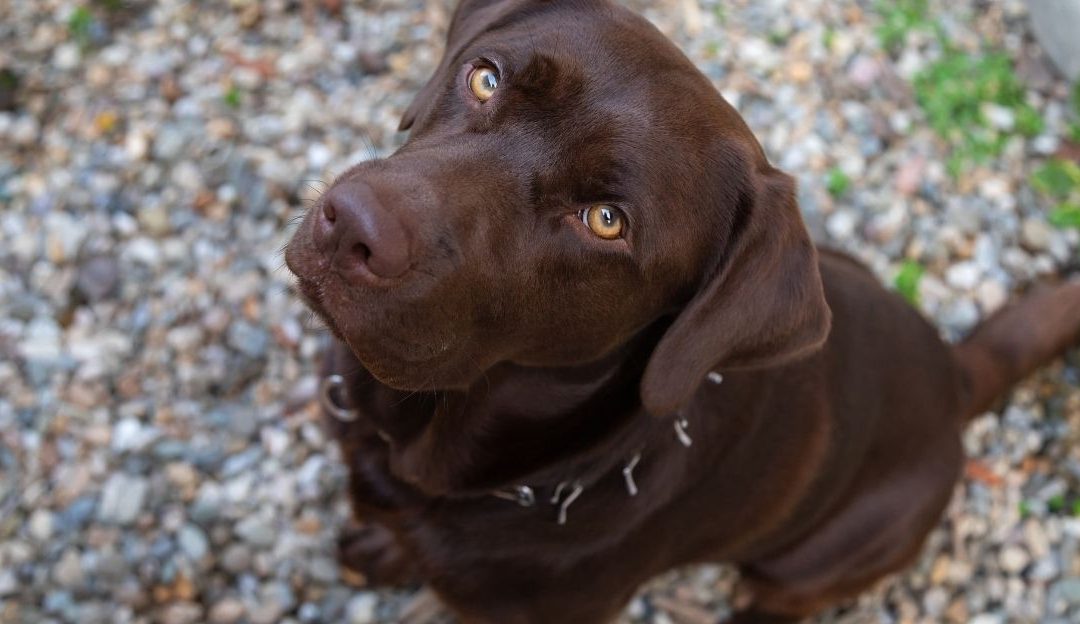
Trauma in dogs is often overlooked in modern training because we rely too heavily on treats. When a dog receives a reward for something it did “right,” we rarely notice the other side of that process: the moment when the reward is absent.
Although the reward system is considered “positive,” for a dog’s physiology it can be deeply counterproductive.
Trauma Hidden in Expectation
Many people ask: what kind of trauma can occur when I reward my dog for being good? The problem is not in the moment of the reward itself. The problem arises in the moment when the dog is not “good” and the reward is missing.
For the dog, there is no theory or training method in that moment. There is only the experience of absence. Learning through pure conditioning directly affects the dog’s physiology, but not in the way we think. Positive stimulation through food is only one side of the coin. The other side is the negative effect that appears in the dog’s body when it does something and the expected reward does not come.
Relationship Above Method: Preventing Trauma in Dogs
The question is not only how we teach a dog, but what kind of relationship we build while conditioning it. Are we building a partnership based on understanding, or a dependency that disturbs inner balance?
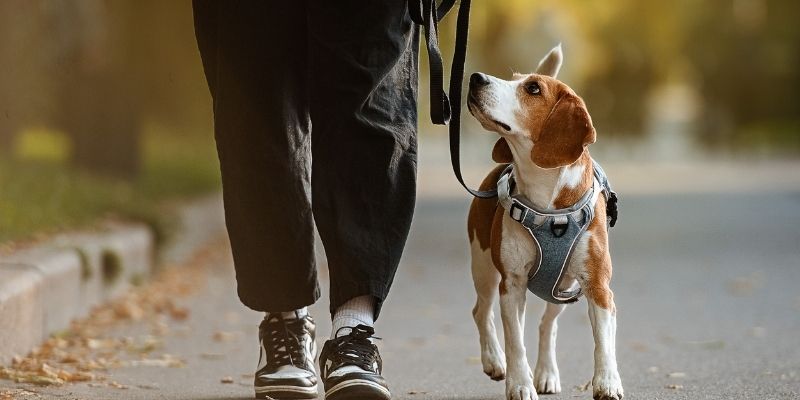
Build a relationship that doesn’t depend on a piece of food in your pocket.
True communication with a dog does not come through a piece of food in your hand. It comes through alignment that leaves no space for physiological stress that later develops into chronic conditions. Remember, every time you rely on conditioning, you risk creating trauma in dogs that is difficult to resolve later.
At Sasha Riess, we believe true communication bypasses the stress of bribery. Moving beyond food conditioning prevents underlying trauma in dogs, paving the way for authentic pureloveandharmony. Build a real partnership: Linktree Sasha Riess