by Sasha Riess | 05.08.26. | Behaviour
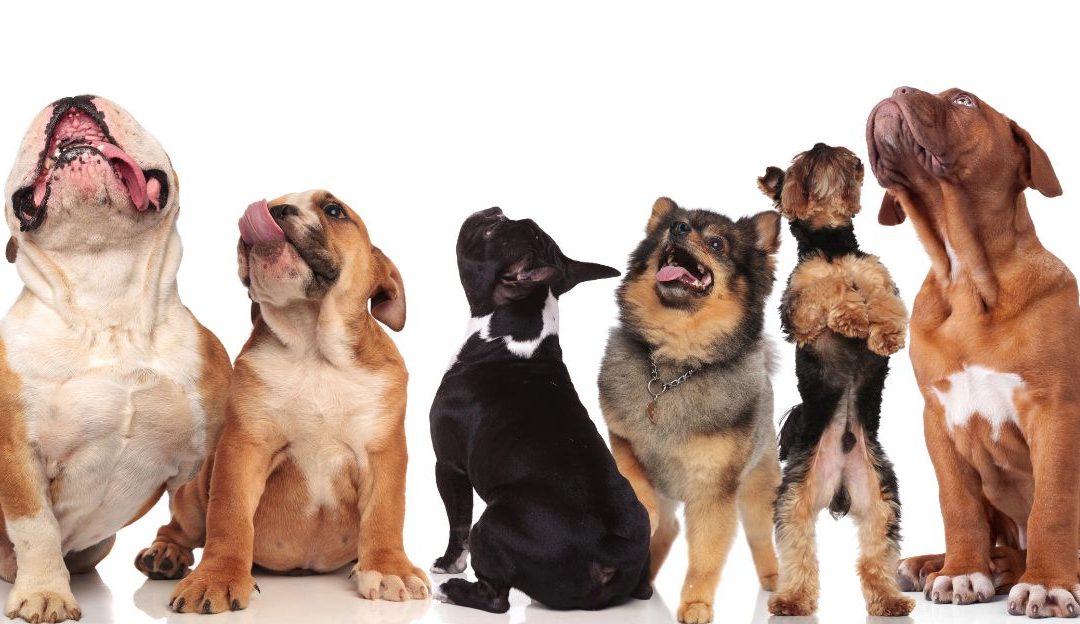
Many owners and animal lovers frequently ask questions about the specific characteristics of different types of dogs. They ask what I think about Maltese dogs, Shih Tzus, Bulldogs, Rottweilers, and many others. However, the most important lesson we must learn remains this: a dog is first and foremost a dog.
Everything else comes second. Every breed carries its own biological and physical characteristics, but the essence of every living being remains the same.
Why Every Breed Shares the Same Unique View of the World
When I think about the dogs I love and admire, I rarely think about breeds at all. Consequently, for me, there is no essential difference between a Maltese and any other dog. What matters most to us as owners is our desire to create a relationship that feels unique, personal, and meaningful.
Every dog possesses its own authentic way of perceiving the world around it. Therefore, that perspective does not depend on whether the dog represents a powerful Rottweiler, a stubborn Bulldog, or a gentle Maltese. Nor does it depend on the dog’s age. Each dog experiences life through its own individuality.
Understanding Matters More Than Labels
Instead of focusing on the limitations or challenges we believe a particular breed may bring when choosing and raising a dog, we should focus on education and a deeper understanding of canine psychology. That is precisely why exploring educational resources can prove so valuable. On our platforms, you will find a large collection of educational videos covering grooming, behavior, communication, wellbeing, and holistic approaches to working with dogs.
Simultaneously, every week, we publish new content designed to help owners better understand their companions. Often, the answers we seek are already available. All that we require is a willingness to learn and explore.

BUILD A RELATIONSHIP BASED ON UNDERSTANDING, NOT STEREOTYPES.
Build a Relationship Based on Understanding, Not Stereotypes
The moment we stop viewing dogs through the lens of breed stereotypes, we open the door to a more genuine connection. Every breed can develop healthy habits, emotional stability, and balanced behavior when approached with love, patience, consistency, and clear boundaries.
Whether your dog is large or small, purebred or mixed breed, the foundational principles remain the same. Always treat the individual in front of you, not the label attached to it. Ultimately, when understanding becomes stronger than assumption, relationships begin to flourish. And that is where true communication with a dog begins.
To discover more about how emotional alignment, balanced lifestyle, and authentic energy restore internal balance, read our canine communication and behavior guidelines.
At Sasha Riess, we look past commercial labels to honor the unique biological blueprint of your companion. True health requires addressing the subtle internal patterns that create lasting vitality and pureloveandharmony. Discover the customized path to your dog’s longevity:Linktree Sasha Riess
👉 Follow our Facebook page and never miss our latest articles, news, and updates.
by Sasha Riess | 04.08.26. | Behaviour
The loss of a companion animal represents probably one of the most painful experiences a person can ever go through. We often witness situations in which dogs suffer for months while their bodies slowly deteriorate. Simultaneously, owners fall apart emotionally, stating that they are dying alongside their companion and cannot endure the pain any longer.
What many people do not realize in those heavy moments is that dogs deeply feel our emotional state. Consequently, they often remain trapped in their suffering simply because they sense our fear and our inability to continue living without them. Only when they feel that we remain capable of surviving do they finally receive the freedom to leave in peace.
The Words That Bring Peace and Release
When this painful moment arrives, there are specific words regarding what to say when a dog is dying—not necessarily out loud, but deeply from the heart. Look directly at your dog and say:
“My dear friend, I can continue my journey even without you. If your time has come, please go in love. We will meet again when my time arrives. I, too, cannot escape death. It is coming for all of us, and with every day I move closer to it. But my time in this world is not over yet.”
Therefore, offering this conscious permission may constitute the greatest act of love you can offer.
The Strength of an Honest Goodbye
Very often, owners who find the strength to do this sincerely, from the deepest part of their soul, experience extraordinary moments. However, once they release the dog from the burden of carrying their emotional pain, the animal sometimes finds one final, unexpected strength.

Once we release the dog from the burden of our pain, they receive the freedom to transition in peace.
The dog may come close one last time, gently touch each family member with its nose as much as its weakening body allows, say goodbye in its own unique way, lie down, and peacefully fall asleep. Ultimately, the passing of a companion animal does not always have to be filled with agony. It can become a conscious and dignified transition, filled with gratitude, love, and the quiet release that comes from truly letting go.
To discover more about how emotional alignment, balanced lifestyle, and authentic energy restore internal balance, read our canine communication and behavior guidelines.
At Sasha Riess, we look past commercial labels to honor the unique biological blueprint of your companion. True health requires addressing the subtle internal patterns that create lasting vitality and pureloveandharmony. Discover the customized path to your dog’s longevity: Linktree Sasha Riess
👉 Follow our Facebook page and never miss our latest articles, news, and updates.
by Sasha Riess | 03.08.26. | Behaviour
How did we begin believing it is normal for a dog to ingest neurotoxic substances every single month? “Have you given your dog tablets against fleas, ticks, and mosquitoes?” With the arrival of warmer days, the season of fear begins. Dog owners increasingly reach for oral tablets, believing they are protecting their dogs. Advertisements promise safety, veterinarians often routinely recommend these products, and very few people stop to ask the essential question: what exactly are these tablets, and how do they work inside the dog’s body?
The truth is simple and uncomfortable. Most oral ectoparasite preventatives function as pesticides. The dog swallows a chemical substance that enters the bloodstream and turns the dog’s body into a “toxic meal” for the parasite. When a flea or tick bites the dog and consumes blood, it also ingests the neurotoxic substance that kills it. However, the question rarely asked is this: if a substance is strong enough to attack the nervous system of a parasite, how can we assume it has no long-term effect on the nervous system of the dog?
The Risks of Chemical Preventatives and Natural Tick Protection
Pharmacological products from the isoxazoline group have been associated with neurological symptoms in dogs, including tremors, coordination problems, anxiety, behavioral changes, and epileptic seizures. Back in 2018, the FDA issued a warning stating that products from this group may trigger neurological reactions even in dogs with no prior history of epilepsy.
Many owners never connect behavioral changes with the tablet they gave “preventively.” The dog becomes more nervous, reactive, withdrawn, sleeps differently, develops tics, experiences itching, digestive issues, or seizures. Consequently, the organism often does not react immediately. Sometimes it takes months or years of continuous strain on the liver, nervous system, and immune balance before symptoms appear. A holistic approach does not mean ignoring the dangers of ticks. On the contrary, it means understanding that protection should not simultaneously damage the organism we are trying to protect.
Garlic as an Ally: Myths and Truth
One of the most controversial natural allies in the fight against ectoparasites is garlic. For decades, it has been demonized through claims that it is “toxic to dogs.” However, what available sources rarely mention is how those claims originated.
According to available analyses, studies that labeled garlic as dangerous used extremely high doses, approximately 5 grams of fresh garlic per kilogram of body weight daily. For an average Beagle, this would mean around 25 large cloves every day for an entire week. Even at such extreme doses, none of the dogs in the study died.
Today, many premium formulas use small amounts of garlic because of its support for immunity and circulation. This is where natural tick protection may play a role. Sulfur compounds in garlic alter the scent of the skin, making the dog less attractive to parasites.
Dr. Karen Becker’s Guidelines for the Safe Use of Garlic
-
Small dogs up to 4.5 kg: about 1/4 clove
-
Dogs from 5 to 7 kg: about 1/2 clove
-
Dogs from 9 to 18 kg: about 1 clove
-
Dogs from 20 to 31 kg: about 2 cloves
-
Large dogs over 32 kg: about 2.5 to 3 cloves
The recommendation is to use fresh, crushed garlic that has rested for several minutes before being added to food.
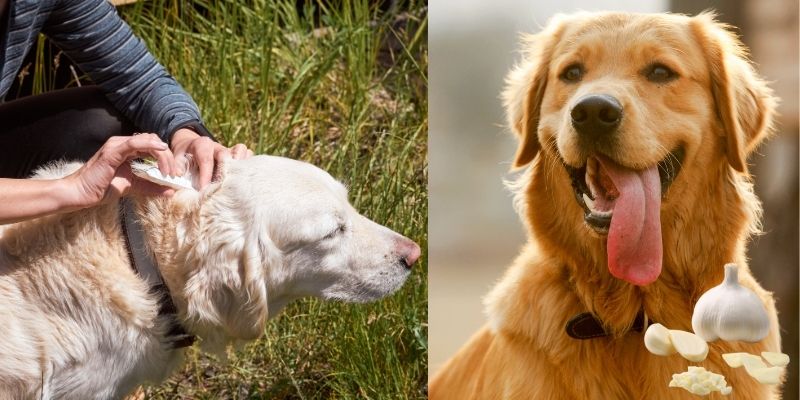
A comprehensive natural approach involves proper skin care, a healthy microbiome, and safe natural allies like garlic.
A Comprehensive Natural Approach to Tick Protection
Natural tick protection is never about “one magical solution.” Therefore, it involves the combination of multiple factors:
-
High-quality nutrition to strengthen the skin barrier
-
Proper skin care and maintenance of a healthy microbiome
-
Natural repellents such as hydrolates and essential oils of lavender, mint, and lemongrass
-
Stress reduction, because stress alters body odor and can make dogs more attractive to parasites
A dog that is metabolically exhausted and fed ultra-processed food often becomes far more attractive to parasites. The problem of the modern world is that we want quick solutions without understanding the consequences. One tablet per month seems simple, but the body, the liver, and the nervous system remember everything.
Ultimately, a holistic approach is a return to one essential question: does the way we protect the dog support life in the long term, or does it merely remove the problem temporarily? Perhaps it is time to stop asking only, “What kills the tick?” and begin asking, “What protects the dog at the same time?”
To discover more about how emotional alignment, balanced lifestyle, and authentic energy restore internal balance, read our canine communication and behavior guidelines.
See you next time.
At Sasha Riess, we look past commercial labels to honor the unique biological blueprint of your companion. True health requires addressing the subtle internal patterns that create lasting vitality and pureloveandharmony. Discover the customized path to your dog’s longevity: Linktree Sasha Riess
👉 Follow our Facebook page and never miss our latest articles, news, and updates.

by Sasha Riess | 02.08.26. | Emotions
We often say, “It’s fine, it can stay like this.” We survived without money, and we survived without enlightenment, so why would we change anything now? However, it is precisely that survival instinct that becomes our greatest obstacle to emotional growth. The human brain constantly prefers what remains familiar, even when that exact familiarity hurts us deeply or keeps us severely limited.
Perspective Depends on Where You Stand
Arguing about whose view of the world is correct remains completely meaningless as long as you do not stand where the other person stands. Until you step entirely out of your old “role” and look at life from a different angle, you simply will not see new possibilities.
Therefore, the problem is not that we cannot do more in our lives.
The problem is that we have become completely accustomed to less. That old “movie” we keep replaying in our mind quickly becomes a prison we are afraid to leave, because stepping out of it feels highly uncertain and often uncomfortable.
The Result That Changes Everything
Although stepping out of the old skin feels deeply frightening at first, it inevitably brings results that are almost immediate. Anyone who gathers the courage to step into the unknown quickly begins to see profound change, first in their dogs, and then simultaneously in their entire life.
Dogs act as remarkable detectors of our inner transformation. Consequently, the moment we stop playing the role of the victim or the survivor, they begin to thrive beautifully. Do not allow your own mind to convince you that “less” is enough. Ultimately, step into a new story, because the real results are waiting for you right on the other side of fear.

Step into a new story, because the results are waiting for you on the other side of fear.
To discover more about how emotional alignment, balanced lifestyle, and authentic energy restore internal balance, read our canine emotions guidelines.
At Sasha Riess, we look past commercial labels to honor the unique biological blueprint of your companion. True health requires addressing the subtle internal patterns that create lasting vitality and pureloveandharmony. Discover the customized path to your dog’s longevity:Linktree Sasha Riess
👉 Follow our Facebook page and never miss our latest articles, news, and updates.

by Sasha Riess | 31.07.26. | Nutrition
Food represents the core and essence of our bond with dogs. In fact, it serves as the purest expression of love we can offer them. While we struggle with our own fears and search for direction in the chaos of modern life, our dogs silently pay the price for our personal comfort.
Consequently, conscious ownership means understanding that they depend entirely on our choices, especially in a world that slowly wears them down.
The Price of Conformism That Dogs Pay
Life in cities and apartments definitely brings us the benefit of convenience, but the environmental cost remains high. The air we breathe, polluted water, and heavy metals surround us every day. While we make conscious decisions about our own lifestyle, our pets do not enjoy that privilege.
Therefore, industrial, “dead” food turns them into weakened beings that lack the strength to cope with a toxic environment. If we cannot fully protect them from smog and the emotional stress of modern society, we can at least support them where we maintain direct control, right in their bowl.
The Power of Living Food Against Modern Challenges
Ultimately, conscious ownership calls us to move far beyond lifeless food that constantly drains vitality. Every time we choose real, living food instead of commercial kibble, we give our dog a powerful tool to face the challenges of the modern world.

Every time we choose real, living food, we give our dog a tool to face modern challenges.
Fortunately, you do not stand alone in this process. Daily guidance and professional support exist to help you overcome the fear of change completely. Our choices directly determine their health and the length of their lives. Let us support them at least in what directly depends on us.
To discover more about how emotional alignment, balanced lifestyle, and authentic energy restore internal balance, read our canine nutrition guidelines.
At Sasha Riess, we look past commercial labels to honor the unique biological blueprint of your companion. True health requires addressing the subtle internal patterns that create lasting vitality and pureloveandharmony. Discover the customized path to your dog’s longevity:Linktree Sasha Riess
👉 Follow our Facebook page and never miss our latest articles, news, and updates.
by Sasha Riess | 31.07.26. | Coat Care
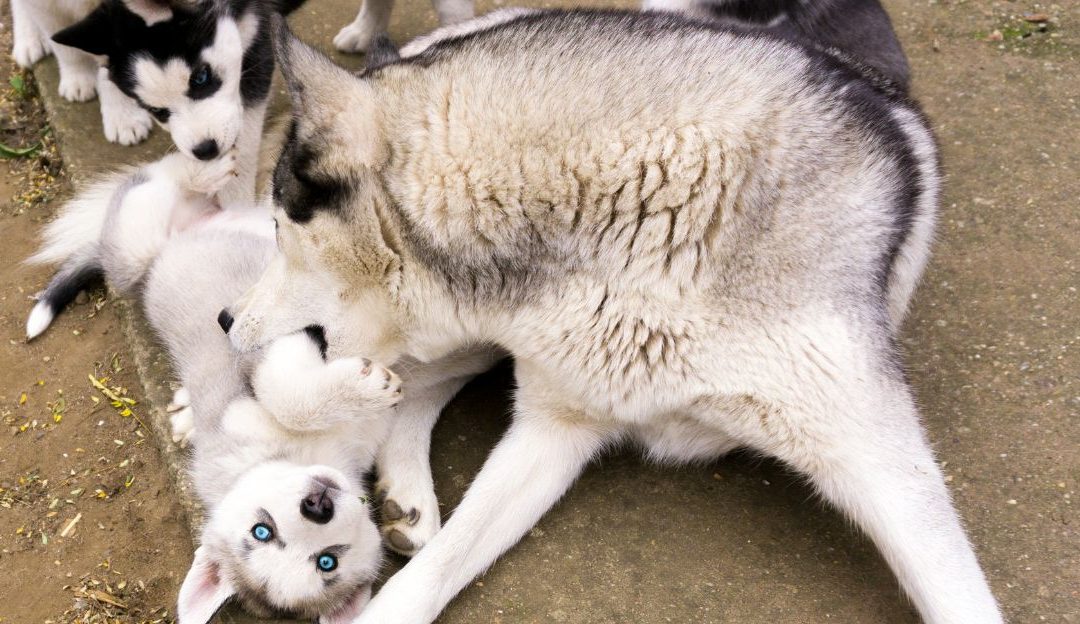
Postpartum hair loss in dogs during the nursing period represents a common occurrence that deeply concerns many owners. If you notice thinning coat around the ears, you must first determine exactly where the shedding occurs. All dogs naturally possess slightly thinner hair along the line extending from the eyebrows toward the ears. However, when noticeable thinning or bald areas appear directly on or around the ears, recent pregnancy and nursing represent important factors to consider. Careful observation and a comprehensive approach help determine whether this coat loss remains temporary or whether additional support becomes necessary.
The Enormous Demands of Pregnancy and Lactation
Pregnancy and raising a litter place tremendous physical demands on a mother’s body, especially in breeds that frequently require additional reproductive support.
Important questions include:
Consequently, the answers often provide valuable clues. In many cases, increased shedding and hair loss in dogs after birth reflect the significant physical demands placed on the mother’s body. First, she must support the biological development of the puppies throughout pregnancy. Immediately afterward comes lactation, a period during which the body continuously produces milk to nourish the growing litter.
Nutrition, Supplementation, and Recovery
When puppies nurse frequently, the mother’s body draws heavily upon its own nutritional reserves. Therefore, protein, vitamins, minerals, and energy constantly flow toward milk production. As a result, coat quality may decline, shedding may increase, and the skin and coat may temporarily lose their usual vitality.
For many females, this represents a normal physiological response if nutritional intake does not fully compensate for the heavy demands of motherhood. Simultaneously, a carefully balanced diet and appropriate nutritional support help replenish the resources that pregnancy and lactation depleted.
Supporting recovery not only benefits the mother’s coat and overall wellbeing but also helps ensure that the puppies continue to receive optimal nourishment during their development. Ultimately, with proper care, the coat gradually returns to its normal condition as the body recovers and hormonal balance restores completely.
To discover more about how emotional alignment, balanced lifestyle, and authentic energy restore internal balance, read our canine coat care guidelines.
At Sasha Riess, we look past commercial labels to honor the unique biological blueprint of your companion. True health requires addressing the subtle internal patterns that create lasting vitality and pureloveandharmony. Discover the customized path to your dog’s longevity: Linktree Sasha Riess
👉 Follow our Facebook page and never miss our latest articles, news, and updates.
by Sasha Riess | 30.07.26. | Behaviour
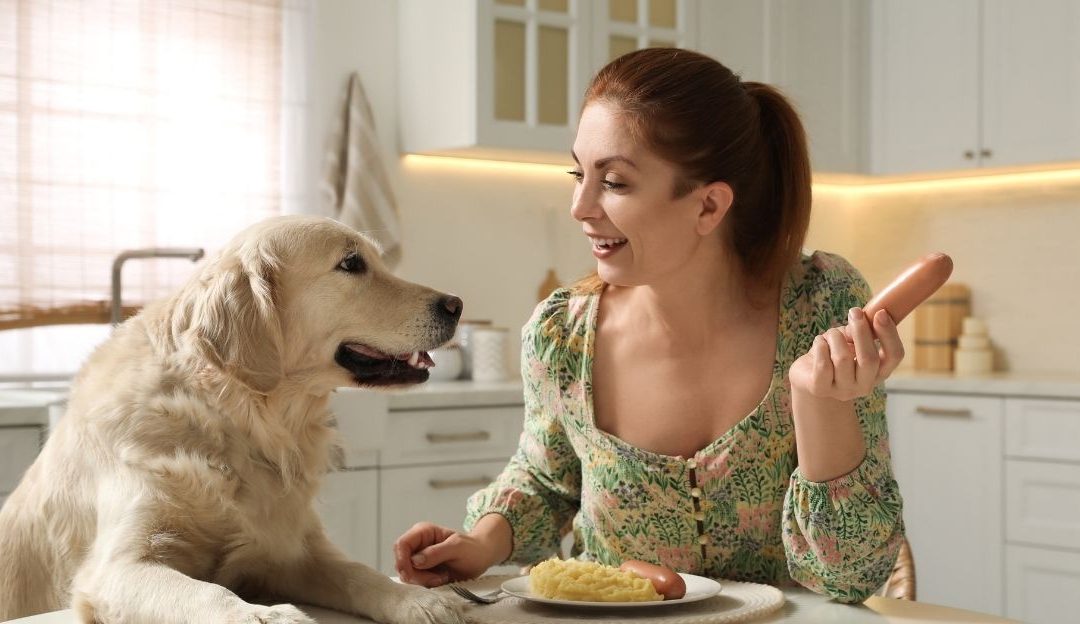
When a dog persistently asks for something, whether it is going out onto the balcony or receiving constant attention, and we fulfill it without question because it looks “cute,” we unconsciously fall into a dangerous trap.
This behavior does not indicate aggression on the dog’s part. Instead, it represents simple persistence testing our leadership. Consequently, the core question remains: are we actively guiding the situation, or are we allowing the dog’s immediate desires to completely dictate our lives?
The Chocolate Parallel: The Price of Weakness
Think of a young child who constantly asks for ice cream and chocolate. A parent who always gives in firmly believes they are showing a genuine expression of love. However, years later, when faced with a harsh diagnosis of diabetes, they suddenly realize it was not true love, but pure weakness.
Children do not bear the blame, just as dogs do not bear the blame. Therefore, the main problem lies entirely in our own inability to set clear boundaries. And that specific weakness does not remain only in our relationship with the dog. Simultaneously, it spills over into all our other relationships, including partners, friends, and colleagues.
Where Does the “Self” Disappear?
When we constantly give priority to everyone else, and when every single desire of our dog or our surroundings becomes far more important than our own internal peace, we slowly disappear. There is no longer a “me,” no longer my own heart, and no longer my personal integrity. Ultimately, we become mere shadows of our own weaknesses.
Recommended readin:
Psychology of Humans and Dogs: How Pets Help Us Reclaim Lost Strength
Canned Dog Food: What Is Hidden Inside and How to Restore Balance

Only when we learn to say “no” to what exhausts us can we truly love, both ourselves and our dog.
Setting healthy boundaries with a dog does not constitute an act of harshness. On the contrary, it represents a profound act of self-respect. Only when we learn to say “no” to what completely exhausts us can we truly love, both ourselves and our dog.
To discover more about how emotional alignment, balanced lifestyle, and authentic energy restore internal balance, read our canine communication and behavior guidelines.
At Sasha Riess, we look past commercial labels to honor the unique biological blueprint of your companion. True health requires addressing the subtle internal patterns that create lasting vitality and pureloveandharmony. Discover the customized path to your dog’s longevity: Linktree Sasha Riess
👉 Follow our Facebook page and never miss our latest articles, news, and updates.

by Sasha Riess | 29.07.26. | Emotions
There is something people constantly try to avoid. Not because they do not know, but because they deeply feel it. And what they feel is often the exact opposite of what they want to believe. That is where the space for lies is created. Not the spoken kind, but the lived kind. Quiet, everyday, wrapped tightly in normality.
Love without a future is exactly that kind of lie. It looks like a relationship. It has form, words, and routine. It has messages, touches, and plans that are never realized. Promises that hang in the air remain strong enough to keep someone there, but never concrete enough to come true. And in that space between what is and what will never be, tension is inevitably created. Consequently, a dog does not live in the story. A dog lives directly in the field.
When that woman came to me, she did not come because of a bad marriage or a lack of love. Instead, she came because of her dog. It is always like that. People rarely come because of the truth. They come because of symptoms. Her dog was mounting her leg. Not occasionally. Not randomly. But persistently, almost obsessively, as if it were trying to release something it could not express otherwise. And that was the focus.
Sterilization did not help, even though most of you reading this probably thought of that first. Two veterinarians and a trainer advised her to sterilize the dog, which she did, because it seemed logical. And perhaps it is logical when we observe symptoms in a linear way.
Symptom or Message: What Is the Dog Really Saying?
In the classical approach, experts would explain this through energy, dominance, or excitement. Therefore, she was also advised to walk the dog more, to tire it out, to correct it, to ignore it. All of that sounds logical. And all of it completely misses the point.
Because the dog was not trying to “behave.” The dog was trying to communicate. In the order of harmony, especially in work with systems where the dog is not separate from the human but deeply connected to their inner state, such behavior carries weight. It does not come from the dog, but through the dog. Mounting is a physical expression of sexual energy that is not in its place, a suppressed, misdirected, destructive sexuality. This is a sentence that sounds uncomfortable to most people. However, discomfort does not mean it is not true.
When sexual energy moves outside of its natural flow, when it does not belong to the relationship in which it should exist, it becomes wrapped in a system of lies and seeks a way to express itself. If people cannot or do not want to face it, something else will do it for them. Very often, that is the dog.
In that specific case, there was love without a future. A relationship that was not acknowledged, not defined, that had no place. Perhaps an affair. Perhaps an emotional connection that remained hidden. Perhaps a relationship that should have ended but did not. Such “love” does not disappear. It remains in the field. And it seeks a way out.
Truth and Love Without a Future Surface Through the Dog
The dog is often that outlet. It did not understand “who is with whom.” It did not know about marriage, fidelity, or social norms. But it felt the tension. It felt energy that had no place. And through its body, it tried to regulate it. That is why it was mounting. Not because it was “badly behaved,” but because it was accurate.
When I told her that either she or her husband had someone else, a lover, I did not say it to provoke her. I said it because the field had already shown it. The dog had already shown it. She reacted like most people do when truth touches them before they are ready. With resistance. With anger. She left, convinced I did not know what I was talking about, insisting that her marriage was perfect and that everything in her life was fine.

The moment we stop seeing the dog as a problem and see it as a signal, everything changes.
But truth has one quality that no lie has. It does not disappear. It can be ignored, suppressed, rationalized. But it remains. And sooner or later, it surfaces. Six months later, it did. Her husband was having an affair. Their marriage had become a relationship without a future. A connection that could not become anything more, yet was strong enough to disrupt everything that existed. They divorced. He left.
And what is most interesting to someone who does not understand how this works, the dog stopped mounting on the very same day her now ex-husband left the apartment. Without a single intervention. Without training. Without “behavioral work.” Why? Because there was no longer a lie to expose.
The Dog as a Mirror of Inner Integrity
When the system integrates, when things are placed where they belong, the dog no longer needs to speak. Its role in that context ends. And this is where we arrive at something most people do not want to accept. The dog as a mirror does not reveal lies because it “knows the truth.” It reveals them because it cannot not feel them.
Unlike a human, who can live between what they feel, what they say, and what they live, a dog is always in unity with what is. That is why it becomes a mirror. Not of what you want to see, but of what you are trying to hide.
Love without a future always carries tension. Because deep inside, we all know when something has no direction. When it has no movement. When it has no place in time. That is when we begin to live in the illusion of maintaining something. But the system does not support that. It seeks order. It seeks clarity. It seeks truth.
If we do not bring it consciously, it will emerge unconsciously. Through conflict. Through illness. Through behavior. Or through a dog that begins to mount its owner’s leg. That is why the question is never what the dog is doing. The question is what the dog is showing.
Because the moment we stop seeing the dog as a problem and begin to see it as a signal, everything changes. Not because we “fixed the dog,” but because we finally saw what was already there. And that is always the beginning of change. And the end of the lie.
And you know what was perhaps the most “interesting” part of this whole story, the woman found her husband with her close friend in their marital bed one morning when she unexpectedly returned home from a trip a day earlier to surprise him for his birthday. And she truly surprised him.
To discover more about how emotional alignment, balanced lifestyle, and authentic energy restore internal balance, read our canine emotions guidelines.
See you next time.
At Sasha Riess, we look past commercial labels to honor the unique biological blueprint of your companion. True health requires addressing the subtle internal patterns that create lasting vitality and pureloveandharmony. Discover the customized path to your dog’s longevity:Linktree Sasha Riess
👉 Follow our Facebook page and never miss our latest articles, news, and updates.

by Sasha Riess | 28.07.26. | Nutrition
What does it really mean to feed a dog that suffers from allergies? A problem faced by an increasing number of owners begins with understanding the proteins we place in the dog’s bowl. Meat can be the least allergenic option, but under one key condition: that it contains no antibiotics.
Therefore, identifying how to properly feed sensitive dogs requires looking past the industrial packaging and into the exact biological complexity of the proteins you choose.
Simple vs. Complex Proteins
In mass animal production, animals with short life cycles are most commonly used. Chicken, turkey, goose, or duck. These animals live only a few months. Even a rabbit, raised for rapid growth, produces proteins that are relatively simple from a biological perspective. These simple proteins form the basis of most commercial dog foods.
On the other side, we have more complex biological systems. Animals that live longer, such as cows or goats. It takes one or two years to raise a good bull. These are biologically more complex organisms, which can carry a higher potential for sensitivity when introduced into a dog’s diet. Knowing how to properly feed sensitive dogs means managing these different tiers of structural complexity based on your dog’s unique metabolic tolerance.
What “Sensitive” Dog Food Actually Means
What many owners do not know is the technology behind dog food labeled as “sensitive.” This type of food is produced through a specific process in which, under high pressure and temperature, protein chains are broken down into simpler amino acid chains.
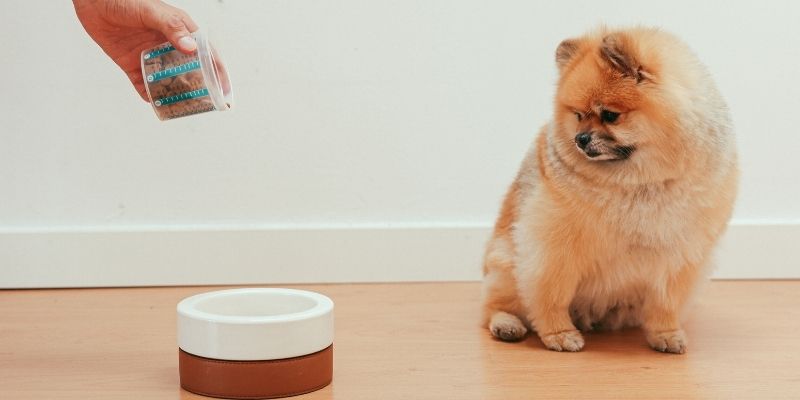
Biologically complex proteins from animals with longer life cycles can trigger sensitivities if the immune system is already compromised.
In this form, the probability of an allergic reaction becomes significantly lower. The dog’s immune system is far less likely to react to such food because, in biological terms, it no longer contains intact protein structures that the immune system recognizes as a threat. However, relying on processed amino acid fragments is a short-term bypass rather than a true biological cure. To understand how to properly feed sensitive dogs using whole, clean proteins that naturally nurture the cellular system, read our holistic nutrition guidelines.
At Sasha Riess, we look past commercial labels to honor the unique biological blueprint of your companion. True health requires addressing the subtle internal patterns that create lasting vitality and pureloveandharmony. Discover the customized path to your dog’s longevity: Linktree Sasha Riess
👉 Follow our Facebook page and never miss our latest articles, news, and updates.

by Sasha Riess | 27.07.26. | Wellbeing
In today’s world, we are witnessing a quiet yet profound transformation in the lives of our canine companions. Modern dogs no longer live the lives they were biologically designed for through thousands of years of evolution.
They no longer guard livestock across open fields, pull sleds through snow, or travel long distances in search of food.
Instead, they now spend much of their lives indoors, adapting to the rhythm of human society and an environment that changes faster than ever before. Because of this, achieving optimal canine health today requires looking far beyond what is simply placed in the food bowl.
Why Does the Urban Dog Lose Its Natural Biological Strength?
We must openly acknowledge that a dog living in the middle of a busy city is no longer living the same life as a dog raised in the countryside. Even if it looks like a powerful Doberman or an energetic Husky, its daily reality is fundamentally different.
Living on hot asphalt, surrounded by concrete and spending much of the day indoors significantly reduces the body’s natural opportunities to develop a diverse and resilient microbiome.
Consequently, as a result of this unique urban stress, the internal ecosystem gradually loses its ability to build the microbial balance essential for long-term health. Once this delicate protective barrier is disrupted, metabolism often begins to function less efficiently.
The Great Misconception About Expensive Dog Food
Many owners invest in the most expensive premium commercial foods available, believing they have solved the problem completely. However, biological reality remains more complex.
Even the highest-quality food cannot be fully utilized if the digestive tract lacks a healthy and diverse microbiome. Without beneficial intestinal bacteria, many valuable nutrients simply pass through the digestive system without being efficiently absorbed.
Therefore, this is precisely why we developed our signature bone broth as a foundational component of digestive health. Its main purpose is to help support the intestinal lining and simultaneously prepare the digestive system for more efficient nutrient absorption.
Dog Food Is Not Bought: Why I Refused to Create My Own Brand
Dog Behavior: The Power of Silent Communication and Group Rules
The Illusion of Difference: How We Lost the Dog in the Search for the Perfect Coat
True Health Comes From the Harmony Between Nutrition and Lifestyle
That is why it is never enough to ask only what a dog eats or which brand of food fills its bowl each day. We must also ask how that dog lives and what kind of emotional environment it experiences every day.
Long-term canine health is built not only through nutritious food, but also through movement, natural surroundings, emotional stability, and a balanced lifestyle. Ultimately, health depends on the body’s ability to efficiently utilize everything it receives each day. Support your dog’s well-being by reconnecting them with nature and helping restore the internal balance that modern life has gradually taken away.
To discover more about how emotional alignment, balanced lifestyle, and authentic energy restore internal balance, read our canine well-being guidelines.
At Sasha Riess, we look past commercial labels to honor the unique biological blueprint of your companion. True health requires addressing the subtle internal patterns that create lasting vitality and pureloveandharmony. Discover the customized path to your dog’s longevity:Linktree Sasha Riess
👉 Follow our Facebook page and never miss our latest articles, news, and updates.