by Sasha Riess | 10.08.26. | Behaviour
In the world of dogs, every time you leave the house, the dog perceives this action as going on a hunt. Hunting represents the most dangerous reason for separation because anything can happen during it, such as an attack from another predator or a severe injury.
Furthermore, a dog has no perception of time. Consequently, the dog does not know whether you have been gone for five minutes or three hours. It only knows that you left and that you returned.
The Trap of Excessive Attention
The biggest mistake we make lies in the ritual of returning home. We often walk in saying, “Kids, I’m home!” or immediately begin petting the dog. However, from the dog’s perspective, this behavior confirms that the “hunt” was indeed dangerous and that your return constitutes something extraordinary. In this way, we unconsciously feed the dog’s insecurity and its fear of the next separation.
The Rule: Don’t Look, Don’t Talk, Don’t Touch
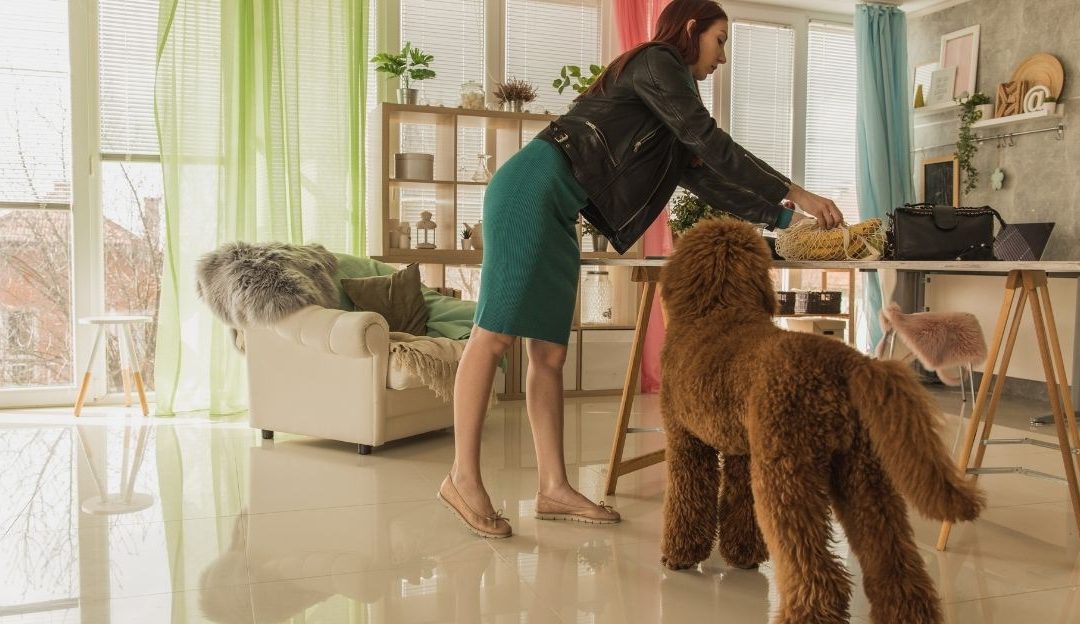
When you execute a calm arrival home, act like the leader of a pack returning from completed work. Put down your bag, take off your jacket, and calmly continue with your routine without rushing.
Therefore, do not immediately look at the dog or speak to it. You have successfully completed your “hunt,” and the dog should remain calm and in its place.
Simultaneously, only when the energy in the room has completely settled, and the dog becomes neutral to your presence, should you initiate calm contact. Calm arrivals teach the dog that your departure and return represent completely normal and safe parts of life. Ultimately, the calmer your return, the safer your dog feels within the rhythm of everyday life.

The place where the dog stays should be his oasis of peace, not a place for panic.
To discover more about how emotional alignment, balanced lifestyle, and authentic energy restore internal balance, read our canine communication and behavior guidelines.
See you next time.
At Sasha Riess, we look past commercial labels to honor the unique biological blueprint of your companion. True health requires addressing the subtle internal patterns that create lasting vitality and pureloveandharmony. Discover the customized path to your dog’s longevity: Linktree Sasha Riess
👉 Follow our Facebook page and never miss our latest articles, news, and updates.

by Sasha Riess | 05.08.26. | Behaviour
Many owners and animal lovers frequently ask questions about the specific characteristics of different types of dogs. They ask what I think about Maltese dogs, Shih Tzus, Bulldogs, Rottweilers, and many others. However, the most important lesson we must learn remains this: a dog is first and foremost a dog.
Everything else comes second. Every breed carries its own biological and physical characteristics, but the essence of every living being remains the same.
Why Every Breed Shares the Same Unique View of the World
When I think about the dogs I love and admire, I rarely think about breeds at all. Consequently, for me, there is no essential difference between a Maltese and any other dog. What matters most to us as owners is our desire to create a relationship that feels unique, personal, and meaningful.
Every dog possesses its own authentic way of perceiving the world around it. Therefore, that perspective does not depend on whether the dog represents a powerful Rottweiler, a stubborn Bulldog, or a gentle Maltese. Nor does it depend on the dog’s age. Each dog experiences life through its own individuality.
Understanding Matters More Than Labels
Instead of focusing on the limitations or challenges we believe a particular breed may bring when choosing and raising a dog, we should focus on education and a deeper understanding of canine psychology. That is precisely why exploring educational resources can prove so valuable. On our platforms, you will find a large collection of educational videos covering grooming, behavior, communication, wellbeing, and holistic approaches to working with dogs.
Simultaneously, every week, we publish new content designed to help owners better understand their companions. Often, the answers we seek are already available. All that we require is a willingness to learn and explore.

BUILD A RELATIONSHIP BASED ON UNDERSTANDING, NOT STEREOTYPES.
Build a Relationship Based on Understanding, Not Stereotypes
The moment we stop viewing dogs through the lens of breed stereotypes, we open the door to a more genuine connection. Every breed can develop healthy habits, emotional stability, and balanced behavior when approached with love, patience, consistency, and clear boundaries.
Whether your dog is large or small, purebred or mixed breed, the foundational principles remain the same. Always treat the individual in front of you, not the label attached to it. Ultimately, when understanding becomes stronger than assumption, relationships begin to flourish. And that is where true communication with a dog begins.
To discover more about how emotional alignment, balanced lifestyle, and authentic energy restore internal balance, read our canine communication and behavior guidelines.
At Sasha Riess, we look past commercial labels to honor the unique biological blueprint of your companion. True health requires addressing the subtle internal patterns that create lasting vitality and pureloveandharmony. Discover the customized path to your dog’s longevity:Linktree Sasha Riess
👉 Follow our Facebook page and never miss our latest articles, news, and updates.
by Sasha Riess | 30.07.26. | Behaviour
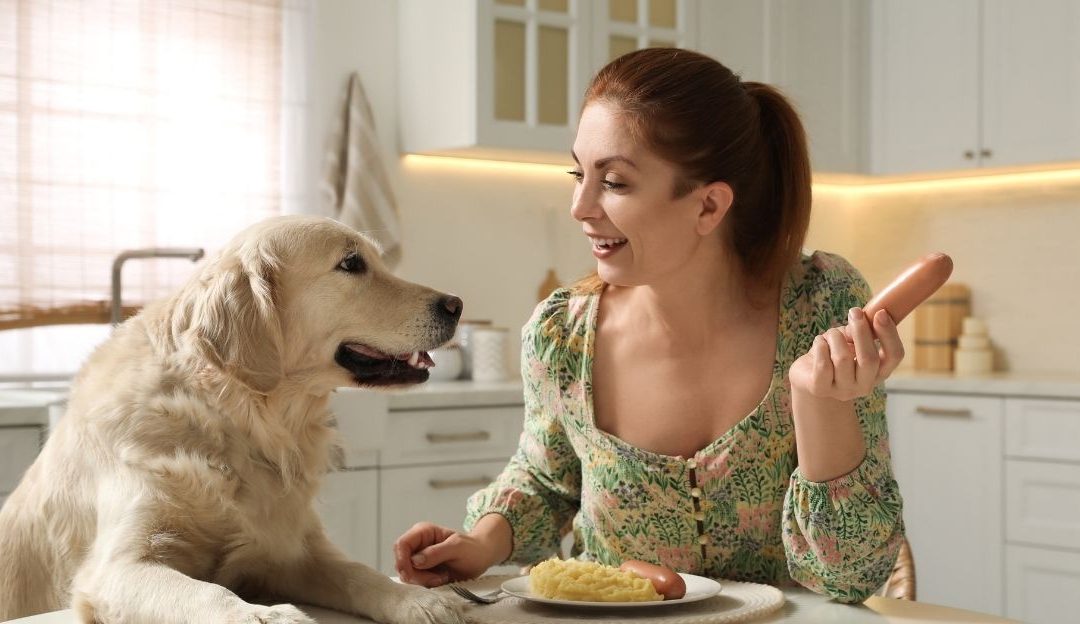
When a dog persistently asks for something, whether it is going out onto the balcony or receiving constant attention, and we fulfill it without question because it looks “cute,” we unconsciously fall into a dangerous trap.
This behavior does not indicate aggression on the dog’s part. Instead, it represents simple persistence testing our leadership. Consequently, the core question remains: are we actively guiding the situation, or are we allowing the dog’s immediate desires to completely dictate our lives?
The Chocolate Parallel: The Price of Weakness
Think of a young child who constantly asks for ice cream and chocolate. A parent who always gives in firmly believes they are showing a genuine expression of love. However, years later, when faced with a harsh diagnosis of diabetes, they suddenly realize it was not true love, but pure weakness.
Children do not bear the blame, just as dogs do not bear the blame. Therefore, the main problem lies entirely in our own inability to set clear boundaries. And that specific weakness does not remain only in our relationship with the dog. Simultaneously, it spills over into all our other relationships, including partners, friends, and colleagues.
Where Does the “Self” Disappear?
When we constantly give priority to everyone else, and when every single desire of our dog or our surroundings becomes far more important than our own internal peace, we slowly disappear. There is no longer a “me,” no longer my own heart, and no longer my personal integrity. Ultimately, we become mere shadows of our own weaknesses.
Recommended readin:
Psychology of Humans and Dogs: How Pets Help Us Reclaim Lost Strength
Canned Dog Food: What Is Hidden Inside and How to Restore Balance

Only when we learn to say “no” to what exhausts us can we truly love, both ourselves and our dog.
Setting healthy boundaries with a dog does not constitute an act of harshness. On the contrary, it represents a profound act of self-respect. Only when we learn to say “no” to what completely exhausts us can we truly love, both ourselves and our dog.
To discover more about how emotional alignment, balanced lifestyle, and authentic energy restore internal balance, read our canine communication and behavior guidelines.
At Sasha Riess, we look past commercial labels to honor the unique biological blueprint of your companion. True health requires addressing the subtle internal patterns that create lasting vitality and pureloveandharmony. Discover the customized path to your dog’s longevity: Linktree Sasha Riess
👉 Follow our Facebook page and never miss our latest articles, news, and updates.

by Sasha Riess | 29.07.26. | Emotions
There is something people constantly try to avoid. Not because they do not know, but because they deeply feel it. And what they feel is often the exact opposite of what they want to believe. That is where the space for lies is created. Not the spoken kind, but the lived kind. Quiet, everyday, wrapped tightly in normality.
Love without a future is exactly that kind of lie. It looks like a relationship. It has form, words, and routine. It has messages, touches, and plans that are never realized. Promises that hang in the air remain strong enough to keep someone there, but never concrete enough to come true. And in that space between what is and what will never be, tension is inevitably created. Consequently, a dog does not live in the story. A dog lives directly in the field.
When that woman came to me, she did not come because of a bad marriage or a lack of love. Instead, she came because of her dog. It is always like that. People rarely come because of the truth. They come because of symptoms. Her dog was mounting her leg. Not occasionally. Not randomly. But persistently, almost obsessively, as if it were trying to release something it could not express otherwise. And that was the focus.
Sterilization did not help, even though most of you reading this probably thought of that first. Two veterinarians and a trainer advised her to sterilize the dog, which she did, because it seemed logical. And perhaps it is logical when we observe symptoms in a linear way.
Symptom or Message: What Is the Dog Really Saying?
In the classical approach, experts would explain this through energy, dominance, or excitement. Therefore, she was also advised to walk the dog more, to tire it out, to correct it, to ignore it. All of that sounds logical. And all of it completely misses the point.
Because the dog was not trying to “behave.” The dog was trying to communicate. In the order of harmony, especially in work with systems where the dog is not separate from the human but deeply connected to their inner state, such behavior carries weight. It does not come from the dog, but through the dog. Mounting is a physical expression of sexual energy that is not in its place, a suppressed, misdirected, destructive sexuality. This is a sentence that sounds uncomfortable to most people. However, discomfort does not mean it is not true.
When sexual energy moves outside of its natural flow, when it does not belong to the relationship in which it should exist, it becomes wrapped in a system of lies and seeks a way to express itself. If people cannot or do not want to face it, something else will do it for them. Very often, that is the dog.
In that specific case, there was love without a future. A relationship that was not acknowledged, not defined, that had no place. Perhaps an affair. Perhaps an emotional connection that remained hidden. Perhaps a relationship that should have ended but did not. Such “love” does not disappear. It remains in the field. And it seeks a way out.
Truth and Love Without a Future Surface Through the Dog
The dog is often that outlet. It did not understand “who is with whom.” It did not know about marriage, fidelity, or social norms. But it felt the tension. It felt energy that had no place. And through its body, it tried to regulate it. That is why it was mounting. Not because it was “badly behaved,” but because it was accurate.
When I told her that either she or her husband had someone else, a lover, I did not say it to provoke her. I said it because the field had already shown it. The dog had already shown it. She reacted like most people do when truth touches them before they are ready. With resistance. With anger. She left, convinced I did not know what I was talking about, insisting that her marriage was perfect and that everything in her life was fine.

The moment we stop seeing the dog as a problem and see it as a signal, everything changes.
But truth has one quality that no lie has. It does not disappear. It can be ignored, suppressed, rationalized. But it remains. And sooner or later, it surfaces. Six months later, it did. Her husband was having an affair. Their marriage had become a relationship without a future. A connection that could not become anything more, yet was strong enough to disrupt everything that existed. They divorced. He left.
And what is most interesting to someone who does not understand how this works, the dog stopped mounting on the very same day her now ex-husband left the apartment. Without a single intervention. Without training. Without “behavioral work.” Why? Because there was no longer a lie to expose.
The Dog as a Mirror of Inner Integrity
When the system integrates, when things are placed where they belong, the dog no longer needs to speak. Its role in that context ends. And this is where we arrive at something most people do not want to accept. The dog as a mirror does not reveal lies because it “knows the truth.” It reveals them because it cannot not feel them.
Unlike a human, who can live between what they feel, what they say, and what they live, a dog is always in unity with what is. That is why it becomes a mirror. Not of what you want to see, but of what you are trying to hide.
Love without a future always carries tension. Because deep inside, we all know when something has no direction. When it has no movement. When it has no place in time. That is when we begin to live in the illusion of maintaining something. But the system does not support that. It seeks order. It seeks clarity. It seeks truth.
If we do not bring it consciously, it will emerge unconsciously. Through conflict. Through illness. Through behavior. Or through a dog that begins to mount its owner’s leg. That is why the question is never what the dog is doing. The question is what the dog is showing.
Because the moment we stop seeing the dog as a problem and begin to see it as a signal, everything changes. Not because we “fixed the dog,” but because we finally saw what was already there. And that is always the beginning of change. And the end of the lie.
And you know what was perhaps the most “interesting” part of this whole story, the woman found her husband with her close friend in their marital bed one morning when she unexpectedly returned home from a trip a day earlier to surprise him for his birthday. And she truly surprised him.
To discover more about how emotional alignment, balanced lifestyle, and authentic energy restore internal balance, read our canine emotions guidelines.
See you next time.
At Sasha Riess, we look past commercial labels to honor the unique biological blueprint of your companion. True health requires addressing the subtle internal patterns that create lasting vitality and pureloveandharmony. Discover the customized path to your dog’s longevity:Linktree Sasha Riess
👉 Follow our Facebook page and never miss our latest articles, news, and updates.

by Sasha Riess | 27.07.26. | Behaviour
We often hear owners say: “As soon as I feed my dog, it gets sick,” or “My dog constantly has some kind of issue.” While we search for causes in food or external factors, physiological outcomes often reveal how sensitive and receptive a dog truly is, absorbing the stress it is exposed to. Consequently, a dog’s psychology is inseparably connected to the subconscious state of its owner.
Rigidity and the Victim Role
In fact, two completely identical worlds exist parallelly. In the first world, the owner successfully takes full responsibility for their own state. Therefore, they clearly understand that they must work on themselves for the dog to get better.
In the second world, however, a “poor me” mentality heavily prevails, where life seems unfair and everyone stands against us.
Besides, this inner rigidity and strong resistance to change place the dog under immense pressure. This emotional burden quickly becomes highly visible in its clinical condition.
The Dog as a Priority Above the Ego
When we say that an owner “must” work on themselves, we do not express criticism. Instead, we use this as a direct way of placing the dog’s wellbeing completely above one’s own ego.
Naturally, a dog can develop illnesses that may be life-threatening. Simultaneously, it can experience conditions that it can easily live with. Everything strictly depends on whether the owner truly shows willingness to change their behavior.

As soon as the owner’s inner pressure disappears, the dog’s body is given a chance to heal.
The exact moment owners become actively involved, begin to understand, and start applying deep changes in their own lives, everything shifts completely. Furthermore, a dog’s psychology responds immediately to this relief. As soon as the heavy pressure of the owner’s subconscious disappears, the dog’s body finally receives a real chance to heal.
Do not forget, your dog does not suffer only from its own conditions. It often suffers directly from your unresolved way of living.
To discover more about how emotional alignment, balanced lifestyle, and authentic energy restore internal balance, read our canine communication and behavior guidelines.
At Sasha Riess, we look past commercial labels to honor the unique biological blueprint of your companion. True health requires addressing the subtle internal patterns that create lasting vitality and pureloveandharmony. Discover the customized path to your dog’s longevity:Linktree Sasha Riess
👉 Follow our Facebook page and never miss our latest articles, news, and updates.