by Sasha Riess | 24.07.26. | Nutrition
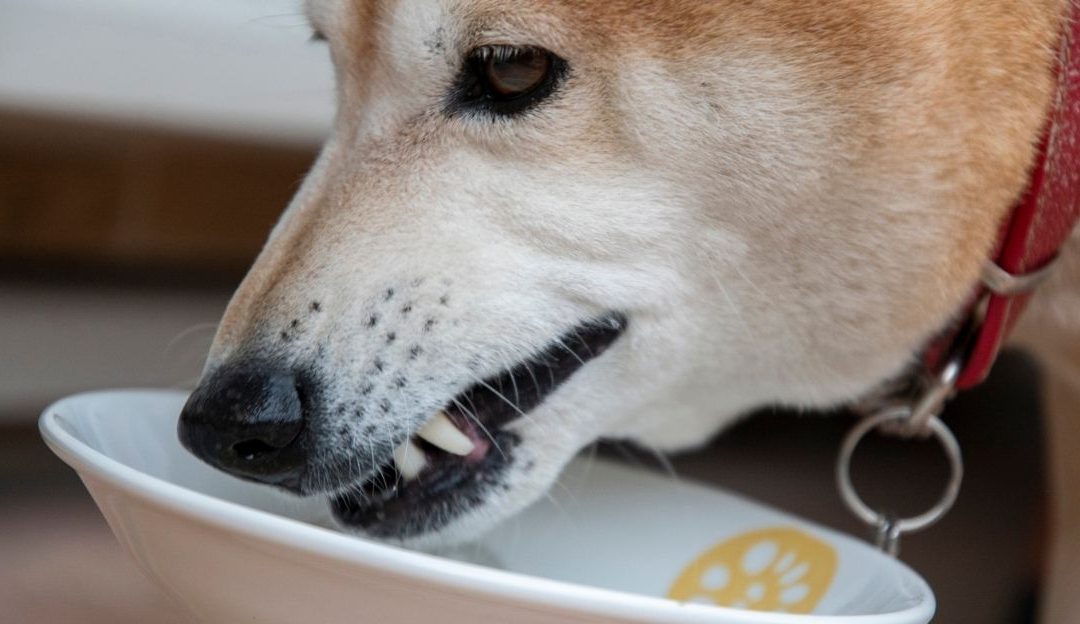
Healthy food in the bowl often serves merely as a symbol of material care without an energetic foundation. Many owners spend a fortune believing that healthy dog food represents the only true solution to their pet’s health problems. But the truth is much deeper.
In fact, what you feed your dog becomes almost irrelevant if your inner world remains in complete chaos. Your dog does not crave expensive proteins; instead, it deeply craves your inner stability.
The Surface of the Problem: Kibble Is Not the Cure
When searching for the best healthy dog food, owners often overlook the crucial energetic foundation. Consequently, a dog can maintain great vitality even on a simpler diet if it lives alongside a stable owner. Food represents only the surface of the situation.
Therefore, if you believe the solution lies strictly in changing the diet, you may actively avoid the core issue. Ultimately, the dog acts as a bridge that clearly shows you where you have lost your personal peace.
Peace With Your Roots as the Basis of Healing
A person experiences true peace only when they remain fully present in the moment and completely aligned with their roots. Regardless of what healthy dog food you put in the bowl, the dog immediately responds to your inner stillness.
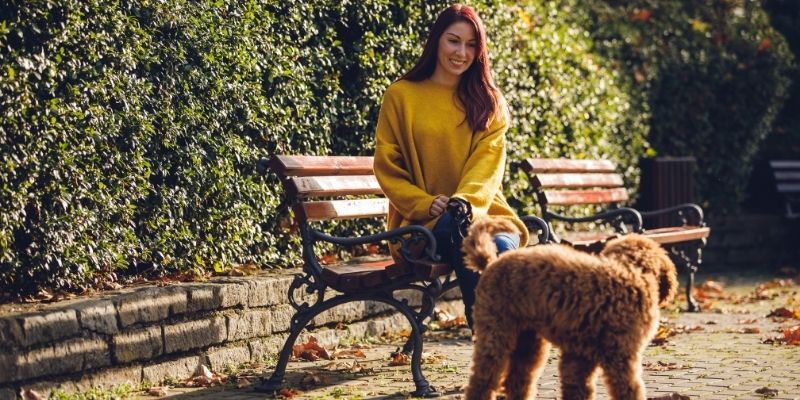
The dog always responds to your inner stillness, regardless of what is in the bowl.
Specifically, peace with your parents establishes the very first point of your stability. Only when you successfully heal those primary relationships does nutrition finally gain its full biological meaning.
To discover more about how emotional alignment, balanced lifestyle, and authentic energy restore internal balance, read our canine nutrition guidelines.
At Sasha Riess, we look past commercial labels to honor the unique biological blueprint of your companion. True health requires addressing the subtle internal patterns that create lasting vitality and pureloveandharmony. Discover the customized path to your dog’s longevity: Linktree Sasha Riess
👉 Follow our Facebook page and never miss our latest articles, news, and updates.

by Sasha Riess | 23.07.26. | Behaviour
I often hear the same sentence: “As soon as I feed my dog, it feels unwell.” Owners move from one specialist to another, while physiological results repeatedly show how sensitive and receptive the dog truly is. It absorbs everything. The level of stress such a dog is exposed to is enormous, yet the owner still does not see the cause in their own behavior.
The truth is clear: a dog’s health is often a direct reflection of the owner’s inner state.
Owner Rigidity and the Dog’s Best Interest
When I tell an owner that they must change, resistance appears. That is the moment where real work begins. My role is to remain firm in placing the dog’s interest above the owner’s comfort.
I must say this directly: your behavior affects your dog to the extent that it becomes visible in its clinical condition.
A dog does not become ill only because of bacteria or viruses. It develops conditions as a response to the world it lives in. Some dogs develop chronic states that can be life threatening, yet with a change in environment, they can also be managed and stabilized.
Two Worlds: Responsibility Versus Victimhood
In my work, I encounter two identical health conditions in dogs, but two completely different worlds in their owners.
The first world consists of people who come, actively participate, understand, and ask: “How do we apply this?” They take responsibility, and everything begins to change. In that world, a dog’s health has a real chance of recovery.
The second world is the world of the victim. “Poor me, life is unfair, everyone is against me.” In that world, the owner is focused on their own discomfort, while the dog quietly deteriorates under the weight of emotions that are not its own.
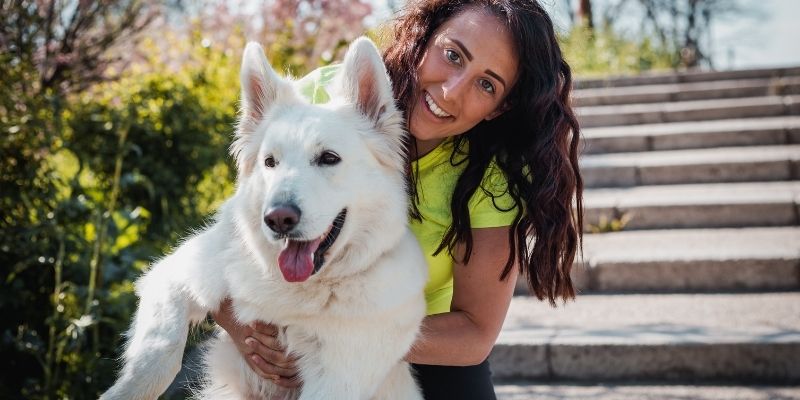
The powerful emotional connection and communication between an owner and her dog.
Living with a dog is not only about feeding and walking. It is a constant awareness of what we project into the shared space.
If you want a healthy dog, the first step is not changing the food, but changing yourself.
To discover more about how emotional alignment, conscious leadership, and deep understanding restore internal balance, read our canine communication and behavior guidelines.
At Sasha Riess, we look past commercial labels to honor the unique biological blueprint of your companion. True health requires addressing the subtle internal patterns that create lasting vitality and pureloveandharmony. Discover the customized path to your dog’s longevity: Linktree Sasha Riess
👉 Follow our Facebook page and never miss our latest articles, news, and updates.

by Sasha Riess | 19.07.26. | Behaviour
For more than twenty-five years, I have been saying the same thing. I do not state this as a warning coming from the outside, but as something I witness every day in my work with dogs and their owners. And each time, they come with the same sentence, spoken almost identically, as if there were a collective script: “But my dog has never bitten anyone, I don’t know what happened.”
Everything lies in that sentence. Fear, confusion, but also a complete misunderstanding of what is actually happening. Because a dog does not need to bite to be in trouble. The bite represents the end, the final point of a process that has been unfolding for a long time. What comes before that, what we today call reactivity in dogs, actually serves as a language. The dog is trying to say that it can no longer cope. That it is too much. That the system is overloaded.
Barking, lunging, tension, the inability to settle, excessive excitement, or sudden fear—these do not constitute “behavioral problems.” Instead, they are signals. But we do not live in a world of signals. We live in a world of expectations.
Why Reactivity in Dogs Develops in the Modern World
We expect the dog to be calm, social, stable, and to fit perfectly into our life, our rhythm, and our chaos. And when it cannot, we confidently say the dog is the problem. Rarely do we ask what kind of world we have given it.
Because the modern dog does not live a natural life. It lives a life that has never existed in history. Constant stimulation, noise, traffic, contact with dozens of dogs and people, a lack of silence, and a lack of space to withdraw shape its daily routine. Even the home is no longer a place of peace. People are rushed, under stress, in conflict, and caught in thoughts that never stop. The dog does not understand this rationally, but its body registers it immediately.
And that is where what we now call an epidemic begins. It is not an epidemic of aggression, but an epidemic of overloaded and reactive nervous systems. Consequently, reactivity in dogs is not a random incident. A dog does not react to the situation; it reacts to the state of the system it lives in. And that system consists of much more than what we choose to see.
It is not just the walk. Not just training. Not just commands. It is the combination of our behavior, the food the dog consumes, the way we touch it and work with its body, and perhaps most deeply, the way we perceive it. Because what we rarely connect today, yet sits actually at the core of the problem, is the formula we live in: the owner’s behavior, nutrition, dog grooming, and anthropomorphism. These four elements, when combined without understanding their order, create chaos that we later try to fix with traditional training.

The dog is not reacting to the situation; it reacts to the overloaded state it is already in.
The Four Pillars That Shape Reactivity
An owner who is rushed, distracted, and uncertain in setting boundaries often unconsciously creates an unpredictable environment for the dog. The dog then tries to find stability, but has no tools to do so. Its body enters a constant state of alertness. And then we wonder why reactivity appears toward another dog, a sound, or a movement. The dog is not reacting to that specific stimulus. It is reacting to the overloaded state it is already in.
At the same time, that dog often eats food that has little to do with its biological needs. Food disrupts hormones, affects the nervous system, and raises the internal level of alertness. A body that is not in balance cannot remain calm.
Then comes grooming. Coat care is, in most cases, reduced to aesthetics and speed. Touch that should regulate the nervous system often becomes a source of additional stress. The dog remembers. Next time, it reacts earlier. And again, we say the dog is difficult.
While we believe we are doing good for the dog, we bathe it with scented shampoos full of essential oils, not understanding that these substances do not remain only on the coat. They enter the body through the skin, accumulate in the liver and kidneys, and over time create a massive burden. Then we are surprised when the dog “suddenly” becomes ill, when in reality the body has been trying to cope for a long time.
And finally, perhaps the quietest but deepest layer, anthropomorphism. This is the idea that a dog is a small human. That it thinks like us, feels like us, and should live like us. This is where order is lost completely. The dog no longer knows where it belongs. Boundaries disappear, and without boundaries, there is no security. When all of this comes together, we get a dog that cannot settle, that “has never bitten anyone,” but increasingly reaches the edge.
Therefore, reactivity in dogs is not a problem solved through technique. It is not a command, not a trick, not a tool. It is a state that requires profound understanding. Because we can teach a dog to sit, to be quiet, to not react outwardly, but if the internal pressure remains, it will appear somewhere else. It will surface through fear, through illness, or through the next situation.
This epidemic is not a problem of dogs. It is a reflection of the society we live in. Dogs are simply the first to show it, because they have no way to hide it. Their body speaks the truth we often avoid. Change does not begin with the dog. It begins with us. When that changes, not through technique but through understanding, the dog changes as well.
Then we will no longer hear that sentence spoken in panic. Instead, we may begin to hear something quieter, but far more truthful:
“Now I see that my dog was never the problem. It was only the first to show where the problem truly exists.”
To discover more about how emotional alignment, balanced lifestyle, and authentic energy restore internal balance, read our canine communication and behavior guidelines.
See you next time.
At Sasha Riess, we look past commercial labels to honor the unique biological blueprint of your companion. True health requires addressing the subtle internal patterns that create lasting vitality and pureloveandharmony. Discover the customized path to your dog’s longevity: Linktree Sasha Riess
👉 Follow our Facebook page and never miss our latest articles, news, and updates.
by Sasha Riess | 03.06.26. | Behaviour
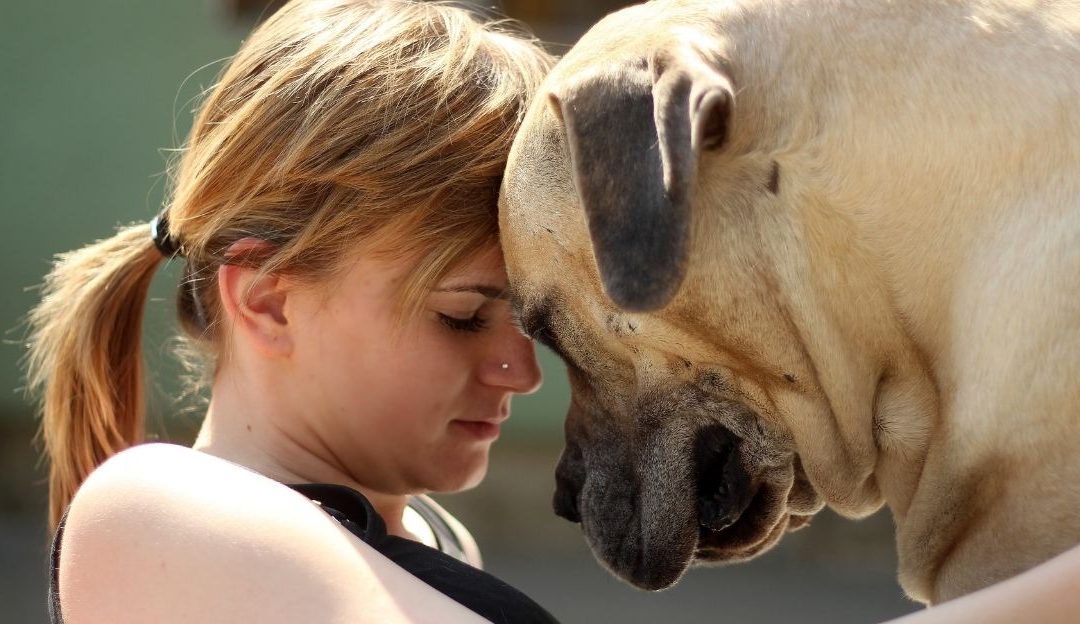
In recent years, one topic has been increasingly emerging in the world of human-dog relationships: the rise of anxiety in dogs. What was once considered an isolated issue is now becoming a pattern seen in almost every society where dogs live closely with humans.
This phenomenon is now discussed in scientific research, veterinary practice, and even in major media outlets. Recently, The New York Times dedicated an extensive report to this very issue, trying to understand why more and more dogs show signs of stress, fear, or separation anxiety in dogs.
Changed Living Conditions and Rising Stress
The modern dog often lives in an environment shaped by the human pace of life. Apartments, confined spaces, and the emotional pressure people carry from daily life all create a reality very different from the one in which the human-dog relationship developed over thousands of years. In such an environment, the dog is part of the system.
In my book About Dogs and Awakening (2018), I wrote that we would see more behavioral issues if we did not begin to understand the deeper connections between humans and animals. Today, we are living in that world.
Dogs as Carriers of Emotional Patterns
Dogs live within a relational field. Biologist Rupert Sheldrake described the concept of morphic fields—informational fields that connect living beings. In this context, anxiety in dogs may not always originate within the dog itself. Dogs respond to tension and insecurity in the human nervous system long before we become aware of them.

The dog is a mirror of the system in which it lives.
Symptoms That Require Understanding the System
When the dog’s nervous system becomes oversensitive, symptoms of anxiety in dogs appear: fear of sounds, distress when left alone, or constant tension. If the dog is part of a broader emotional system, then behavior is not just a matter of discipline. It is a signal that the relationship is seeking balance.
Perhaps the dog is the first to show that the system we live in is not in balance. If we see this as part of the relationship, it becomes valuable information.
Conclusion: A Shared Connection
Dogs have developed an extraordinary ability to read our emotions over thousands of years. The relationship between a human and a dog is not just a shared living space. It is a shared nervous system.
At Sasha Riess, we look beyond the symptoms to find the source of the imbalance. Addressing anxiety in dogs requires a holistic approach to the shared nervous system, leading back to pureloveandharmony. Find balance together:Linktree Sasha Riess
by Sasha Riess | 29.05.26. | Behaviour
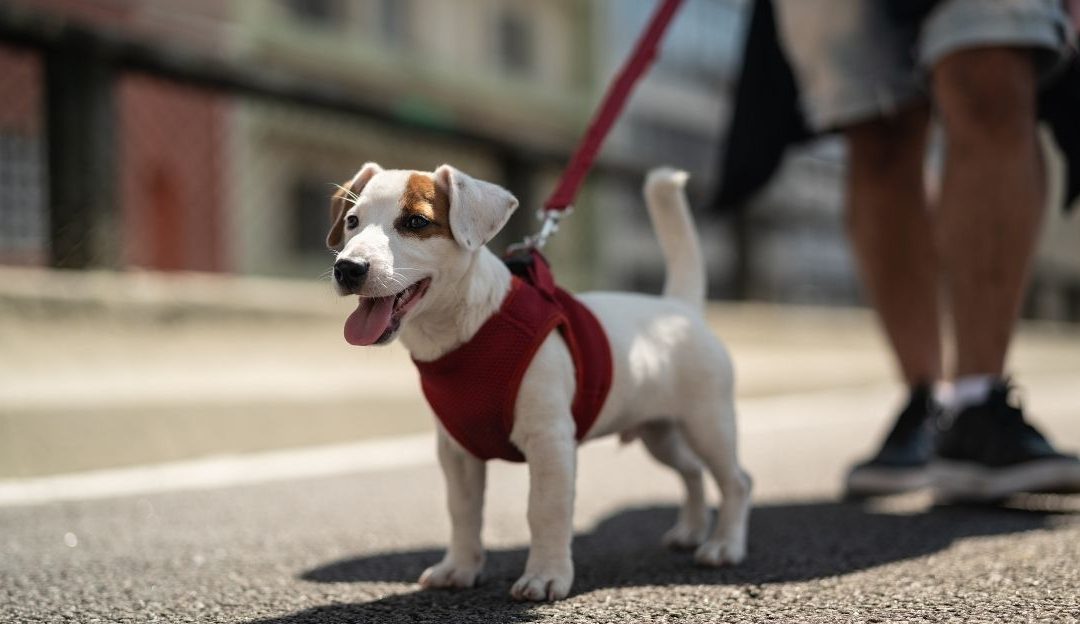
Many owners believe that an hour-long walk or a game of fetch is enough to “tire out” a dog. However, after 25 years of experience, I have come to understand that what we call recreation is often, for the dog, a high-stress mission.
A Walk Is Not Leisure, but Survival
How can you physically exhaust a being biologically designed to run up to 40 kilometers a day? One hour of walking means little physically. Yet, when the dog returns home and collapses, the reason is not physical fatigue, but mental overload.
When a dog steps outside, its biology dictates three essential things:
-
Territory Defense. Every scent or passerby can be a potential challenge.
-
Food Search. An instinct that never sleeps.
-
Marking. Leaving traces in a world that may feel like a minefield.

Recovery from a high-stress mission requires deep, undisturbed rest.
The Mental Effort That Breaks a Dog
Why does a dog collapse after a walk? It is from the constant analysis of its environment. The dog scans for threats and evaluates every scent. It doesn’t just return from a stroll; it returns from an environment it may perceive as life-threatening, where it felt responsible for helping its owner secure the ground.
Are You Giving Too Much or Too Little?
Perhaps we make the world too complex for them. Forced socialization and crowded environments can overwhelm the nervous system. Instead of pushing a dog to survive our idea of fun, consider its true biological needs: calm, clear boundaries, and an understanding of its instincts.
At Sasha Riess, we believe that true well-being comes from reducing mental strain. Understanding why does a dog collapse after a walk is the first step toward creating an environment of pureloveandharmony. Help your dog find true peace: Linktree Sasha Riess