
by Sasha Riess | 10.02.26. | Emotions
This Isn’t the Text I Wanted to Write
This is the text that grew inside me for years — after watching too many dogs fade away. Not from age. Not from disease. But from everything we, with the best intentions, unknowingly impose on them every single day. I’ve had dogs who are no longer here. And each of them taught me something about how wrongly we sometimes love.
A Dog’s Body Reflects Its Owner’s Emotions
I’ve watched their bodies change under the weight of our emotional tension. How they try to adapt, to understand us, to be “good” — even when we stop understanding them. This isn’t a plea. It’s a confession. A personal call to responsibility. Because there were dogs who never heard this message in time.
The Moment My Dog Spoke — Through Silence
I remember the first time my dog turned his head away while I was talking to him. I thought he was being stubborn. Today I know he was overwhelmed. He had no more space inside him for my chaos. He was a mirror of my inner instability — and I refused to see it.
When Love Without Boundaries Hurts
I used to believe love was enough. That attention, care, and time were all that mattered. But they’re not. Love without wisdom can become a heavy burden. Love without boundaries can wound the very being it tries to protect.

Our dogs are mirrors of our inner world—their health starts with our stability.
My Rhythm, His Stress: How Our Lives Shape Theirs
It took me years to realize that my way of living shaped his body. My restless rhythm became his anxiety. My sleepless nights — his exhaustion. My need to have him everywhere with me — his burnout. When his body finally broke, I was shocked. But the signs had been there all along.
What It Really Means to Be a Good Owner
Being a good owner doesn’t mean endless affection, play, and care. It means balance. It means setting boundaries. Giving the dog silence when it needs it. Leaving it at home when the world feels too loud. It means being present, not just physically near.
The Dog as a Mirror of Our Inner World
My dog is not my therapy tool. He is not my accessory. He is a being who carries a fragment of my world within him. And if that world is unstable — he will be too.
Not Out of Fear — But Out of Responsibility
I don’t write this to scare anyone. I write it because I believe we can do better. For the dogs who are gone — and for those still waiting for us to truly see them, as they are.
Maybe It’s Time for Silence
Maybe it’s time to stop trying to be “good owners.” And to start becoming stable, grounded human beings. Because that’s when love becomes what it was meant to be — healing, not heavy.
At Integrative and Holistic Grooming Education, we believe that every physical symptom is a message. Understanding these signals and addressing them through a holistic lens is at the heart of everything we teach to ensure the well-being of every dog in our care.

by Sasha Riess | 09.02.26. | Behaviour
The moment you start asking yourself why your dog seems restless, sad, or anxious, remember one thing: A dog would never do what we do to ourselves every single day. This is exactly why a dog so clearly feels every inner lie, every fracture, and every self-betrayal.
A Dog Feels Your Energetic Signature
To a dog, everything matters. They don’t hear your words; they feel the energetic signature of your decisions. They watch you as you:
-
Go to a job you hate.
-
Stay in a marriage where there is no love, only habit or fear.
-
Attend social events with people you dislike, wearing a mask of politeness.
-
Sacrifice your peace just to „show respect“ or maintain appearances.
The dog sees all of it. Reads all of it. Feels all of it.
Animals Live in Harmony; Humans Live in Conflict
No animal in nature would ever live against itself. A dog would never:
An animal lives in harmony with its own being. A human, however, often lives in a constant state of internal conflict.

A dog does not hear your words; it feels the energy of your decisions.
Your Dog Feels Your Inner Dishonesty
When you finally turn toward your own life and ask:
-
How honest am I with myself?
-
How honest am I with those I love?
-
Who am I pretending to be?
You will realize that the greatest suffering doesn’t come from the outside, but from the betrayal of your own truth. Your dog suffers with you not because you are „bad,“ but because the dog sees what you are trying to hide.
A mask can deceive people, and makeup can hide a sleepless night—but a dog can never be deceived.
This profound connection between human integrity and canine well-being is the foundation of our work. At Integrative and Holistic Grooming Education, we teach you how to achieve the systemic balance that allows both you and your dog to live authentically and healthily.

by Sasha Riess | 08.02.26. | Behaviour
Can training be traumatic for dogs? The answer is yes. Training becomes traumatic not only when physical force is used, but also when a dog is punished through reward withdrawal, pressure, or manipulation.
Any method that uses fear, pain, or a loss of safety creates long-term behavioral change through trauma, not through understanding. When force produces a “result,” it is only by pushing the dog’s body into a state of shock—the brain registers danger, and the dog adapts out of fear.
What Falls Under Traumatic Dog Training?
Trauma is not just about physical hitting. It is created through various forms of pressure where the dog loses its sense of safety:
-
Pulling the leash and choking.
-
Using slip collars and prong collars.
-
Electronic shock collars.
-
Withholding rewards when the dog “fails to perform.”
-
Any situation where the dog loses the power of choice.
Both physical punishment and reward withdrawal affect the dog’s nervous system in the same way: as a total loss of control.
Why Does Trauma Appear “Effective”?
Trauma works quickly because the body remembers. The dog stops the “undesired” behavior not because it learned a better way, but because it learned what must not be done to survive. This is adaptation to fear, not true learning.

Trauma creates adaptation to fear, not true understanding.
The Consequences of Fear-Based Training
Methods that rely on shock or coercion create a dog that:
-
Constantly assesses danger instead of relaxing.
-
Reacts from a state of chronic tension.
-
Lacks a stable, trusting relationship with the owner.
-
Loses the ability to make independent, calm decisions.
Structure Without Coercion: The Alternative
Avoiding traumatic training does not mean a lack of structure or rules. On the contrary, a dog needs a clear framework—but one built without threat or pain.
Stable behavior does not come from shock; it comes from safety, consistency, and understanding the language of dogs. If we want a reliable companion, we must stop using methods that function only because they produce fear.
This understanding of a dog’s emotional state is at the heart of everything we do. At Integrative and Holistic Grooming Education, we teach people how to apply these principles of safety and care, helping create calm, healthy, and happy results without trauma.
by Sasha Riess | 08.02.26. | Emotions
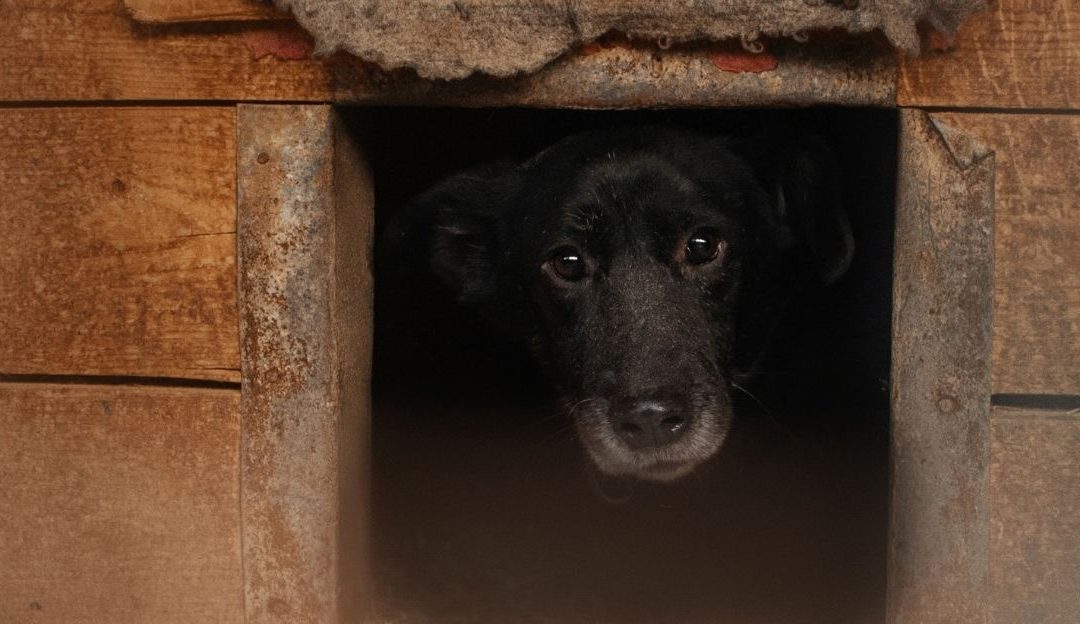
There is an ancient teaching that says meeting a black or white dog is a sign of respect. This isn’t because these dogs are biologically different, but because dogs as a species have always been closest to humans. This is where a topic begins that is rarely spoken about openly: Black Dog Syndrome.
What Is Black Dog Syndrome?
Black Dog Syndrome is a term used worldwide to describe a heartbreaking phenomenon: black dogs are adopted less often, end up in shelters more frequently, and are more easily abandoned or euthanized.
A black dog is often the first to be left on the street and the hardest to find a home for. This has nothing to do with the dog’s character; it is entirely about human projections, fears, and the symbolism we attach to color.
Black and White: Same Essence, Different Perception
In nature, black and white have equal value. A dog does not know whether it is black or white; it only knows whether it belongs or does not belong.
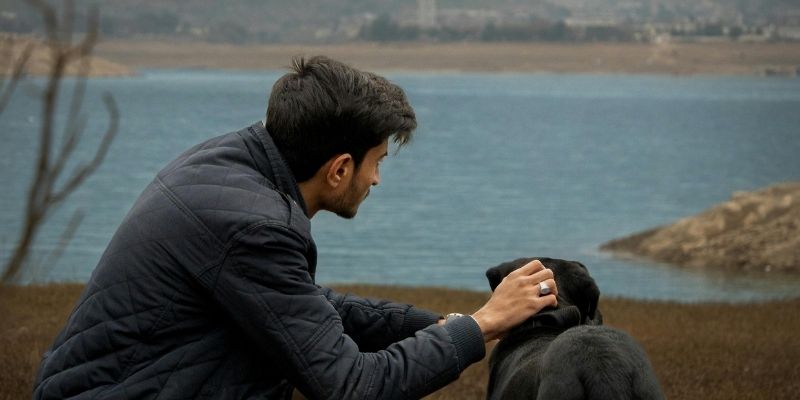
A dog does not know its color – it only knows whether it belongs.
The problem begins with human perception:
-
Viewing black dogs as „more dangerous.“
-
Believing they are harder to train.
-
Considering them „less photogenic.“
-
Projecting personal fears onto the color of their coat.
The Responsibility of Those Who Choose Black Dogs
Caring for a black dog carries a greater responsibility. Not because the dog is problematic, but because society’s attitude toward them is. Choosing a black dog is a conscious decision not to participate in collective rejection.
The Dog as a Mirror of Humanity
There is no animal that has suffered so much because of humans, nor one that has given us such unconditional closeness. The way we choose dogs says more about us than it does about them.
Every dog, regardless of color, seeks the same things: belonging, safety, and peace. A black dog is not a symbol of darkness; it is often a victim of the human fear of our own reflection.
This understanding of a dog’s emotional and physical state is at the heart of everything we do. At Integrative and Holistic Grooming Education, we teach people how to apply these principles of stability and care in their everyday lives with their dogs, helping create calm, healthy, and happy results.

by Sasha Riess | 05.02.26. | Behaviour
Many dog owners believe their dog can pull them out of emotional pain, fix their inner struggles, or carry their stress and anxiety. But dogs are not therapists, psychologists, or rescuers. They do not have the tools or understanding to emotionally repair us or solve our problems.
Imagine this situation: You feel anxious, worried, or overwhelmed by life challenges and you often seek comfort in your dog. Although your dog offers love and closeness, it cannot resolve your worries. Instead, the dog absorbs your stress, senses your inner unrest, and may begin to suffer emotionally and physically.
A dog cannot say „give me a break“ or „this is too much for me.“ The dog simply reacts to your behavior and your energy. When people expect dogs to be saviors of their emotions, they unknowingly place their burden onto a being that has no capacity to carry it.
How Projected Stress Affects Dogs
When we place our problems onto a dog, we risk its health and happiness through:
-
Physical health: Long-term stress in a dog can cause digestive issues, sleep disturbances, and lowered immunity.
-
Emotional state: The dog becomes nervous or anxious and may develop destructive behavior or withdrawal.
-
Bond with the owner: Constant exposure to negative emotions can weaken the sense of trust and safety in the home.

Separating human problems from the pet protects their happiness and health.
Owner and Dog: Establishing a Healthy Boundary
Separating human problems from the dog protects the dog’s happiness and health. Responsible ownership means protecting the dog’s peace, stability, and well-being, not loading it with a weight it was never meant to carry.
How to Properly Support Your Dog
-
Separate your problems: Recognize when you use your dog as an emotional outlet and seek human support from friends, family, or professionals.
-
Structured play and routine: Dogs function best in a stable environment. Consistent routine helps them remain calm.
-
Mental and physical activity: Walks and play help the dog release its own stress, not yours.
-
Emotional connection: Dogs offer comfort and love, but they cannot solve human problems. When this is understood, love becomes healthy for both sides.
A dog is not your savior. The dog loves and offers support, but cannot carry human emotional burdens.
This understanding of a dog’s emotional and physical state is at the heart of everything we do. At Integrative and Holistic Grooming Education, we teach people how to apply these principles of stability and care in their everyday lives with their dogs, helping create calm, healthy, and happy results.