by Sasha Riess | 03.03.26. | Nutrition
At first glance, commercial dog food seems like a perfect solution. It is easy to buy, practical, and described as professionally formulated. But the core of the problem is not practicality. It is responsibility and the role of the owner.
Why It Is Essential That You Personally Prepare Food for Your Dog
If you prepared food yourself, you would need to choose ingredients, think about the balance of proteins, fats, and carbohydrates, observe your dog’s reactions, and adjust the diet according to your dog’s condition. By buying ready-made commercial dog food, you transfer that responsibility to someone else.
Why Commercial Food Is Often Offered as an Easier Solution
If profit were the only goal, the market would already be overflowing with supplements, special formulas, and industrial products promising health. The problem is that commercial dog food is not designed in service of the dog, but in service of the system.
When someone sells you a ready solution, they are actually taking away your opportunity to understand, removing responsibility from your hands, and limiting your ability to learn and adapt on your own. A dog does not respond through packaging; a dog responds through relationship.
Why It Matters That You Remain in Service of Your Dog
When you prepare food yourself, you observe your dog, notice changes in behavior, and respond earlier than any industry ever could. This is not always easy. It is not fast. It is not clean or perfectly measured. But it is honest.
That is why many people do not remain in this process for long. Not because they do not want better, but because they cannot carry the responsibility.
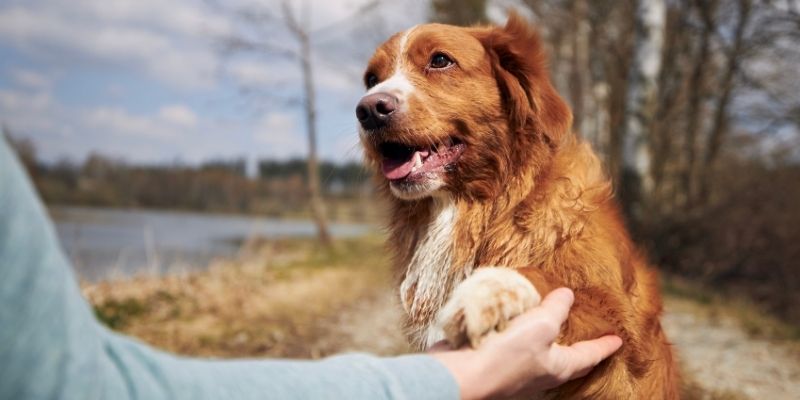
Nutrition is part of the relationship, not just a meal.
Perfection Is Not the Goal. Presence Is.
There is no perfect diet. There is no perfect owner. There is only effort, learning, mistakes, and correction. Perfectionism has long been abandoned; presence has not. Every message, comment, question, or doubt shows that people want to understand, not just buy a solution.
Why Personal Food Preparation Matters More Than Any Recipe
Anyone can copy a recipe, but a relationship cannot be copied. When you prepare food for your dog, you are not feeding only the body. You are participating in your dog’s life. And that is the one place where the commercial dog food industry can never replace you.
At Integrative and Holistic Grooming Education, we believe that every physical symptom is a message. Understanding these signals and addressing them through a holistic lens is at the heart of everything we teach to ensure the well-being of every dog in our care. Learn more and join our community: Linktree Sasha Riess

by Sasha Riess | 09.02.26. | Wellbeing
A stuffy nose in dogs often worries owners, but it is important to understand that this symptom can actually be the body’s way of trying to correct an internal imbalance. When a dog breathes heavily or seems congested, the most common cause is allergies. These can be triggered by dust, pollen, detergents, or inappropriate food.
Everything a dog inhales, eats, or absorbs through the skin must be processed into energy. When the body fails to recognize certain substances, it reacts, and that reaction appears as an allergy.
Allergies in Dogs – How to Recognize Them
In some dogs, allergic reactions appear externally through the skin, with itching, redness, or rashes. This is actually a positive sign because it shows the body is able to expel what is bothering it.
However, when the reaction is not visible externally, the problem may appear in the respiratory system. The dog may breathe with difficulty or have a constantly stuffy nose in dogs. These are called internal allergies and can be triggered by food, parasites, or stress.
Allergies and the Respiratory Tract
When allergies affect the respiratory organs, the dog may snort, breathe heavily, or have nasal discharge. It is important not to ignore this symptom because it may indicate that the body is unable to fight off toxins on its own.
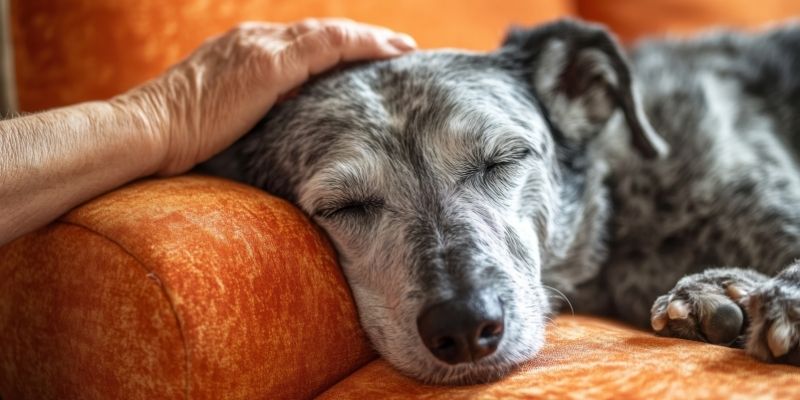
Careful care and a natural approach help a dog breathe easier.
Parasites – The Hidden Cause of a Stuffy Nose
Parasite larvae sometimes travel through the bloodstream to the sinuses, as nasal passages provide a favorable environment for them to settle. For this reason, it is helpful to occasionally carry out a natural parasite cleanse.
A combination of green black walnut, wormwood, parsley, and clove works effectively against adult parasites and their larvae. This approach not only helps breathing but also strengthens the dog’s immune system and supports overall detoxification.
When the Problem Persists
In rare cases, a stuffy nose in dogs may indicate the presence of growths in the sinuses, which can be benign or malignant. If the problem persists for a longer period, a veterinary examination is necessary to check the condition of the respiratory tract.
A Holistic Approach to a Dog’s Health and Breathing
It is also important to pay attention to everyday habits, such as what you use to wash your dog’s bed, which detergents you apply, and what kinds of treats you offer. Often, it is these small details that trigger allergic reactions.
A holistic approach means looking at the bigger picture, including what the dog breathes in, what it eats, and what kind of energy it feels at home. Only then can a dog truly breathe freely and feel calm, both physically and emotionally.
At Integrative and Holistic Grooming Education, we believe that every physical symptom is a message. Understanding these signals and addressing them through a holistic lens is at the heart of everything we teach to ensure the well-being of every dog in our care.

by Sasha Riess | 09.02.26. | Behaviour
The moment you start asking yourself why your dog seems restless, sad, or anxious, remember one thing: A dog would never do what we do to ourselves every single day. This is exactly why a dog so clearly feels every inner lie, every fracture, and every self-betrayal.
A Dog Feels Your Energetic Signature
To a dog, everything matters. They don’t hear your words; they feel the energetic signature of your decisions. They watch you as you:
-
Go to a job you hate.
-
Stay in a marriage where there is no love, only habit or fear.
-
Attend social events with people you dislike, wearing a mask of politeness.
-
Sacrifice your peace just to „show respect“ or maintain appearances.
The dog sees all of it. Reads all of it. Feels all of it.
Animals Live in Harmony; Humans Live in Conflict
No animal in nature would ever live against itself. A dog would never:
An animal lives in harmony with its own being. A human, however, often lives in a constant state of internal conflict.

A dog does not hear your words; it feels the energy of your decisions.
Your Dog Feels Your Inner Dishonesty
When you finally turn toward your own life and ask:
-
How honest am I with myself?
-
How honest am I with those I love?
-
Who am I pretending to be?
You will realize that the greatest suffering doesn’t come from the outside, but from the betrayal of your own truth. Your dog suffers with you not because you are „bad,“ but because the dog sees what you are trying to hide.
A mask can deceive people, and makeup can hide a sleepless night—but a dog can never be deceived.
This profound connection between human integrity and canine well-being is the foundation of our work. At Integrative and Holistic Grooming Education, we teach you how to achieve the systemic balance that allows both you and your dog to live authentically and healthily.

by Sasha Riess | 06.02.26. | Nutrition
The question “What should my dog eat?” is one of the most common, but also one of the most wrongly framed questions. Not because it is unimportant, but because it cannot be answered without context. In a holistic approach, there is no universal list of foods that applies to all dogs, in all homes, and in all circumstances.
Holistics does not function on the principle of “this is allowed, this is forbidden.” It does not separate the dog from the environment in which it lives, nor nutrition from lifestyle.
Why There Is No Single Answer to „What Should My Dog Eat?
When someone asks me what their dog should eat, the real question behind it is: What kind of world does this dog live in?
A dog does not live in isolation. It lives in your home, in your rhythm, and in your habits. That is why a dog’s diet cannot be separated from:
-
The way you eat and your relationship with your own body.
-
The pace of life in your home.
-
The level of stress, noise, chaos, or calm.
A holistic approach does not connect the dog to symptom-based therapy, but to the totality of the life it shares with its human.
Canine Nutrition and the Diet as a Mirror of the Home
Food is not just fuel; it is part of the communication between the dog and the space it lives in. If meals in the home are rushed and stressful, the dog feels it. If feeding is chaotic or emotionally charged, the dog registers it.
The question “What should my dog eat?” carries a deeper one: What does healthy living truly mean in this home?
The Holistic Approach: Asking the Right Questions
Holistics teaches the owner to ask:
-
How does my dog react to the food it eats?
-
Is it calm after meals or restless?
-
What are its sleep, digestion, and energy like?
-
Does my lifestyle reflect through my dog’s behavior?

A dog does not eat only food, but also the rhythm, energy, and habits of the home.
A Dog Does Not Eat Only Food – A Dog ‘Eats’ Context
A dog does not live on proteins, fats, and carbohydrates in isolation. A dog lives on meaning, rhythm, and security. Food is only one part of that system.
When the question “What should my dog eat?” is asked, it soon leads to another dilemma: kibble or homemade food? But even that question has no meaning until the bigger picture is seen—the rhythm of the home, the level of stress, and the human relationship with food.
Only then does the conversation about nutrition gain its true meaning.
This understanding of a dog’s emotional and physical state is at the heart of everything we do. At Integrative and Holistic Grooming Education, we teach people how to apply these principles of stability and care in their everyday lives with their dogs, helping create calm, healthy, and happy results.

by Sasha Riess | 05.02.26. | Wellbeing
A dog’s first heat cycle often causes concern among owners, especially for those experiencing it for the first time. One of the most common questions is whether a dog feels pain during heat and whether pain medication is needed.
The answer is simple: No.
Is a Dog’s Heat the Same as Menstruation in Women?
Although both processes involve the release of unfertilized eggs prepared in the uterus, a dog’s heat cycle is not the same as human menstruation.
In dogs, this process is entirely instinctive and biologically guided. The dog’s body knows exactly what to do and moves through hormonal changes without inner resistance.
Why Dogs Do Not Experience Pain the Same Way Humans Do
In women, menstrual pain is often influenced not only by physiology but also by psychosomatic factors such as the relationship with femininity, emotions, life experiences, and the bond with the mother.
A dog does not carry such inner conflicts. A dog does not analyze, suppress emotions, or create mental stress around bodily processes. Because of this, a dog’s first heat is not a painful experience.
Behavioral Changes Are Normal
During heat, a dog may:
These changes are caused by hormonal fluctuations, not by pain or suffering.

Peace and routine are the best support for a dog
Are Pain Medications Necessary?
In most cases, no. Medication is not given preventively or “just in case.” If a dog shows strong pain, apathy, fever, or unusual symptoms, a veterinarian should be consulted, as this may indicate a health issue unrelated to the heat cycle itself.
What Owners Need to Understand Most
Heat is not an illness. It is a natural biological cycle that a dog experiences without emotional burden. The best thing an owner can do is provide calmness, routine, and a sense of safety, without unnecessary interventions.
This understanding of a dog’s emotional and physical state is at the heart of everything we do. At Integrative and Holistic Grooming Education, we teach people how to apply these principles of stability and care in their everyday lives with their dogs, helping create calm, healthy, and happy results.