by Sasha Riess | 01.04.26. | Wellbeing
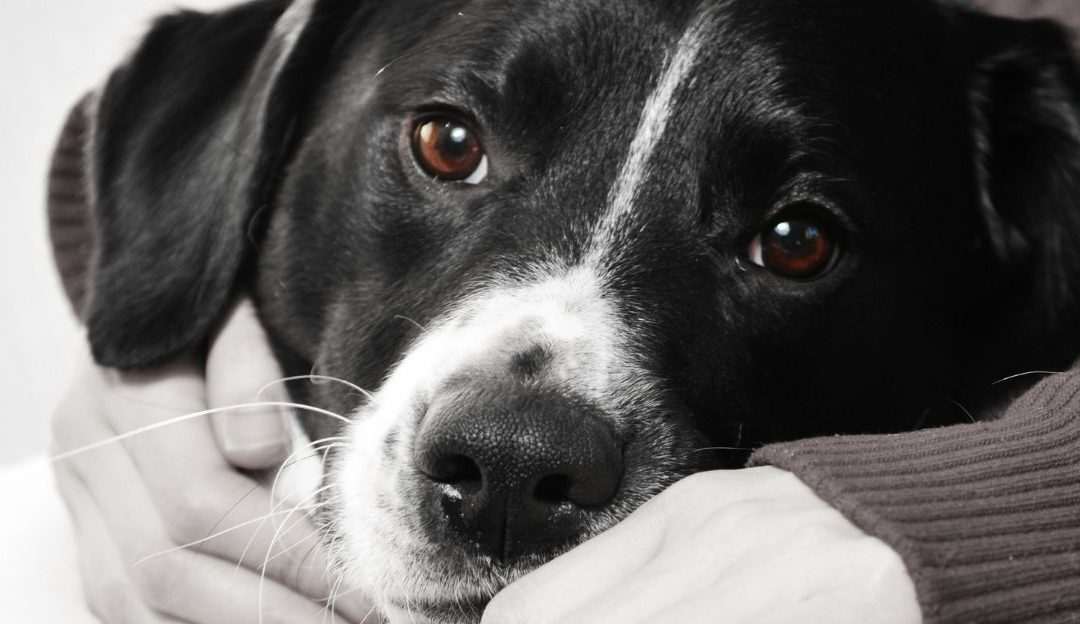
Red tears in dogs often confuse owners and cause concern, but behind them lies a complex process within the human dog relationship. These stains are not just an aesthetic issue; they are a biological signal that something in the dog’s body is shifting due to stress or diet.
Physiological and emotional causes of red tears in dogs
„Red tears are a metabolic process,“ explains Sasha Riess. „You can see it in the tears, saliva, and sweat glands.“
A dog’s body temperature is naturally higher than a human’s, around 38°C. Because of this, the warm, moist areas of the face become an ideal environment for bacteria to flourish. These bacteria, reacting with porphyrins in the fluid, produce the characteristic reddish-brown color.
Red tears are therefore a triad of:
-
Bacterial imbalance
-
Disrupted pH levels
-
Emotional stress
How the human dog relationship impacts tear staining
Dogs are sentient beings that react deeply to the feelings of their owners. If you notice your dog withdrawing or showing restlessness alongside red tears, you may be looking at an emotional reaction. In the human dog relationship, dogs often act as emotional sponges.
Sasha Riess advises: „Check how attached the dog is to you and whether there is any other behavior that shows tension. Dogs are emotional animals and can respond to your own emotional processes.“
Pay attention to environmental shifts:
-
Has a family member left the household?
-
Has the daily routine changed significantly?
-
Is the dog experiencing separation anxiety?
Natural solutions for red tears in dogs
An imbalance in the microbiome often manifests through the eyes. If the pH level of the tears is off, bacteria grow more easily. To restore balance:
-
Adjust or change the dog’s food: Move toward more natural, less processed options.
-
Introduce probiotics: Support the gut-eye axis.
-
Maintain hygiene: Keep the area dry to discourage bacterial growth.
„First, resolve the physiological part. Change the food and add a probiotic,“ says Sasha. „And at the same time, reduce the dog’s exposure to stress.“
Restoring balance in your shared life with your dog
Chronic stress triggers higher levels of cortisol, which weakens the immune system and disrupts the microbiome. When the human dog relationship is strained or the environment is chaotic, bacteria grow faster.
Stability is the cure:
-
Feeding and walking at the same time daily.
-
Structured play and consistent physical contact.
-
A calm environment without abrupt changes.

Closeness and calm communication help a dog release stress and reduce the appearance of red tears.
How to Help Your Dog
Helping a dog with red tears involves a two-step approach of understanding and action. Addressing the issue gradually through diet, hygiene, and stress reduction is key. Consider keeping a small diary to track when the tears appear—after which meals or emotional events? This makes the root cause easier to identify.
Caring for both the emotional and physiological balance is the best way to prevent red tears. Dogs are mirrors of our emotions. If we learn to read their tears, we might learn something about ourselves as well.
At Integrative and Holistic Grooming Education, we believe that precision in nutrition is a reflection of our care. When we measure with love, we feed the soul. Explore our philosophy: Linktree Sasha Riess
by Sasha Riess | 30.03.26. | Behaviour
Punishing a dog is never the solution. It leaves lasting consequences not only for the dog but also for us. Instead of control and force, the real path leads through love, understanding, and trust. Our approach to discipline is perhaps the most profound reflection of the human dog relationship.
My View on Canine Behavior
Today I live with a dog who behaves beautifully. He follows me, listens, and walks at my side. At first glance, it looks perfect, but I always ask myself one question: At what cost?
When a dog’s behavior comes solely from our will and pressure, that behavior is no longer natural, but imposed. Such an approach leaves deep traces, and the consequences often show up later as various health problems. We are seeing more and more dogs suffering from epilepsy, tumors, and other serious diseases. While many search for the cause in poor nutrition or vaccinations, few stop to ask whether these physiological factors are the only explanation. Could the suppression of a dog’s soul within the human dog relationship be the silent trigger for physical decay?
A Harmonious Relationship Between Owner and Dog
Punishing a dog does not create obedience; it creates a „Janissary“—a being stripped of its own will. Love and understanding are the only materials that can build a real, lasting relationship.

Punishing a dog does not lead to obedience — love and understanding build a true relationship.
The Question I Ask Myself
When I am faced with a choice in how to respond to my dog, I always remember one thing: Every time I punish him, I am actually punishing myself.
Our choices in how we treat our dogs mirror our inner world. If I choose the path of strict control and force, it means I carry inner insecurities that I project onto him. The human dog relationship acts as a mirror, showing us the parts of ourselves we are afraid to face.
Why This Is Not Easy to Accept
It may sound simple: Do not punish your dog, love him, and let him be who he is.
But if it were easy, people would effortlessly give up bad habits, stop eating food that harms them, or leave toxic environments. Life would be much simpler. In reality, it takes courage and deep honesty to admit that the way we treat our dog is a reflection of how we treat ourselves. True healing begins when we stop seeking control and start seeking connection.
At Integrative and Holistic Grooming Education, we believe that precision in nutrition is a reflection of our care. When we measure with love, we feed the soul. Explore our philosophy: Linktree Sasha Riess
by Sasha Riess | 29.03.26. | Nutrition, Wellbeing
During the show “1000 Why – 4 Therefore,” a question was raised about a dog with spots on its pupils. The veterinarian explained that cataracts can develop in later years. The owner wanted to try a treatment with cold-pressed castor oil, one drop each evening. Many owners have reported the same issue: their dogs suddenly lost sight or experienced a gradual decline in vision. Such problems are often not purely ophthalmological but also immunological and metabolic. Understanding the human dog relationship and its impact on health is the first step toward healing.
The Eyes Reflect Inner Health
Just as the eyes can be affected by diabetes, visual degeneration in dogs indicates a deeper imbalance in the body. The eye is difficult to regenerate, but it’s not impossible to stop degeneration. The goal is not to “fix the eye” but to stop the process that breaks it down.
We return to the relationship with the dog, reducing stress, and applying the principles of holistic care. Stress is one of the main triggers of diabetes and autoimmune diseases. It disrupts mineral balance and weakens the microbiome, which is the foundation of immunity. Poor nutrition—too many carbohydrates and sugars, and too few proteins—further worsens the condition. In this process, the adrenal, thyroid, and parathyroid glands are often affected, leading to increased acidity in the body and a range of symptoms, including eye problems.
Castor Oil and Alternative Approaches
Experiences with castor oil vary, and there is no universal solution. Before treating the symptom (the eyes), it is important to understand the cause, because loss of vision is only a signal of a deeper problem within the dog’s body.
The eyes are part of a complex system, and if your dog has vision problems, ask yourself:
By working on nutrition, reducing stress, and restoring emotional balance, you help the body stop losing function and begin the process of healing.

Trust and closeness — the foundation of a dog’s health and emotional balance.
Eye Health Diet for Dogs
This diet is designed to strengthen the immune system, support eye health, and balance the dog’s body through natural ingredients.
Ingredients
-
450 g lean ground beef
-
85 g beef liver, chopped or ground
-
115 g beef heart, chopped or ground
-
170 g spinach
-
85 g carrot, chopped or ground
-
3 eggs (without shells)
-
55 g mussels (well rinsed; canned is acceptable)
-
1 pear
-
3 teaspoons finely ground almonds
-
3 teaspoons finely chopped mint
-
55 g sardines in water (added at mealtime)
-
1 flat teaspoon kelp powder (added at the end)
Note: Give eggshells only to puppies, not to adult dogs.
Preparation
Grind and mix all ingredients into a uniform mixture.
Cooking methods:
-
In the oven at 160°C for 30–45 minutes.
-
In a slow cooker on low for 4–6 hours.
After cooking, let it cool completely. Add powdered supplements (like kelp) only after the mixture has cooled. If using capsule supplements, open them and mix the contents evenly into the food. Grind nuts and seeds before adding them. Freeze portions you won’t use within 72 hours. Frozen food retains nutritional value for up to 3 months.
Daily feeding amount: about 3% of your dog’s ideal body weight.
Important Note
Avoid fish oils as a source of omega-3 fatty acids because toxins from polluted waters remain in the fatty tissues of fish. Instead, use flaxseed oil or pumpkin seed oil, added just before serving.
In Conclusion
Eye health does not depend solely on local treatments but on the overall balance of the body. Proper nutrition, stress reduction, and emotional stability can help slow down or stop the degenerative process. When your dog begins to see clearly again, it’s a sign that there is more light and balance in your human dog relationship too.
At Integrative and Holistic Grooming Education, we believe that precision in nutrition is a reflection of our care. When we measure with love, we feed the soul. Explore our philosophy: Linktree Sasha Riess
by Sasha Riess | 25.03.26. | Emotions
Allergies in dogs aren’t just physical reactions to food or environmental triggers — they’re often messages from the body and soul. Through a dog’s symptoms, we can see how much the owner’s stress, emotions, and energy shape the dog’s health. Understanding the roots of a canine allergy requires us to look beyond the surface.
The Quiet Message of Canine Allergy
There is no quieter cry for help than an allergy. No noise. No screaming. No attack. Just itch. Just redness. Just a body trying to expel what it can no longer tolerate. And in this case, the body isn’t ours — it’s the dog’s.
Symptoms That Speak Louder Than Words
For years people have called me about allergies. The dog scratches, chews his paws, loses hair, breaks out in rashes. They hunt for the culprit in food, grass, detergents, or kibble. And the question is always the same: “What is he allergic to?”
More and more often, I take a breath and say: “To you.”
Not literally. Not as an accusation. But as an invitation to awareness. A dog can’t choose his own life. He lives ours. He eats what we give him, breathes the air of our home, walks at our pace, sleeps when we sleep. A dog is the truest mirror of the life we lead. And if he’s suffocating, itching, protesting, and falling apart — that’s not a sign to change the brand of food. It’s a sign to look at what, exactly, we’re feeding.
Allergy as an Inner Conflict
By its nature, allergy is conflict — rejection. Physiologically, it’s an overreaction of the immune system to something that should be harmless but has become unrecognizable. The body refuses to accept it and tries to expel it. Systemically, it means a boundary has been crossed — the organism can no longer tolerate a lie.
The Dog as a Mirror of the Owner’s Life
Now imagine a dog who becomes allergic to chicken, beef, pollen — to things tied to life, strength, fertility, movement, the presence of nature. On the level of the body, his system is shouting: “This isn’t my life. This isn’t for me. I can’t digest it.”
Then we look at the owner and see a forgotten person. Forgotten by himself. Forgotten in a marriage that has traded tenderness for mere correctness. Forgotten in a job that’s no longer a choice but a climate-controlled cell with monthly paychecks. Forgotten in a body that no longer feels hunger but runs on habit. Forgotten in a sexuality that’s no longer lived.
Civilization and Suppression
This isn’t about blame. It’s civilization. We were taught to be polite, useful, productive — not to disturb the order. Not to want too much, ask too much, feel too much. When we suppress our hunger for life, for the body, for touch, for feeling and sexuality, the body that no longer knows how to say “I want” begins to say “I mustn’t.”
And the dog — who feels everything, resonates with our nervous system, absorbs our chemistry, our unfinished thoughts, our unspoken grief — begins to react. He can’t digest what we give him because we’re not giving from love but from guilt. He can’t tolerate the life we offer because we ourselves can no longer tolerate our own.
So the dog isn’t allergic to food. He’s allergic to us. Or, more precisely, to the life we, as his humans, have forgotten how to live.
Physiology: What’s Actually Happening
That’s hard to admit.
Physiologically, a canine allergy is an overreaction to a harmless substance. A confused, depleted immune system sees threat where there is none. Instead of protecting, it starts attacking — everything. The only question is: what will be the trigger.
Stress, the Microbiome, and the Invisible Link
In dogs with chronic symptoms we often see the same story: cortisol — the stress hormone — stays elevated. It signals danger. The system switches to survival mode. Blood leaves the stomach for the muscles. Digestion halts. Blood sugar spikes. Gut pH turns acidic. The microbiome — that separate organ of trillions of bacteria — begins to collapse. Without it, food isn’t digested. Everything becomes toxic. The dog eats but doesn’t utilize. He’s fed yet starving. He receives but cannot assimilate. His body becomes a battlefield. Not because the food is “wrong,” but because everything in him has been put on alert without a break.

Behind every allergy might lie an unspoken emotion – a dog often feels what the owner suppresses.
Where It Starts: When a Dog No Longer Knows Where He Belongs
It begins quietly — the moment a dog no longer knows to whom he belongs, which species he belongs to, what his role is. He only knows he must stay near us. Because he loves us. And because we are falling apart.
The Dog as a Substitute
It starts when the dog becomes a stand-in. When he enters during a time of pain — a gift to a child after a divorce, a comfort after a parent’s death, a “new chance” when everything else has failed. While we believe the dog loves us unconditionally, each day he gets more lost in a role that was never his.
He begins to carry what cannot be carried. And his body shows it — through skin, through gut, through allergy.
Allergy as a Metaphor for the Life We Don’t Live
Allergy isn’t just a physical response. It’s a metaphor. A message. Resistance. A symptom that says: “I can’t digest this.” And most often it’s not about chicken. Food isn’t the problem — it’s the symbol. Food is life. When a dog becomes “allergic to food,” what he’s often trying to say is: “I’m allergic to the life I’m living.”
But whose life is that?
The Owner’s Life as the Key
It’s the owner’s life — woven with suppressed emotions, compromises, and polite smiles. A life without joy, touch, or presence. A life of waking next to someone you no longer love. Of going to a job you can’t stand. A life where “I’m fine” is just a façade.
A dog doesn’t understand that. He absorbs it. Tries to break it down, to “digest” it. When he cannot, the body reacts. Because love without order becomes poison.
Hypoallergenic Diets: Solution or Surrender?
Then comes the next phase: “But my dog has no more symptoms on a hypoallergenic diet.” Anti-allergy food — industrially broken down under extreme heat and pressure — is no longer food. It’s a semi-digested mash of amino acids, fractionated fats, and processed carbohydrates. There’s nothing left to digest. It doesn’t provoke — but it doesn’t nourish either. It carries no character, no information, no vitality. The body accepts it without resistance — because there’s nothing left to receive.

Hypoallergenic food is often just a temporary fix – the root of the problem lies deeper, in how the dog and owner live.
The Silence of Symptoms Isn’t Healing
Phenomenologically, the absence of symptoms is not the same as healing. It can be life giving up — and we call that progress. If a dog can function only on sterile, inert food, that isn’t health. That’s capitulation — like all our compromises. Food without taste. Relationships without touch. Days without meaning.
When a dog can again eat real, living food without reacting — then we know the body has renewed itself. Then life can enter again. And often, it means our own life has started moving again, too.
A Dog’s Loyalty — and His Quiet Tragedy
Dogs love blindly. That is their magnificent tragedy. In systemic work we know: what remains unresolved is passed on. In human–dog relationships, that transmission is direct — from soul to body. The dog becomes the bearer of a dynamic no one recognizes.
A canine allergy to chicken may be an allergy to the fact that we keep smiling when we don’t want to. A “pollen allergy” may be resistance to life blooming outside while the flowers of our sexuality wither within.
When Love Turns Toxic
When love is out of order, it becomes poison. And the dog carries it — silently. So when you ask me, “What should I feed a dog with allergies?” I no longer have a single recipe to give you. I’ve shared thousands. I can only ask: “What are you feeding your life?”
Returning to Life — Your Dog as Your Barometer
A dog eats what we serve — but digests what we radiate. If we live dead relationships, suppress feelings, feed illusions and polite smiles — if we’re surviving instead of living — a dog can’t understand it, but he feels it. And he reacts. Not as disease, but as message.
Dogs don’t lie. Their skin doesn’t lie. Their itch doesn’t lie. We do. If we stop lying, the dog can finally breathe. That is healing — not symptomatic, but deep, present, alive. That is love — not the commercial kind, but the real kind, the kind that sees and looks toward the future.
A Gentle Self-Check: What Is Your Dog Really Telling You?
Answer honestly — not as self-blame, but as an invitation to awareness:
-
Does your dog have chronic allergies, itching, rashes, or digestive issues?
-
Have you rotated through foods, shampoos, and supplements without a lasting solution?
-
When you look at your dog, do you see only symptoms — or also sadness, exhaustion, restlessness?
-
Are you living the life you truly want — or just functioning out of duty, habit, obligation?
-
Are you in relationships you’ve stayed in out of fear rather than love?
-
Do you sometimes feed your dog out of obligation instead of love and presence?
-
Have you felt “tired of everything” lately without knowing why?
-
Does your dog come to you when you’re upset — and do you push him away?
-
Did your dog’s symptoms worsen after a major family change (divorce, move, death, illness)?
-
If your dog could speak, would he say: “I can’t carry this for you anymore”?
Your Dog as Your Reflection
If you answered “yes” to more than a few of these, your dog may not need a brand-new food. He may be mirroring your life. And if you return to your own life, he may no longer have to run from his body.
At Integrative and Holistic Grooming Education, we look beyond the itch. We help you decode the language of the soul reflected in the skin. Real health begins with real truth. Explore our philosophy: Linktree Sasha Riess
by Sasha Riess | 25.03.26. | Emotions
When we banned chains, we thought we had done something great, something civilized and humane. We freed dogs from chains, but not from ourselves.
Sophisticated slavery in the name of love
We passed laws, declared victory over cruelty, and celebrated ourselves as protectors of life. But the truth is far deeper and much darker. Because while we were breaking iron, we forgot that chains are not made only of metal.
Today, dogs are no longer tied to trees. They are tied to us. To our fears, insecurities, ambitions, emptiness, and projections. Their new collars are not made of steel, but of energy. Silent and invisible, yet incomparably stronger. And while in the name of love and freedom we removed visible chains, in the name of those same words we created new ones, subtle, unbreakable, and far more cruel.
Today we no longer use chains. We design them. We make them from fine leather, order handmade buckles, decorate them with crystals, gold plating, initials, and logos. We call them leashes, as if a new word has the power to erase the old truth. We sell them in luxury boxes, photograph them on marble floors, advertise them as status symbols and proof of a special bond between human and dog.
And while we praise how far we have progressed in our relationship with animals, no one dares to say what is obvious. This is not freedom. This is sophisticated slavery. A new level of hypocrisy in which humans have surpassed themselves. Never before have we managed to turn restraints into fashion accessories and call that act love.
The Energetic Chain: When a Dog Becomes Our Emotional Prosthesis
We call them “our dogs.” We tie them to beds, couches, terraces, yards, to every moment of our sadness, boredom, and insecurity. They are no longer guardians, hunters, or companions. They have become emotional buffers, carriers of our inner emptiness.
Every time we are afraid, they feel it. Every time we argue, they carry it. Every time we want love we cannot give ourselves, we take it from them.
And so, while they smile in our photographs and wear scarves at Christmas, dogs die more slowly than ever before. Because their collapse is not physical. It is energetic. A collapse of connection with their true place in the order of life. In the natural order of the world, the dog is a bridge between humans and wilderness. He stands between instinct and consciousness, between darkness and light, between life that fights and life that loves. But we have turned that bridge into a wall. Instead of respecting it, we possess it. Instead of listening, we use it.
When the Dog Becomes a Mirror: Invisible Chains of Human Imbalance
In the order of harmony, every being has its place. When someone leaves their place, the system reacts, distorts, seeks balance. The dog has always been a guardian of balance between humans and nature. Today, as we are cut off from the earth, dogs become our sensors, transmitters of our imbalance.
The modern dog is no longer free even within his own nature. He is not allowed to bark because it bothers neighbors. He is not allowed to run because he gets dirty. He is not allowed to sniff because it is “unhygienic.” His drive to hunt, to move freely, to touch water and mud, everything that makes him a dog, we label as a “behavioral problem.”
We have created dogs that are obedient, sterilized, trained, emotionally saturated, yet spiritually dead and physically zombie-like. This is the price of our comfort. And while we believe we have freed them, they have become prisoners of our “humane” concepts. The chain of normality is the strongest of all. Because there is no scream, no audible pain, no blood. Only silent sadness in the eyes of a dog who knows he has lost the right to be what he is.

„He has everything, except himself.“ Our homes have become camps of love.
Invisible Chains of Love Without Boundaries
Every love without boundaries becomes violence. We do not see it because we believe we love. But love without awareness of place, without respect for distance, without honoring another nature, is not love but obsession.
A dog does not ask to be loved like a child, but to be respected as a being. When a dog lies next to us, he does not ask to become human. He asks to remind us that we are animals too. That we breathe, feel, and move through the field of life just like he does. But we rejected that lesson, and now dogs look at us with the same gaze wolves once did, a gaze of understanding and sorrow.
Our homes have become camps of love. Everything looks gentle, clean, and orderly, yet in that sterility something is dying. Every dog who has lost contact with his body, with the earth, with a sense of meaning, becomes a victim of our system of “care.” We call this a humane society, but that society does not know true freedom. Because true freedom is not the absence of a chain, but the presence of awareness. And we have not become aware of our place in relationship with dogs. We have only changed the material.
The Camp of Kindness: Are Our Homes Prisons for Dogs
In the order of harmony, the dog has a deep purpose. He does not exist to serve, but to testify to how far we have strayed from ourselves. When a dog loses peace, it is a sign that we have lost touch with the source. When a dog becomes ill, it is a message that the system between human and nature is broken.
The dog does not carry our mistakes as punishment, but out of loyalty. He will carry our imbalances until we admit that they are ours. And when we do, when we bow to his pain as a mirror of our own unconsciousness, that invisible chain breaks.
False Freedom, Real Suffering
In the desire to give them freedom, we stripped dogs of meaning. In the desire to protect them, we took away their task. In the desire to love them, we took away their dignity.
The law that banned chains is not wrong. It is incomplete. Laws do not change awareness, only behavior. And behavior without awareness becomes a new form of unfreedom. Real change is not when a dog is no longer tied, but when a human stops tying him into their own processes and problems. When we stop seeking confirmation of our value in his gaze. When we stop using his loyalty as medicine for our insecurity.

True freedom is not the absence of a chain, but the presence of awareness.
The Dog as a Prophet
Perhaps one day, if we are quiet enough, we will hear what the dog is trying to tell us. That we do not need to be pitied, but awakened. That the real chain is not between dog and tree, but between human and hypocrisy.
And perhaps then we will understand that the dog does not come into our life to be “ours,” but to teach us how to be part of the world he also belongs to. Not owners of life, but participants in it. Imagine a dog sitting in a yard without a fence. The wind carries the scent of earth, leaves rustle, and he simply breathes. In his eyes there is no fear, no dependency, no expectation. Only peace. That is the image of freedom.
Now imagine another dog, clean, groomed, loved, in an air-conditioned apartment, always in company, but never in silence. His body looks relaxed, but his soul and every muscle are tense. He looks through the window and does not understand where he went wrong.
We say, “He has everything.” But if he could speak, he would say, “I have everything, except myself.”
We freed dogs from chains, but not from ourselves. And as long as we refuse to see what we do not want to admit, that our dogs have become extensions of our inner prisons, freedom will remain only a word. Only when we stop binding them invisibly and finally return to them the place that belongs to them in the order of life will the dog once again be what he has always been: the guardian of the sacred bridge between us and nature. The same nature we admire from afar, while with every action we push it toward the abyss.
And only then might we realize that as long as we keep dogs imprisoned in our fears and illusions, we ourselves remain the greatest prisoners, walking tirelessly toward our own end, convinced we are civilized, while in truth we accelerate our own destruction.
At Integrative and Holistic Grooming Education, we believe that true connection requires the courage to let go of control. Respecting a dog’s nature is the ultimate expression of love. Explore our philosophy: Linktree Sasha Riess