When we banned chains, we thought we had done something great, something civilized and humane. We freed dogs from chains, but not from ourselves.
Sophisticated slavery in the name of love
We passed laws, declared victory over cruelty, and celebrated ourselves as protectors of life. But the truth is far deeper and much darker. Because while we were breaking iron, we forgot that chains are not made only of metal.
Today, dogs are no longer tied to trees. They are tied to us. To our fears, insecurities, ambitions, emptiness, and projections. Their new collars are not made of steel, but of energy. Silent and invisible, yet incomparably stronger. And while in the name of love and freedom we removed visible chains, in the name of those same words we created new ones, subtle, unbreakable, and far more cruel.
Today we no longer use chains. We design them. We make them from fine leather, order handmade buckles, decorate them with crystals, gold plating, initials, and logos. We call them leashes, as if a new word has the power to erase the old truth. We sell them in luxury boxes, photograph them on marble floors, advertise them as status symbols and proof of a special bond between human and dog.
And while we praise how far we have progressed in our relationship with animals, no one dares to say what is obvious. This is not freedom. This is sophisticated slavery. A new level of hypocrisy in which humans have surpassed themselves. Never before have we managed to turn restraints into fashion accessories and call that act love.
The Energetic Chain: When a Dog Becomes Our Emotional Prosthesis
We call them “our dogs.” We tie them to beds, couches, terraces, yards, to every moment of our sadness, boredom, and insecurity. They are no longer guardians, hunters, or companions. They have become emotional buffers, carriers of our inner emptiness.
Every time we are afraid, they feel it. Every time we argue, they carry it. Every time we want love we cannot give ourselves, we take it from them.
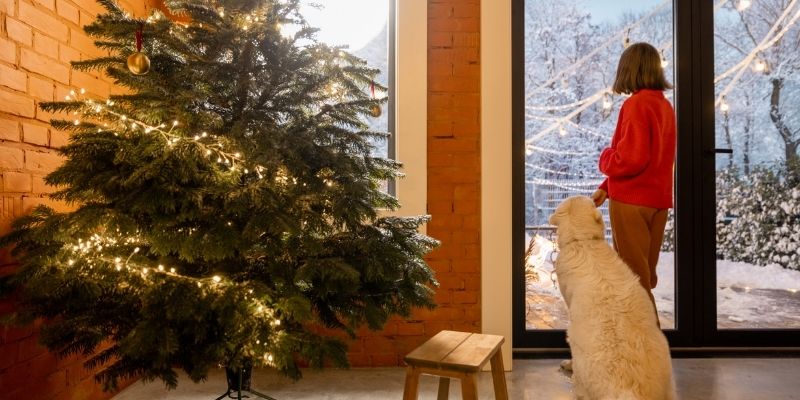
And so, while they smile in our photographs and wear scarves at Christmas, dogs die more slowly than ever before. Because their collapse is not physical. It is energetic. A collapse of connection with their true place in the order of life. In the natural order of the world, the dog is a bridge between humans and wilderness. He stands between instinct and consciousness, between darkness and light, between life that fights and life that loves. But we have turned that bridge into a wall. Instead of respecting it, we possess it. Instead of listening, we use it.
When the Dog Becomes a Mirror: Invisible Chains of Human Imbalance
In the order of harmony, every being has its place. When someone leaves their place, the system reacts, distorts, seeks balance. The dog has always been a guardian of balance between humans and nature. Today, as we are cut off from the earth, dogs become our sensors, transmitters of our imbalance.
The modern dog is no longer free even within his own nature. He is not allowed to bark because it bothers neighbors. He is not allowed to run because he gets dirty. He is not allowed to sniff because it is “unhygienic.” His drive to hunt, to move freely, to touch water and mud, everything that makes him a dog, we label as a “behavioral problem.”
We have created dogs that are obedient, sterilized, trained, emotionally saturated, yet spiritually dead and physically zombie-like. This is the price of our comfort. And while we believe we have freed them, they have become prisoners of our “humane” concepts. The chain of normality is the strongest of all. Because there is no scream, no audible pain, no blood. Only silent sadness in the eyes of a dog who knows he has lost the right to be what he is.
„He has everything, except himself.“ Our homes have become camps of love.
Invisible Chains of Love Without Boundaries
Every love without boundaries becomes violence. We do not see it because we believe we love. But love without awareness of place, without respect for distance, without honoring another nature, is not love but obsession.
A dog does not ask to be loved like a child, but to be respected as a being. When a dog lies next to us, he does not ask to become human. He asks to remind us that we are animals too. That we breathe, feel, and move through the field of life just like he does. But we rejected that lesson, and now dogs look at us with the same gaze wolves once did, a gaze of understanding and sorrow.
Our homes have become camps of love. Everything looks gentle, clean, and orderly, yet in that sterility something is dying. Every dog who has lost contact with his body, with the earth, with a sense of meaning, becomes a victim of our system of “care.” We call this a humane society, but that society does not know true freedom. Because true freedom is not the absence of a chain, but the presence of awareness. And we have not become aware of our place in relationship with dogs. We have only changed the material.
The Camp of Kindness: Are Our Homes Prisons for Dogs
In the order of harmony, the dog has a deep purpose. He does not exist to serve, but to testify to how far we have strayed from ourselves. When a dog loses peace, it is a sign that we have lost touch with the source. When a dog becomes ill, it is a message that the system between human and nature is broken.
The dog does not carry our mistakes as punishment, but out of loyalty. He will carry our imbalances until we admit that they are ours. And when we do, when we bow to his pain as a mirror of our own unconsciousness, that invisible chain breaks.
False Freedom, Real Suffering
In the desire to give them freedom, we stripped dogs of meaning. In the desire to protect them, we took away their task. In the desire to love them, we took away their dignity.
The law that banned chains is not wrong. It is incomplete. Laws do not change awareness, only behavior. And behavior without awareness becomes a new form of unfreedom. Real change is not when a dog is no longer tied, but when a human stops tying him into their own processes and problems. When we stop seeking confirmation of our value in his gaze. When we stop using his loyalty as medicine for our insecurity.
True freedom is not the absence of a chain, but the presence of awareness.
The Dog as a Prophet
Perhaps one day, if we are quiet enough, we will hear what the dog is trying to tell us. That we do not need to be pitied, but awakened. That the real chain is not between dog and tree, but between human and hypocrisy.
And perhaps then we will understand that the dog does not come into our life to be “ours,” but to teach us how to be part of the world he also belongs to. Not owners of life, but participants in it. Imagine a dog sitting in a yard without a fence. The wind carries the scent of earth, leaves rustle, and he simply breathes. In his eyes there is no fear, no dependency, no expectation. Only peace. That is the image of freedom.
Now imagine another dog, clean, groomed, loved, in an air-conditioned apartment, always in company, but never in silence. His body looks relaxed, but his soul and every muscle are tense. He looks through the window and does not understand where he went wrong.
We say, “He has everything.” But if he could speak, he would say, “I have everything, except myself.”
We freed dogs from chains, but not from ourselves. And as long as we refuse to see what we do not want to admit, that our dogs have become extensions of our inner prisons, freedom will remain only a word. Only when we stop binding them invisibly and finally return to them the place that belongs to them in the order of life will the dog once again be what he has always been: the guardian of the sacred bridge between us and nature. The same nature we admire from afar, while with every action we push it toward the abyss.
And only then might we realize that as long as we keep dogs imprisoned in our fears and illusions, we ourselves remain the greatest prisoners, walking tirelessly toward our own end, convinced we are civilized, while in truth we accelerate our own destruction.
At Integrative and Holistic Grooming Education, we believe that true connection requires the courage to let go of control. Respecting a dog’s nature is the ultimate expression of love. Explore our philosophy: Linktree Sasha Riess
Negative influence on a dog is rarely the result of intentional cruelty. Much more often, it comes from the unconscious transfer of emotions, trauma, and inner conflicts from the owner. Dogs do not understand words the way humans do, but they deeply sense the emotional state of the person they live with. When a dog becomes a place where unresolved problems are discharged, the consequences inevitably appear in the dog’s behavior.
When a Dog Becomes an Emotional Support
Many owners unconsciously project their trauma onto their dog. They talk to the dog as if it were a therapist, confide their problems, and expect understanding. The dog does not respond with words, but it absorbs the emotional burden that does not belong to it.
Such a relationship does not heal the human, but it deeply burdens the dog.
Transferring Trauma Across Generations
If a person grew up in an environment of violence, emotional coldness, or manipulation, those same patterns are often transferred to the dog, usually in a milder form. There may be no physical violence, but there is control, emotional pressure, passive aggression, or constant tension. This is a negative influence on the dog that often goes unnoticed until it becomes serious.
How a Dog Shows That It Is Carrying Your Burden
Dogs clearly signal when they are under emotional pressure:
Constant tension or withdrawal
Excessive attachment to the owner
Fear without a clear cause
Digestive or skin problems
Unexplained aggression or apathy
These are not “bad dogs.” These are dogs carrying emotions that are not theirs
Dogs feel and absorb the inner conflicts of their owners.
Love Is Not Projection
If we only know how to love through control, fear, or pain, the dog becomes a victim of our patterns. Loving a dog does not mean transferring our wounds onto it. It means taking responsibility for our own inner state.
A dog is not therapy. A dog is a living being that reacts to the truth we live. Recognizing that you are negatively affecting your dog requires an honest look inward. A dog does not need a perfect owner, but a stable human being. When you begin to carry your own emotions, the dog will be the first to show relief.
At Integrative and Holistic Grooming Education, we believe that the mirror of a dog’s soul reflects the clarity of its owner’s heart. True well-being starts with emotional responsibility. Explore our philosophy: Linktree Sasha Riess
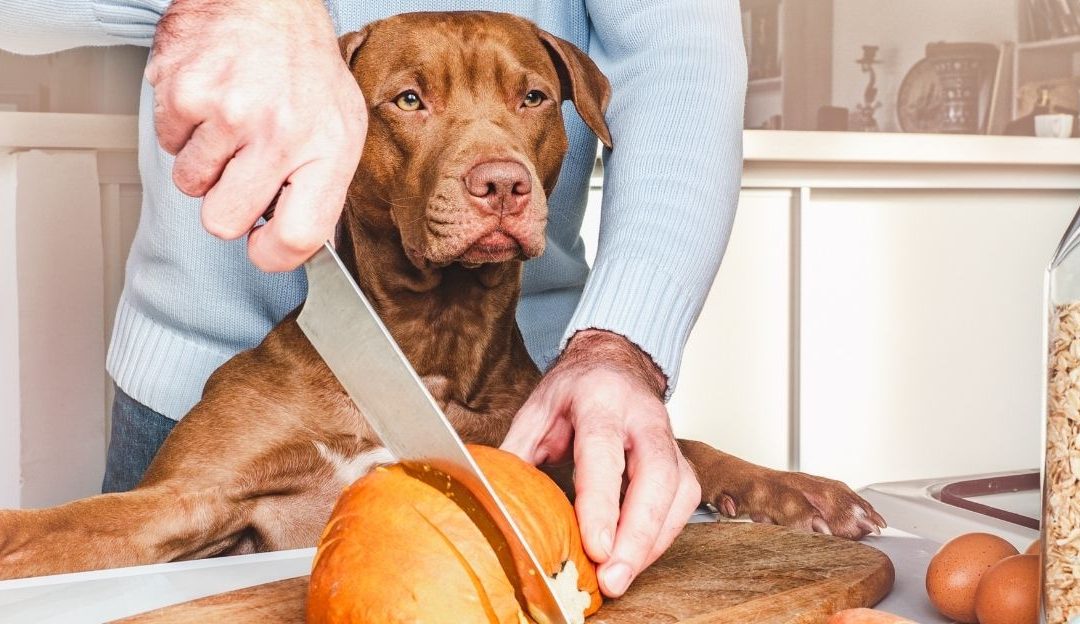
Many dog owners want to switch to cooked or homemade food but worry about one thing: how can they manage to cook when they work, rush, and barely have time for themselves? The truth is that preparing meals for your dog does not need to be complicated, slow, or demanding. Below is a simple system that allows you to feed your dog with high quality, healthy, homemade meals without cooking every day.
Quick Cooking: A Complete Meal in One Pot
You do not need anything special to prepare homemade dog food.
Chop the ingredients in a food processor, including meat, vegetables, and optionally rice or buckwheat.
Place everything in a single pot.
Add water to cover and cook for about thirty minutes.
That is all. No special techniques, no complicated recipes, just simple cooking that results in a nutritious meal.
How Much Food Does a Dog Need
The amount is very easy to calculate. Give your dog three percent of his body weight per day.
Example: A dog weighing twenty kilograms eats about six hundred grams of food per day. This amount can be divided into one or two meals depending on the dog’s routine.
Batch cooking — the perfect solution for busy dog owners.
You Do Not Need to Cook Every Day
If you cook a larger batch, you can feed your dog for several days in advance. Homemade food can:
Stay in the refrigerator for three to four days
Be reheated and sterilized if you want it to last longer
Be frozen for one to two weeks
This means you do not cook every day, but once every few days.
Why Kibble Is Not a Good Alternative
Kibble often looks like small pieces of meat, but in reality it is:
A concentrate
An industrially processed mixture of ingredients
A type of feed also given to livestock
Large corporations make it look attractive, but that does not make it natural food. This is why many owners feel that kibble is not the right choice, and there is no brand I can genuinely recommend as ideal.
Is Homemade Food Sustainable
Absolutely yes. If you can set aside thirty minutes once every two or three days, one pot, and a few basic ingredients, then you already have everything you need to feed your dog healthy, real food. Cooking for your dog does not have to be a time consuming task. On the contrary, with simple preparation, cooking in advance, and basic ingredients, homemade dog food becomes the most practical and healthiest option.
At Integrative and Holistic Grooming Education, we believe that providing fresh, nutrient-dense food is the greatest act of love an owner can perform. Your dog’s vitality starts in the kitchen. Explore our philosophy: Linktree Sasha Riess
As someone who has been sharing advice on dog care for years through social media and now through my blog, I constantly look for ways to help owners make their dogs feel better. Allergies in dogs such as itching, redness, and restlessness can be very uncomfortable, and natural solutions are often what my followers ask for. One recipe that has proven effective includes broth, local honey, pollen, and spirulina. Here is how I prepare it and why I believe it can help.
A Simple Recipe to Help with Allergies
This recipe is simple, and the ingredients are carefully chosen to support the dog’s immune system and reduce allergy symptoms.
1.5 cups of vegetable and bone broth
3.5 tablespoons of local honey
2.5 teaspoons of local pollen
2 teaspoons of spirulina powder
Mix all the ingredients well and pour into molds. After a few hours in the refrigerator, the cubes are ready.
Dosage
One cube per day, about 20 grams, for every 10 kilograms of the dog’s body weight. It can be given daily for a month or until allergy symptoms disappear.
Why These Ingredients Work
Local honey and pollen help the dog adapt to environmental allergens such as pollen, acting as natural immune modulators. Bone and vegetable broth nourish the skin and coat, while spirulina, thanks to its anti-inflammatory properties, reduces itching and irritation. This recipe is not only healthy but also appealing to most dogs.
Natural remedies can help soothe allergy symptoms from the inside out.
When a Dog Refuses This Recipe
Sometimes I hear from followers that their dog will not even approach such a recipe. From my experience, this is often a matter of trust. Dogs usually eat what we give them when they are calm and trust us. If your dog hesitates, patiently introduce the recipe, perhaps mixed with familiar food.
Natural Care for Happier Dogs
Natural recipes like this one can be a great alternative to medication, but it is important to monitor your dog’s reactions and adjust the diet to its needs. Over the years of conversations with my followers, I have realized how important it is to share practical advice. Try this recipe and help your dog get relief from itching in a natural way.
At Integrative and Holistic Grooming Education, we believe that true well-being comes from honoring the dog’s natural needs. By choosing natural remedies, you are not just treating symptoms; you are strengthening your dog’s entire system from within. Explore our philosophy here: Linktree Sasha Riess
Did you know that your dog’s stomach acid can dissolve bones, but that its imbalance can lead to serious health problems? As someone who loves dogs and cares deeply about their well-being, I often think about what happens in their stomach while they gnaw on bones or swallow food.
A dog’s stomach acid plays a crucial role in digestion, and its strength can significantly affect your pet’s health. I want to share what I know about this topic, based on an understanding of canine stomach pH and the problems that arise when that acidity is out of balance.
Why Is a Dog’s Stomach Acid So Strong?
A dog’s stomach has an extremely low pH, between 1 and 1.5, which means it is very acidic. This acidity allows dogs to break down even hard materials such as bones, turning them into a soft, paste-like mass. Unlike humans, dogs rarely chew thoroughly. They swallow food in large chunks, and thanks to the strength of their stomach acid, those chunks are dissolved so the body can absorb nutrients.
However, problems appear when the acid is not strong enough. If the acid becomes diluted, food remains in large pieces, which can damage the stomach lining and cause ulcers. This raises an important question: what weakens stomach acid, and how does that affect our dogs?
A dog’s health begins in the stomach with proper nutrition and low pH.
What Weakens Stomach Acid?
Poor nutrition can greatly affect stomach acidity. Foods high in carbohydrates, fizzy drinks, or even excessive water intake during meals can dilute stomach acid. When the acid loses its strength, it cannot properly break down food. As a result, poorly digested pieces irritate the stomach, causing discomfort or more serious problems such as ulcers.
Dogs also do not naturally chew their food thoroughly. While humans chew to support digestion, dogs tend to gulp down their meals almost whole. If the stomach acid is not strong enough, it cannot process these large pieces, placing additional strain on the digestive system.
How Can We Support Our Dogs?
I try to give my dog the best possible conditions for a healthy stomach. Here are the things I do to help maintain balanced stomach acidity:
Quality nutrition: I choose food rich in protein and adapted to canine needs, avoiding processed carbohydrates that can dilute stomach acid.
Limiting water intake during meals: I make sure my dog does not drink too much water while eating, because this can weaken the acid.
Regular veterinary checkups: If I notice digestive issues, I consult my veterinarian to check the condition of my dog’s stomach.
Caution with bones: Even though dogs love bones, I give them in moderation and always under supervision, because excessive consumption can burden the stomach.
Why This Matters for Us and Our Dogs
Our dog’s health begins in the stomach. Watching my dog enjoy his meals every day reminds me how important it is that his stomach acid functions properly. Proper acidity not only supports digestion but also protects the dog from problems like ulcers or infections caused by poorly digested food.
Next time you watch your dog eat, remember how important that invisible acid in his stomach really is. With a bit of attention and the right nutrition, we can help them live healthier and happier lives.
At Integrative and Holistic Grooming Education, we know that external beauty is a reflection of internal health. A strong digestive system is the foundation of a vibrant coat and a happy spirit. Explore our philosophy:Linktree Sasha Riess