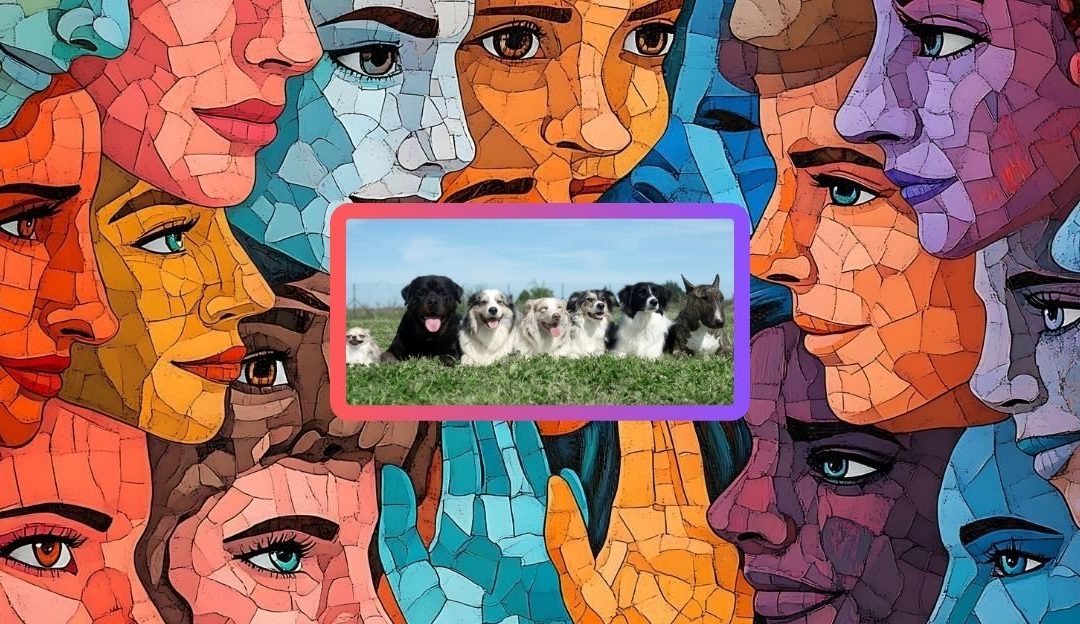
The human-dog relationship is often a mirror of our personal attitudes, fears, and cultural patterns. Differences in opinions, tastes, and values are not a problem in themselves; they become dangerous only when dogs suffer because of them.
Why People Disagree Even About Dogs
Differences in what we like are not random. When we choose a dog, we often do not choose a living being—we choose an image.
One person dislikes black dogs.
Another focuses on the fur.
A third sees only beauty.
There is no right or wrong here, only difference. People look at life through different filters, and different opinions are not an attack. The problem begins when these differences justify poor treatment.
A Paradigm That Brings Results
There is a way of thinking and working with dogs that, when applied consistently, brings real results to the human-dog relationship:
Dogs do not stop eating.
Dogs do not end up on the street.
Dogs are not abandoned.
Humans and dogs live stable, peaceful lives together.
If a method produces these results, why should it be dismissed just because it challenges the dominant belief that a dog is „problematic“?
The dog is the animal that suffers most because of humans.
Who Truly Suffers in the Human-Dog Relationship?
There is no animal beside which humans suffer more than a dog, but there is also no animal that suffers more because of humans. The dog is the only animal completely bound to human decisions, fears, and projections.
Because of this, the responsibility always lies with us.
Changing Our Perspective
Differences in opinion are not the issue. The issue is when a dog pays the price for our aesthetic criteria or our fears. If we change how we perceive them, we change their fate.
At Sasha Riess, we believe that the human-dog relationship should be based on understanding the dog’s true nature, not our own projections. Only then can we achieve pureloveandharmony. Learn how to look past the „image“ and see the soul: Linktree Sasha Riess
There was a time when we truly lived. Breathed. Existed as part of a world that didn’t ask us to prove love, worth, or meaning through what we own or achieve. Today, in an age of performance and self-promotion, it seems we have lost the ability to love simply, without needing to see ourselves reflected in the eyes of others.
Life Then and Now – When We Knew How to Feel
In the past, we relied on one another, in both pain and joy. We knew that not everything had to be easy, and that true connections were not always pleasant, but they were real. Today, however, we run away from conflict, uncertainty, and everything that reminds us of our vulnerability. In that silence, in that escape from ourselves, a dog often appears.
The Dog as a Substitute for Human Closeness
That is why today, more and more often, a dog sits across from a person in a restaurant. The dog listens, does not interrupt, does not judge. It asks for no explanation. It is easy to love such a being, one that never says no, never demands reciprocity, and never sets boundaries.
Anthropomorphism – When a Dog Becomes “Human”
In anthropomorphism, the process through which we assign human qualities to animals, lies the essence of our modern relationship with dogs. The dog becomes our emotional extension, the one through whom we live everything we cannot express ourselves. It becomes our child, our partner, our therapist.
The Dog Did Not Come to Be Your Pet, It Came to Change Your Life
A dog does not set boundaries. It does not force us to change. That is why it is the perfect companion for a generation that runs from pain, imperfection, and unpredictability. Our society functions more and more as a space where emotions are treated as discomfort to be avoided, not lived.
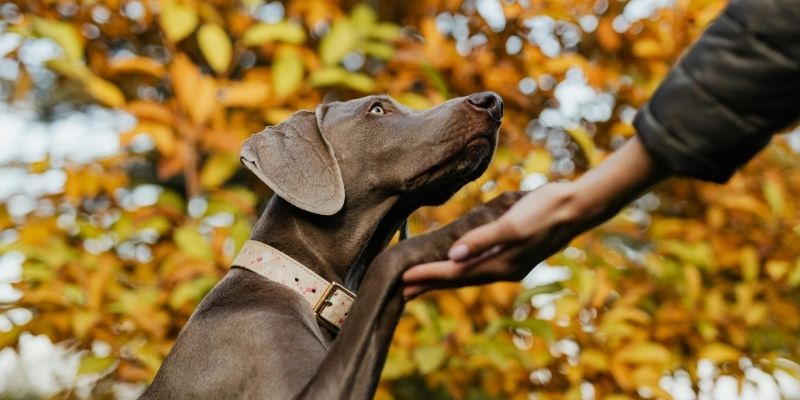
A dog’s gaze revealing the connection between a person and their emotions.
Loneliness as the New Norm
Loneliness has become a lifestyle. People work, communicate, and love through screens, while the dog becomes physical proof that we are not alone, at least on the outside. In its eyes, we seek the peace we cannot find in human relationships.
Perfect Relationships with Dogs – The Instagram Illusion
On Instagram, the dog wears a birthday hat, surrounded by balloons and cakes. On TikTok, it “talks” about its feelings. The dog becomes the main character in our emotional marketing, and we become the audience to our own lack of connection.
Dogs Take On Our Emotions
Dogs increasingly show symptoms that are not their own: anxiety, depression, stress. These are not their problems; they are reflections of ours. They become mirrors, our emotional extensions, carriers of everything we do not know how to process.
When the Dog Becomes Our Shield from the World
They enter places that are not theirs—airplanes, hotels, restaurants—not because they want to, but because we no longer know how to be alone. The dog becomes our protection, our boundary, our excuse, and our comfort, all in one.
How to Break the Cycle
So what now? How do we escape this circle of emotional dependency? Not by loving our dog less, but by learning to love ourselves more, sincerely, vulnerably, and without hiding behind someone’s unconditional love.
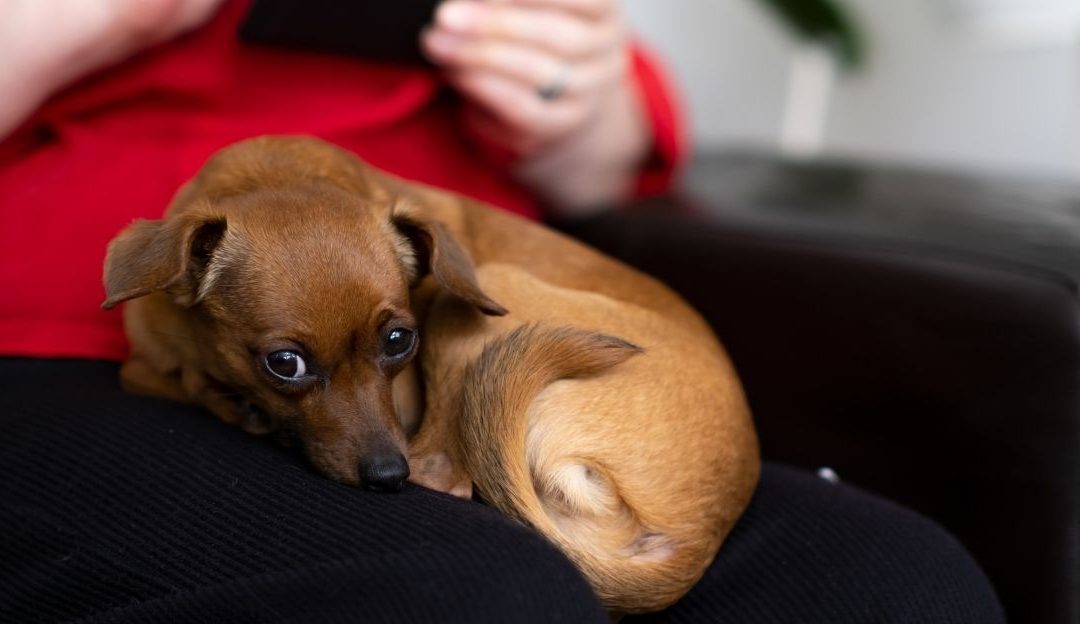
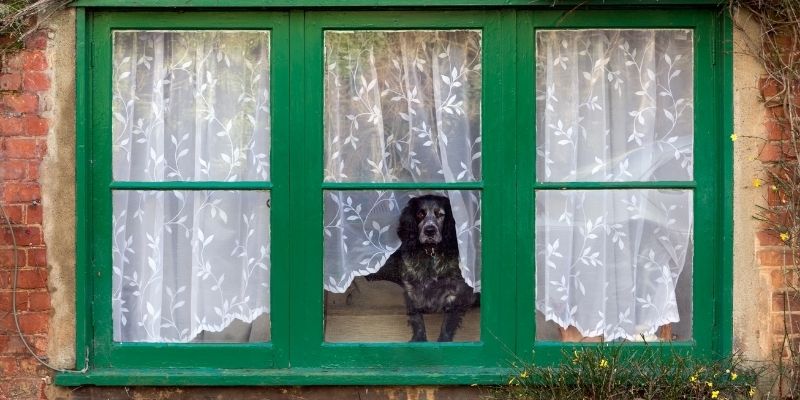
The loneliness of modern humans through the eyes of a dog.
Small Rituals That Restore Presence
That is why we created a guidebook, not as an absolute truth but as a tool. Small rituals that bring us back to presence: shared breathing, silence without words, a gaze without the need for validation. In those moments, the dog stops carrying our pain and becomes what it truly is—a being that reminds us what it means to be alive.
Presence as Medicine
Presence is not a state, it is a practice. Every day, the dog reminds us that everything we are searching for already exists within us. When we realize that, our relationship with the dog is no longer an escape from the world but a return to it. This is the path of the human dog relationship.
Silence that connects – a moment of sincere presence between a human and a dog.
At Integrative and Holistic Grooming Education, we believe that true love doesn’t hide behind a leash. It faces the mirror of the soul. Find your balance and return to presence: Linktree Sasha Riess
Why is a dog a reflection of its owner? When a dog shows problematic behavior, it is never the dog’s problem. It is our reflection. The dog is not asking us to change him. He is asking us to change ourselves.
What Does It Mean That the Dog Mirrors the Owner
I often hear people say that they have a problematic dog. But the truth is that the dog is never the problem. The dog is our mirror. He senses our tension, our restlessness, and our insecurity. If a dog shows behavior we dislike, it is not a sign that the dog needs correction. It is a sign that we must first look within ourselves, because the dog mirrors the owner.
When I am not honest with myself, my dog cannot be calm. When I am tense, he becomes tight. When I am out of balance, he lives that imbalance with me.
Why We Try to Fix the Dog When the Dog Mirrors Us
People often turn to trainers, manuals, and new techniques, hoping to “fix the dog” without understanding that the dog is simply their mirror. The dog does not ask for correction. The dog asks for authenticity.
Just as a child is not responsible for how a parent feels, the dog is not the cause of the problem. The dog is the consequence. When we change ourselves, the dog changes with us. This is what I call a holistic approach.
The dog is not a correction, but a consequence—a reflection of your authenticity.
The Holistic Perspective We Often Miss
Medicine and veterinary science often look only at the symptom, without seeing the bigger picture. But life is not a sum of disconnected parts. The soul, emotions, and body are connected.
That is why solving only the consequence is not enough: barking, pulling on the leash, or digestive issues. If truth and inner change are missing, no trainer or expensive manual will help.
Truth and Authenticity as the Key to Change
We already have all the tools we need. What is often missing is truth. When we add truth to what we do, the dog responds and everything falls into place. Just like a child does not become happy when we try to “fix” it, but when the parent finds inner balance, the same is true for the dog. The dog is the result of our energy.
The Dog Is Not Your Problem. The Dog Is Your Indicator
If you want the dog to change, you must first change yourself. This is the hardest, yet the only path to true harmony with your dog. This is the ultimate truth of the human dog relationship.
At Integrative and Holistic Grooming Education, we believe that the leash works both ways. To lead your dog to peace, you must first find it within yourself. Discover the path to true authenticity:Linktree Sasha Riess
The real issue isn’t temperature. Dogs have a completely different system of thermoregulation from humans — they don’t sweat like we do. Their fur creates a thin layer of air between the skin and the outer coat, forming a natural “insulating bubble.”
When you take a dog outside, that thin layer of air warms him in winter and cools him in summer. That’s why shaving dogs too short — especially in the summer — can cause major problems: it prevents them from maintaining that protective air layer. Even short-haired dogs, like Pinschers or Boxers, have this natural protection.
Shedding and the Protective Role of Hair
Short-haired dogs shed frequently. Their coat’s life cycle lasts about 21 days, while the undercoat renews every one to two weeks. Within three weeks, the entire coat regenerates. Even short hair lifts slightly — often invisible to the human eye — creating a thin air space that protects the dog from the cold in winter and from overheating in summer.
The Real Cause: Anxiety
The dog described in the question is not reacting to cold but to dog anxiety — deep-seated anxiety rooted in his relationship with the owner. When a dog obeys out of fear rather than trust, he feels responsible for protecting his owner in the car, on walks, or from other people. He lives in a constant state of alertness, trying to control a world that feels too big for him. Through this behavior, the dog is showing that he doesn’t believe his human can keep things safe.
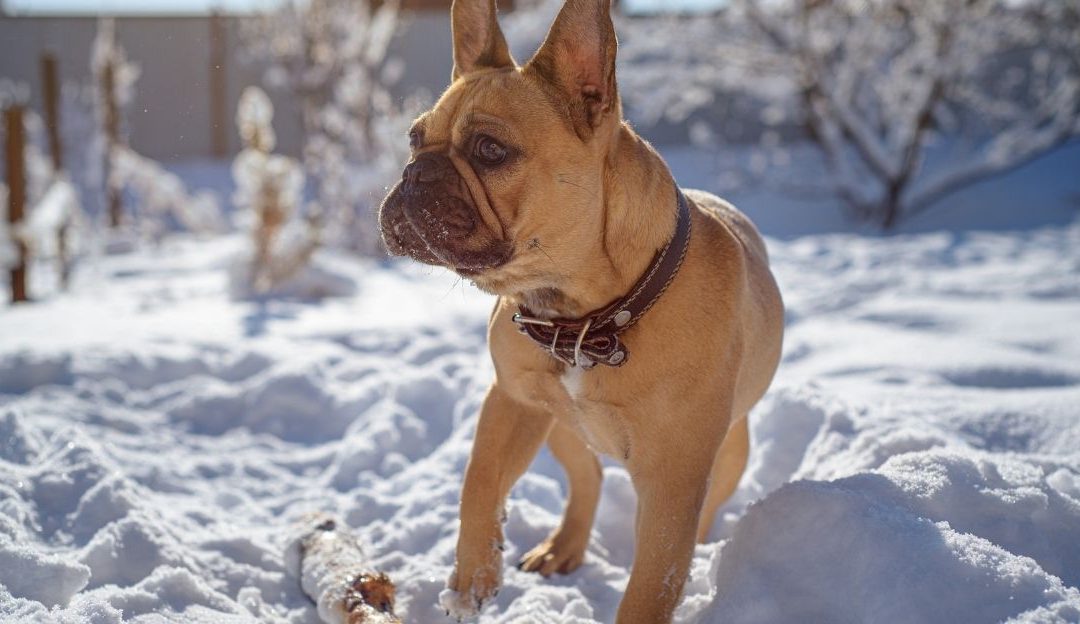
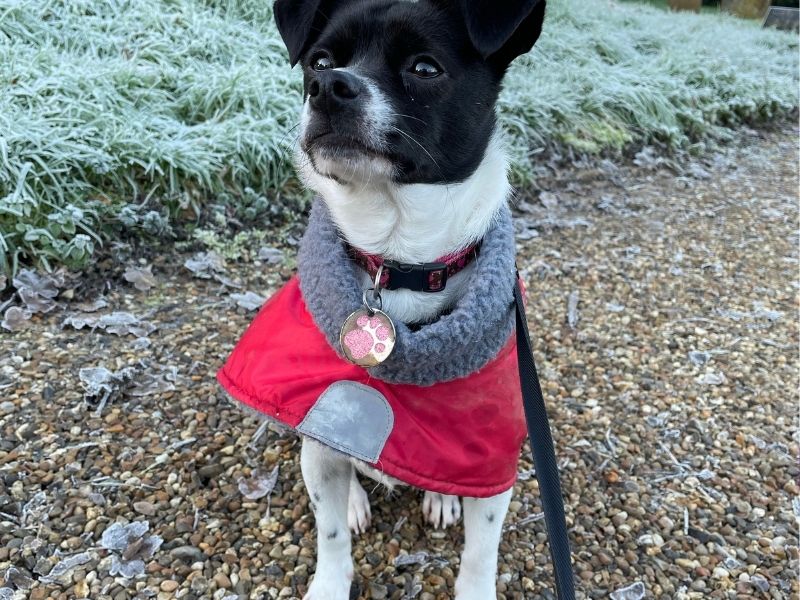
The dog only wants to go out when dressed; the problem is dog anxiety, not the cold.
Signs of Dog Anxiety
It wouldn’t be surprising if such a dog also:
Pulls on the leash,
Barks excessively at people or doorbells,
Refuses to stay home alone,
Loses appetite,
Shows constant stress-related behaviors.
Eventually, under the pressure of chronic stress, the dog’s body begins to break down.
Dressing Is Not the Solution
Dressing a dog has nothing to do with the cold. Think about what happens when we humans are nervous — our stomach tightens. This is because the vagus nerve connects the digestive organs with the heart and the parasympathetic nervous system.
Dogs have the same mechanism. When fear activates this nerve, it triggers physical symptoms — and in winter, these reactions become more visible. Winter awakens the ancient instinct for survival, where the body prepares for scarcity and danger.
How to Help Your Dog
Dogs that can’t handle the emotional tension of their environment often take on the family’s stress. Most emotional “breakdowns” in dogs happen in winter because we fail to prepare their nervous systems.
Support your dog through:
A proper diet,
The use of prebiotics and probiotics,
Regular parasite cleansing,
Following the Harmony Manual that helps establish healthy boundaries.
When this balance is restored, the dog can finally relax — living as a dog should: calm, trusting, and ready to follow you everywhere. This is the goal of a healthy human dog relationship.
At Integrative and Holistic Grooming Education, we look beyond the sweater to find the source of the shiver. True warmth comes from a balanced nervous system and a secure bond. Start your journey to harmony: Linktree Sasha Riess
The inspiration for this column came one afternoon while sitting in a café, witnessing a scene that exposed the cruelty and hypocrisy of our system.
Rescuing dogs and understanding their nature often reveals how far we are from true empathy — and how deeply dogs and human childhood trauma can intertwine through shared, unhealed pain.
Invisible Discrimination Against Dogs
A young woman entered quietly with her dog—a strong, muscular breed, perhaps a Staffordshire Terrier or a Pit Bull. The dog made no noise, reacted to no one, and just rested his head on her leg.
Despite this, a waiter asked them to leave because guests „didn’t feel safe.“ Meanwhile, a barking, lunging Pomeranian on the other side of the café was met with laughter and pictures.
So what was truly dangerous in that scene? The dog — or our perception of what danger looks like?
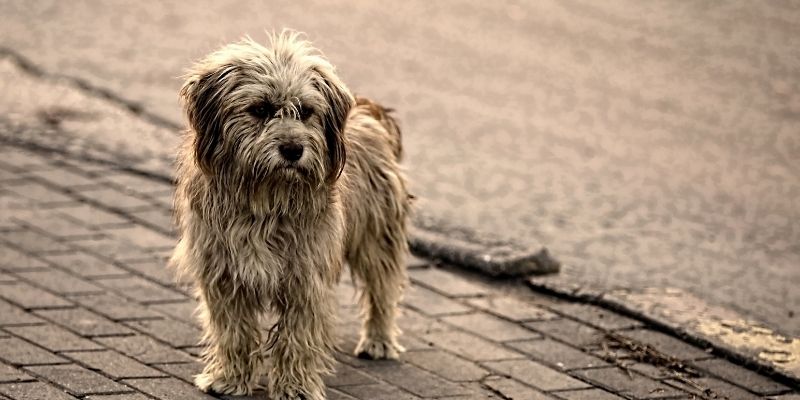
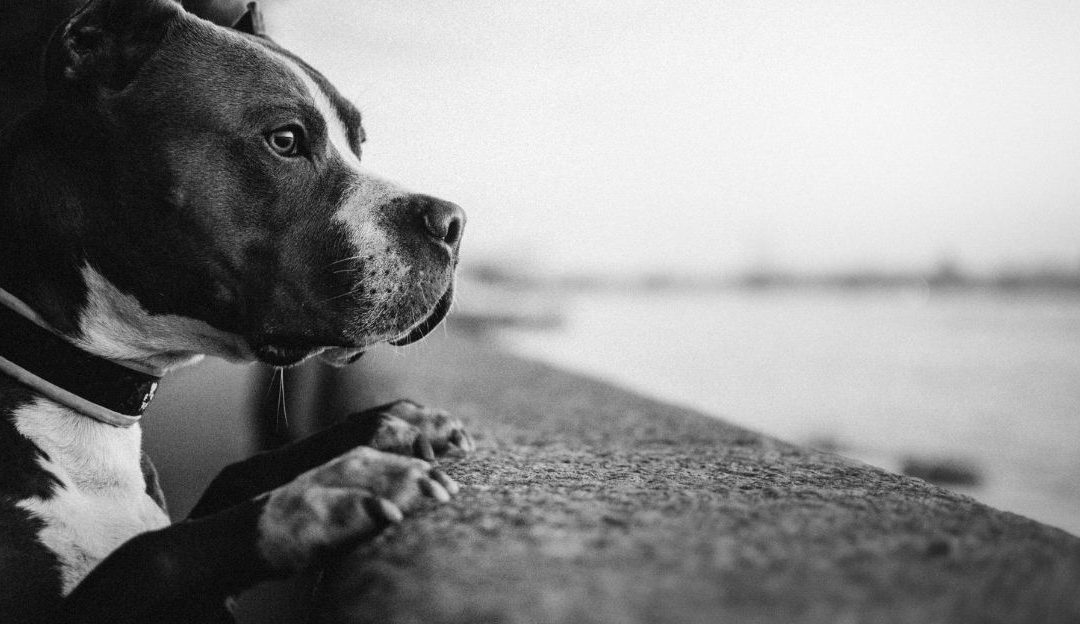
A look that shatters prejudices—a dog is not genetic evil, but a reflection of human misunderstanding.
The Myth of “Dangerous Breeds”
Dr. Karen Overall, a veterinary behaviorist, analyzed 15,000 cases of dog bites. The results were striking:
84% of bites were caused by dogs that had never shown aggression before.
67% of bites came from dogs under 20 kg.
Pit Bulls, Dobermans, and Rottweilers together accounted for less than 12% of all incidents.
Rescuing dogs unfairly labeled as “dangerous” is therefore not just an act of kindness — it’s a moral stance.
The Roots of Eugenics and the Idea of a “Pure Breed”
Banning specific breeds isn’t about safety — it’s an admission of ignorance. When we don’t know how to educate owners, we ban dogs. The list of “dangerous breeds” is a symptom of a society still echoing the ideology of eugenics. Rescuing dogs in this context is truly a fight for the freedom of all living beings.
Aggression Is Not Inborn — It’s a Consequence
Aggression is not a trait, nor a disorder — it’s a consequence. Dr. Jaak Panksepp discovered that aggression in mammals is triggered when there’s a perceived threat and no alternative escape. Dogs don’t fight because they’re “evil” — they fight because they see no other way out. In many cases, canine aggression mirrors unresolved trauma from the human owner.
The Emotional Field and Inner Healing
Our emotions create an energetic field that dogs can sense. Dr. Rollin McCraty proved that the heart emits a field 60 times stronger than the brain. That’s why true dog rescue doesn’t begin in shelters — it begins within us. When we heal our own pain, the dog no longer has to carry it.
The Dog as a Mirror of Society
Aggression is everywhere — in wars, on streets, in homes. But when it surfaces, we project it outward onto others, or onto dogs. A dog that growls is often not the problem — but the only one who can no longer stay silent.
The Path of Change — The Philosophy of Pure Love and Harmony
Rescuing dogs and rebuilding trust begins through four steps:
Recognition – instead of labeling, ask: “What is the dog trying to tell me?”
Responsibility – take ownership of your own energy.
Transformation – by changing ourselves, we transform the dog’s space.
Harmony – build relationships through understanding, not control.
Understanding instead of judgment – a shared path toward shattering the myth of genetic evil.
Saving Dogs as a Mirror of Human Awareness
If we want real change, we don’t need to change dogs — we need to change ourselves. Rescuing dogs is a symbol of rescuing empathy, awareness, and love in a world that fears difference. A dog is not a reflection of genetic evil — but of our collective pain and our capacity to heal. This is the foundation of the human dog relationship.
At Integrative and Holistic Grooming Education, we believe that no breed is born with a label. We look past the muzzle to find the soul. Join us in transforming the way the world sees dogs: Linktree Sasha Riess