by Sasha Riess | 17.04.26. | Emotions
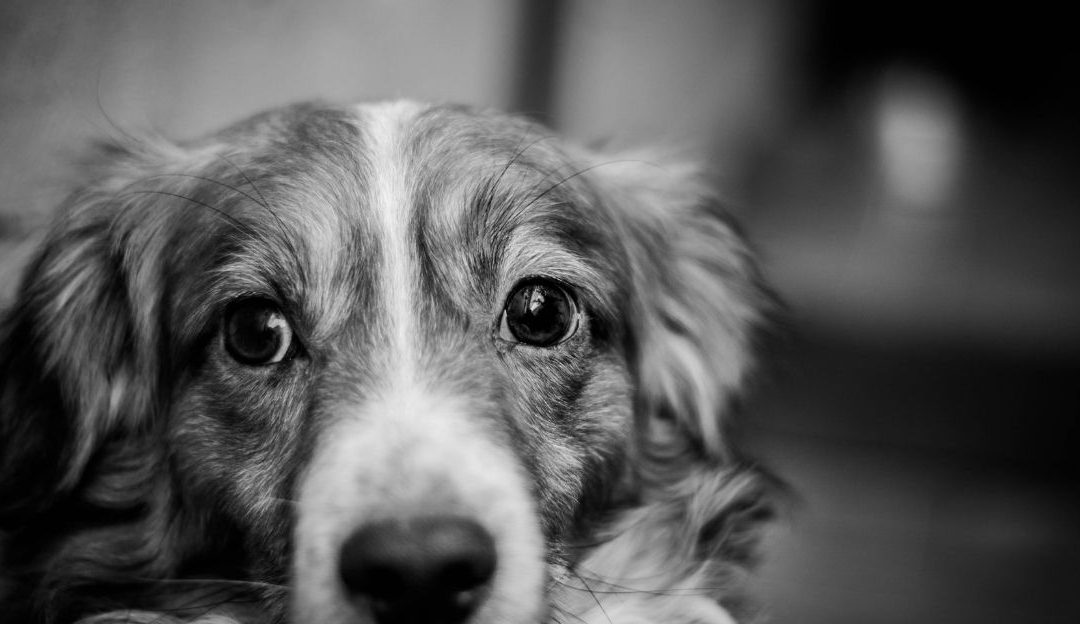
When a dog dies, time seems to stop. What remains is silence in the house, an empty spot on the couch, and an indescribable feeling that a part of you is gone. People often say “It’s just a dog.” But anyone who has ever loved a dog knows it’s much more than that. It’s a being that breathed with you every day, followed you with its eyes, slept by your feet, and quietly carried a piece of your soul.
The Day After – The Emptiness After a Dog’s Death
The first day without them is the hardest. You instinctively hear footsteps that no longer exist, you reach for a bowl that’s now empty. The house breathes differently. The body remembers the routine, but the heart refuses to accept the absence. Grief for a dog isn’t “just sadness”, it’s physical, real, and follows its own rhythm.
“It’s Just a Dog” – Why Society Doesn’t Understand Our Grief
Many people won’t understand why you cry “so much over a dog.” But your pain is real because the relationship was real. A dog never pretends to love. It loves you purely, without masks, and that’s why its absence hurts deeper than words can express.
When a Dog Dies, a Part of Us Goes With Them
Every dog carries a piece of our lives. The first apartment, heartbreak, joy, moving homes—they witness all our changes. When they go, it feels as though a part of our past disappears with them. That’s why grief feels endless, because we lose not only them, but the memories that breathed with them.
The Death of a Dog as a Trigger for Hidden Emotions
Sometimes a dog’s death opens the door to emotions we’ve long kept buried. We grieve for them, but also for everything we never had the courage to feel. Their departure forces us to face parts of ourselves we’ve been avoiding, and that’s part of healing.
The Body Knows Grief – The Physical Side of Losing a Dog
Grief doesn’t stay only in the mind; the body carries it. People often feel insomnia, chest pain, or heaviness in the stomach. It’s the body’s way of processing loss. Allow yourself to feel it all, because suppressed grief stays in the body as silence that never fades.
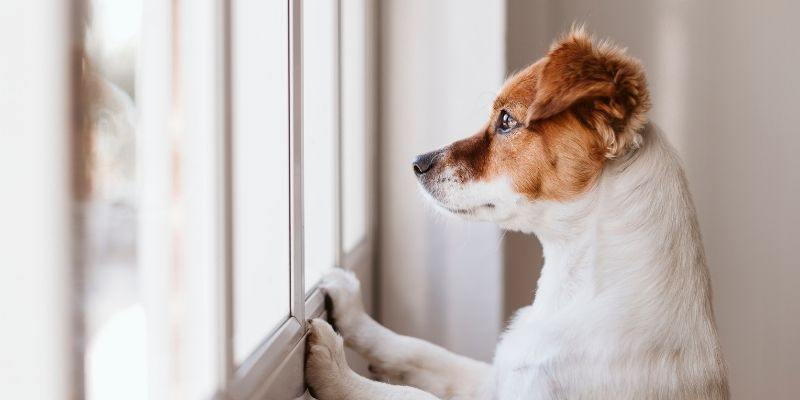
The memory of a dog remains in every glance, movement, and silence.
Family Dynamics – The Dog Who Carried Our Emotions
A dog is never just a pet. It carries the family’s energy, reflecting its rhythm and tensions. When they’re gone, we often realize how much their presence held balance in the home. Their absence exposes our inner imbalances, the ones we no longer have anyone to project onto.
A Dog as Our Last Honest Love
Dogs are often the only beings we love without fear of being hurt. They accept us completely, and their loss reveals how much we’ve missed that kind of unconditional love from humans. They are the mirror of our ability to love purely.
How to Grieve and Allow Yourself to Feel
Grief has no deadline and no right way to go through it. Some people make a photo album, some light a candle, some just sit in silence. What matters is to give yourself permission to feel. Don’t cut off your sadness with “I have to pull myself together.” Grief is proof that love existed.
The Order of Harmony – When It’s Time to Let Go
Letting your dog go doesn’t mean forgetting them. It means giving them freedom to leave, and giving yourself peace to continue. That’s when grief stops suffocating and starts healing. Love doesn’t disappear; it simply changes form.
The Day After Is Not the End – Love Remains
They may no longer be physically here, but their place in your life remains forever, in every walk and in every glance toward the sky. It’s not the end. It’s a new form of connection, quieter but no less real. Love for a dog never ends. You just learn to breathe with it.
At Integrative and Holistic Grooming Education, we believe that the bond between a human and a dog transcends the physical. When that bond changes form, we are here to help you find the path back to harmony. Love is eternal: Linktree Sasha Riess

by Sasha Riess | 16.04.26. | Emotions
Pretending that everything is fine has become one of the most expensive modern habits. When we enter this game of hiding the truth, from ourselves, from our partner, from our children, even from our dogs, our life slowly loses authenticity. Instead of living from our inner truth, we begin shaping situations out of fear.
Where will I live if I leave? How will I pay rent? What if I lose my job? What if everything falls apart? These questions seem rational, but they actually push us into emotional paralysis. Instead of choosing truth, we choose survival. And when we choose survival, the cost is always the same—health.
The Emotional Cost of Pretending
Every time we suppress what we feel, the body begins to react. Through stress, insomnia, fatigue, weakened immunity, tension, and even chronic illness. Our dogs and our children are the clearest witnesses of this. They intuitively feel everything we hide. A dog that is always restless, a child that does not listen, a home that constantly feels like a battlefield. All of it is a reflection of what we refuse to acknowledge.

Dogs feel every unspoken emotion in the family.
Why Children and Dogs Are Mirrors of Our Truth
There is no child that becomes spoiled on its own. There is no dog that becomes demanding without a reason. They become who we are in the moment when we send them messages that are not aligned with our inner state.
If a mother takes what is not hers—for example, stays in a marriage that has long been over, stays out of fear, out of need, out of convenience—the child will seek the same, what does not belong to them. If we pretend everything is fine when it is not, the dog will live in the energy of tension and imbalance, and will behave “problematically”, even though it is only mirroring our state. Children and dogs are not spoiled; they are our mirror.
A Relationship That Has Ended, but Still Continues
The greatest emotional cost of pretending comes from a relationship that ended long ago, yet still exists. A partnership reduced to logistics. Love that remains only in form, not in substance. A household that continues simply because no one has the courage to speak the truth.
This is where the most emotional resistance is born. And the dog feels every second of that tension. The child feels every unspoken sentence. Pretending costs us peace. Truth gives us life back.
At Integrative and Holistic Grooming Education, we know that energy never lies. Your dog doesn’t react to your words, but to your truth. To heal the bond, you must first heal the silence: Linktree Sasha Riess
by Sasha Riess | 16.04.26. | Nutrition
Understanding the benefits of organ meats for dogs is essential for every owner. Many dog owners believe they are doing something good for their pet when they serve them high-quality steak or meat cuts. But the truth is very different. If you constantly give your dog meat you would eat yourself, you are actually damaging their health over time. Here is why you should choose organ meats instead of steaks.
Why Organ Meats for Dogs Are Better Than Steaks
When someone asks me what is better for a dog, steaks or organ meats, my answer is always immediate: organ meats, without question. It may sound strange to many. People often think that if something is “good for humans,” it must be good for dogs too. But a dog is not a human. And that is where the biggest mistake of modern dog owners begins.
How Wolves Do It in Nature
Wolves, the moment they catch prey, eat the organs first. Not the muscles, not the “nice” cuts of meat, but the soft inner organs full of nutrients. These organs contain proteins, vitamins, minerals, all in a form that is natural and easily digestible for dogs.
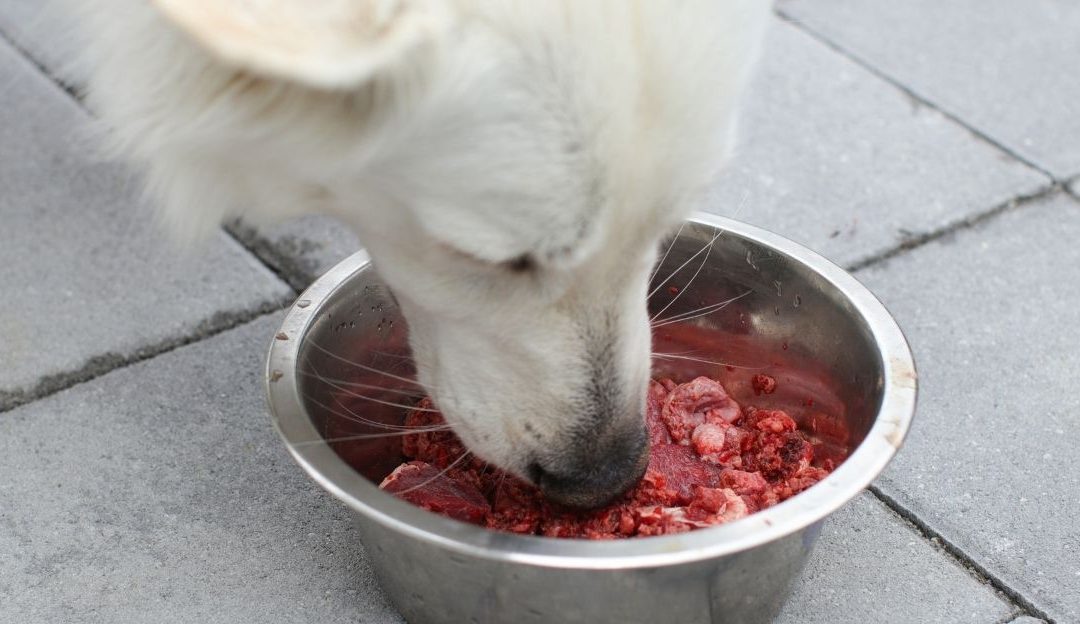
And what do we do today? We open the fridge, take a steak or a fillet and think, “My dog eats better than I do.” In reality, we are slowly harming their system. Muscle meat, especially when not organic, is often full of water, hormones, antibiotics, and things a dog in nature would never eat. And most importantly, muscle meat does not contain the life energy that organ meats provide.
Health Benefits of Organ Meats for Dogs
When I give my dog a piece of liver, heart, or stomach, I know I am giving food that his ancestor, the wolf, would eat. There is no luxury in that, but there is everything a dog needs: pure proteins, vitamin A, B-complex vitamins, iron, and enzymes. A dog does not eat to experience “fine taste.” A dog eats to be healthy, strong, and long-lived.
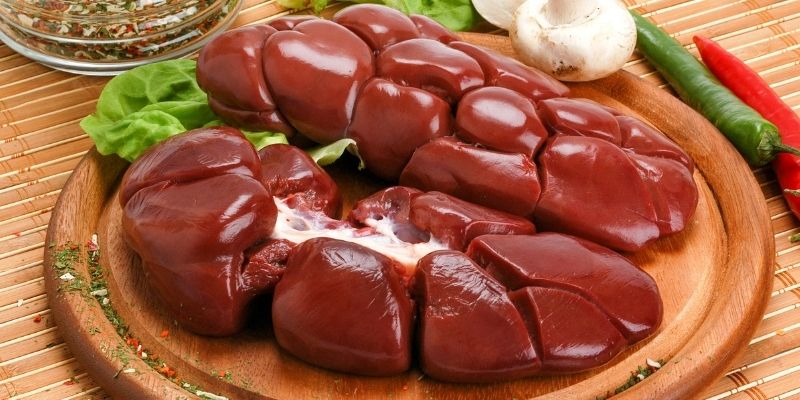
Fresh organ meats – a natural source of protein for dogs.
Why “Human Grade Food” Is the Wrong Approach
Today, especially in America, it’s trendy to feed dogs “human grade” food. But to me, that is completely wrong. When you give a dog human-grade food, you’re telling them, “You are a human.” But they are not. Their digestive system, energy, and nutritional needs are completely different from ours.
That is why in my home there are no luxury steaks for dogs. There are organ meats, bones, fruits, vegetables, and plenty of love. And you know what? The dog is healthy, strong, shiny, and bright-eyed. And that means more to me than any expensive pet-shop meal.
Feed Your Dog as a Dog, Not as a Human
If you want your dog to live long and healthy, feed them as a dog, not as a human. It may sound harsh, but it is a truth anyone who loves animals should know. A dog is not a creature that eats like us. It doesn’t want fancy portions or spices. It wants energy from natural foods, the kind it would eat in the wild.
Do not forget: always feed dogs from white ceramic bowls.
At Integrative and Holistic Grooming Education, we believe that nutrition is the foundation of energy. To understand your dog, you must first respect their biology. Feed the nature, not the ego: Linktree Sasha Riess

by Sasha Riess | 15.04.26. | Behaviour
The evolution of canine companionship began with stray dogs—animals that live on the streets and adapt to both urban and natural environments. Unlike abandoned dogs placed in shelters, stray dogs have their own place within the street ecosystem and follow a natural survival dynamic.
Who Are Stray Dogs
Stray dogs are not “abandoned” in the traditional sense. They belong to the street. They wander in search of food and shelter, constantly adapting to changes in their surroundings. When they find a source of food, they stay near it for as long as it is available, and when it disappears, they move on.
These dogs are part of the urban ecosystem. Along with birds, mice, rats, and cats, they form a living chain within the streets. It is important to understand that taking a street dog and placing it in a shelter disrupts its natural life path and creates additional challenges such as long term feeding, health care, and housing.
The History and Evolution of Canine Companionship
Modern dog breeds actually originate from street dogs that lived alongside humans thousands of years ago. These early dogs were semi dependent on humans and selectively used for specific tasks. Domestic dog breeds were created through the selection of traits found in street dogs, not the other way around.
This shows how adaptable stray dogs are and how their characteristics have influenced the evolution of canine companionship.
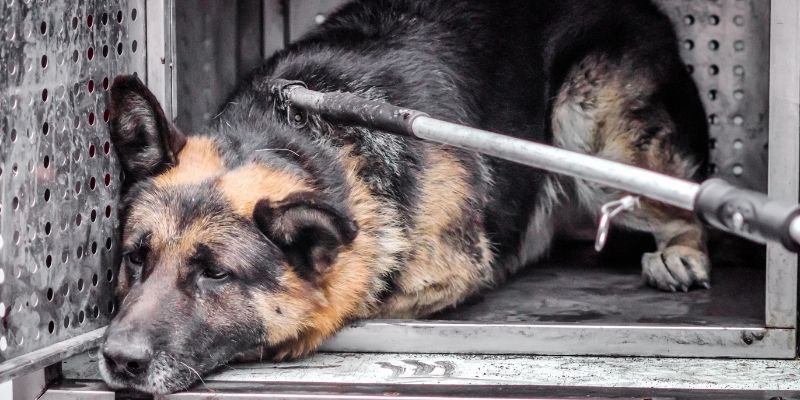
Street dogs often end up in shelters, where they lose a part of their freedom and daily life.
Why It Is Important to Respect the Nature of Street Dogs
Taking a stray dog into a shelter may seem humane, but in reality it confines a free living animal to a limited space. Stray dogs are used to exploring, moving freely, and choosing where they want to be. In a shelter they lose their freedom, and responsibility for their well being shifts entirely to humans.
Understanding their nature helps people make better decisions when they encounter dogs on the street, whether through careful observation, education, or humane approaches to addressing the challenges related to stray dog populations.
The Future and Evolution of Canine Companionship
Stray dogs are independent animals and part of the urban ecosystem. Modern dog breeds were created by selecting traits from street dogs, which demonstrates their adaptability and intelligence. Respecting their nature and understanding their needs is essential for building an ethical and compassionate relationship toward these animals. Through the evolution of canine companionship, we learn that harmony is found in respecting the freedom and place each being holds in the world.
At Integrative and Holistic Grooming Education, we respect the origin of every bond. Understanding the street dog is the first step toward understanding the true nature of the companion by your side. Honor the journey: Linktree Sasha Riess

by Sasha Riess | 15.04.26. | Wellbeing
Urinary incontinence in dogs, especially in spayed females, is a common and unpleasant issue that can seriously affect quality of life. Although it is usually treated with medications such as Propalin, there are natural methods that can help regenerate and strengthen the bladder.
Why Incontinence Occurs After Spaying
After spaying, female dogs experience a decrease in estrogen, the hormone that helps keep the muscles around the bladder strong. When there is not enough estrogen, the sphincter, the muscle that closes the bladder, weakens and urine leaks uncontrollably, most often while the dog is sleeping or relaxed. This is not a disease in itself but a consequence of hormonal imbalance and physiological change in the body.
Conventional and Holistic Therapy
Veterinarians usually recommend hormonal drugs that replace estrogen, such as Propalin syrup. These often help, but long-term use can burden the adrenal glands. The holistic approach combines mild phytotherapy, proper nutrition, and emotional support. The goal is for the body to regain strength and restore natural balance on its own.
Initial Assessment and Observation
Before starting natural therapy, it is necessary to have a veterinary examination to rule out infections, bladder stones, tumors, or neurological issues. Then observe:
-
When leakage occurs (during sleep, excitement, or after drinking water)
-
Whether the dog shows stress, sadness, or insecurity
-
Whether the problem appeared after sterilization
-
The type of diet and level of physical activity
Lifestyle Adjustments
-
A calm environment: a dog that lives without stress regulates body functions more easily. Never punish a dog for urination, as it only worsens the condition.
-
Hydration: use filtered water and add a little aloe vera juice or chlorophyll.
-
Movement and massage: gentle belly and back massages improve circulation and muscle tone.

Natural supplements and herbs help strengthen the sphincter and restore hormonal balance in spayed dogs.
Nutrition and Herbal Support
-
Phytoestrogens – natural hormonal balance
-
Ground flaxseed: 1/2 teaspoon daily
-
Red clover tea: add 1–2 tablespoons to the meal
-
Fermented soy or tempeh: 1 tablespoon twice a week
-
Corn silk (Zea mays): 1/4 teaspoon powder per 5 kg of body weight, twice a day
-
Saw Palmetto: 100 mg per 10 kg of body weight daily
-
Chinese formula – Sang Piao Xiao San: Used for older dogs and spayed females (consult a professional in Chinese phytotherapy).
-
Additional support: Nettle tea, pumpkin seeds, cranberry extract.
Homeopathic Support
-
Causticum 30C – for leakage during sleep
-
Sepia 30C – for females after spaying
-
Pulsatilla 30C – for emotional dogs under stress
-
Give 1–2 pellets daily for seven days, then take a break and observe.
Skin and Hygiene Care
Trim the hair around the genital area and tail. Use wet wipes with chamomile, calendula, or aloe vera. Bathe the dog regularly with a mild shampoo and conditioner. Wash bedding with the addition of vinegar for natural disinfection.
Emotional Support and Monitoring
Incontinence often reflects emotional states such as fear of abandonment, sadness, or insecurity. A dog who receives attention, affection, and calm surroundings improves more quickly. Keep a diary: note changes, behavior, and leakage frequency. Progress usually appears within four to six weeks.
Prevention
Do not rush with sterilization until the dog is physically mature. Maintain an ideal body weight. Use fresh, natural nutrition and regular activity.
Final Message
Urinary incontinence is not just a physical issue but often a message from the body and soul. By caring for your dog’s diet, emotional balance, and environment, you support healing from within.
At Integrative and Holistic Grooming Education, we look at the whole being. When the body speaks through symptoms, we listen with care and science. Support your dog’s natural balance: Linktree Sasha Riess