by Sasha Riess | 15.04.26. | Wellbeing
There are messages that are easy to like and messages that create resistance. The difference between them is not quality but how deeply they touch our need for safety. When we talk about dog nutrition relationships family or personal boundaries we quickly reach a point where the topic stops being about the dog and becomes about the human being. And that is where discomfort begins.
When Knowledge Stops Being Comfortable
The greatest response and the most questions always appear when simple solutions are offered: what to cook, how to feed, what is allowed and what is not. That phase gives a sense of control. However, as the conversation goes deeper, it becomes clear that the problem is often not in the food but in the life we live while preparing that food.
In conversations, topics open that have nothing to do with the dog:
-
relationships that cannot be digested
-
fear of change
-
a feeling of being trapped
-
dependence on a sense of safety that no longer exists
At that point, knowledge stops being pleasant and truth begins to create resistance.
Popularity Is Not the Same as Responsibility
The goal is not for a message to please everyone. A platform exists to allow speech whether one person listens or five thousand. Popularity is temporary but responsibility for the spoken word remains. When truth is spoken, especially truth that requires personal change, natural resistance appears. That is not a sign that something is wrong with the message. On the contrary, it is often a sign that the message is true.

Resistance is often a sign that we have touched the essence of the problem.
Manipulation as a Survival Strategy
At the moment we face the possibility of losing safety, love, finances, status, or familiar surroundings, people often reach for manipulative patterns. Not because they are bad but because they are trying to survive. Fear of loss becomes stronger than the need for truth.
In that context:
-
problems are shifted onto the dog
-
symptoms are treated instead of causes
-
external solutions are sought for internal conflicts
Why Truth Hurts But Frees
Truth does not offer comfort. It offers choice. And choice means responsibility. That is why it creates resistance. But that resistance shows exactly where the point of growth is.
When we stop looking for easy explanations and accept that change does not happen without personal decision, knowledge begins to make sense. Not as a recipe but as a tool. This approach is not meant for everyone. And it does not need to be. Its value is not in the number of people who like it but in the depth it reaches in those who are ready to hear.
Because truth has never been popular. But it has always been necessary.
At Integrative and Holistic Grooming Education, we don’t offer shortcuts, only the truth. When you are ready to stop treating symptoms and start addressing causes, we are here. Face the truth: Linktree Sasha Riess
by Sasha Riess | 15.04.26. | Wellbeing
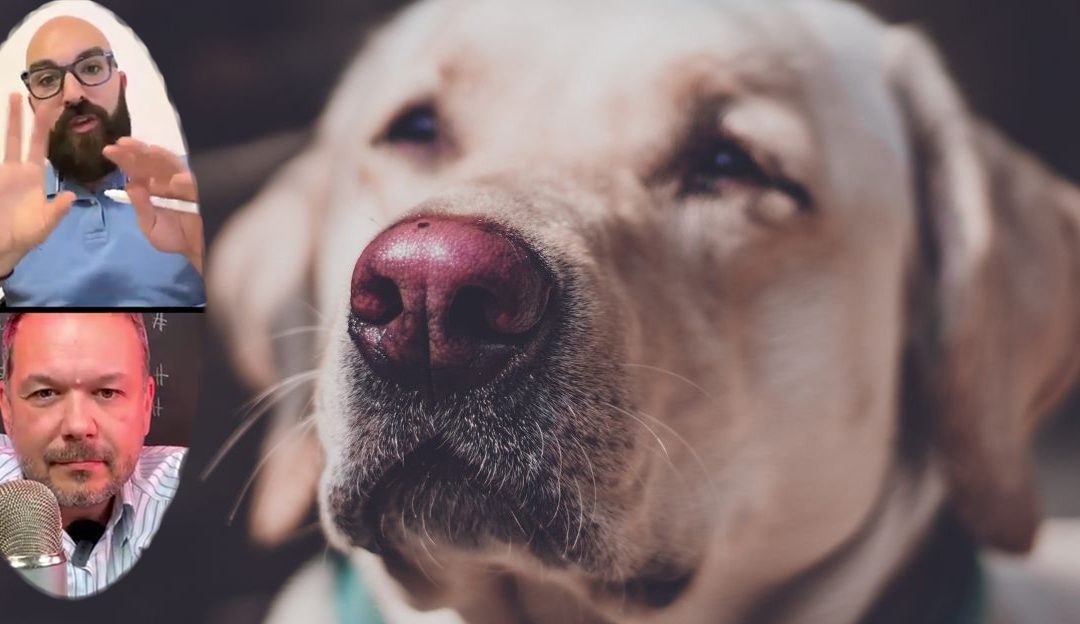
When therapy dogs help humans, where does love end and burden begin? In the new episode of the series Sometimes at Eight, Sasha Riess talks with Svetozar Stevin, founder of the organization Friendly Paw, about the role of therapy dogs in people’s lives and their wellbeing. The full video conversation is available below, and here are the key points and messages from this open and sincere discussion.
How Therapy Dogs Help Children and the Community
Svetozar Stevin, a physiotherapist and occupational therapist by profession, has worked for years with both typically developing children and those with developmental challenges. As he explains, his love for dogs merged naturally with his professional calling.
“Even during my studies, I tried to combine working with children and my love for dogs. That was when I first heard about therapy dogs and guide dogs for the blind. I began learning, connecting with professionals abroad, because at that time, there was almost nothing like that in our country.”
Together with veterinarian and behaviorist Dunja Kovac, Svetozar formed the first team in Serbia focused on including dogs in work with children, both in individual and group settings. As he says, the goal is not only to provide support for children but also to educate the community about what dogs truly are and what their real needs are.
The Legal Status of Therapy Dogs in Serbia
One of the key topics discussed was the lack of legal regulation regarding the status of therapy dogs in Serbia. “In our legal system, the terms rehabilitation dogs and therapy dogs appear, but nowhere is it precisely defined what they are allowed to do, under which conditions, and who is qualified to train them.“
Unlike in countries such as Croatia, where therapy dogs can freely enter hospitals, in Serbia this work is still mostly limited to kindergartens. Since 2017, Friendly Paw has succeeded in introducing therapy dog programs into public kindergartens in Novi Sad, where children learn about dogs, emotions, and empathy.
When Therapy Dogs Absorb Human Emotions
Later in the conversation, Sasha Riess raises a rarely discussed question: do dogs actually suffer because they are placed in service to humans? “Are dogs truly serving humans, or have they become victims of that service? When a dog takes on our emotions, stress, and trauma, what is the cost to its health?”
Sasha adds that many people forget the physiological side of the story. Hormones, cortisol, stress, the sympathetic nervous system — all of these affect the dog just as they affect humans. Therapy dogs must often be sterilized to minimize hormonal imbalance and prevent stress responses. This highlights the importance of canine emotional labor, where the dog’s well-being must be the priority.
Therapy dogs help people in hospitals and schools every day.
How Education Supports Therapy Dogs and Their Handlers
“If we want to evolve in anything, we have to start with ourselves,“ says Svetozar. He emphasizes that every interaction with a dog carries the potential for learning but also the responsibility of self-reflection. Through a decade of work, he has often faced situations that reminded him that every encounter requires presence, attention, and continuous growth.
A Dog in Service to Humans – Choice or Destiny
The conversation also touches on the philosophical side of the human-dog relationship. Svetozar shares an example of a street dog from his neighborhood who voluntarily follows children to school. “He has his own mission. He chose to care.”
Sasha Riess adds that dogs, unlike humans, never lose connection with their nature. “Humans are the only species that can create an environment in which they themselves cannot survive. A dog, no matter how much it serves, always knows where it belongs.”
Open Questions That Remain
The conversation ends with many questions left to resonate:
-
Is a therapy dog a helper or a victim?
-
Can love justify the stress a dog absorbs?
-
Where is the line between helping and exploiting?
“These are topics that cannot be exhausted,“ concludes Svetozar. This episode opens the eyes of dog owners, parents, and educators to the reality of canine emotional labor and the science behind the service.
At Integrative and Holistic Grooming Education, we believe that true therapy starts with respecting the dog’s autonomy. When we protect their peace, they can truly heal us. Explore the ethics of connection: Linktree Sasha Riess
by Sasha Riess | 14.04.26. | Emotions
Today we follow the third wave of dog evolution through dogs from the movie screen and the messages they bring us. Dear readers, last time I spoke about free will and the thin veil behind which the forces that guide us operate. These cinematic dogs are not just characters in stories, but archetypes of our era, reflections of our longings and fears. Each of them reveals a piece of our path toward harmony.
Movie Dogs as Teachers of Harmony
Every movie dog carries a lesson about connection, belonging, and harmony that goes beyond the story itself.
Rin Tin Tin and the Third Wave of Evolution
We remember Rin Tin Tin, the puppy found in the ruins of war. His story began at a time when the world was shattered and tired, when people wanted to believe that courage was still possible. Rin Tin Tin became a movie star and a symbol of loyalty. They say he saved an entire film studio from bankruptcy, but what he truly saved was people’s belief that there is someone who protects, someone who never gives up.
His character was not just a dog. He was the image of strength that people searched for within themselves but could not find. Did people choose Rin Tin Tin, or did the dog from the ruins choose them? Perhaps neither. Perhaps it was simply the moment when human fear and canine courage met in the same place. In that meeting, something called belonging was born. The feeling that we are not alone in our own despair. And there we find the first lesson of harmony: strength does not come from control, but from surrendering to the relationship.
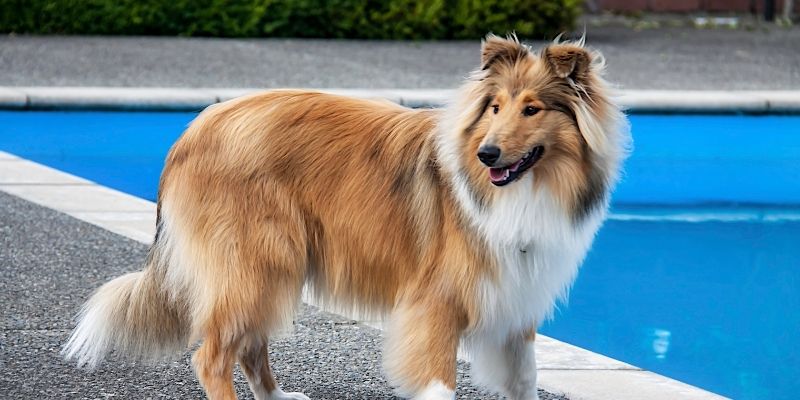
Lassie – a return to belonging.
Lassie and the Return to Belonging
Then comes Lassie. Her journey home was much more than a movie plot. It was a return to everything that waits for us, everything that does not forget us. Lassie was the dog who crossed hills and rivers to return to her boy. Her journey awakened in people the memory of their own longing: to be seen, to be awaited, to be wanted.
In her return we see the other side of the human dog relationship. Here, the dog is not a projection of our strength but of our belonging. She goes toward the human, and in that movement we feel that we too are found. That is the moment when the dog shows that the relationship is never one sided. And when we watch Lassie, we know that the same instinct lives in us too, the instinct to find our way back to the one we love.
Dalmatians and the Messages of the Third Wave
In the sixties, the world was captivated by the story of the dalmatians. Hundreds of puppies on screen brought joy and laughter, and people rushed to buy dogs of that breed. Statistics show that demand increased by more than four hundred percent. But soon it became clear that not everyone was ready to live with that image. Dogs are not plush toys. Dogs are active, demanding, and require time and structure. Many ended up in shelters, because people wanted the feeling but could not carry the responsibility. This is the moment when harmony breaks. When we try to take joy without giving anything in return. And then the relationship collapses. The dalmatians became a mirror of human impatience, the desire to have everything immediately, without offering what the relationship demands.
Beethoven and the Evolution of Dogs Through Film
In the nineties, Beethoven the Saint Bernard entered our homes. His chaos was refreshing. He brought warmth into a family that was cold and rigid. The parents wanted control, the children were afraid, and the dog broke down the walls. Only when Beethoven arrived did the family find warmth again. He was not obedient, but he was true. His “chaos” was therapy. Beethoven teaches us that dogs do not come to please us, but to awaken us. He shows us where love is not flowing. Only when the parents learn to lead from the heart does the dog find peace. His stubbornness was the path toward the opening of the heart.
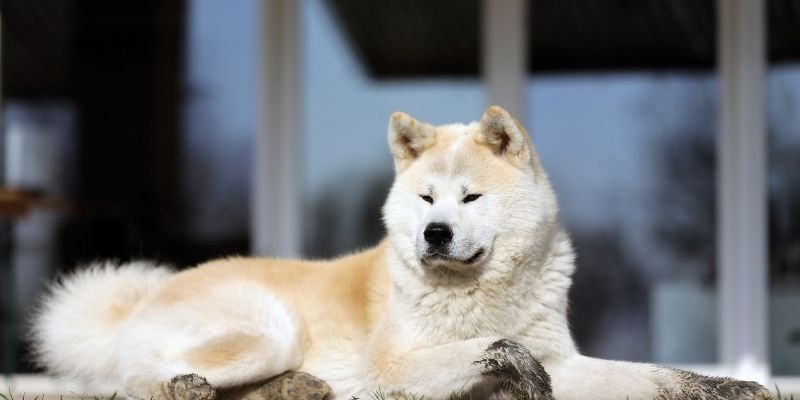
Hachiko – facing the pain.
Hachiko and Facing the Pain
And then Hachiko. His story is perhaps the deepest of all. The dog who, for years after his owner’s death, sat and waited at the train station. No adventure. No play. No chaos. Only waiting. People around the world cried at that image. But unlike all other movie dogs, no one rushed to buy a Japanese Akita afterward. Why? Because Hachiko does not give the illusion of happiness. He confronts us with pain. His image is not the image of joy, but of sorrow that goes beyond words. He reminds us that love includes parting. That a bond does not end with death, but continues even when there is no response. Hachiko showed a dimension people did not want to possess. Because it is not a story of ownership. It is a story of devotion.
Krypto and the Messages of the Third Wave of Dog Evolution
And today, Krypto. The dog of a superhero. His strength is not in his power, but in his gentleness. The film inspired thousands of people to adopt shelter dogs. Krypto did not awaken the desire for a breed, but for an act of love. He is not a symbol of heroism but a symbol of invitation. He reminds us that a community can be moved by a single dog. And there we see a clear sign that the third wave has arrived. The dog is no longer a hero we seek, nor a projection of fashion, nor the breaker of family coldness. He is the initiator of harmony. He is the connection between people. He is the one who unites.
The Third Wave of Dog Evolution
If we look at the entire journey, we see a line: from Rin Tin Tin to Krypto, from courage to belonging, from trend to chaos, from pain to unity. This is not just the history of film. It is the history of our relationship with dogs. But also the history of ourselves.
In the first wave, we wanted dogs to give us what we did not have: courage, safety, belonging. In the second wave, we projected our desires: play, joy, warmth. In the third wave, dogs are no longer projections. They are teachers. They come to connect us. And here the true strength of the Order of Harmony is revealed. Harmony does not mean only happiness. It also means pain, waiting, parting. It means that a dog can leave, that life can separate us, and that we do not control everything. When we accept this, the illusion of free will as the ability to avoid pain disappears. What remains is free will as the ability to say yes to what is.
Hachiko and Krypto together form the whole of the third wave. One leads us inward, toward silence and acceptance. The other leads us outward, toward community and giving. And both lead us toward harmony. Dogs never judge us. Their gaze, even when they leave, is not a gaze of judgment. They do not understand human concepts of betrayal. They simply exist, in the flow of life. And perhaps that gaze is what teaches us that love is not always pretty and easy, but often painful and paradoxical.
The third wave of dog evolution reminds us that relationships do not exist to fulfill our desires. They exist to teach us to accept life. Harmony is born not when we control, but when we say yes to what is, and to whatever comes. Perhaps that is why it is important to remember all the dogs from the movie screen. They are not just heroes of our childhoods. They are teachers of our lives.
Rin Tin Tin reminded us of courage in ruins. Lassie reminded us of the return to belonging. The dalmatians reminded us of the temptation of joy without responsibility. Beethoven reminded us of the need for warmth. Hachiko reminded us of pain and waiting. And Krypto reminded us of unity. Each of them is part of the same river of life. And each brings us back to the question: do we choose dogs, or do they choose us?
A Meeting in Harmony
Perhaps the answer is not important. In the third wave of evolution, in the Order of Harmony, the difference disappears. There is only the meeting. The meeting of a human and a dog. A meeting in which there is no longer a question of who leads and who follows. There is flow. There is harmony. And in that harmony the need to choose dissolves. What remains is simply to say yes to life. With all its joys and with all its pain. And then free will finds its true form, not as power, but as acceptance. And that is what dogs teach us, on the screen and in life. They bring us back to ourselves. They teach us how to live in the third wave, the wave of evolution in which there are no divisions, but only one great yes.
At Integrative and Holistic Grooming Education, we see the dog not as a character, but as a guide. From the screen to your home, find the path to true connection. Join the evolution: Linktree Sasha Riess
by Sasha Riess | 14.04.26. | Emotions
The Order of Harmony did not begin as a defined idea but as a journey into the unknown. At first, I only had a deep feeling that there was a strong emotional connection between dogs and their owners, one that went beyond the ordinary boundaries of behavior and training. Not as symbolism, not as obedience work, but as something essential and systemic, a bridge between two species that do not understand each other through words but feel the same.
The Order of Harmony: The Meeting with Ivana and Ela
Years ago, in New York, I met Ivana. She came to an individual workshop after hearing my television interview about the philosophy of living with dogs based on the deep interconnection between a human and a dog as one system. At that time, I still didn’t know how to explain it. I was only researching, noting behavioral patterns, and trying to understand what dogs were telling me through the behavior of their owners. Ivana didn’t come out of curiosity. She came out of pain.
The Unspoken Loss
The purest form of unconditional love exists between a mother and a child. Its strength fills the universe. To give life to another being is the most sacred task a human can experience. But what happens when that love is interrupted, frozen in time, without the possibility of expression? When pain overcomes hope, and fear silences truth? That is when those who do not speak but feel everything step in: the dogs.
The Workshop – The Last Stop
Ivana calmly told me that she had a problem with her Rottweiler, who had bitten her mother on the forehead. She was afraid the dog might become aggressive toward her children and was considering euthanasia, although she had already worked with trainers and tried various methods. The workshop was her last attempt before making that painful decision.
The Forgotten Truth
I listened carefully, letting her share everything that had happened. And then, a question arose within me that both frightened and confused me: “Are all our children alive?” As a father and as a therapist, I felt fear I did not yet know how to channel or accept as a guide. Instead, fear spoke through me as a question: “Were all your children born?”
Ivana replied, “No, I had two abortions.” I asked how many dogs she had. She said three. In that moment, it was clear, but I was too fragile to face it fully.

A dog as a silent witness to our tears – truth that sets free and connects.
The Order of Harmony and Dogs as Mirrors
The Order, however, was watching over me. We ended the workshop at a point where Ivana felt safe, and I told her that I believed we would see each other again soon. There was one more step for both of us to climb, but we would have to be ready.
A few minutes after she left, Ivana called me and said she had forgotten to share something she rarely talked about anymore. As a young woman, she had given birth to a child with developmental difficulties who, at her mother’s urging, was placed in an institution. The child had died. Although Ivana had worked on herself for years, she had never truly spoken about it. The memory faded over time, covered with layers of pain, anger, guilt, and shame. We agreed to meet again the next day.
Healing Through the Order of Harmony
When she returned, I asked her again, “Are all our children alive?” In that moment, everything became clear. And everything healed. Suddenly, everything was filled with light. Ivana began to cry. She spoke about the pain and anger she had suppressed for years. She realized that her anger toward her mother had never been truly resolved. Instead of releasing it, she had only pushed it deeper.
That was not the end of pain, but the beginning of new life. The moment that truth was spoken aloud, the dog Ela never again showed a trace of aggression. She was not at the workshop. I never saw her. Yet everything changed. The Order of Harmony is not a theory. It is an experience. Dogs do not carry our secrets; they reveal them.
Science Confirms the Order of Harmony
In psychoneuroimmunology research, such as the study published in Frontiers in Veterinary Science in 2023, it has been confirmed that stress in owners affects the behavior and health of dogs. Dogs that live with anxious or depressed people often develop behaviors that mirror human disorders: aggression, anxiety, hypervigilance.
Moreover, there is a documented link between chronic stress and cancer development in dogs, as shown in veterinary oncology studies (MACVETREV-2016-0088). Science confirms what the soul already knows: everything is connected.
The Gaze That Heals
But we don’t need scientific studies to recognize this truth. It is enough to look into a dog’s eyes. In a world where everyone is quick to suppress pain with a pill, dogs remain the only ones who do not run away. They sit beside us in silence and wait. For us to feel. To admit. To remember.
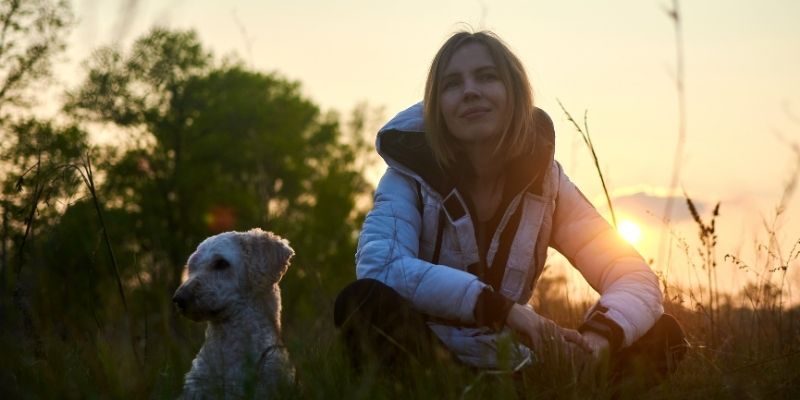
The Order of Harmony – a meeting between human and dog that reveals a deep connection of soul and love.
Pain as an Ally
Because pain does not have to hurt. We only believed it must. If we honor it and carry it with respect, it becomes a source of endless strength and creation. In the teaching of the Order of Love, which forms the foundation of the Order of Harmony, pain and anger are not symptoms to be removed. They are impulses pointing to disruption, exclusion, or forgetting. They live on through our children, our illnesses, and our dogs.
Dogs as Companions of the Soul
Dogs are part of our energetic field. When we acknowledge what belongs to us, we free them to be who they truly are: companions, not carriers of our burdens. A dog does not ask us to be perfect, only to be truthful.
The Legacy of a Bond: Ivana, Ela, and the Order of Harmony
Ivana and Ela shaped me as a therapist, as a father, as a man. Their story became part of the foundation of the Order of Harmony. Ela continued to live loved and at peace. She was never aggressive again. She died years later, peacefully. Ivana continued to grow, to feel, to live as a mother and a woman in wholeness.
The Light of the Order of Harmony in Life
Some pains stay with us forever. And they should. Not as wounds, but as light that reminds us of where we no longer need to go and of all the places we still can.
At Integrative and Holistic Grooming Education, we look for the truth behind the behavior. When the soul speaks, the dog finds peace. Discover the system that heals: Linktree Sasha Riess
by Sasha Riess | 13.04.26. | Behaviour
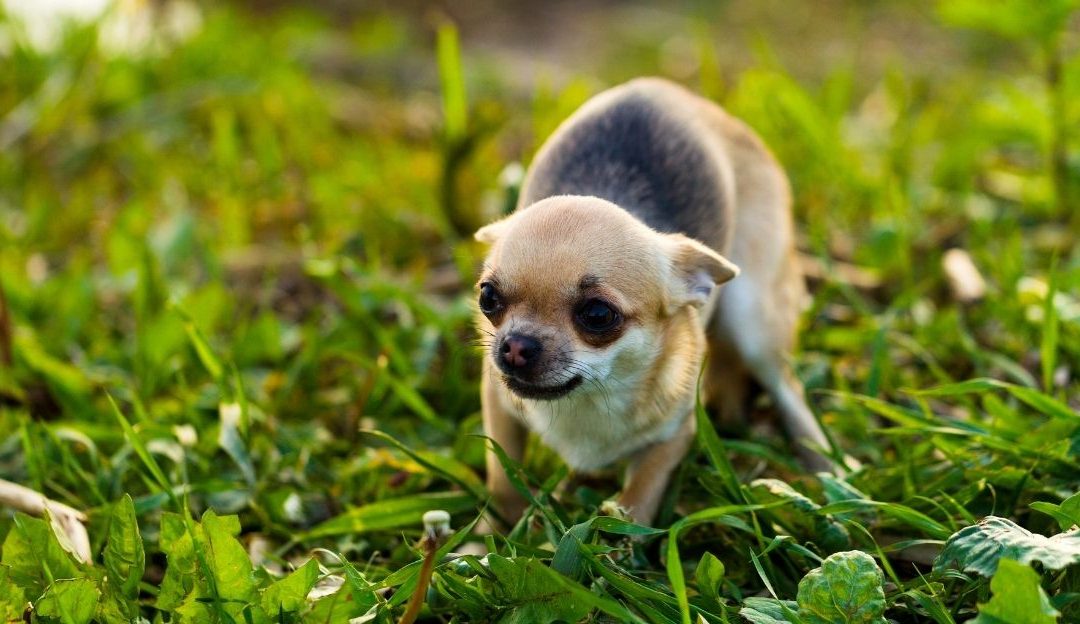
Should a happy, well-adjusted dog let everyone pet or pick them up? In a recent episode of “1000 Whys – 4 Truths,” a dog owner shared her concern: her dog growls and snaps whenever someone tries to lift him. This raises a deeper question: why should anyone touch a dog if the dog doesn’t want to be touched?
A Dog Is Not a Toy
Many owners unconsciously see their dogs as beings that “must be nice to everyone.” But that belief often reflects our own conditioning — the need to please, to always appear kind and agreeable, even when we feel otherwise inside. When we project that onto our dogs, we expect them to behave the same way — calm, polite, and endlessly patient. Yet, a dog is not an extension of our personality. A dog is a sentient being with boundaries, memories, and emotions of its own.
Pack, Family, and Boundaries
A dog is a social being — but when living with humans, the “pack” becomes a family system with different rules. A wolf pack consists of parents and their offspring. Our families with dogs are not packs — they are interspecies groups built on emotional connection and a sense of safety.
For the dog, the human represents that safety. When the family lacks harmony — when parents don’t respect each other, or the home is filled with tension — the dog feels it deeply. In such an environment, the dog doesn’t know whom to rely on, and this uncertainty often manifests as growling, snapping, or avoiding touch.
Change Creates Insecurity
When guests visit or a new family member arrives, the dog must “remap” its social world. If there’s no stable, trusted figure, the dog can’t relax. Each change in the household forces the dog to find its place again. In balanced families, where respect and emotional clarity exist, the dog feels calm and secure. But in unstable relationships, where roles and boundaries blur, the dog can’t be stable — because no one else is.
Why the Dog Doesn’t Want to Be Picked Up
If a dog growls when someone tries to lift them, it’s rarely aggression — it’s fear or loss of control. They might have been hurt before, mishandled, or traumatized as puppies. Or they may simply dislike being restrained.
Dogs also mirror their owners’ unresolved emotions. If a person has experienced abuse — emotional or physical — and hasn’t fully healed, the dog can reflect that energy through defensive behaviors. It’s not coincidence. Dogs perceive our energy and subconscious patterns. When the owner begins to heal and integrate their own experiences, the dog often calms down naturally.

Trust is built with patience and understanding, not force.
How to Help a Dog That Fears Touch
The answer isn’t to “force the dog to get used to it.” It’s about rebuilding trust — slowly, gently, and respectfully. Through desensitization, the dog learns that touch doesn’t mean threat, and that humans can be close without control or pressure. A good professional or a well-designed guide can help you work with dogs that fear handling or have lost their sense of safety.
What the Growl Really Means
A dog that growls when someone tries to pick it up is not “bad.” It’s saying: “I’m not sure. I don’t trust you yet.” Understanding, patience, and the family’s emotional stability can help the dog feel safe again — and rediscover that human touch is not a threat, but an expression of love and trust. This is the foundation of a healthy interspecies family.
At Integrative and Holistic Grooming Education, we teach that a growl is a conversation, not a conflict. Respecting a dog’s „no“ is the first step toward a deeper „yes.“ Learn to listen to your dog: Linktree Sasha Riess