
by Sasha Riess | 19.08.26. | Wellbeing
Why Cancer Is More Than a Local Disease
The appearance of malignant disease is one of the greatest fears shared by dog owners. For cancer to develop, many different biological and environmental factors may come together over time. One important perspective shows that cancer in dogs is a systemic disease rather than a simple problem of a single organ. Consequently, it affects the body as an interconnected system. Every day, the immune system continuously recognizes and eliminates abnormal cells before they have the opportunity to multiply.
When Changes in DNA Alter the Behavior of Cells
Cells with genetic alterations are continuously formed throughout life. Fortunately, the body’s natural defense mechanisms successfully repair or eliminate most of them. Cancer begins when certain cells acquire changes in their DNA that allow them to continue dividing instead of being removed.
As these altered cells multiply, they gradually replace healthy tissue and disrupt normal biological function. Although scientists understand many of the molecular mechanisms involved in this process, the exact combination of events that initiates cancer often differs from one individual to another.
The Mechanism Is Better Understood Than the Original Trigger
Modern medicine has made remarkable progress in understanding how tumors grow and spread. However, the precise causes that trigger cancer remain complex and, in many cases, multifactorial. Genetics, chronic inflammation, environmental exposures, nutrition, aging, and other biological influences may all contribute. Therefore, rather than stemming from a single cause, cancer in dogs is a systemic disease resulting from multiple interacting factors that gradually overwhelm the body’s normal protective mechanisms.

HOLISTIC CARE SUPPORTS THE BODY’S NATURAL RESILIENCE AND OVERALL BALANCE.
A Holistic Perspective on Supporting the Whole Body
Because cancer affects the organism as a whole, many holistic practitioners believe that supporting overall health should accompany any medical treatment. Simultaneously, nutrition, stress reduction, environmental quality, physical wellbeing, and appropriate veterinary care may all play important roles in maintaining the body’s natural resilience.
From this perspective, the goal goes beyond addressing the tumor itself to support the biological systems responsible for maintaining balance throughout the body. Ultimately, true prevention begins long before disease appears; it begins by creating the healthiest possible internal environment for the body to protect itself.
Thank you for reading.
To discover more about how emotional alignment, balanced lifestyle, and authentic energy restore internal balance, read our canine wellbeing guidelines.
See you next time.
At Sasha Riess, we look past commercial labels to honor the unique biological blueprint of your companion. True health requires addressing the subtle internal patterns that create lasting vitality and pureloveandharmony. Discover the customized path to your dog’s longevity: Linktree Sasha Riess
👉 Follow our Facebook page and never miss our latest articles, news, and updates.

by Sasha Riess | 19.08.26. | Behaviour
Why Your Dog Doesn’t Respond to What You Say and How Relationships Are Really Built
In previous columns, we explored vision and one fundamental principle: dogs do not react to the world they see, they react to the meaning their nervous system assigns to what they see. The eyes are simply gateways through which information reaches the brain. Only inside the brain does perception emerge, creating the internal reality that guides every decision an organism makes. Consequently, this explains why two dogs can witness the exact same event and respond in completely different ways. The scene itself has not changed. Only the meaning assigned to it by each dog’s nervous system has changed.
A World of Frequencies: How Dogs Hear Emotions Instead of Words
The next sense that shapes this internal reality is hearing. Just as with vision, however, hearing has surprisingly little to do with the ears themselves. The ears represent mechanical structures that collect sound waves from the environment. Only after those sound waves reach the brain does sound acquire true meaning. Perhaps the greatest misconception people have about dogs involves believing that dogs primarily listen to our spoken words.
In reality, dogs rarely respond to words themselves. Instead, they respond to the experiences their nervous system has associated with those specific sounds. From a physiological perspective, dogs live in an acoustic world that humans can barely imagine. While the average human hears frequencies up to approximately 20,000 Hz, dogs can detect sounds exceeding 60,000 Hz. Their highly mobile ears function like directional antennas, constantly locating the source of sound with remarkable precision.
Therefore, this means dogs do not simply hear more sounds than we do, they also perceive far more subtle variations within every sound. While people often hear only the spoken voice, dogs simultaneously detect changes in tone, rhythm, intensity, breathing patterns, muscle tension around the neck, and even subtle changes in vocal resonance that reflect a person’s emotional state.
This remarkable ability evolved over thousands of years. In nature, sound often served as the earliest warning that something important was happening. The rustling of grass could signal approaching prey, or an approaching predator. A single snapping branch could mean the difference between survival and death. Evolution did not shape hearing so animals could enjoy music or conversation. It shaped hearing as an early warning system. Although dogs no longer live in the environment for which that nervous system evolved, they still carry the very same biological machinery today.
Lost in the Noise of the Modern World
Modern civilization has completely transformed the acoustic environment in which dogs live. For most of the shared history between humans and dogs, the soundscape was relatively simple. Wind, rain, birds, other dogs, people, flowing water, thunderstorms, and occasional wildlife made up nearly the entire acoustic world.
Today, dogs live surrounded by televisions, mobile phones, alarms, microwave ovens, air conditioners, vacuum cleaners, traffic, sirens, elevators, electronic devices, and the constant noise of modern cities. Their nervous systems never evolved to process such an enormous volume of sound. Yet every single day, they attempt to interpret it all. This brings us directly to one of the brain’s most important biological characteristics.
The brain cannot afford the enormous energy cost of treating every sound as entirely new information. Instead, it constantly searches for recognizable patterns. Every new sound compares automatically with previous experiences. In other words, the brain does not simply hear sound. The brain hears memory.
Associative learning represents one of the most important survival mechanisms in neurobiology. When a particular sound repeatedly occurs alongside a particular experience, neural connections gradually form between them. Consequently, the sound is no longer just a sound. It becomes a direct prediction. A bell may predict food. The sound of a leash may predict a walk. The sound of a car may predict the owner’s arrival.
The very same mechanism also works in the opposite direction. A sound can become associated with punishment, discomfort, fear, or frustration. The nervous system does not distinguish between positive and negative experiences. It simply learns the connections between them.
When a Dog’s Name Becomes a Source of Emotional Conflict
This realization completely changed the way I began thinking about why dogs stop trusting their own name over time. For humans, a name represents identity. For dogs, a name is simply a sound. Yet it may also be the single most frequently repeated sound they hear throughout their entire lives. An owner may say their dog’s name thousands of times each year—and tens of thousands of times over an entire lifetime.
The problem begins when the very same sound carries completely different, and often contradictory, emotional meanings. We use the dog’s name to wake them. We use it during play. We use it to scold them. We use it to invite affection. We use it to warn them. We use it to praise them.
Humans naturally understand context. We know that the same word can carry different meanings depending on the situation. However, dogs do not process language in this way. Their nervous system primarily registers the emotional value attached to the sound. When the same sound repeatedly pairs with conflicting emotional experiences, it gradually becomes less predictable, and therefore less useful as a reliable signal. Consequently, this explains why dogs stop trusting their own name when mixed signals create chronic internal confusion.
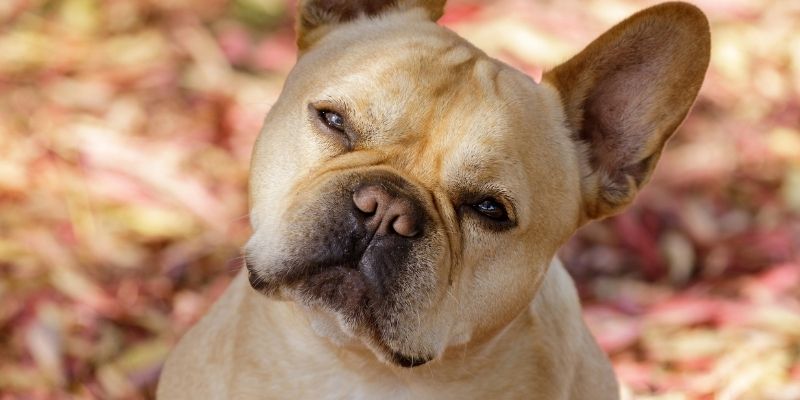
DOGS LISTEN TO THE EMOTIONAL HISTORY ATTACHED TO EVERY SOUND WE MAKE.
When Confusion Replaces Connection
When a dog’s name becomes a source of emotional conflict, the relationship itself often begins to weaken. Over the years, I noticed a pattern that at first seemed like pure coincidence. In dogs that had developed severely disorganized emotional relationships with their owners, changing the dog’s name often marked the beginning of surprisingly rapid behavioral improvement.
The new name was not magical. It did not change the dog’s personality. It did not alter genetics. It simply interrupted the history attached to one particular sound. The new sound carried none of the thousands of previous frustrations, contradictions, disappointments, or emotional conflicts. For the first time, the nervous system had the opportunity to build a completely new association between one sound and one consistent meaning.
The new name became predictable. It predicted safety. Connection. Cooperation. Positive interaction. Within that predictability, many dogs appeared to discover an emotional stability they had previously lacked.
Perhaps our greatest mistake is not that we fail to teach dogs enough. Perhaps it is that we rarely consider what their nervous systems are learning from us every single day. Every word we speak. Every tone of voice. Every shift in intonation. Every emotion carried within our voice leaves a trace inside the brain. For humans, speech is a way of expressing thoughts.
For dogs, sound is a way of predicting the future. When a sound becomes consistent and predictable, the nervous system finds safety. When the same sound repeatedly carries contradictory meanings, the organism loses its ability to predict what comes next. That is when confusion emerges. And confusion represents one of the greatest enemies of homeostasis.
Perhaps the next time you say your dog’s name, the most important question is not whether your dog heard you. The more important question is: What has your dog’s nervous system learned that this sound means? Dogs do not simply listen to the words we speak. They listen to the history attached to every sound we have built together over the years.
Within that history grow trust, security, and connection. But within that same history can also grow fear, uncertainty, and emotional disorganization. Ultimately, once we understand that sound is never just sound, but an experience remembered by the brain, understanding why dogs stop trusting their own name becomes much clearer, showing how changing a single word can sometimes transform an entire world for a dog.
Thank you for reading.
To discover more about how emotional alignment, balanced lifestyle, and authentic energy restore internal balance, read our canine communication and behavior guidelines.
See you next time.
At Sasha Riess, we look past commercial labels to honor the unique biological blueprint of your companion. True health requires addressing the subtle internal patterns that create lasting vitality and pureloveandharmony. Discover the customized path to your dog’s longevity: Linktree Sasha Riess
👉 Follow our Facebook page and never miss our latest articles, news, and updates.

by Sasha Riess | 18.08.26. | Nutrition
For decades, experts told us that the secret to health remains simple. When we discuss the nutrition of both dogs and humans, we always hear the same message: provide enough protein, enough fat, enough vitamins, and enough calories. If nutrition tables, formulas, and recommended daily allowances speak the truth, health should feel relatively easy to achieve. Simply follow the numbers, and the body will function properly.
I once believed that idea too. When I began working with dogs more than thirty years ago, teachers taught me the exact same concepts as everyone else. Health could undergo measurement, calculation, and prediction. If a dog received enough energy, enough protein to build the body, and enough vitamins alongside essential minerals for dogs according to recommendations, then it should radiate health. On paper, everything looked perfect. The tables were precise, the formulas were clear, and the numbers were accurate. However, the only problem was that life rarely follows paper.
Over the years, I began observing dogs that broke almost every rule I had learned. Two dogs could eat nearly identical diets, live similar lifestyles, and consume the same number of calories. Yet one would radiate vitality while the other constantly struggled with skin issues, digestive problems, allergies, low energy, or behavioral challenges. Of course, experts first offered genetics as the main explanation. Genetics certainly matters.
However, the longer I worked with dogs, the more I realized that genetics could not explain every difference. I saw dogs that struggled with certain problems for years suddenly begin to improve after positive changes in their environment, stress levels, lifestyle, or diet. Some became healthier, more stable, and more resilient after moving to new homes. Others, despite excellent genetic potential, began developing issues they had never previously experienced. Consequently, genetics may determine potential, but the environment determines how much of that potential the body ultimately expresses.
At that point, I turned my attention to something experts discuss far less often than calories, proteins, and fats: minerals for dogs and humans. The story of minerals represents, in many ways, the story of life itself. Before humans, dogs, plants, or trees existed, minerals already filled the universe. Iron, magnesium, calcium, copper, zinc, and selenium forged within stars billions of years before Earth even existed. Consequently, when those stars eventually died, the elements they created became part of the planet we call home today.
Over time, rocks slowly released these minerals into the living soil. Plants absorbed them through their root systems. Animals ate the plants, and other animals consumed those plant-eaters. Therefore, this natural process formed the chain of life that continues to this day. The earth feeds the plant, the plant feeds the animal, and the animal feeds another animal. Ultimately, all of us depend entirely on what exists within the living soil.
The Industrial Illusion and Natural Mineral Balance
Over the past century, as agriculture and industrialization expanded, pollution increased and the soil itself gradually lost part of its natural mineral balance. The modern response introduced synthetic fertilizers. There is no doubt that this approach increased crop yields and helped feed billions of people. However, an important question remains: did we solve the underlying problem, or merely postpone the consequences?
A plant does not grow from only a handful of isolated chemical compounds. It forms an integral part of a much larger ecosystem involving soil biology, microorganisms, organic matter, and hundreds of interconnected natural processes. Consequently, when we attempt to replace natural balance with industrial solutions, we often create a new form of chronic dependence. The soil becomes less of a living ecosystem and more of a mechanical production medium requiring constant chemical correction.
Sometimes I wonder whether we follow the exact same pattern today in modern dog nutrition. When processed food loses part of its natural nutritional value, manufacturers respond by adding synthetic vitamins and minerals for dogs. Of course, these additions can prove useful and, in many urgent situations, absolutely necessary. However, the question we rarely ask is whether we actively restore natural balance or merely compensate for its complete absence.
In a sense, synthetic supplements added to processed food function as a kind of “fertilizer” for nutritionally depleted ingredients. They attempt to replace what processing destroyed, but they cannot reproduce the complex nature of the biological systems from which those nutrients originally came. Consequently, the greatest challenge of the future will not focus on producing more factory food or adding more artificial supplements. Simultaneously, the real challenge requires learning how to restore the natural processes that create healthy soil, healthy food, healthy animals, and ultimately healthier people. When we continually correct consequences rather than addressing the root cause, we risk becoming dependent on an endless series of adjustments that never truly solve the underlying problem.

RETURNING TO THE EARTH AND THE ESSENCE OF HEALTH.
Returning to the Earth and the Essence of Health
Perhaps, as a human civilization, we have spent so long trying to conquer nature that we have forgotten our place within it. We tried to replace fertile living soil with artificial fertilizer, rich food diversity with strict formulas, and natural biological balance with synthetic supplements. Consequently, every time a new health problem appears, our response adds yet another correction to the previous correction. Yet no amount of industrial technology can permanently replace what we lose when the connection between soil, plant, animal, and human breaks apart.
That is why holistic canine nutrition cannot simply exist as a manufactured product created inside a laboratory. Perhaps dogs are reminding us today of a fundamental truth we have begun to forget. Life did not originate in a high-tech laboratory. Life did not originate in a commercial factory. Life did not originate in a rigid nutritional chart.
Traditional canine nutrition and canine health remain deeply connected to the natural world. Life emerged directly from the earth, rising from it just as a child emerges from its mother’s womb. Ultimately, when we learn once again how to care for the living soil from which everything begins, we will discover that the greatest problem was never a lack of food quantity. The greatest problem stemmed from our lack of understanding of what truly makes food alive, both for our beloved dogs and for ourselves.
Thank you for reading.
To discover more about how emotional alignment, balanced lifestyle, and authentic energy restore internal balance, read our canine nutrition guidelines.
See you next time.
At Sasha Riess, we look past commercial labels to honor the unique biological blueprint of your companion. True health requires addressing the subtle internal patterns that create lasting vitality and pureloveandharmony. Discover the customized path to your dog’s longevity: Linktree Sasha Riess
👉 Follow our Facebook page and never miss our latest articles, news, and updates.

by Sasha Riess | 17.08.26. | Coat Care
When we step into everyday life with our four-legged companions, we often forget the deeper dimension of the relationship we share with them. Too often, people view caring for their dogs as nothing more than a series of routine tasks that simply need completion. Yet, consciously spending time with our best friend creates, in reality, a truly magical journey for the soul. Consequently, it often makes me wonder whether the time I spend with my dog can make me a kinder, wiser, and more compassionate human being. Does that warm greeting at the door every single day carry a deeper purpose? Is there something far greater hidden within those simple moments of connection?
Do We Really Need Thirty Minutes with a Brush in Our Hands?
When life becomes busy and our schedules overflow with endless obligations, perhaps we should ask ourselves one honest question. Do I really need to become more polished and perfect than I already am today? And do I truly have to give up those precious thirty minutes of free time? The answer is surprisingly simple.
Consciously brushing your dog transforms love into something deeper, gentler, and infinitely more beautiful. Therefore, practicing conscious brushing turns a simple act of physical touch and focused attention into an unbreakable bond between a person and the animal they love.
How Much Silence and Joy Exist Within a Wagging Tail?
When you become completely present with your dog, the world around you suddenly stops rushing. Simultaneously, within every gentle stroke of the brush lives an extraordinary sense of peace and quiet joy. Your dog responds to your attention with every happy wag of the tail, gently leading you into a deeper state of awareness.
In many ways, dogs take us by the hand and guide us toward a place where painful memories and daily worries gradually fade away. Through conscious brushing and thoughtful grooming, they offer us one of life’s most beautiful promises: that we never truly have to feel alone.

THE QUIET JOY AND UNBREAKABLE BOND CREATED THROUGH MINDFUL PRESENCE.
Love Them Fully and Never Punish Them
Perhaps it is time to change the way we think about grooming altogether. Instead of treating coat care as another heavy obligation, let every session become a mindful ritual of gratitude. Consequently, rather than becoming frustrated by loose hair or the time it requires, choose to love your dog wholeheartedly.
Do not scold them. Do not punish them. Our companions represent our greatest teachers of presence and mindful living. Ultimately, the brush in your hand functions as far more than a basic grooming tool; conscious brushing creates a direct bridge connecting two hearts. The next time you sit beside your dog, do so with genuine love, and allow yourself to enjoy every single second of the quiet magic you create together.
Thank you for reading.
To discover more about how emotional alignment, balanced lifestyle, and authentic energy restore internal balance, read our canine coat care guidelines.
.
At Sasha Riess, we look past commercial labels to honor the unique biological blueprint of your companion. True health requires addressing the subtle internal patterns that create lasting vitality and pureloveandharmony. Discover the customized path to your dog’s longevity: Linktree Sasha Riess
👉 Follow our Facebook pageand never miss our latest articles, news, and updates.

by Sasha Riess | 17.08.26. | Behaviour
In the modern world, we constantly hear theories about dominance and the owner acting as the primary pack leader dog authority. However, the true psychology of animals reveals a completely different picture. In many cases, fear and insecurity in dogs arise not because they lack domination, but because owners do not fully understand their fundamental emotional needs.
Dogs are not searching for someone who simply commands and controls them. Above all, they seek safety, stability, and a deep sense of genuine connection. Their natural instinct drives them to find security within the family unit and within the relationships that make them feel protected.
Why Does Your Dog Cry and Howl When You Leave?
Imagine a situation in which your dog begins barking, whining, or howling the moment you walk out the door. Many self-proclaimed experts may tell you that the dog acts stubborn or that you fail to display enough control as a dominant pack leader dog figure. However, the explanation remains far simpler and more human. In that moment, the dog experiences severe distress because something important leaves its world.
Consequently, the feeling of security disappears, and overwhelming uncertainty takes its place. As a result, anxiety and panic begin to emerge within the dog’s nervous system.
They Are Not Only Afraid of Being Alone
When a dog cries at the door, society often interprets the sound as disobedience, manipulation, or spoiled behavior. Yet many dogs react to something far deeper. They are not simply responding to physical separation; they respond directly to the loss of connection, predictability, and emotional security.
Dogs remain highly sensitive to changes in human emotions, daily routines, body language, and immediate energy. Consequently, when they perceive subtle instability in their environment, uncertainty grows inside their own nervous system as well. They do not need a forceful pack leader dog to discipline them in these moments; they need a reliable source of grounding and reassurance.

THE DOG AS A REFLECTION OF OUR INNER PEACE.
Dogs and Children See Beyond Our Masks
Learning to care for our own emotional wellbeing represents one of the most powerful ways to help the animals sharing our lives. Dogs and young children often respond less to the social roles we play and more to the true emotional state beneath them. They react to consistency, authenticity, calmness, and quiet presence.
For this reason, lasting behavioral change rarely comes from force, mechanical control, or dominance alone. True progress grows from mutual trust. It grows from authentic connection. Ultimately, it grows from the profound sense of safety we create together. Perhaps true leadership does not require fear or control. Ultimately, true leadership means becoming a permanent source of peace.
Thank you for reading.
To discover more about how emotional alignment, balanced lifestyle, and authentic energy restore internal balance, read our canine communication and behavior guidelines.
See you next time.
At Sasha Riess, we look past commercial labels to honor the unique biological blueprint of your companion. True health requires addressing the subtle internal patterns that create lasting vitality and pureloveandharmony. Discover the customized path to your dog’s longevity:Linktree Sasha Riess