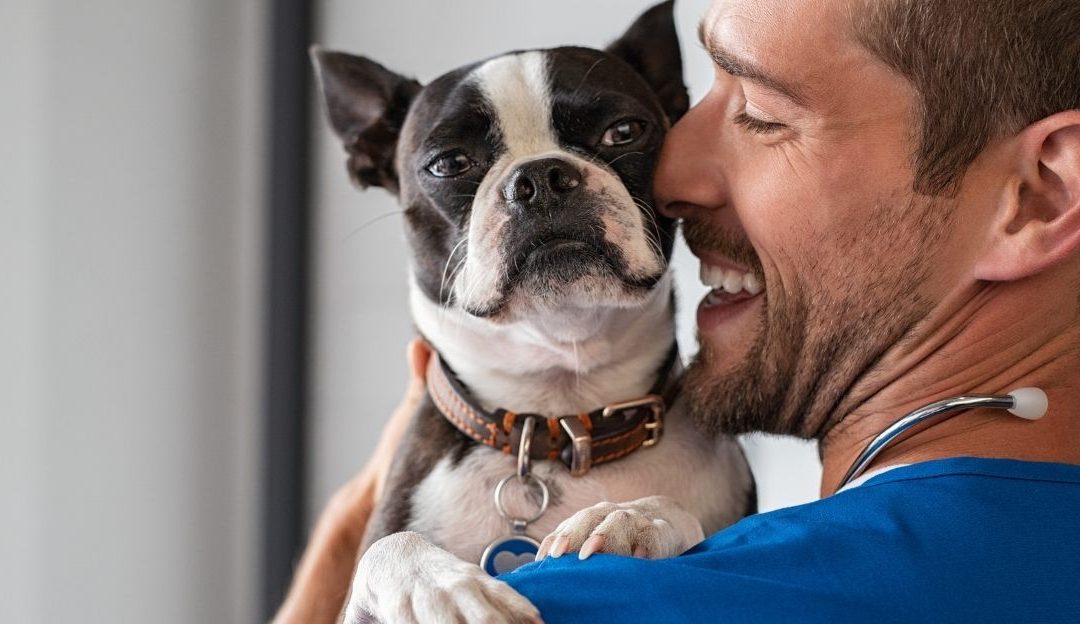
by Sasha Riess | 15.03.26. | Behaviour
Dogs simply react to the environment we create for them. We assign them rules and behaviors we believe are correct. Every owner wants the best for their dog, just as we want the best for our children.
At the end of a dog’s life, we often see how successful we were in that intention, or how much we struggled. That final “reflection” of our love brings back everything the dog has lived through, and that is what frightens us and hurts us the most.
Lessons We Learn Through Caring for a Dog
The choices we make are rarely wrong because we wanted them to be. More often, we simply did not know better. However, the problems and challenges that arise become more intense over time, and the responsibility carried by the dog’s owner becomes greater.
How Supporting Dogs Can Transform Their Experience
Through attention, proper nutrition, and understanding their emotional needs, we can reduce a dog’s stress and offer them a healthier and calmer life. Supporting dogs through nutrition and daily care is not just an act of love. It is also a form of education for the owner, a chance to understand how our decisions affect them and how we can correct our mistakes.
-
Bone broth for dogs: A natural recipe to support joint health and immunity.
-
Separation anxiety: Understanding why a dog cries when left alone and how to build their confidence.
-
Modern challenges: A dog in an urban environment is a symbol of how city life affects canine wellbeing.
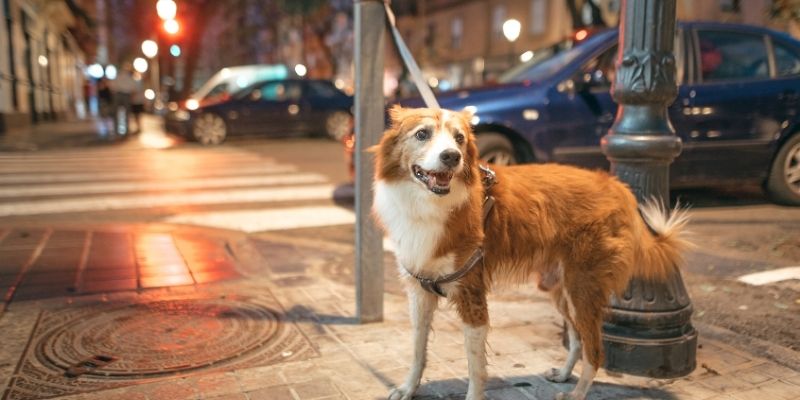
Dogs live through our choices and carry the weight of our environment.
Nutritional Support as the Foundation of a Healthy Life
When we understand that supporting dogs through nutrition directly affects their immunity, behavior, and resilience to stress, we realize that food is not a small detail. It is the foundation of their stability. If we want to truly be their sense of safety, it is essential that we show that care through the way we feed them, offering what their body and mind genuinely need.
At Integrative and Holistic Grooming Education, we believe that communication is felt, not forced. We teach you how to listen to your dog’s soul instead of just commanding their body. Explore our philosophy: Linktree Sasha Riess
by Sasha Riess | 13.03.26. | Behaviour
The prong collar — a metal collar with pointed links — divides the dog training world into two camps. While some defend its use, Sasha Riess makes his stance clear: “It’s not a tool — it’s a symptom of our misunderstanding of dogs.” This discussion goes beyond training — it questions the very essence of the human-dog relationship.
What Is a Prong Collar and Why Is It So Controversial?
The prong collar, also known as a “pinch collar,” tightens around a dog’s neck when pulled. While some trainers claim it’s an effective tool for quick correction, others see it as an instrument of fear that damages trust. Ivan from Super Dog Academy explains that, used properly, it can prevent bigger problems. However, Sasha Riess points out that many countries have already banned it — and not without reason.
Sasha Riess: “There Is No Such Thing as Justified Cruelty”
Sasha poses an ethical question that cuts deep: “Can there be such a thing as a little abuse, a little slap, a little pain?” He emphasizes that dogs don’t misbehave to provoke us — they act out to communicate. When we pull them with a prong, we teach them to fear their own instincts.
“The problem isn’t the dog — it’s the human who can’t control their own emotions.”
The Effects of the Prong Collar on Dogs
Research and practical experience show several potential consequences:
-
Physical pain and neck injuries.
-
Increased stress and anxiety.
-
Loss of trust in the owner.
-
Suppressed reactions that can later develop into aggression or fear.
“If the Dog Suffers and the Human Feels Powerful — That’s Not Training”
As Sasha Riess concludes: “If a tool works by making the dog suffer while the human feels stronger — that’s not training, that’s therapy for the human.”
Legal and Ethical Dimensions
The prong collar is currently banned in over 20 countries, including Austria, Switzerland, Norway, and Sweden. These bans reflect an evolving understanding of animal welfare. Even where it remains legal, the world is moving toward more humane training methods like positive reinforcement, redirection, and emotional awareness.
The Final Thought
The prong collar is more than a training tool — it’s a mirror of our relationship with dogs. True strength in a trainer lies not in control — but in the trust they build. The more we understand dogs, the less we need extreme tools.
At Integrative and Holistic Grooming Education, we believe that communication is felt, not forced. We teach you how to listen to your dog’s soul instead of just commanding their body. Explore our philosophy: Linktree Sasha Riess
by Sasha Riess | 13.03.26. | Emotions
There was a time when dogs died peacefully in their sleep — without clinics, diagnoses, or “final visits to the vet.” They passed quietly at home, beside their humans. They didn’t have medical charts thicker than novels or endless appointments with specialists. The dogs of our grandparents lived and died with dignity — simply, as dogs.
The Judas Kiss at the Last Heartbeat
Today, dogs are consumed by diseases that have become the new normal — tumors, epilepsy, autoimmune disorders, and chronic inflammation. Instead of facing the truth of how our choices brought them there, we choose euthanasia. We call it “mercy.” But it’s not mercy. It’s helplessness — and hypocrisy.
Dogs no longer die suddenly and quietly. They die slowly — day by day, month by month — not because their time hasn’t come, but because they feel us. Their hearts keep beating even when their bodies have already given up — because they are still bound by our love, our fear, and our inability to let go.
Loyalty and the Right to a Dignified End
They stay because they believe it’s their duty to be there for us. They stay through pain and exhaustion because we’ve never freed them from the idea that they are our “angels” or our “only joy.” We never gave them permission to be simply — dogs.
We hold them back because it hurts to imagine life without them. And when that pain becomes unbearable, we choose to kill them — calling it “release.” But the truth is harder: We do it because we can’t bear to face what their final days reflect — the reality of what we’ve become.
The Hypocrisy of Our Lives
Isn’t it hypocritical? We work jobs we hate, share beds with people we no longer love, and stay in relationships that drain us. And so, when faced with pain, we choose what we’ve already chosen for ourselves — death as escape. Only this time, not for us — but for them.
The Other Way: Love and Freedom
There is another way — a life lived in love and harmony, where we learn that death isn’t an ending, but a transition. Where we can look our dog in the eyes and say: “You can go now. Your mission is complete. I’ll stay until my time comes. Thank you for every moment of love and service.”
When those words finally come from the heart — they understand. And then, they can go. Quietly. Freely. Without injections, without the “ceremony of goodbye.” They simply lie down and drift away because we released them.
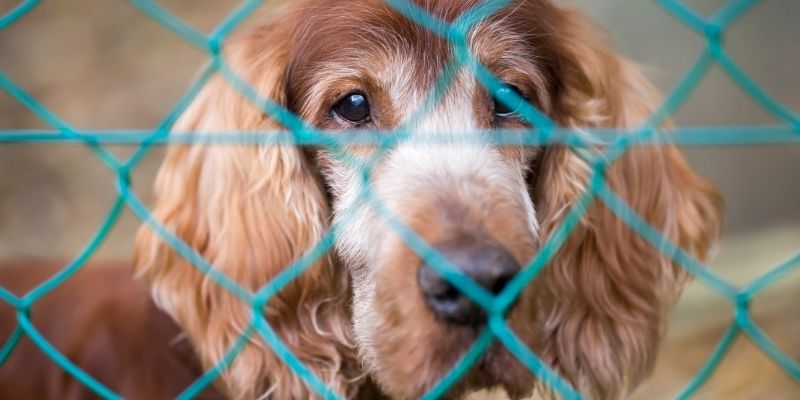
When our pain becomes unbearable, we choose to kill them.
Euthanasia Is Not Love
Euthanasia is not love. Love is letting them go when their time truly comes — without fear, without control, without disguising weakness as compassion. As our hand trembles above their body, we call it “mercy,” but what we give is often a Judas kiss — an act that appears gentle, yet carries the mark of betrayal.
We owe them the right to a dignified end — the same dignity they offered us every day of their lives. From the very start, they must know they are free — never bound to stay longer than destiny allows. Love doesn’t hold. Love releases.
At Integrative and Holistic Grooming Education, we believe that communication is felt, not forced. We teach you how to listen to your dog’s soul instead of just commanding their body. Explore our philosophy: Linktree Sasha Riess
by Sasha Riess | 12.03.26. | Emotions
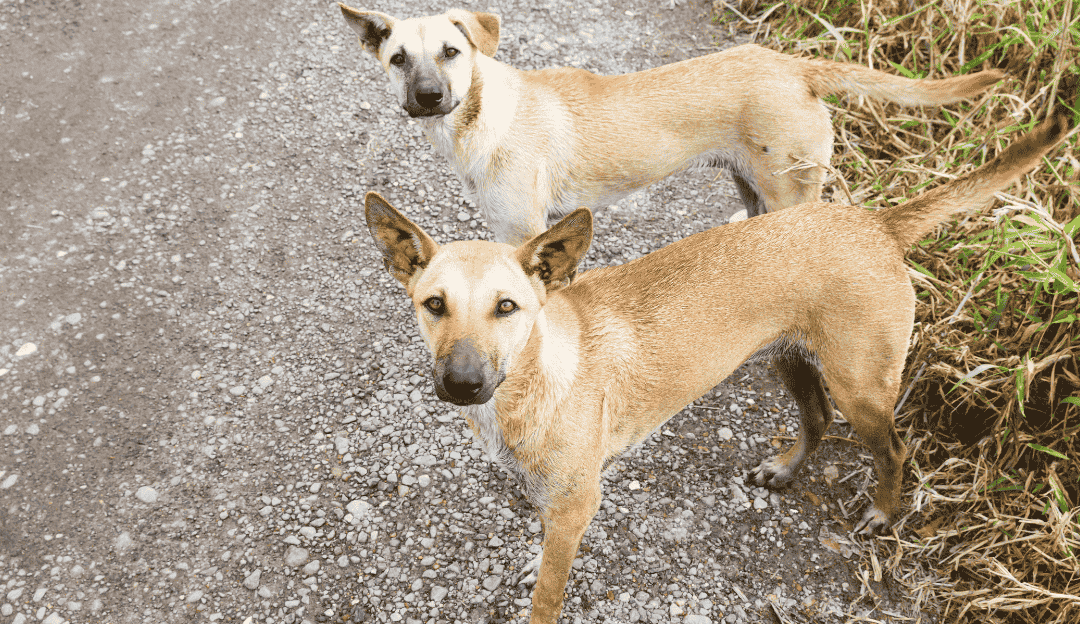
Stray dogs are not just a problem on the streets; they are guardians of order and a mirror of our society – showing how deeply we understand the nature that surrounds us.
I know this column may bother some people, but I have no other way to write it. My view of this phenomenon isn’t neutral. Street dogs are neither just a problem nor a solution. They are a reflection of the world as it truly is – overflowing, filled with hungry eyes, and with traces we leave behind but refuse to see. For me, a dog is not merely a stray; it is a guardian of order we never learned to respect. If it disappears, a part of our defense against the chaos we create will vanish too.
This truth has no price for me
In the midst of new laws, proposals, pressures, and actions from shadowy figures – in a time when conspiracy theories always find their place – a question hovers over us, painted with the color of our empathy: What will we do with the dogs on our streets?
As the world divides between regulations and emotions, between politics and daily life, the issue of stray dogs becomes more than a communal concern. It becomes a mirror: how much do we really understand nature, and how much do we simply want to sterilize it into an image that doesn’t disturb our sense of order?
The Western „Solution“
While “northern dogs” in Canada await execution because they are supposedly a public health risk – even though they are perfectly healthy – a new initiative emerges: the random killing of dogs. And we act surprised, though it’s been part of the Western “solution” for decades. In the United States alone, about two million dogs are euthanized each year – healthy, unwanted, and without necessity.
Behind all this lies one deeply ingrained idea, almost taken as truth: overpopulation. Back in the 1990s, scientist Ray Coppinger estimated that there were around one billion dogs on Earth. If we follow the growth of the human population and ecological trends, that number today likely approaches one and a half billion.
According to Wikipedia (Free-ranging dog), only about 20% of the world’s dogs live under human control. The vast majority are free-ranging – the dogs we see on streets, in villages, in the peripheries, and the ones we never even notice. In other words, when we speak of dogs, we are really talking about a planet populated mostly by dogs without leashes.
The Mirror of Human Excess
And here’s what most people don’t realize: these dogs didn’t appear just because of “irresponsible ownership.” Of course, some were abandoned, but in relation to the global dog population, that number is tiny – a drop in the ocean. By focusing only on “discarded pets,” we miss the forest for the trees.
Free-ranging dogs are not an anomaly of modern times – they are a natural canine form as old as civilization itself. They have always lived at the edges of human settlements, near landfills and fields, feeding on our excess. Their history is woven with ours – but never completely under our control.
The dog has become what no other animal is – a mirror of human excess. A dog exists where there is surplus. Where we throw away food. Where we leave traces. Where we consume too much. The dog is a symbol of what could be called human hunger – not for food, but for love and wholeness.
Lesson from Yellowstone: Removing a natural regulator always invites chaos.
When the street dog disappears — who replaces it?
We always ask: How do we remove dogs from the streets? As if they’re the only surplus in our society. But nature doesn’t tolerate a vacuum. Remove the dogs, and other animals take their place – usually rats.
Rats have lived beside us since ancient times. They didn’t just bring noise; they brought disease. The plague that wiped out a third of Europe’s population in the 14th century spread through fleas carried by rats. We may think removing dogs means safety – but history says otherwise. Dogs are not the problem; they are part of the defense against chaos. When they disappear, silence fills the space – and in that silence, the rats multiply, carrying diseases we cannot foresee.
The Ecological Cascade of Yellowstone – a Lesson on Absence
Nature already showed us what happens when we remove just one link from the chain. When wolves were eradicated from Yellowstone National Park in the early 20th century, people thought it would bring balance. Instead, it triggered an ecological cascade that became a catastrophe. Only when wolves were reintroduced in 1995 did balance slowly return – the trees, the bees, the birds, even the rivers came back to life.
What happened in Yellowstone can happen in any city if we remove street dogs. They are our “urban wolves” – not predators, but regulators. Their presence keeps other opportunistic species at bay. Their absence invites a quieter, more dangerous kind of chaos.
The Dog as Guardian of Order
A dog is not just an animal living beside humans – it’s a symbol of order. In mythology, dogs guard thresholds and gates. Even today, street dogs stand between our world and nature’s disorder. We dislike their presence because they remind us of failure – that we tamed and then abandoned. They show us we cannot control what we once invited into our lives.
But in that discomfort lies truth: A dog is our indicator. It shows where we waste, where we overconsume, where nature returns balance to our excess.
Why not sterilize all rats and pigeons?
When we say, “We should sterilize all dogs,” it’s worth asking: why not do the same with rats or pigeons? They are just as opportunistic, just as problematic. But we don’t see them as “ours.” The dog is too much ours – and not enough. It’s both family and foreign. That’s why we punish it more severely – under the mask of empathy and “mercy.”
Can Dog Populations Be Stable?
Maybe the question isn’t how to eliminate them, but how to coexist within order — without chaos. Perhaps the answer begins with something simple: stop throwing away food. Our waste is not just trash – it’s a signal. It invites nature to expand, to reclaim, to remind. Dogs are here because we call them – they are proof of our insatiability.
The Pain of These Words
This column won’t please everyone. Those seeking solutions, sterilizations, removals, and euthanasia will say I exaggerate. Dog lovers may say I’m too harsh. But the truth is simple: dogs reveal our world. When we see them on the streets, we aren’t looking at them – we’re looking at ourselves.
If they disappear, we won’t find peace – only emptiness. An emptiness soon filled with rodents and disease. Cities without barking but filled with the faint scratching of rats behind the walls. And history will remind us: pandemics always rise from that silence.
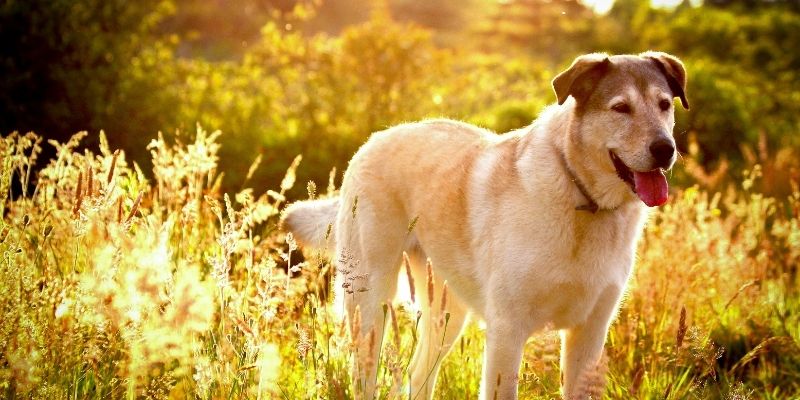
The dog is a symbol of human hunger – a mirror of the excess we refuse to see.
Dogs are the guardians of our order not because we tamed them, but because they show us the limits of how much we can consume and waste. They are witnesses to our excess – and our unwanted allies. So next time you see a dog on the street, remember – it isn’t just a “stray.” It is a sign. A symbol. A mirror. If we remove it, we remove our subconscious alarm. And nature will answer – quietly, relentlessly – through sickness, through rats, through the invisible plague that always waits in the dark.
At Integrative and Holistic Grooming Education, we believe that communication is felt, not forced. We teach you how to listen to your dog’s soul instead of just commanding their body. Explore our philosophy: Linktree Sasha Riess

by Sasha Riess | 11.03.26. | Wellbeing
The English Bulldog would not survive in nature. Few people truly ask themselves which dogs would not survive in nature and what that means for us who choose to breed or adopt certain breeds. Once a human steps into canine genetics and begins deciding what will be combined, they take on enormous responsibility for the life that is created. Nature is simple. It does not forgive weaknesses and it does not preserve mutations that make survival difficult.
Which dogs would not survive in nature and why
Some breeds were created as a result of human choice rather than natural selection. This means that without humans they would not be able to survive even for a few days.
The most well known examples include:
-
English Bulldog: Cannot breathe properly, cannot run, has difficulty regulating body temperature, and often cannot give birth naturally.
-
Dachshund: Extremely short legs and a long torso would make it an easy target for predators. In the wild it could neither escape nor defend itself.
-
Pug, French Bulldog, Pekingese: All brachycephalic breeds suffer from breathing difficulties, problems with heat regulation, and limited physical endurance.
In nature, natural selection would simply remove such individuals.
The Dachshund and short legs as a genetic mutation
The Dachshund is an example of a breed whose short legs represent a genetic trait that would be a serious handicap in nature.
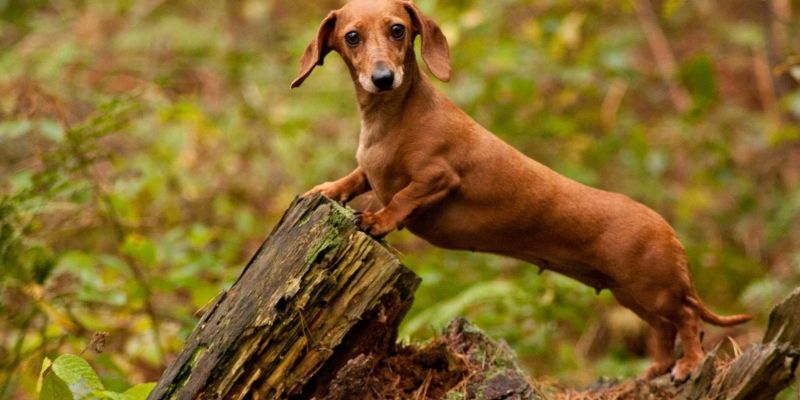
Genetic mutations like short legs would make survival in the wild nearly impossible.
Genetic mutations: what happens when humans help nature
Genetic mutations occur in all species, but in nature only those that enable life survive. In domestic dog breeds, the problem arises when humans take a mutation such as short legs or a flattened nose, consider it cute, and then deliberately breed that same mutation further. The result is dogs that would not be able to survive even a few hours without our care, medical assistance, and controlled environment. At that point, the breeder must be extremely responsible, because they take on the role of nature itself.
Why mothers sometimes reject puppies with mutations
In the wild, a mother immediately recognizes which puppy will not survive. This is not cruelty. It is biology. If a puppy has a severe mutation, difficulty walking, inability to nurse, or congenital diseases, the mother will not care for it. She knows what humans often do not want to see: that puppy is not capable of life. But when a human intervenes and saves every puppy without reflection, the mutation is preserved and passed on.
Which dogs would not survive in nature and what that means for us
Breeds such as the English Bulldog, Pug, Dachshund, and many others would not be able to survive in nature. They survive because of us. That means the responsibility lies entirely with humans:
If we create life, we must be ready to protect it.
At Integrative and Holistic Grooming Education, we believe that communication is felt, not forced. We teach you how to listen to your dog’s soul instead of just commanding their body. Explore our philosophy: Linktree Sasha Riess