
by Sasha Riess | 11.10.26. | Wellbeing
In today’s world, public understanding of chronic illnesses is too often shaped by outdated fears and stigma. Modern medicine, however, shows us that even serious health challenges can often be managed successfully through knowledge, responsibility, and appropriate treatment.
Humanity has not eradicated HIV, but extraordinary medical advances have transformed it from a fatal disease into a manageable chronic condition for many people. At the heart of this progress lies personal responsibility. Consequently, analyzing what the fight against hiv health awareness teaches us highlights why knowing your health status through regular testing protects both yourself and the people you care about.
Why Someone Receiving Treatment Poses Less Risk Than Someone Untested
Modern medical evidence has revealed an important fact. People living with HIV who consistently take effective antiretroviral therapy and maintain an undetectable viral load do not sexually transmit the virus. This principle is widely known as U = U (Undetectable = Untransmittable).
For that reason, someone who knows their HIV status, follows treatment, and remains under medical care may actually present less transmission risk than someone who has never been tested and remains unaware of their infection. Therefore, knowledge, treatment, and responsibility protect both the individual and the community.
The Importance of Testing and the Window Period
One of the greatest risks comes from not knowing. A person who has never been tested may unknowingly transmit HIV before becoming aware of their infection.
Simultaneously, an early stage exists after infection, known as the window period, during which standard tests may not immediately detect the virus, depending on the type of test used and the time since exposure. This is why timely testing, follow-up testing when appropriate, and professional medical guidance remain essential.

TAKING CARE OF OUR HEALTH AND RESPONDING WITH KNOWLEDGE RATHER THAN FEAR IS ULTIMATELY CHOOSING LIFE.
Every Health Challenge Invites Greater Awareness
Every illness invites us to become more conscious of our health and our choices. Rather than responding with fear or stigma, we can respond with knowledge, compassion, and responsibility.
Ultimately, taking care of our health, seeking appropriate medical care, and supporting one another represent the greatest expressions of respect for both ourselves and the people around us. Choosing awareness is, ultimately, choosing life.
Thank you for reading.
To discover more about how emotional alignment, balanced lifestyle, and authentic energy restore internal balance, read our wellbeing guidelines.
See you next time.
At Sasha Riess, we look past commercial labels to honor the unique biological blueprint of your companion. True health requires addressing the subtle internal patterns that create lasting vitality and pureloveandharmony. Discover the customized path to your dog’s longevity: Linktree Sasha Riess
👉 Follow our Facebook page and never miss our latest articles, news, and updates.
by Sasha Riess | 09.10.26. | Behaviour
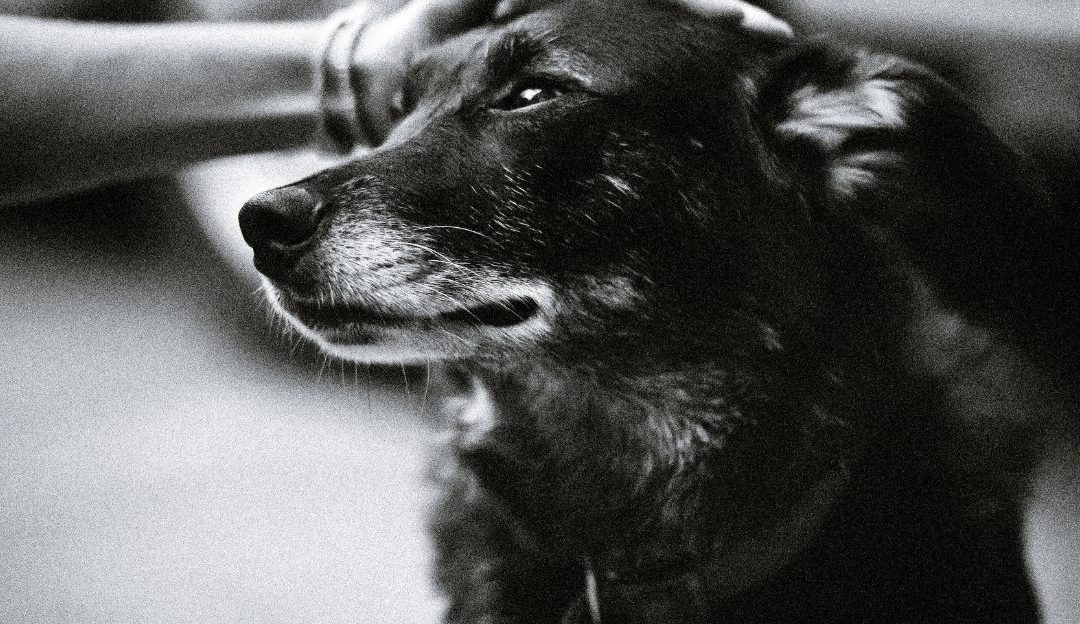
The loss of a companion animal is probably one of the most painful experiences a person can go through. We often witness situations in which dogs suffer for months, their bodies slowly deteriorating while owners fall apart emotionally, saying:
“I’m dying with him. I can’t endure this anymore.”
What many people do not realize in those moments is that dogs deeply feel us. They remain trapped in their suffering because they sense our fear and our inability to continue living without them. Consequently, learning what to say when a dog is dying helps owners release their pets from emotional burdens.
Only when dogs feel that we are capable of surviving do they finally receive the freedom to leave in peace.
The Words That Bring Peace and Release
When this painful moment arrives, there are words you should say to your dog, not necessarily out loud, but deeply from the heart.
Look at your dog and say:
“My dear friend, I can continue my journey even without you. If your time has come, please go in love. We will meet again when my time arrives. I, too, cannot escape death. It is coming for all of us, and with every day I move closer to it. But my time in this world is not over yet.”
Therefore, offering this conscious permission may be the greatest act of love you can offer.

A DIGNIFIED AND PEACEFUL TRANSITION IS FILLED WITH GRATITUDE, LOVE, AND QUIET RELEASE.
The Strength of Honest Goodbye
Very often, owners who find the strength to do this sincerely, from the deepest part of their soul, experience extraordinary moments.
Once they release the dog from the burden of carrying their pain, the animal sometimes finds one final, unexpected strength. Simultaneously, the dog may come close one last time, gently touch each family member with its nose as much as its weakening body allows, say goodbye in its own way, lie down, and peacefully fall asleep.
The passing of a companion animal does not always have to be filled with agony. Ultimately, it can become a conscious and dignified transition, filled with gratitude, love, and the quiet release that comes from truly letting go.
Thank you for reading.
To discover more about how emotional alignment, balanced lifestyle, and authentic energy restore internal balance, read our communication and behavior guidelines.
See you next time.
At Sasha Riess, we look past commercial labels to honor the unique biological blueprint of your companion. True health requires addressing the subtle internal patterns that create lasting vitality and pureloveandharmony. Discover the customized path to your dog’s longevity: Linktree Sasha Riess
👉 Follow our Facebook page and never miss our latest articles, news, and updates.
by Sasha Riess | 08.10.26. | Wellbeing
In today’s society, we are accustomed to drawing a sharp line between pets and other animals. We often love dogs as members of the family, while maintaining a completely different attitude toward pigs or cows. This naturally raises the question of why a dog is different from a pig in our eyes.
Who actually decides this difference, and according to what criteria do we draw these boundaries? Our entire relationship with animals rests on laws and social conventions that we readily accept without deeper questioning. Consequently, analyzing what occurs when a hypothesis arises regarding a virus transmitting from dogs to humans forces us to re-evaluate how quickly society alters its ethical standards.
Protocols and Decisions Made for the Greater Good
Throughout history, we have witnessed mass culling and destruction of domestic animals during epidemics. When swine flu, avian flu, or mad cow disease emerge, governments and institutions activate strict protocols. Millions of animals are then sacrificed in the name of protecting human health and controlling the spread of infection.
However, what would happen if a virus transmitting from dogs to humans were hypothesized? What protocols would then be applied, and how would the system respond to our pets? Therefore, asking this hypothetical question reveals how easily boundaries and rules change under systemic pressure.
Who Determines the Value of Life and Ethical Boundaries?
The way laws treat animals directly reflects our current collective consciousness. In terms of intelligence and emotions, a pig is in no way inferior to a dog. Yet lawmakers and industry have placed one animal in the category of food and resources, while placing the other in the category of friend and protector.
When decisions occur under the pretext of the greater good, ethical boundaries become highly flexible. Simultaneously, injustice or cruelty happens to certain animals today, but tomorrow, the same question could easily extend to our companion animals.
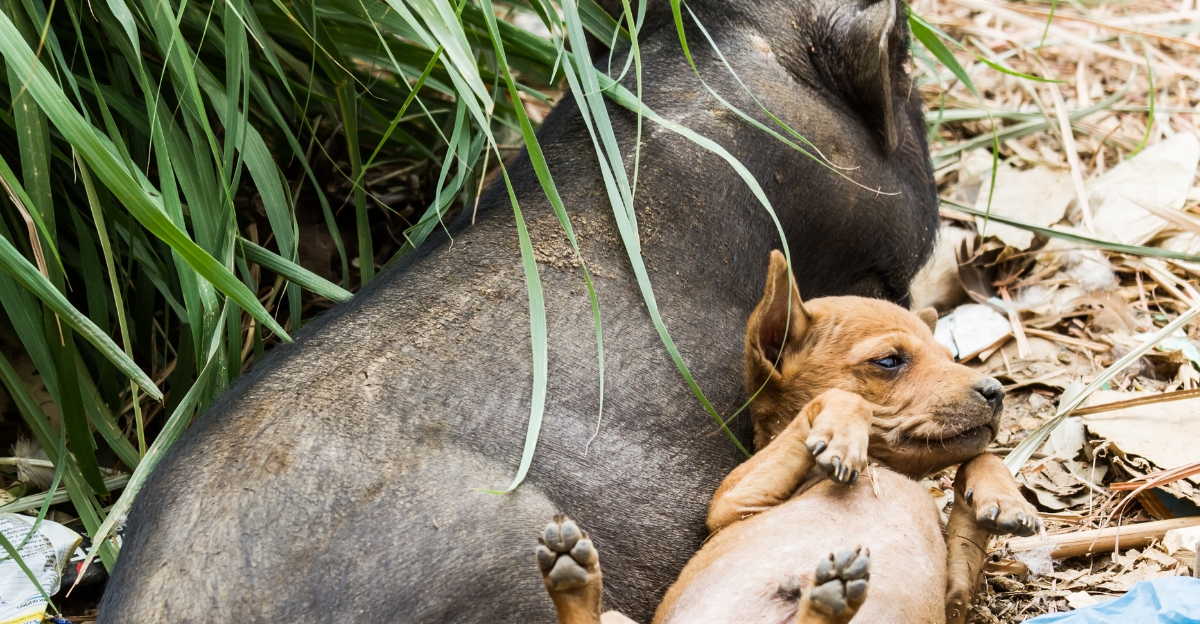
IN TERMS OF INTELLIGENCE AND EMOTIONS, A PIG IS IN NO WAY INFERIOR TO A DOG, YET SOCIETY TREATS THEM DIFFERENTLY.
Understanding Our World and Building Awareness
The purpose of these questions is not to spread fear, but to deeply understand the world and the system in which we exist. Our individual relationship with animals determines what decisions we will make and what kind of world we build.
Ultimately, we must begin to view life as a whole, rather than measuring the value of a being solely by its usefulness to humans. Only when we develop a true awareness of the value of every living being will we be able to make wise, fair, and ethical decisions for the future.
Thank you for reading.
To discover more about how emotional alignment, balanced lifestyle, and authentic energy restore internal balance, read our wellbeing guidelines.
See you next time.
At Sasha Riess, we look past commercial labels to honor the unique biological blueprint of your companion. True health requires addressing the subtle internal patterns that create lasting vitality and pureloveandharmony. Discover the customized path to your dog’s longevity: Linktree Sasha Riess
👉 Follow our Facebook page and never miss our latest articles, news, and updates.
by Sasha Riess | 07.10.26. | Coat Care
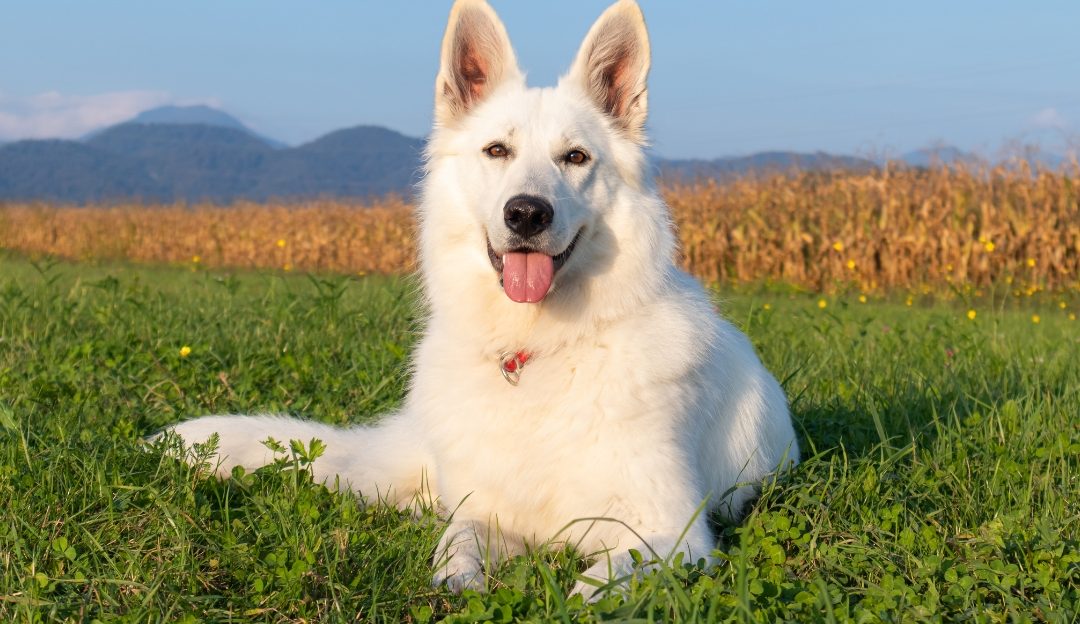
Recently, a dog owner named Dragan contacted me because he was struggling with caring for his pet. While searching the internet, he found claims that the breed is easy to maintain, but that daily brushing is necessary. The White Swiss Shepherd has a dense coat, so owners often wonder why constant brushing is necessary and what equipment should be used.
Our approach to at-home dog grooming is controversial because we recommend that the dog should not be brushed dry at all. Consequently, understanding why white swiss shepherd daily brushing fails requires examining coat biology, shedding mechanics, and proper bathing techniques. Brushing should occur exclusively during bathing and blow-drying.
Why Does the White Swiss Shepherd Shed All Year Round?
The dense undercoat of this breed sheds intensively twice a year, in spring and autumn. The undercoat attaches firmly to the follicles and does not easily fall out on its own. If owners fail to handle the shedding process properly, new hair cannot emerge and remains trapped beneath the surface. This creates the false impression that the dog sheds continuously throughout the year.
Daily brushing was once used because modern undercoat-blowing dryers did not exist. Therefore, using the appropriate water temperature during bathing and physically helping the old hair fall out in the bath fully resolves the issue.
Pain and Anxiety Caused by Dry Brushing
Brushing tangled hair while dry causes an extremely painful experience for any dog. When owners perform dry brushing unprofessionally, the dog develops a strong aversion and begins to run away. Forcing a dog to endure constant pulling leads directly to anxiety and severe mental stress.
Owners should not brush a dog at home outside the bathing process. The solution lies in creating the correct interval between baths so that the coat does not become tangled in the first place. For most double-coated breeds, the ideal interval between baths ranges from seven to ten days.
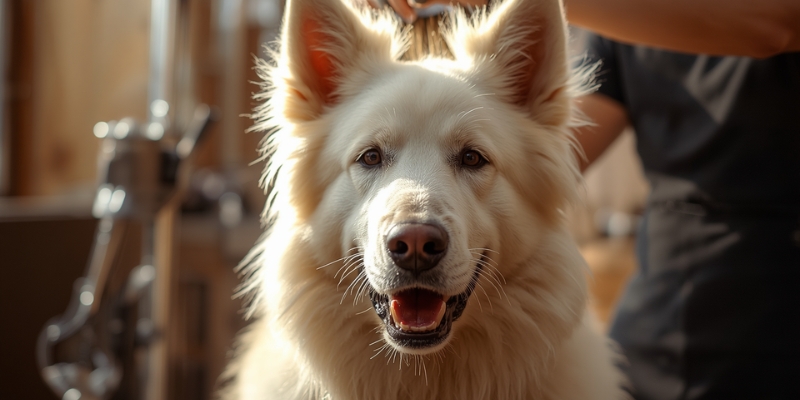
WHEN BLOW-DRYING AND BRUSHING ARE DONE CORRECTLY DURING WASHING, THE DOG EXPERIENCES IT AS PLEASANT PETTING.
Brushing Is Recommended Only During Blow-Drying
Mastering the proper technique for brushing out the coat and handling the dog represents the most critical part of dog grooming. Using a brush makes sense exclusively while you dry the dog with warm air after washing.
Simultaneously, using appropriate dryer strength alongside a suitable brush allows you to remove dead hair without causing any physical pain. When you execute blow-drying correctly, the dog experiences the treatment as pleasant petting and completely enjoys the process. Ultimately, regular bathing maintains skin health and coat elasticity, while dry brushing remains completely unnecessary.
Thank you for reading.
To discover more about how emotional alignment, balanced lifestyle, and authentic energy restore internal balance, read ourcoat care guidelines.
See you next time.
At Sasha Riess, we look past commercial labels to honor the unique biological blueprint of your companion. True health requires addressing the subtle internal patterns that create lasting vitality and pureloveandharmony. Discover the customized path to your dog’s longevity: Linktree Sasha Riess
Comfort bundle prebiotics and probiotic supplement gut health aid your dog’s immune and digestive systems
by Sasha Riess | 06.10.26. | Emotions
There is something almost every dog owner experiences at least once, yet rarely knows how to explain with words. A person enters a room tense, upset, angry, or afraid, and before a single word is spoken, the dog has already changed its behavior.
In those moments, the dog’s nervous system immediately registers the shift in the environment. Some dogs begin following their owner through the house. Some withdraw. Others start panting, licking their lips, trembling, or barking for no apparent reason.
Sometimes it seems as though the dog is “reading energy.” And this is exactly where the conflict begins between everyday human experience and the modern attempt to explain reality.
Many people immediately dismiss the phrase “bad energy” as something mystical or irrational. However, if we remove the spiritual terminology and observe what is physiologically happening inside both the human and the dog, we arrive at a very serious and scientifically grounded topic. Consequently, understanding what happens when a dog feels a person’s bad energy requires examining biological processes: stress hormones, changes in breathing, muscle tension, body micromovements, chemical scents released through the skin, tone of voice, heart rhythm, and neurochemical reactions that dogs perceive long before humans become consciously aware of them.
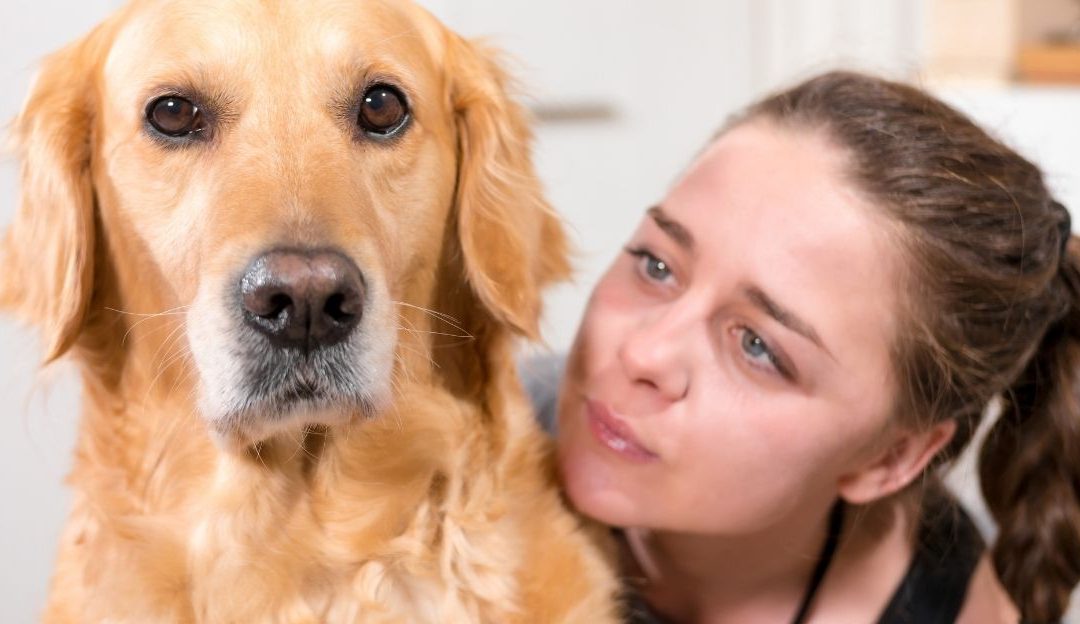
A dog does not primarily live in a world of language like humans do. A dog lives in the world of the nervous system — in the world of scent, movement, rhythm, tension, and safety. While humans try to explain reality through thought, dogs experience it through the state of the organism itself. Therefore, dogs often know how a person feels before the person is ready to admit it to themselves.
The Biology of Stress: What the Dog Actually Detects
When a human being experiences stress, the body automatically activates the stress response, which serves as the organism’s survival reaction to perceived danger. This process begins in the brain, specifically in the amygdala, which evaluates whether something is safe or threatening. When the brain perceives danger, whether physical or emotional, the sympathetic nervous system activates, pushing the body into a state of alertness.
The heart beats faster. Breathing becomes shallow and rapid. Muscles tighten. The tone of voice changes. Adrenaline and cortisol levels rise. Even the chemical composition of sweat and skin odor changes. A person may attempt to appear calm externally, but the organism speaks an entirely different language.
And this is precisely the language the dog reads with extraordinary accuracy.
Biology and Chemistry: How the Dog’s Nervous System Responds
Dogs possess between 220 and 300 million olfactory receptors, while humans have approximately six million. The area of the canine brain dedicated to processing scent is vastly more developed than our own. In other words, dogs live in a world of rich chemical information.
When humans experience stress, the body releases chemical compounds that alter body odor. Studies demonstrate that dogs distinguish sweat samples of stressed humans from those of relaxed individuals. This is not magic — it is pure biology.
However, the story goes far beyond scent alone. When a person lives under prolonged stress, the energetic dynamic of the body changes completely. Facial muscles tighten, movements become sharper or less coordinated, breathing loses rhythm, and the nervous system shifts into hypervigilance.
And the dog, as a social being that evolved alongside humans for thousands of years, does not merely observe behavior. It neurologically synchronizes with the human being. Today, researchers associate this phenomenon with the co-regulation of the nervous system. Human and canine nervous systems continuously influence one another. When a person stays calm, stable, and emotionally regulated, the dog remains far more capable of staying in a state of safety. Conversely, when the person becomes chaotic, anxious, or emotionally explosive, the dog often enters a state of alertness and stress.
That is why many dogs begin developing problematic behaviors during periods when the family experiences major stress: divorce, financial difficulties, illness, conflict, relocation, or emotional crises. The dog may not understand human language, but it deeply senses the shift within its system.
Perhaps the dog is not the problem. Perhaps the dog simply responds to the condition of its environment.
Chronic Stress in the Modern World of Dogs
In practical work with dogs, owners frequently seek help for barking, aggression, separation anxiety, or hyperactivity, only for it to become clear that the entire household has lived under immense pressure for months or years. The dog’s nervous system functions as a sensor for the entire household. The dog does not rationally analyze the problem — its body simply feels it.
When a dog’s organism detects human stress, the same biological mechanisms activate within the dog. The sympathetic nervous system triggers, adrenal glands release adrenaline and cortisol, heart rate increases, and muscles prepare for action. Simultaneously, digestion slows because the body redirects energy toward survival. If this state lasts too long, the organism eventually becomes exhausted.
This creates one of the central problems of modern canine life. Dogs today live in a state of constant stimulation. Cities remain loud, humans stay chronically stressed, and daily rhythms accelerate. Screens, noise, emotional tension, lack of routine, unpredictability, loneliness, and constant rushing create an environment where the dog’s nervous system rarely experiences true rest.
In the past, dogs had clearer roles, stable routines, and greater opportunities for physical energy release. Today, many dogs live as emotional companions to humans who are themselves emotionally overloaded. Consequently, we increasingly see symptoms of chronic stress: compulsive licking, destructive behavior, excessive barking, digestive problems, allergies, increased shedding, reactivity, and even autoimmune disorders. The body cannot remain in survival mode indefinitely without consequences.
The Dog as a Mirror of Human State
Science now explores hormonal synchronization between humans and dogs. For example, contact between a dog and a human increases oxytocin levels — the hormone associated with bonding, safety, and love. If states of safety can transmit across species, states of stress transmit just as easily.
A chronically anxious person unconsciously communicates danger to the dog. The dog becomes more vigilant, tense, and reactive. If this state persists long enough, the dog’s organism functions as though the world itself is fundamentally unsafe.

SAFETY IS A PHYSIOLOGICAL STATE THAT ALLOWS THE DOG’S NERVOUS SYSTEM TO ENTER A PARASYMPATHETIC STATE OF REST.
This explains why simply „training behavior“ often fails. Teaching a dog to sit or lie down means very little if the animal’s entire nervous system remains trapped in survival mode. The dog may learn commands, yet the body remains under stress. This is why so many owners state they tried every training method without lasting success. The body remembers, the nervous system remembers, and hormonal patterns remember. The dog does not respond only to external behavior — it responds to the inner condition of the human being.
Safety Is a Physiological State
People often want a calm dog while living in constant emotional chaos themselves. They desire stability in the dog while living unstable lives, expecting a relaxed companion while their own bodies function daily under pressure, tension, and unresolved internal conflict. The dog then tries to find safety inside a system that lacks safety.
Of course, this does not mean humans bear blame for every issue a dog develops. Life remains far more complex than that. Genetics, early experiences, socialization, nutrition, health, and countless other factors play crucial roles. However, ignoring the influence of human emotional states on dogs is no longer realistic.
Interestingly, dogs react very differently to different people, even when those people outwardly behave in similar ways. One person may approach gently while internally feeling tense or fearful, while another remains calm, stable, and emotionally present. Very often, the dog reacts more strongly to the state of the organism than to visible behavior. This explains why dogs instinctively avoid certain people while immediately relaxing and falling asleep beside others.
In the world of dogs, safety is not an abstract idea — safety is a physiological state. When a dog feels safe, the body enters a parasympathetic state. Heart rate slows, digestion functions better, muscles relax, and breathing deepens. The organism becomes capable of regeneration. Only then can true learning, emotional stability, and healthy socialization occur.
When the organism remains under constant pressure, the body stops investing energy into balance and development — it invests energy into survival. And perhaps this is one of the greatest lessons dogs try to teach us.
Dogs do not respond as much to what we say as to what we are. They do not listen only to our words — they listen to our heart rhythm, breathing, hormones, muscle tension, movement patterns, and nervous system condition. In that sense, the dog becomes a mirror of the human being. When the human stays present, stable, and regulated, the dog feels it. When the human lives in constant internal conflict, the dog feels that as well.
Perhaps the relationship between humans and dogs has never truly been only a relationship between owner and animal. Ultimately, it is a relationship between two nervous systems that continuously communicate, influence one another, and together search for safety in a loud, fast, and stressful world. Many dogs suffer today not because we do not love them, but because many of us have forgotten what peace itself feels like.
Thank you for reading.
To discover more about how emotional alignment, balanced lifestyle, and authentic energy restore internal balance, read our canine emotional health guidelines.
See you next time.
At Sasha Riess, we look past commercial labels to honor the unique biological blueprint of your companion. True health requires addressing the subtle internal patterns that create lasting vitality and pureloveandharmony. Discover the customized path to your dog’s longevity: Linktree Sasha Riess
👉 Follow our Facebook page and never miss our latest articles, news, and updates.