by Sasha Riess | 08.07.26. | Nutrition
When dealing with a companion who rejects their meals, learning how to handle a picky eating dog is the most important step an owner can take. When your dog turns its head away from a bowl into which you have invested your effort and love, it is not showing that it is “spoiled” or “stubborn.” Instead, it is placing you into the simplest possible trap.
Dog behavior, throughout evolution, has always been inseparably connected to food—from the wolf, to the village dog, to the one now sleeping on your couch. Food is not just a meal; it is the thinnest layer of your relationship and a key means of communication.
Evolution in the Bowl: How to Handle a Picky Eating Dog Through History
The entire relationship between human and dog revolves around one question: will there be food tomorrow, and who is responsible for it? In that relationship, the dog does not seek luxury; it seeks its place.
When it refuses to eat, it is not choosing flavors. It is showing you where your place is, or trying to understand where its own place is. This is a subtle game of power in which the dog casually rejects your investment of love in order to observe your reaction. Recognizing this dynamic changes how to handle a picky eating dog, shifting your focus from culinary desperation to calm consistency.
Consistency as the Only Solution
The solution is neither punishment nor indulgence. If you have prepared a meal, that is what is eaten. The dog is neither picky nor greedy; it is simply testing the boundaries of your authority.
If the dog senses that it can manipulate your emotions through food, it takes the leadership role in your small pack. A healthy relationship is built on clear rules: “I prepared this, and this is what is eaten.” If the dog believes there is a better place or a better leader who will offer something else, it is free to look for it. But in your home, you are the one who sets the standards.

A healthy relationship is built on clear household standards: the leader provides the meal, and the follower accepts it without manipulation.
Reclaiming Balance in the Household
Only when you understand this does dog behavior stop being a stressful problem and become a balanced partnership. When you hold the boundary calmly, without anger or bribery, the dog relaxes into its natural role as a follower.
To explore more about how freshly prepared, raw meals and natural enzymes restore internal balance, read our holistic nutrition guidelines.
At Sasha Riess, we look past commercial labels to honor the unique biological blueprint of your companion. True health requires addressing the subtle internal patterns that create lasting vitality and pureloveandharmony. Discover the customized path to your dog’s longevity: Linktree Sasha Riess
👉 Follow our Facebook page and never miss our latest articles, news, and updates.

by Sasha Riess | 05.07.26. | Nutrition
When a Bichon owner says their dog is “itching all the time,” the first thought usually points to fleas or an improper shampoo. However, if the dog eats a diet consisting strictly of kibble, the problem is almost always internal. Constant scratching and chewing on the paws are not just surface-level skin irritations. Instead, they represent the body’s ultimate cry for help when it cannot process the substances entering it. Therefore, understanding what causes constant bichon itching requires looking beneath the fur, because the issue stems from the digestive system rather than a topical condition.
Microbiome: The Invisible Army Losing the Battle
The absolute core of the problem lies within the microbiome, which is the delicate community of beneficial probiotic bacteria in the digestive tract. Unfortunately, poor-quality industrial food and chronic stress rapidly destroy these protective bacteria. Consequently, when the microbiome weakens, the dog’s immunity drops significantly. The body then begins to produce histamines in response to everyday substances that would not normally act as allergens. Commercial kibble is frequently filled with ingredients and artificial elements that the dog’s body simply does not know how to process. This internal failure explains exactly what causes constant bichon itching from the inside out.
The Brain Commands: “Push It Out Through the Skin”
An allergy is, in its essence, a highly active defense mechanism. When a dog consumes something its body does not recognize or cannot safely process, the brain makes an urgent survival decision. Since the liver, kidneys, and bladder cannot fully handle or filter out these unfamiliar elements, the organism utilizes its largest detoxification organ: the skin.
“Push it out!” the brain signals. Consequently, histamines appear directly on the surface, causing intense itching, redness, and persistent wounds from compulsive scratching.
Ultimately, scratching is only the final, visible stage of a complex metabolic process that began directly in the food bowl. Therefore, if you want your Bichon to stop itching permanently, do not look for another medical cream or a temporary chemical spray. Instead, look for real, living food that will naturally rebuild the microbiome and restore internal peace. To explore more about how a clean, species-appropriate diet transforms your dog’s health from the inside out, read our holistic nutrition guidelines.
See you next time.
At Sasha Riess, we look past commercial labels to honor the unique biological blueprint of your companion. True health requires addressing the subtle internal patterns that create lasting vitality and pureloveandharmony. Discover the customized path to your dog’s longevity: Linktree Sasha Riess

by Sasha Riess | 30.06.26. | Nutrition
Why Generic Dog Food Does Not Exist: The Power of the 7%
Many owners wonder why generic dog food does not exist as a permanent health solution, and the answer lies in the hidden 7% of nutrition that shapes a dog’s life. Commercial pet food relies on one idea we have all unconsciously accepted. We assume that if a formula covers basic nutritional needs, then it applies to every single dog.
Standard education taught us to look strictly at composition. Consequently, we turn the bag around to search for protein, fat, and carbohydrate percentages. We compare numbers, analyze labels, and look for a “better ratio.” However, by doing that, we only look at the surface.
The physiological diversity of dogs does not begin in the percentage of protein. Instead, it begins in the unique way their organism uses what it eats. Two dogs can consume the same amount of nutrients. Yet, they build completely different biochemistry, energy levels, stability, and longevity from them. This is the main reason why generic dog food does not exist when you look past the label.
93% Versus 7%: What Is Written on the Label and Why Generic Dog Food Does Not Exist
To understand why, we must break down daily nutritional needs. About ninety-three percent of a dog’s daily nutritional intake consists of macronutrients. These are proteins, fats, and carbohydrates. That is what we measure. Furthermore, that is what we monitor and what the industry promotes.
The remaining seven percent consists of micronutrients. This means roughly one percent vitamins and about six percent minerals. On paper, that seems marginal. Seven percent looks small. However, those seven percent shape how the body uses the other ninety-three.
Proteins function as essential building material. The body uses them to repair tissues, muscles, enzymes, and the immune system. Additionally, the organism can recycle amino acids. It can redistribute them, and it can even meet part of its energy needs by breaking down its own protein reserves when necessary.
Fats act as an energy reservoir. They function as long-term fuel, organ protection, and carriers of certain vitamins. The body stores them and uses them when energy demand exceeds intake.
Carbohydrates provide quick fuel. They regulate blood sugar and supply cells with immediate energy. Yet, the organism can synthesize them from other sources when needed.
In other words, macronutrients are highly flexible. The body can store them, redistribute them, and transform them. Vitamins, although essential, also have a certain degree of internal regulation. Indeed, the body can synthesize or activate some from precursors. It stores certain types, while recycling others through metabolic processes.
Minerals: The Foundation of Life and Proof Why Generic Dog Food Does Not Exist
But minerals are a different story. The organism cannot produce them. It cannot synthesize them. It cannot create them from nothing. Therefore, the only reason a dog eats food is to obtain minerals. Without them, there are no enzymatic reactions. There is no hormonal signaling, no cellular respiration, and no nervous system stability. Energy production stops completely without minerals. Truly, minerals are the foundation of life, not a dietary supplement.
And this is where generic product formulas fail. Minerals do not function in isolation. Instead, they function in relationships, in patterns, and in balances that are unique to each dog. Deep within the organism, beneath calories and protein, a mineral dynamic unfolds. This dynamic determines how a dog will live, react, and age. This complex reality explains why generic dog food does not exist as a one-size-fits-all solution.
Cascade of Imbalance: The Dangerous Copper and Magnesium Relationship
Let us look at one of the clearest examples. This is the relationship between copper and magnesium. When copper in the tissues is stable and functional, it supports cellular respiration. It supports enzymatic activity and oxidative metabolism. But when it becomes imbalanced, a chain reaction begins. This happens especially when copper levels rise but remain biologically unavailable, bound, and inactive.
The body immediately loses the ability to properly retain magnesium. Therefore, magnesium begins to drop. This does not happen because it is absent from food, but because the organism cannot integrate it. And then a cascade of disturbances begins. You will first see this in the nervous system.
The dog loses stability. It becomes more tense, more reactive, and harder to relax. From the outside, this looks like behavior. Inside, it is mineral loss. As magnesium continues to decline, calcium begins to dominate. Consequently, tissues become more rigid, metabolism slows, and recovery weakens.
The drop in energy activates the adrenal glands. They attempt to compensate through stress hormones. Thus, the dog enters a paradoxical state. It is exhausted and overstimulated at the same time.
At this stage, owners often try to correct the condition. They use magnesium supplementation or “better food.” But as long as copper remains imbalanced, the body cannot retain magnesium. It enters, but it does not integrate.
As long as the primary stress and copper relationship is not stabilized, food begins to break down inside the organism instead of being incorporated. This is often seen through elevated sulfur levels in tissues. This is a clear marker of protein breakdown and reduced nutrient utilization. To learn more about conscious canine diet options, explore our holistic nutrition guidelines.
Why Dogs Touch the Places Where It Hurts the Most
When a Dog Refuses Obedience, Our Real Conflict Begins
When Play with a Dog Becomes a Trap
A dog does not build energy from calories, but from perfect internal balance.
The Path to Longevity Through the Mineral Profile
And here we arrive at the essence of this column. The problem is not that the food is of poor quality. Rather, the problem is that it is generic. It does not consider the mineral pattern, stress history, glandular function, and metabolic type of the individual dog.
A dog does not digest food only through the stomach. It digests food through minerals. It does not build energy from calories, but from balance. That is why generic dog food does not exist in nature. There is only a generic product that hopes it will suit the majority.
But life is not lived in the majority. Life is lived in those seven percent no one looks at. Yet, those minerals determine how everything else will be used. And that is why the path to a dog’s longevity does not begin with choosing a brand. It begins with understanding its unique mineral profile. Everything else follows or it does not.
See you next time.
At Sasha Riess, we look past commercial labels to honor the unique biological blueprint of your companion. True health requires addressing the subtle internal patterns that create lasting vitality and pureloveandharmony. Discover the customized path to your dog’s longevity: Linktree Sasha Riess
👉 Follow our Facebook page and never miss our latest articles, news, and updates.

by Sasha Riess | 28.06.26. | Emotions
Calcium is probably the most misunderstood mineral in dog nutrition. We have learned to associate it with physical strength, bone density, and structural stability. When a dog is growing, we add calcium. When a dog weakens, we add calcium. Furthermore, when a problem with teeth or bones appears, our first impulse is almost always the same—the dog needs more minerals.
However, the body does not function according to the principle of quantity. Instead, it functions according to the principle of biological availability. There is a significant difference between calcium that exists statically in tissue and calcium that is alive, mobile, and active. An organism can easily have an excess of calcium and at the same time suffer from its functional deficiency. This exact imbalance triggers a defense mechanism that we call a calcium shell. Therefore, you must understand how a calcium shell affects dog behavior and health before blindly adding supplements.
A Defense Mechanism and an Inner Armor
The calcium shell is not an illness. Rather, it is a defensive survival mechanism of the organism. When a dog faces long-term physical, emotional, or metabolic stress, the body attempts to protect itself from an overload of the nervous system. One way it achieves this is by depositing calcium directly into tissues.
Consequently, calcium stops circulating freely and begins to accumulate. Tissues become more rigid, behavioral reactions slower, and the perception of the world more muted. The dog may not appear calmer. On the contrary, it may become extremely anxious, tense, or hypersensitive because the organism no longer functions in a flowing balance.
This protective mode manifests in two distinct behavioral directions. The dog may become withdrawn and energetically closed, but just as often it may suddenly become irritable, anxious, or even aggressive. The nervous system then no longer reacts proportionally to reality. Instead, it reacts through an internal sense of threat that arises when the body loses its ability for fine regulation. It is as if the body builds a rigid emotional armor.
Tartar Deposits and the Hidden Calcium Shell
One of the first visible signs of this process often appears on the teeth. Tartar deposits are not only a matter of daily hygiene or genetics. Instead, they can be an external trace of internal mineral accumulation. The organism releases excess unused calcium wherever it can because it no longer knows where to distribute it.
The paradox becomes obvious. The dog has visible deposits of calcium, while at the same time the cells cannot use calcium where it is actually needed. At that moment another often forgotten mineral enters the story: magnesium.
Calcium and magnesium never function separately. They are partners of opposites. Calcium tightens, while magnesium relaxes. Calcium activates contraction, whereas magnesium enables relaxation. Calcium stabilizes structure, but magnesium allows the flowing of energy. When their relationship breaks, the body loses its natural rhythm between tension and relaxation.
How Nutritional Imbalance Changes a Dog’s Behavior
In dogs exposed to chronic stress, magnesium is often lost rapidly. The nervous system consumes it faster than the body can replace it. As magnesium drops, calcium is left completely without its natural regulator. It begins to accumulate, fall out of balance, and create systemic rigidity instead of healthy stability.
Dog Nutrition: Allowed Fruits, Vegetables, and Mushrooms – A Complete Guide
Bathing Dogs: Hygiene That Protects Internal Organs
When a Dog Refuses Obedience, Our Real Conflict Begins

When mineral balance is present, the dog experiences true stability without physical rigidity.
The dog may then show seemingly contradictory symptoms. Its reactions become highly unpredictable, sometimes slow and withdrawn, sometimes sudden and excessive. Muscles remain in chronic tension while the organism’s real energy remains very low. The dog may flare up quickly or withdraw just as quickly because tolerance to stress becomes very small. The organism no longer manages energy through balance, but through protection. It tries to survive by limiting flow and adapting to internal pressure instead of regulating it.
In such a state, the biggest mistake we can make is adding more calcium. To explore more about how internal biochemical states impact canine conduct, read our holistic behavior guidelines.
Why Nutritional Behaviorism and the Calcium Shell Require Understanding
Sometimes an owner sees deterioration they cannot explain. The dog becomes more rigid, slower, digestion changes, or hidden inflammation appears. The food seems high quality and the supplements carefully chosen, yet the body reacts opposite to expectations. The reason is not bad intention. The reason is simply the wrong moment.
An organism under stress first seeks energetic balance and only then building material. When we skip that order, even the best intention becomes a heavy burden. In extreme cases, long-term disturbance of mineral balance can lead to serious metabolic disorders that become life-threatening for the dog.
That is why the relationship between calcium and magnesium is not a matter of quantity but of communication within the body. It is the relationship between protection and flexibility, between armor and life. When balance is present, the dog has stability without rigidity. Your task is not to break that shell by force with supplements, but to understand why it formed. The organism of a dog never makes mistakes. It always adapts to what it receives. True nutrition begins only when we learn to listen to that adaptation instead of drowning it out with another supplement.
See you next time.
At Sasha Riess, we look past commercial labels to honor the unique biological blueprint of your companion. True health requires addressing the subtle internal patterns that create lasting vitality and pureloveandharmony. Discover the customized path to your dog’s longevity:Linktree Sasha Riess
👉 Follow our Facebook page and never miss our latest articles, news, and updates.
by Sasha Riess | 26.04.26. | Nutrition
Artificial dog food is often presented as a practical and supposedly healthy solution, but its effect on a dog’s body is usually limited to short-term results such as “no visible symptoms.” The real issue is not whether the dog eats, but what actually happens inside the body during that process. If there is no digestion, there is no health.
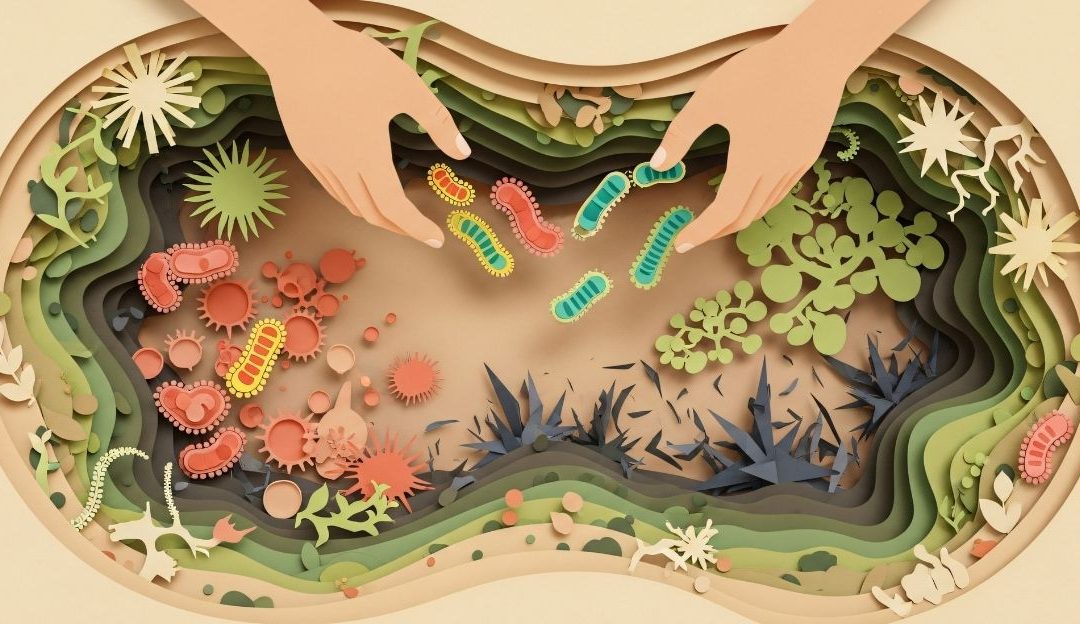
How Artificial Dog Food Affects the Microbiome
The essence of digestion lies in the microbiome. Without a microbiome, there is no digestion. Without digestion, there is nothing from food that can truly be absorbed.
In artificial dog food, almost everything is already broken down. Proteins, vitamins, and minerals are in powdered form. The body has no reason to engage. When the body does not need to digest, it does not activate the microbiome. And the microbiome does not exist only to break down food.
Why There Is No Immunity Without a Microbiome
The immune system lives in the microbiome. Not metaphorically, but literally. When the microbiome does not develop because the body does not need to digest food, the immune system remains inactive and weakened.
Artificial dog food therefore does not build resilience. Over time, it creates an organism that lacks the capacity to defend itself when serious issues arise, such as chronic inflammation, autoimmune processes, and severe diseases later in life.
Nature’s Law of Minimum Energy Expenditure
Nature functions according to the principle of minimal energy expenditure for maximum result. If the body receives ready-made substances that do not require breakdown, it will not invest energy in developing systems that appear unnecessary.
The problem is that the microbiome is not an optional feature; it is the foundation of health. When a dog becomes accustomed to food that does not require digestion, the body enters a state of passivity. Everything appears fine while the organism is young, but when aging begins, there are no developed defense mechanisms.

Industrial food does not require digestion—and for that reason, it does not build immunity.
How Industrial Nutrition Weakens Dogs Over Time
Industrial food does not require digestion, and for that very reason, it does not build immunity. Artificial dog food often seems like a solution because the dog eats, there is no diarrhea, and the coat shines. These are surface indicators.
Beneath them, resilience is not built. Adaptation is not built. A healthy relationship between body and food is not built. The microbiome and the immune system are either built through food or destroyed by it. There is no neutral option.
Not Convenience, but Responsibility
Feeding dogs is not a question of convenience. It is a question of responsibility. Food that does not require digestion does not stimulate life processes; it puts them to sleep. A healthy dog is not a dog without symptoms, but a dog with a system that knows how to defend itself.
At Integrative and Holistic Grooming Education, we teach that beauty begins in the gut. When you move away from artificial dog food, you choose to wake up your dog’s natural defenses. Discover the path to pureloveandharmony:Linktree Sasha Riess
Sasha Riess Pure Love & Harmony Duo Pack The Complete Dog Coat Care System