by Sasha Riess | 10.06.26. | Behaviour
Trauma in dogs is often overlooked in modern training because we rely too heavily on treats. When a dog receives a reward for something it did “right,” we rarely notice the other side of that process: the moment when the reward is absent.
Although the reward system is considered “positive,” for a dog’s physiology it can be deeply counterproductive.
Trauma Hidden in Expectation
Many people ask: what kind of trauma can occur when I reward my dog for being good? The problem is not in the moment of the reward itself. The problem arises in the moment when the dog is not “good” and the reward is missing.
For the dog, there is no theory or training method in that moment. There is only the experience of absence. Learning through pure conditioning directly affects the dog’s physiology, but not in the way we think. Positive stimulation through food is only one side of the coin. The other side is the negative effect that appears in the dog’s body when it does something and the expected reward does not come.
Relationship Above Method: Preventing Trauma in Dogs
The question is not only how we teach a dog, but what kind of relationship we build while conditioning it. Are we building a partnership based on understanding, or a dependency that disturbs inner balance?
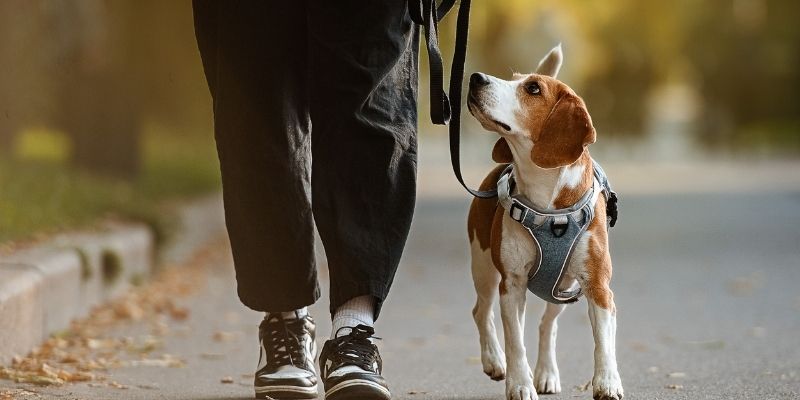
Build a relationship that doesn’t depend on a piece of food in your pocket.
True communication with a dog does not come through a piece of food in your hand. It comes through alignment that leaves no space for physiological stress that later develops into chronic conditions. Remember, every time you rely on conditioning, you risk creating trauma in dogs that is difficult to resolve later.
At Sasha Riess, we believe true communication bypasses the stress of bribery. Moving beyond food conditioning prevents underlying trauma in dogs, paving the way for authentic pureloveandharmony. Build a real partnership: Linktree Sasha Riess
by Sasha Riess | 10.06.26. | Nutrition
In dog nutrition we often talk about proteins, fats, and calories. But deep within the body there is a relationship that determines far more profoundly how the organism uses food. That relationship is the balance between calcium and phosphorus.
How Dog Nutrition and Metabolism Depend on Minerals
This mineral pair is not important only for bones. It actually regulates the speed of metabolism, meaning the way the body burns energy. Calcium tends to slow metabolic processes and stabilize cellular activity, while phosphorus accelerates energy production and intensifies metabolic reactions. When their balance changes, the rhythm at which the body functions changes as well.
For this reason, physiology often speaks about so-called fast and slow oxidative metabolic types. These terms do not simply mean that metabolism is fast or slow in the usual sense. They describe the way cells burn fuel.
Different Metabolic Types and Dog Nutrition
A fast oxidative type is an organism that converts food into energy very quickly. Cells intensively use fuel, the nervous system reacts rapidly, and energy is consumed at a high pace. Such an organism has a powerful energetic rhythm, but often also a greater need to stabilize that rhythm.
A slow oxidative type releases energy more slowly and in a more controlled way. Fuel is burned steadily but at a slower rate. Such an organism often has a different relationship with proteins, fats, and minerals because energy does not leave the cells at the same speed as in fast types.
The difference between these two metabolic types has a direct influence on the way a dog uses proteins.
The Influence of Proteins on Oxidative Types
In the fast oxidative type, the body often uses proteins as fuel. When metabolism operates at a high tempo, amino acids are quickly broken down to produce energy. This means that too much protein can further accelerate a system that is already running fast.
In such cases, food with a lower share of protein, around forty percent in the overall structure of the meal, often helps stabilize the organism. Such a meal provides energy without placing additional pressure on the metabolic system.
In the slow oxidative type, the situation is different. The body does not burn fuel quickly enough and often struggles to produce energy from food. In those cases, the organism responds better to a higher share of protein, sometimes up to eighty percent in the structure of the meal, because proteins stimulate metabolic activity and help the body initiate energy production.
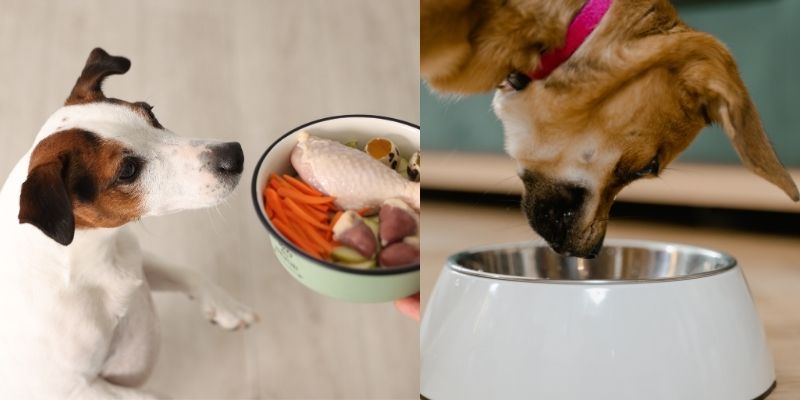
Each dog requires a unique ratio of nutrients.
The Trap of Universal Nutrition
This is where modern dog nutrition and metabolism science often makes a mistake. In recent years, raw and high-protein diets have become almost a universal recommendation for dogs. The idea that a dog should eat mostly meat or almost exclusively protein-rich food appears logical, since the dog is a carnivore. But physiology is not that simple.
If a dog belongs to the fast oxidative type, a diet composed almost entirely of protein can further accelerate a system that is already overloaded. The nervous system may become overstimulated, stress tolerance may decrease, and the body may begin to consume its own tissues to maintain the energetic rhythm. In such cases, what was intended as natural nutrition can actually worsen the dog’s condition.
On the other hand, a slower oxidative type may benefit from a higher protein intake because such food helps the body increase metabolic activity and energy production. The real question therefore is not whether raw or protein-rich food is good or bad. The question is for which dog.
Two dogs can eat the same meal and have completely different physiological reactions. One may become more stable and energetic. The other may become more tense, more fatigued, or metabolically burdened. The reason often lies precisely in the calcium and phosphorus balance that determines the tempo of metabolism.
When this balance is stable, the body can properly use proteins, fats, and energy from food. When it is not, even high-quality food can become a metabolic burden. That is why the most important step in feeding a dog is understanding its metabolic type. Only when we understand whether the body burns energy quickly or slowly can we begin to build a diet that truly supports its physiology.
Food then stops being a universal formula and becomes a tool that helps the body find its natural rhythm. Because a dog does not live from the percentage of protein written on the label. A dog lives from balance that allows its body to function.
At Sasha Riess, we look past the generic labels to discover the real needs of your pet. True health relies on a tailored understanding of dog nutrition and metabolism, allowing you to guide them toward lifelong pureloveandharmony. Learn your dog’s rhythm: Linktree Sasha Riess
Awakening With Dogs : Exploring the Profound Connection Between Dogs and Humans: Love, Resonance, and Healing Kindle Edition
by Sasha Riess | 09.06.26. | Coat Care
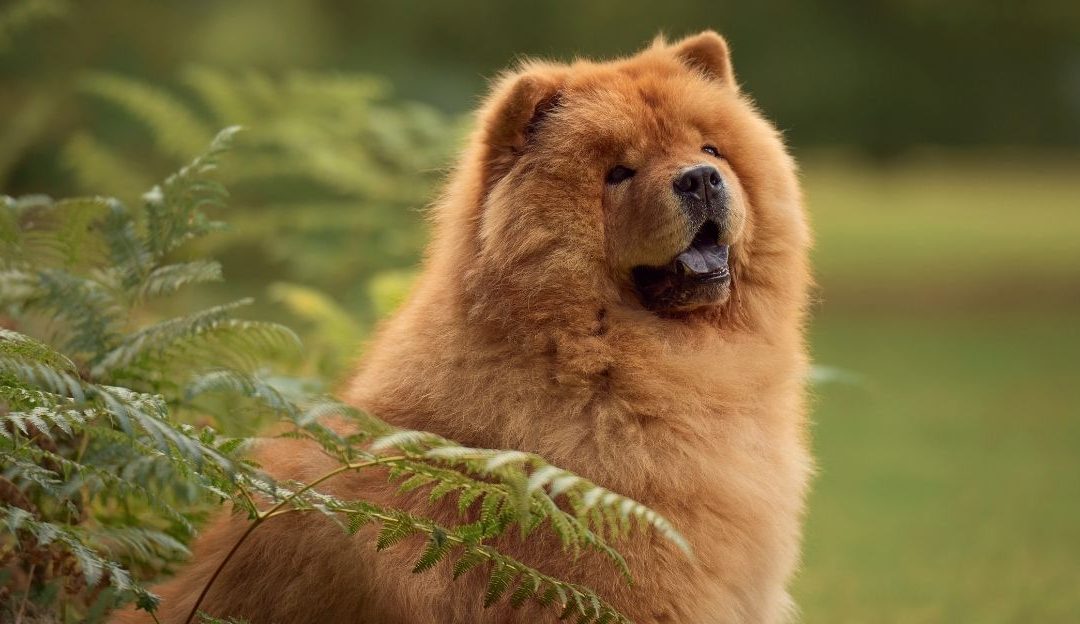
There is never enough discussion about hygiene. It is interesting how often happy owners tell me that the Chow Chow was their choice because it is “as clean as a cat.” They believe the claim that bathing this dog two or three times a year is sufficient, since it licks and cleans itself. Through conversations with people, I have gained the impression that the Chow Chow is perceived as one of the cleanest breeds, but this is a dangerous misconception.
Factors That Influence the Chow Chow’s Coat
What matters most is where and under what conditions the dog lives. Coat quality and the amount of lanolin are the result of multiple factors. External factors, what the dog eats, whether it sleeps in a bed or on a terrace, whether it lives in the city center or on the outskirts, directly affect hygiene. Internal factors such as genetics, hormones, age, and sex also determine the condition of a Chow Chow’s coat.
As a brand, we move away from the belief that a dog should be groomed solely according to coat type. A dog is groomed in relation to its proximity to humans. If your dog sleeps in your kitchen or your bed, it must adapt to your lifestyle, not the other way around.
Hygiene as the Foundation of the Human-Dog Relationship
People and dogs often separate because a person cannot tolerate a “smelly house.” And the house smells because the owner does not bathe the dog, trusting advice that one bath per year is enough. If you take your dog into the city three times a day, infrequent bathing is unrealistic. Lanolin is a sticky fat that attracts urban dirt. When the odor becomes unbearable, the dog often ends up on the street.
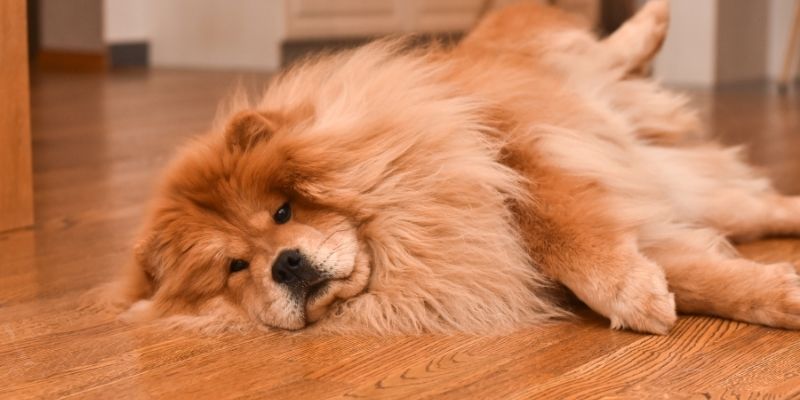
A dog living in the house must be adapted to the hygiene standards of the owner.
A person should not become a servant to the Chow Chow breed and its coat. In selective breeding, coat was always a secondary outcome, while character and working ability were the priorities. Today, when dogs are no longer needed for work, the focus has shifted to appearance, yet the relationship between humans and dogs is far deeper than that. A dog that lives in the home must be aligned with the owner’s hygiene standards.
Specific Challenges: The Chow Chow and Wrinkle Hygiene
The Chow Chow is an exceptionally sensitive breed. It has a long coat, abundant skin, and numerous wrinkles where hair grows in different directions. This creates an ideal environment for bacteria and fungi. Hygiene is essential here not because of “naturalness,” but because of health and coexistence with humans.
The myth that the Chow Chow cleans itself like a cat is actually a misinterpretation. What often appears as self-cleaning is the dog attempting to scratch because the wrinkles itch. Care for your dog in accordance with the standard of your own life. The breed is not what matters; what matters is the dog that sleeps beside your children. Everything else is the result of eugenics, similar to the idea once imposed on humans, a concept that places the breed above the living being.
At Sasha Riess, we break the myths that separate families. Grooming your Chow Chow according to human standards ensures a clean home and true pureloveandharmony. Align your hygiene: Linktree Sasha Riess
by Sasha Riess | 08.06.26. | Emotions
Many of us believe we are stable because we have maintained our daily habits, but very often that routine is nothing more than the pain trap we fall into in order to hide our unprocessed wounds. In my previous column, I spoke about how, in an attempt to protect ourselves from overwhelming pain, we allowed dogs to be the first to show the consequences of our silence.
Denial: How the Pain Trap Is Formed Through Unprocessed Wounds
A recent comment stated: “There was no panic or chaos. The dog had its routine.” This sentence is a perfect example of the very truth I was writing about. It is born when the memory of pain is too heavy to open. When social trauma strikes so deeply that the easiest way to survive is to say that nothing happened.
But this kind of denial is not proof of stability. It is proof of a wound. The pain trap is a survival mechanism where we minimize trauma because we cannot yet bear to confront it.
The Most Dangerous Pattern of Collective Psychology
The normalization of suppression is dangerous—not just for adults, but for children and dogs. They do not have mechanisms to lock everything away in inner drawers. They will live what we do not dare to admit. Dogs are already living the symptoms of silence; children will inherit them if we continue on this path.
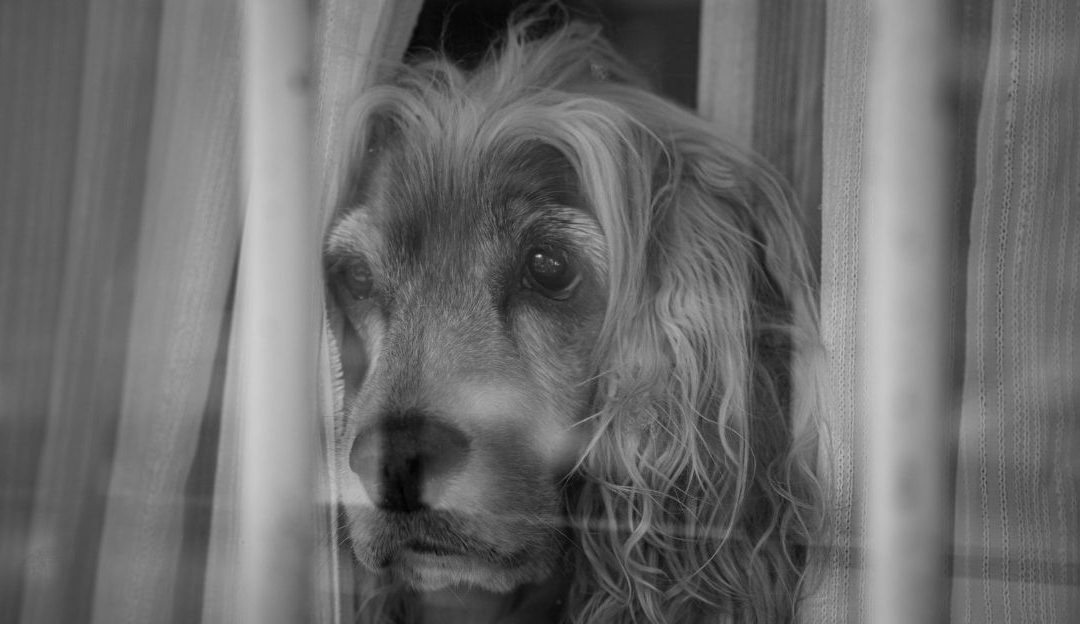
[Image representing the contrast between outward routine and inner emotional weight]
Symptoms of Silence: What Dogs Tell Us About Our Pain
When we say „the dog had its routine,“ we are often speaking about our own need to maintain the illusion of normality. But dogs have already shown us what happens when emotions remain without a voice. We see it in:
These are not „problem dogs.“ These are emotional imprints of human pain that was never fully processed within the pain trap.
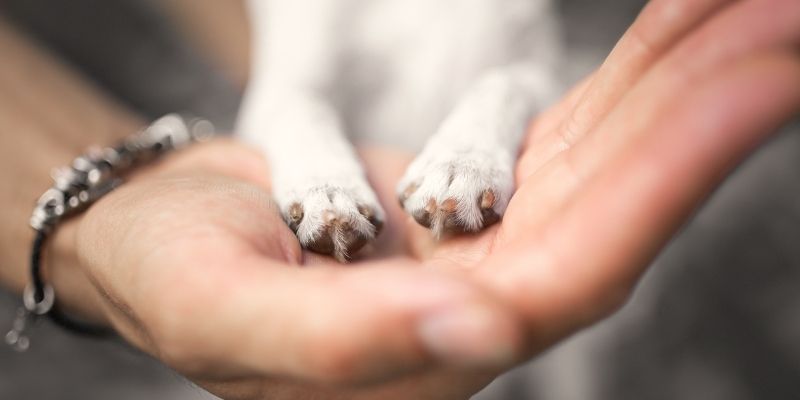
Our children and pets do not know how to hide what we are silent about.
Acknowledgment as the Path to Healing
If we do not speak about what happened, those who should not will speak instead: our children and our dogs. They speak through behavior, through the body, and through restlessness. We must not leave them an inheritance of a burden that belongs to us.
Acknowledging that it was hard and painful is not weakness. It is the only way to ensure we do not pass our own trauma on as an invisible inheritance. The pain trap only loses its power when we find the courage to speak the truth.
At Sasha Riess, we understand that a dog’s behavior is often a reflection of the human’s inner state. Breaking free from the pain trap is essential to achieving true pureloveandharmony. Start your journey of acknowledgment here: Linktree Sasha Riess
by Sasha Riess | 08.06.26. | Nutrition
Many owners become worried when black stool in dogs appears, immediately suspecting internal parasites or bleeding. However, the truth is often much simpler. Just like in humans, stool color is a reflection of what your dog has eaten in the past hours.
When Is Dark Stool in Dogs Normal?
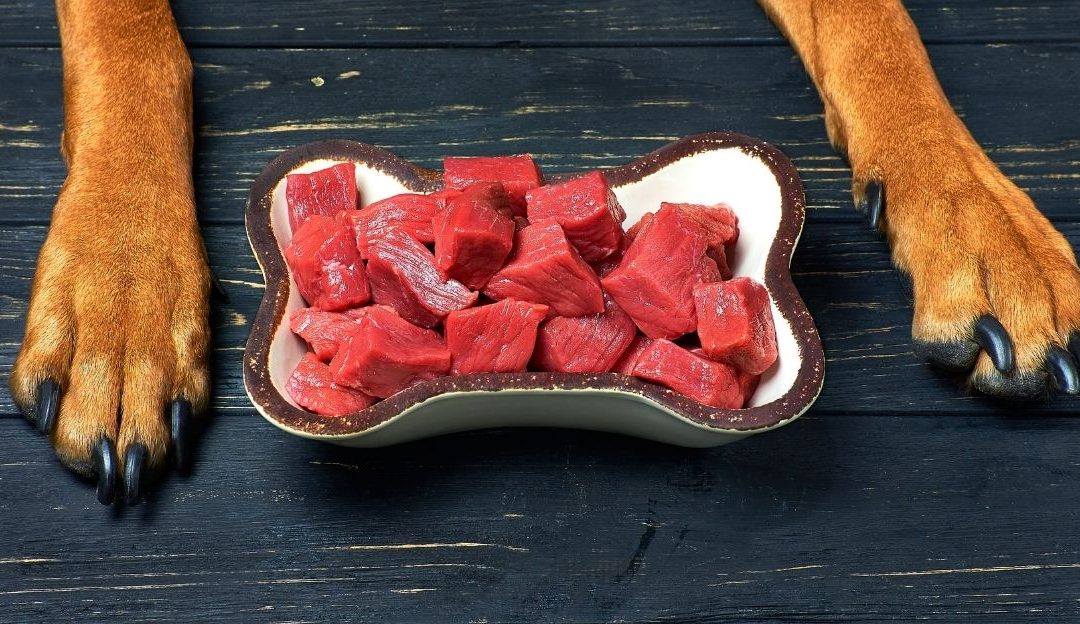
Dark stool is common in dogs that consume a lot of meat, especially organ meats, or eat cooked food. Certain foods can significantly change stool color. Just as beetroot can cause red shades in humans, specific ingredients can lead to black stool in dogs.
However, it is important to know that a black, tar-like stool can sometimes indicate internal bleeding in the upper parts of the digestive tract. That is why it is essential to observe behavior, not just color.
How to Recognize If Black Stool in Dogs Is Dangerous
Color alone is rarely the only symptom. If your dog has diarrhea but is still cheerful, active, and eating normally, it is most likely a temporary stomach irritation.
But if black stool in dogs appears along with the following symptoms, immediate attention is needed:
-
Loss of appetite and refusal to drink;
-
Vomiting or pronounced lethargy;
-
A drastic change in normal behavior.
First Aid for Digestive Disturbances
If you notice the problem without severe symptoms, the first step is to pause feeding for a short period. After that, for the next three days, offer a light diet: cooked rice and lean white meat with very little salt. This will help stabilize digestion, even if black stool in dogs was temporarily present.
At Sasha Riess, we look at the whole system to find balance. When dealing with issues like black stool in dogs, observing behavior alongside physiology brings pureloveandharmony. Keep track of their health: Linktree Sasha Riess